
Description
WEHRPASS & INFANTERIE-STURMABZEICHEN AWARD LETTER – INFANTERIE-REGIMENT 67 – 23. INFANTERIE-DIVISION – POLAND, FRANCE & RUSSIA – WOUNDED AT MOGILEV 1941
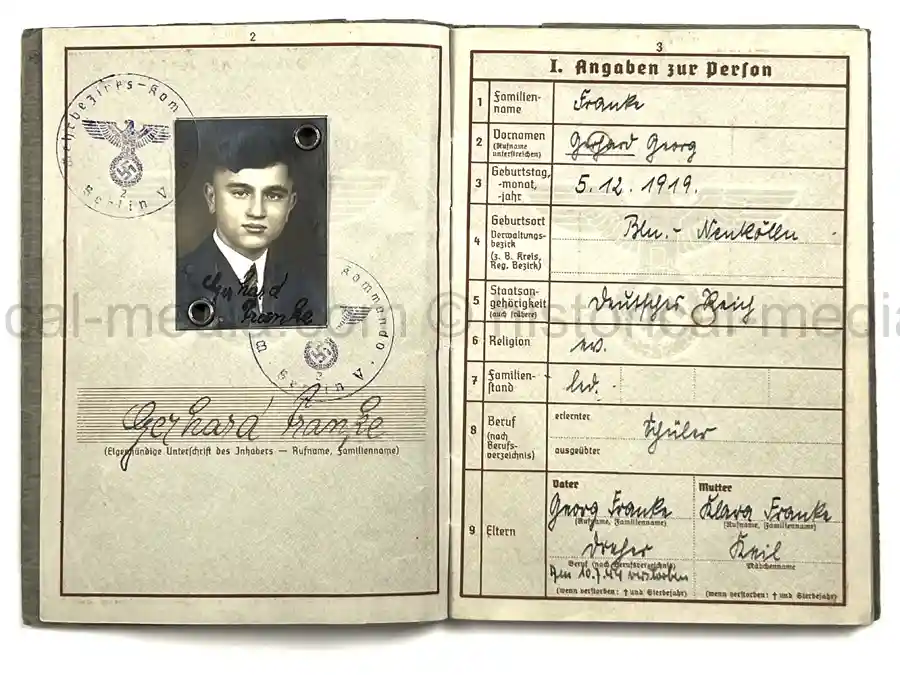
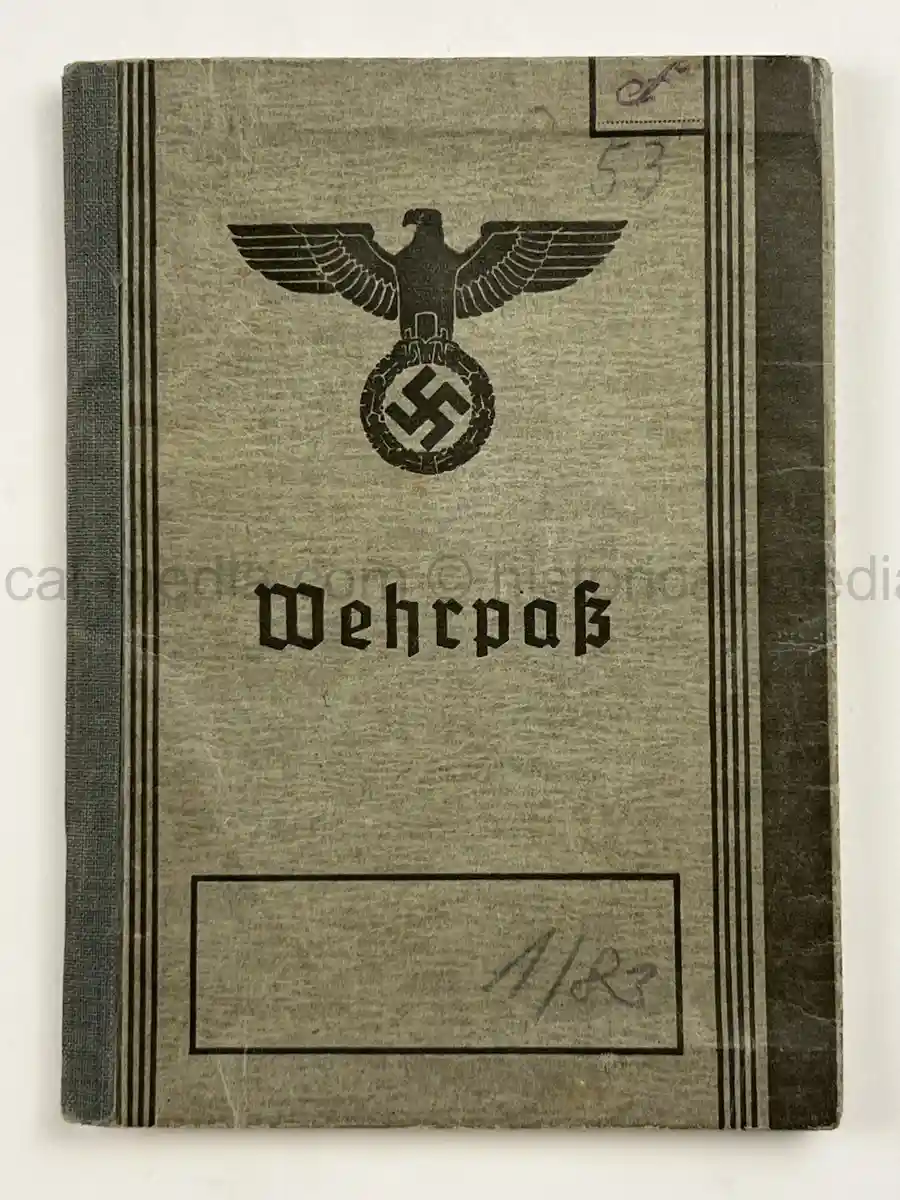
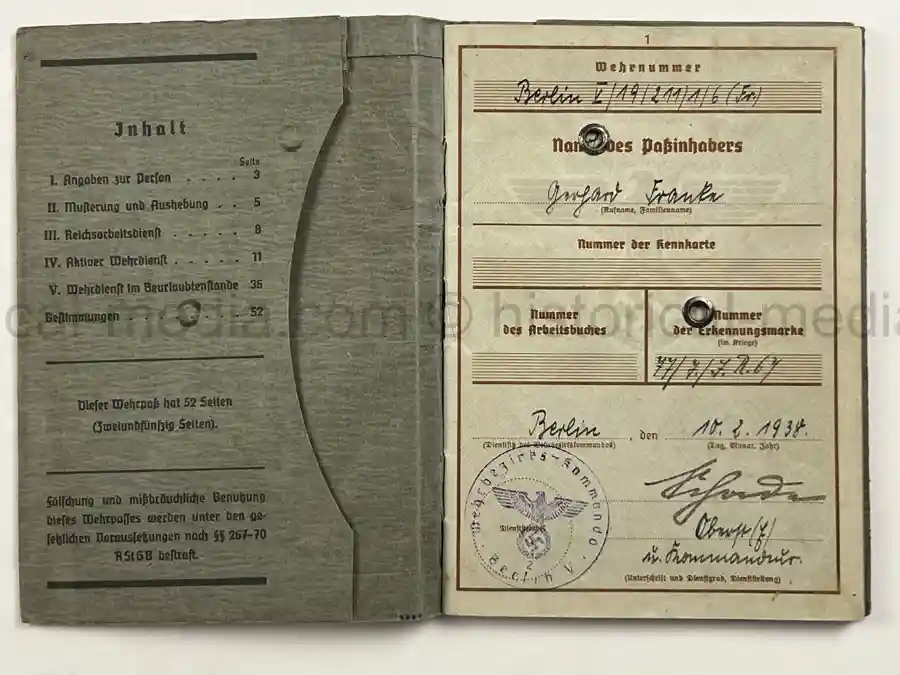
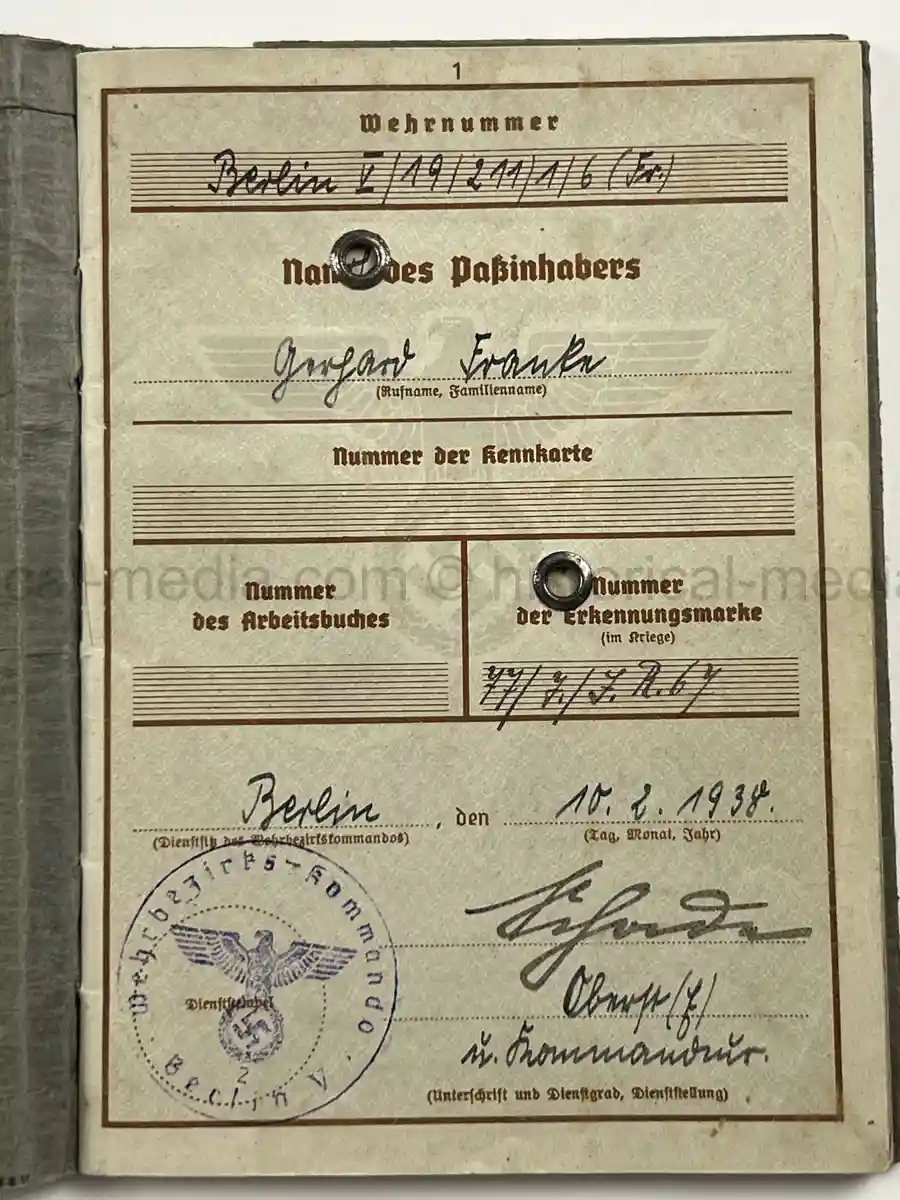
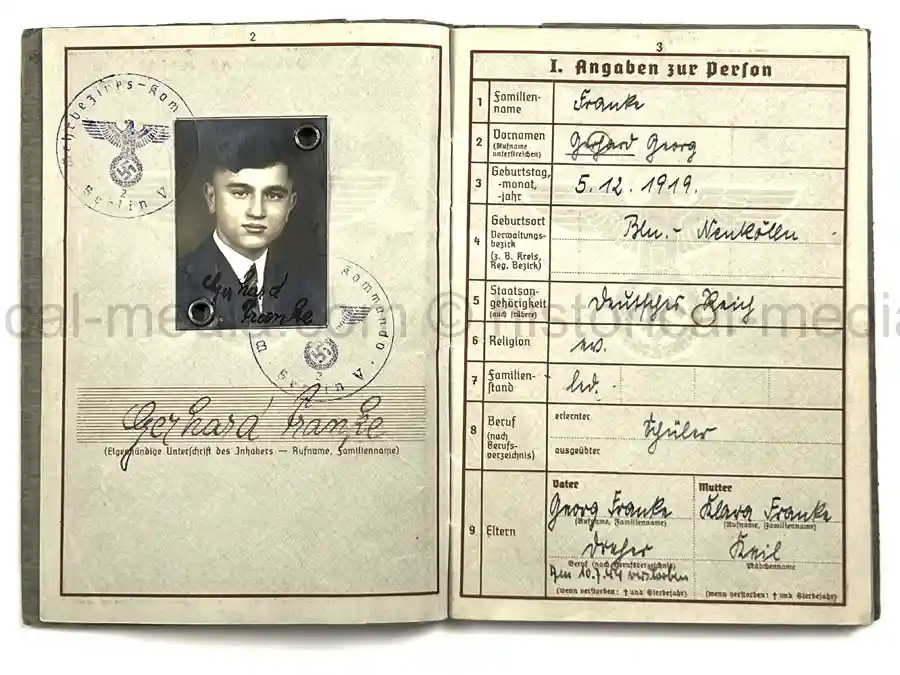
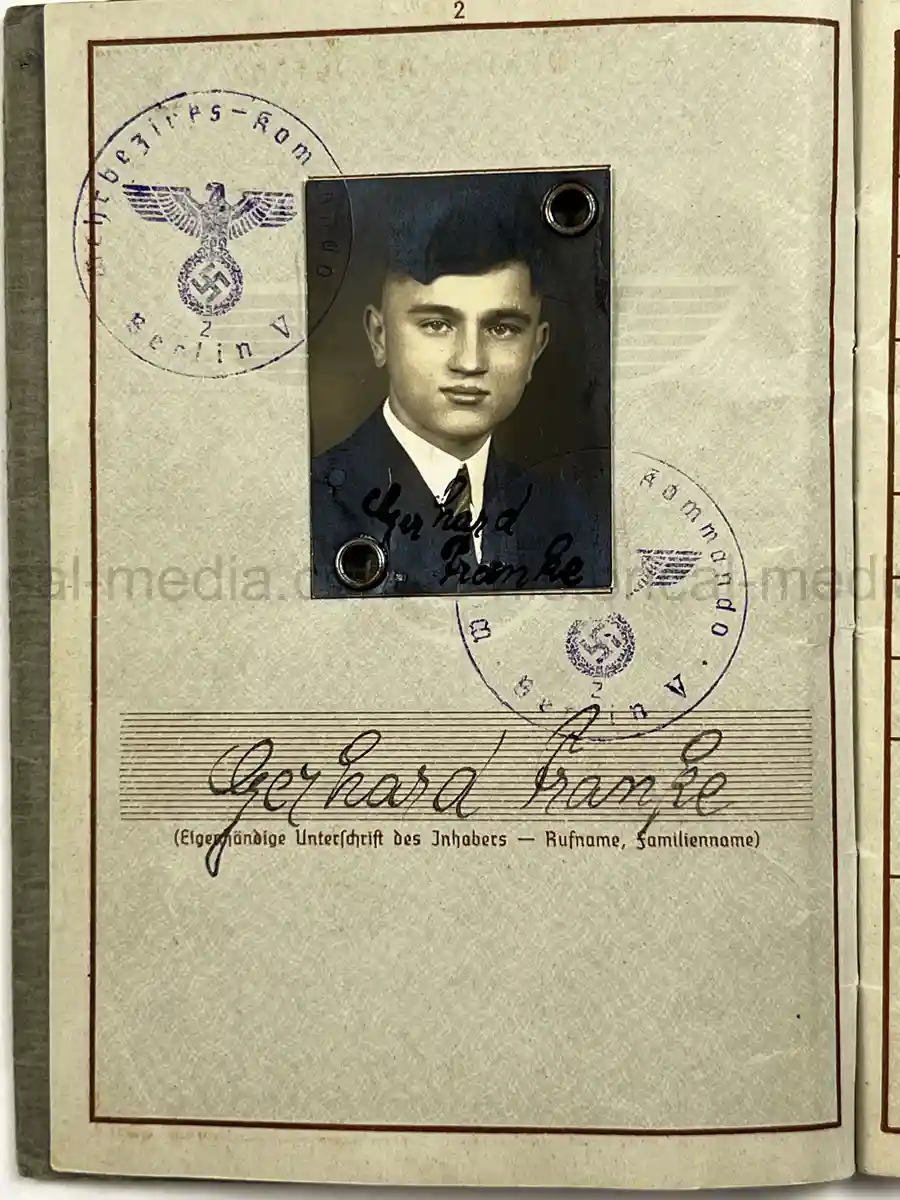
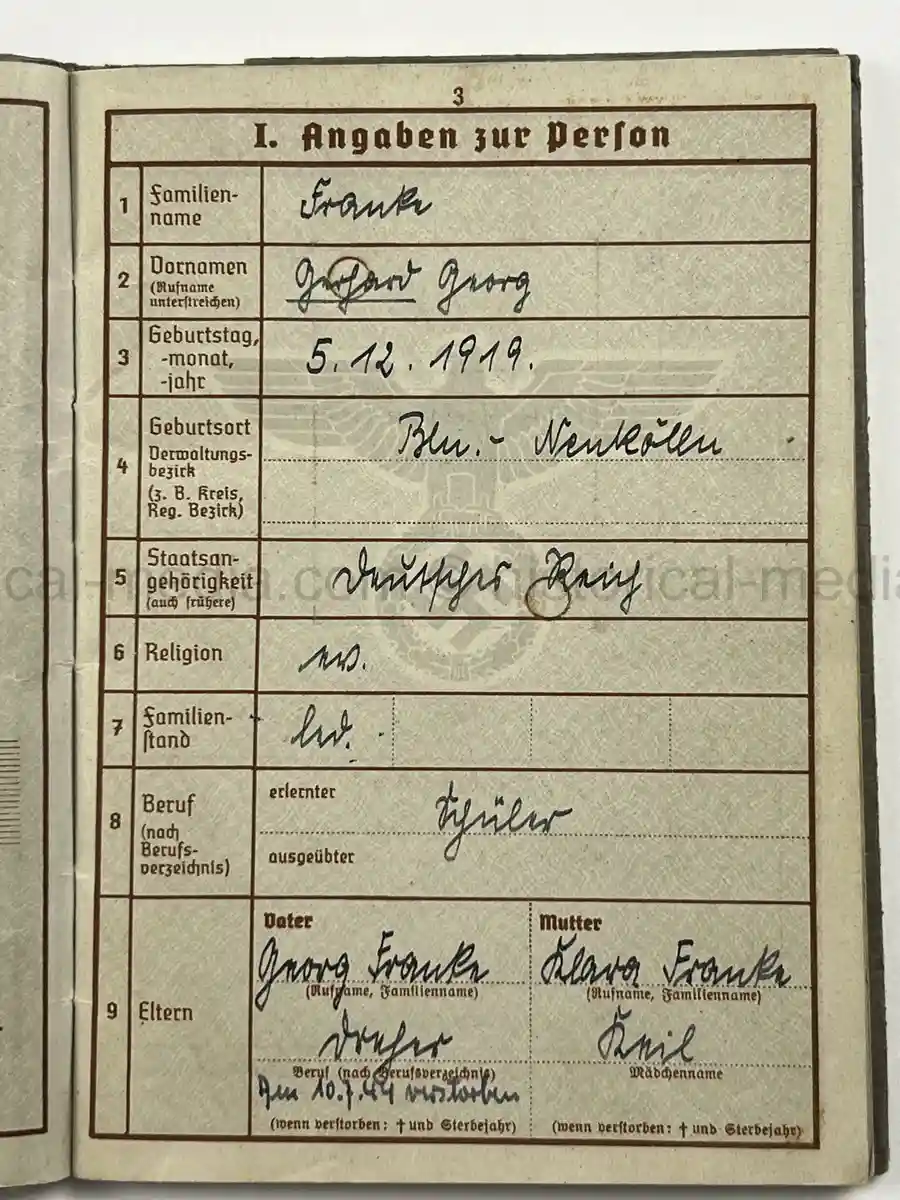
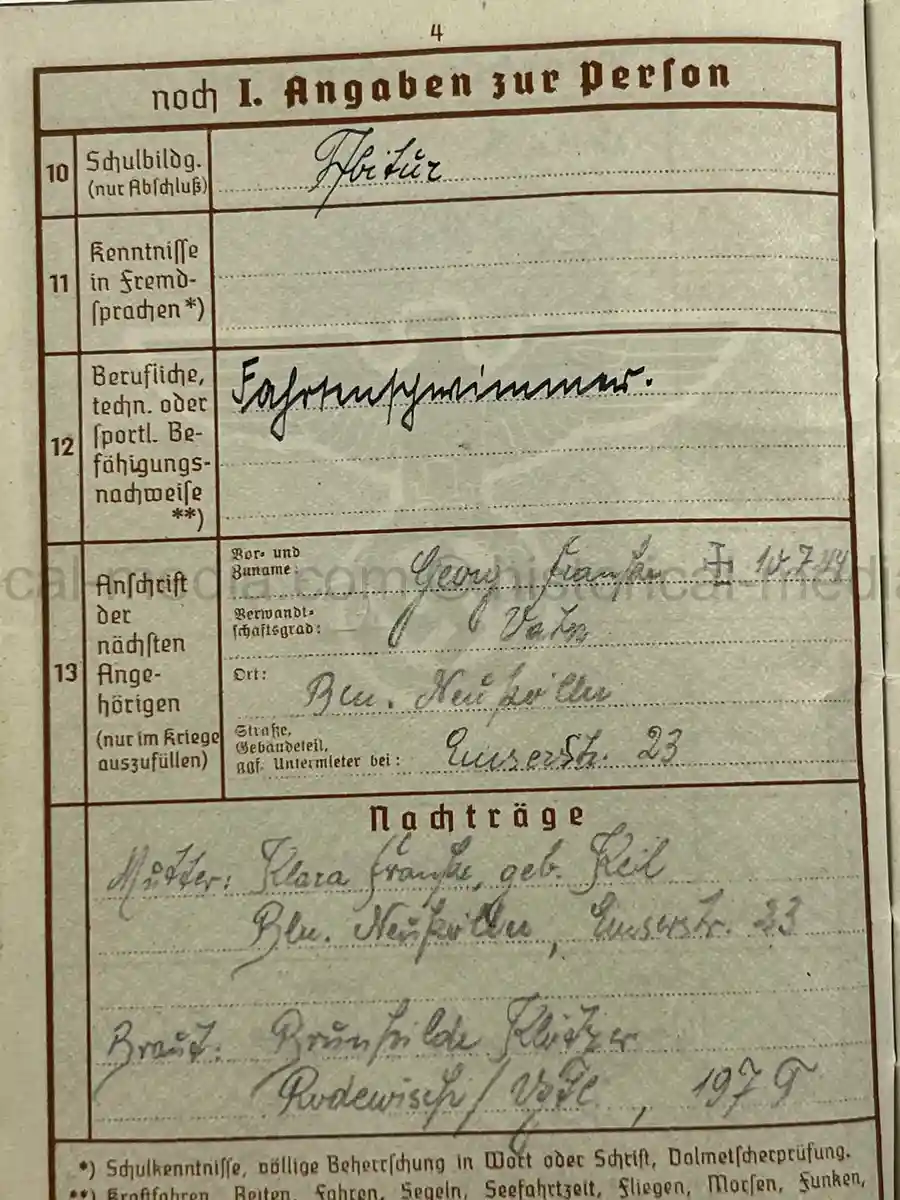
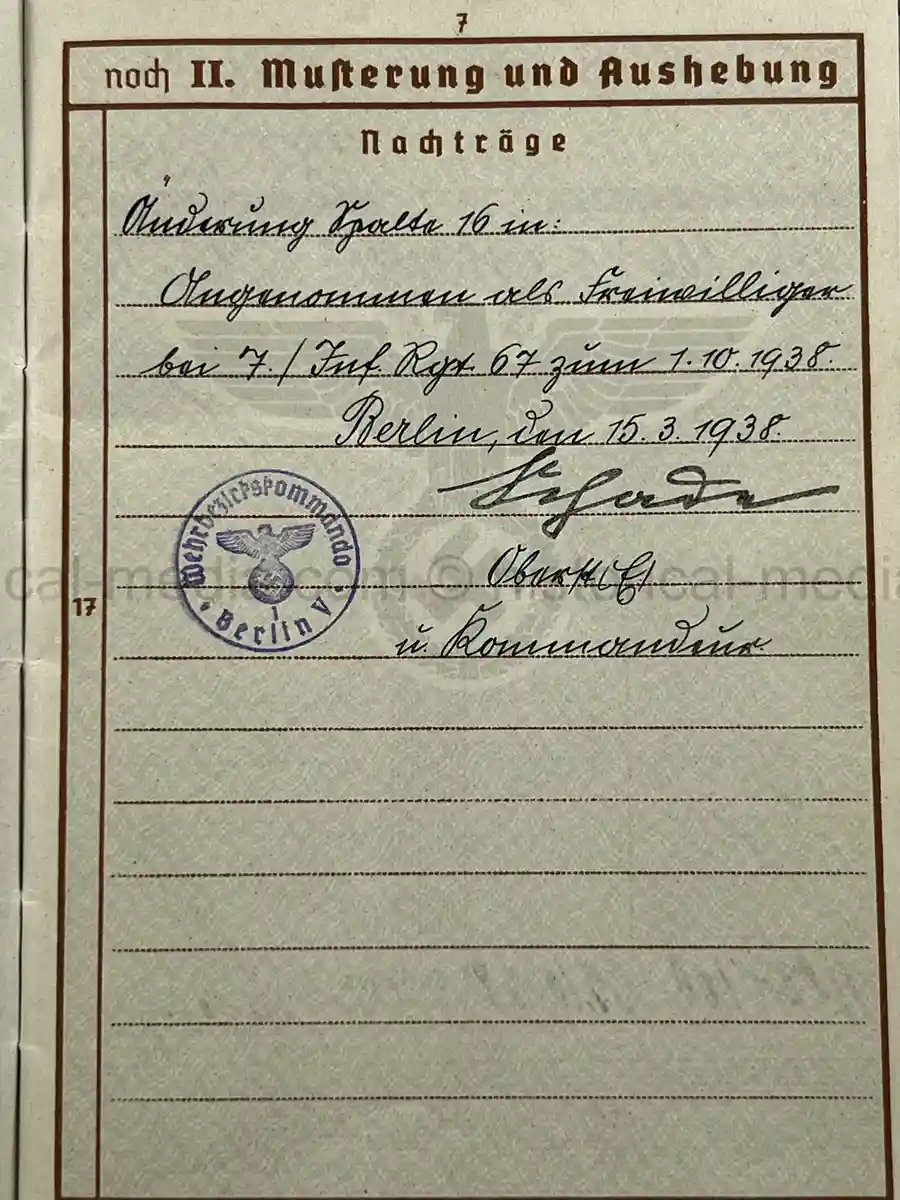
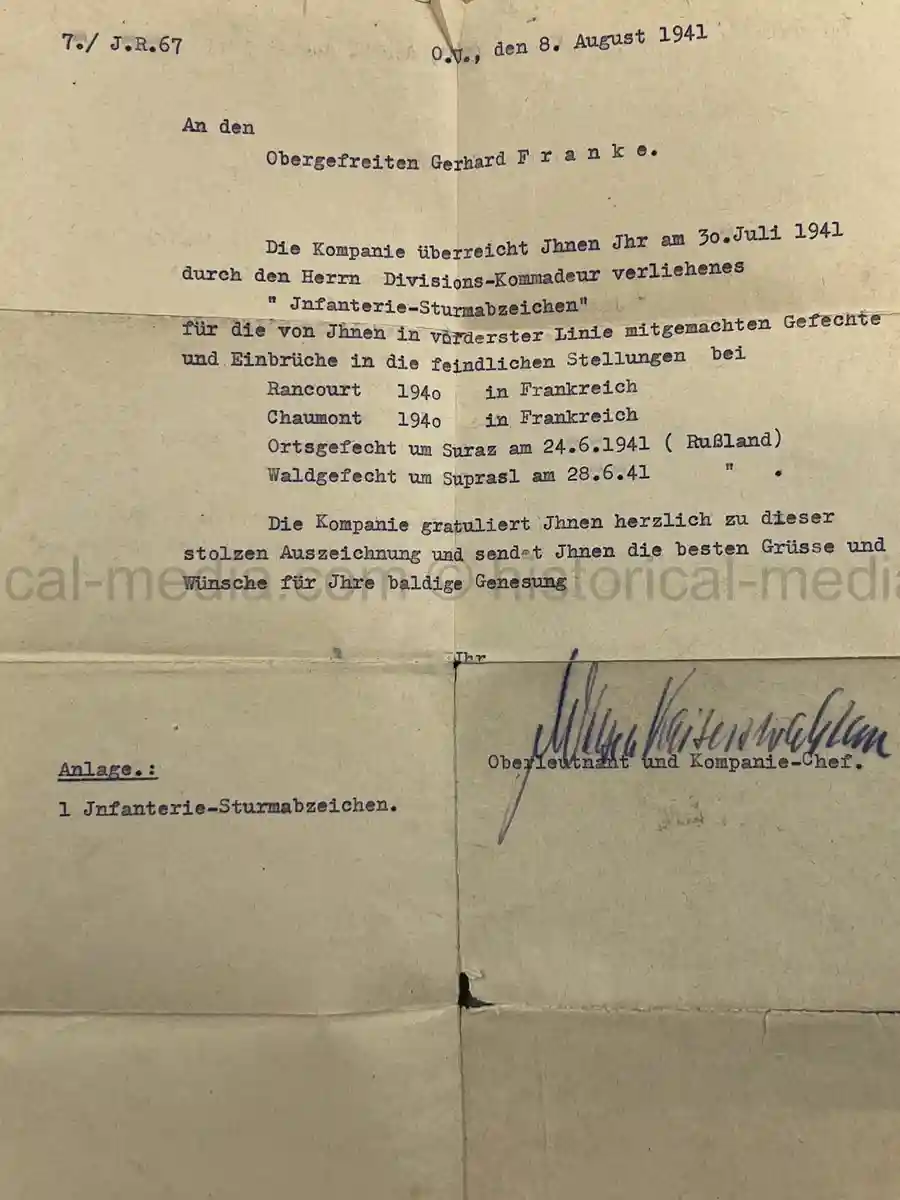
Extensively documented Heer Wehrpass issued to Unteroffizier Gerhard Georg FRANKE, born December 5, 1919, in Berlin-Neukölln. A student prior to entering military service, Franke volunteered for the German Army at the age of 18. Particularly noteworthy are his detailed handwritten campaign entries covering the Poland and Western Campaigns, his documented combat wound at Mogilev in July 1941, and an exceptional original letter from his company commander accompanying the award of his Infanterie-Sturmabzeichen. The letter specifically identifies four separate combat engagements in France and Russia for which he received the decoration.
PREWAR MILITARY SERVICE
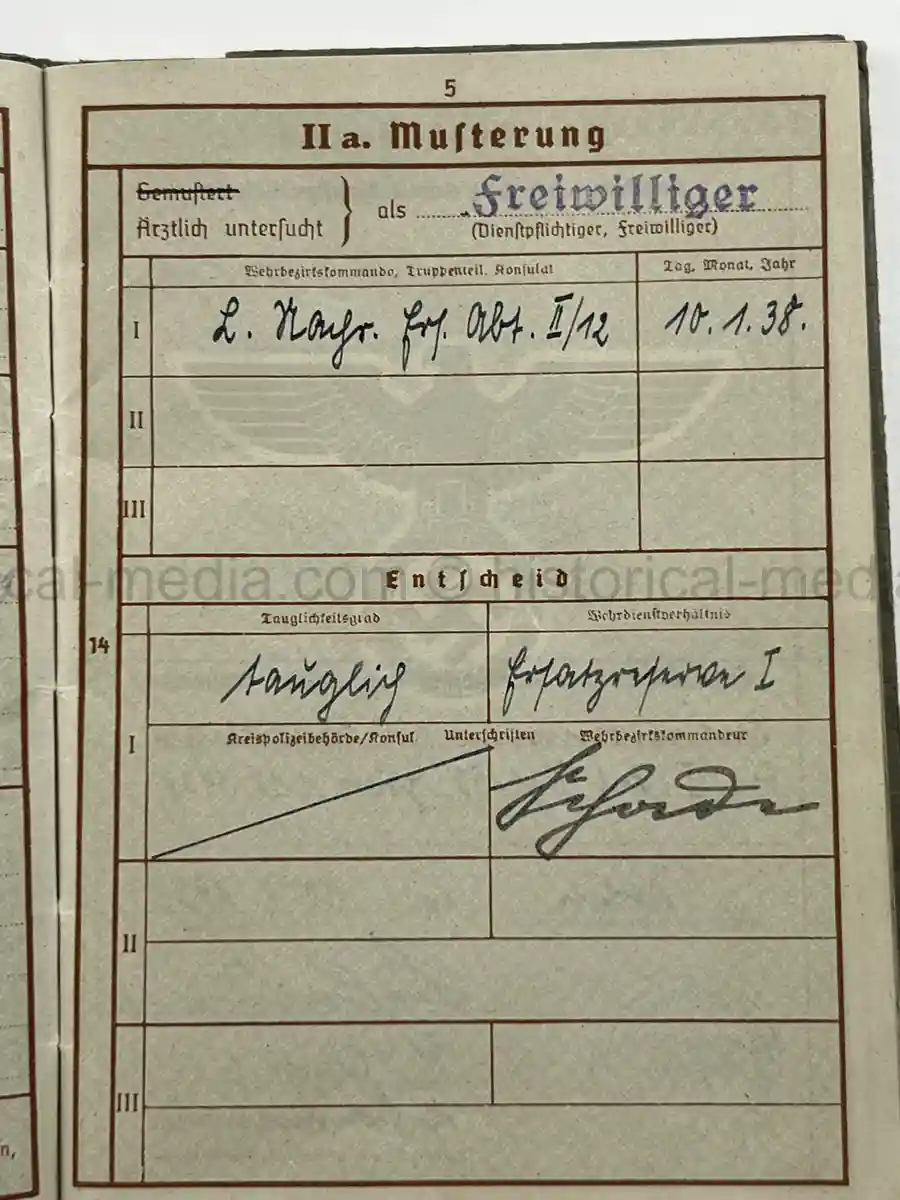
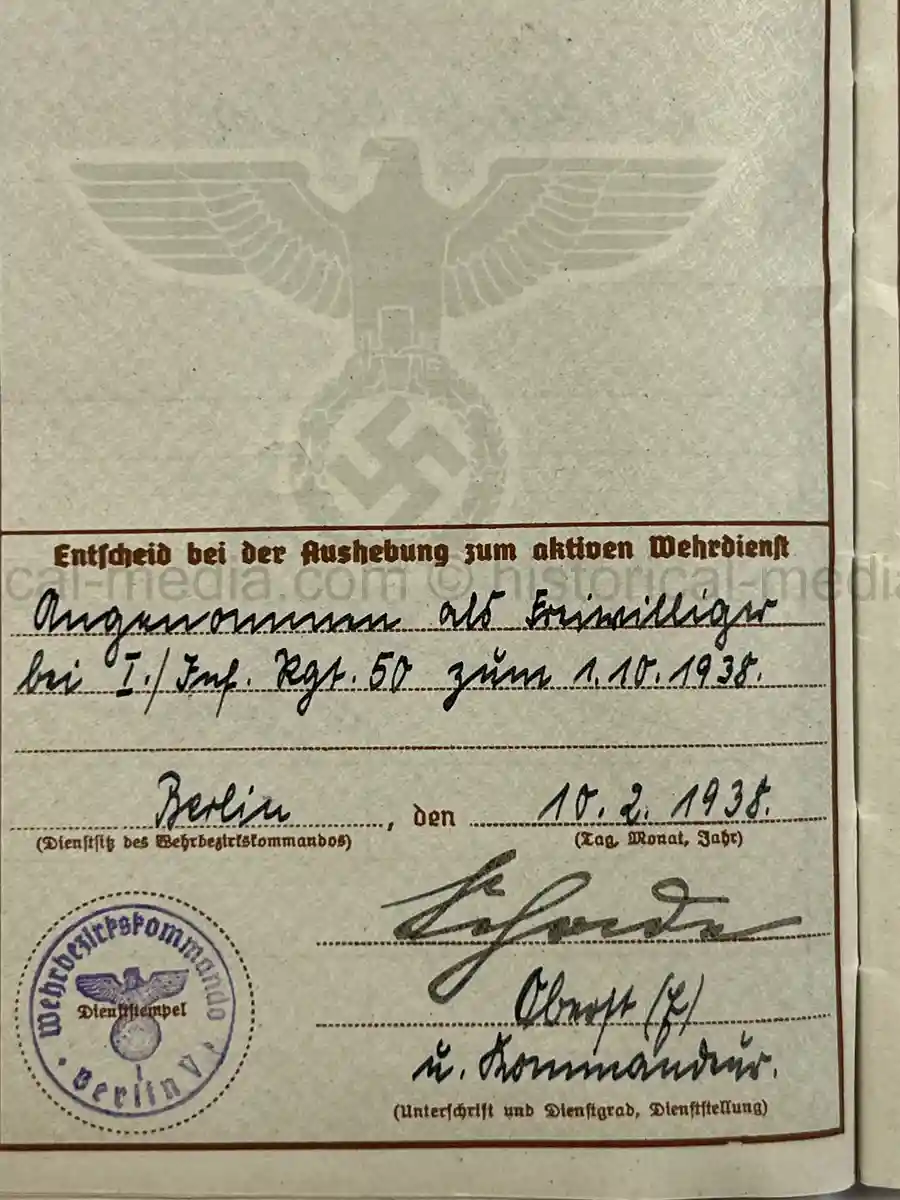
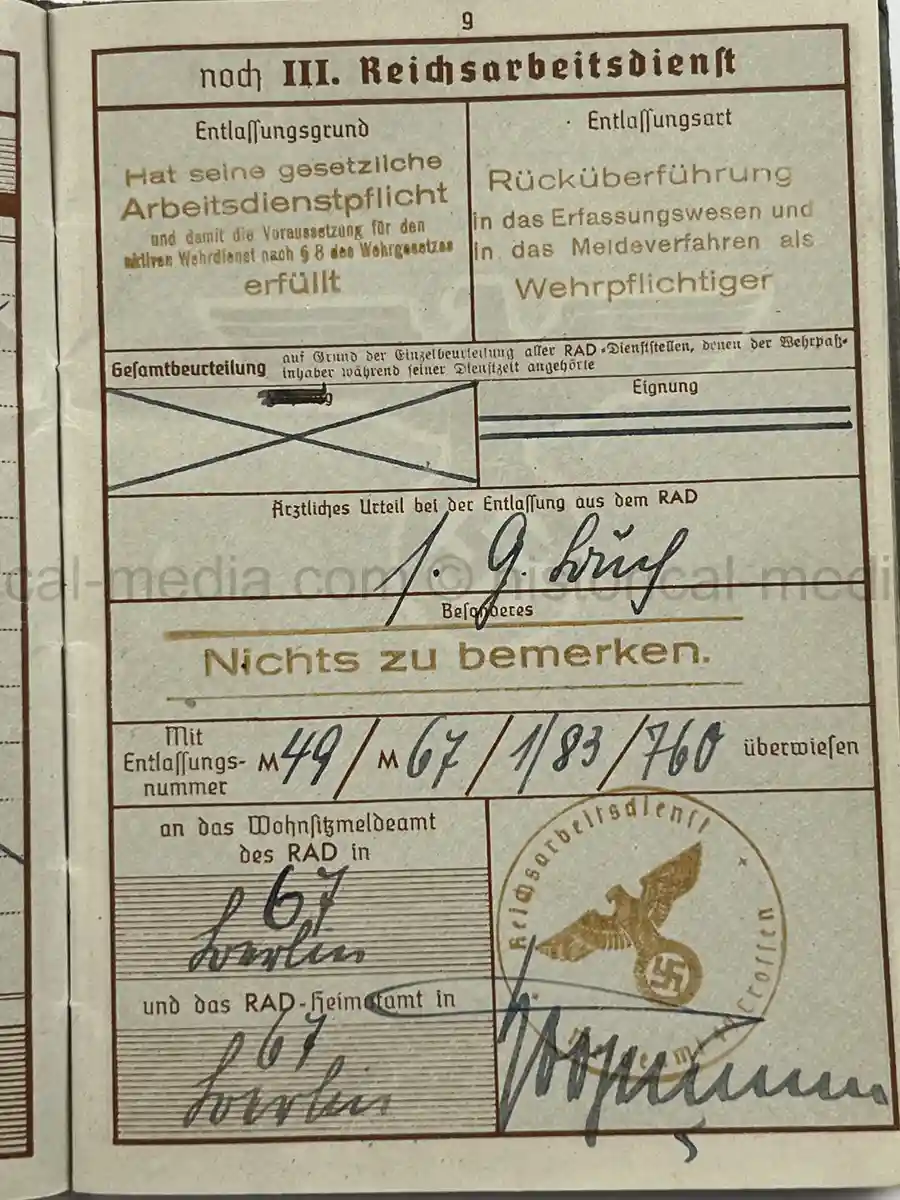
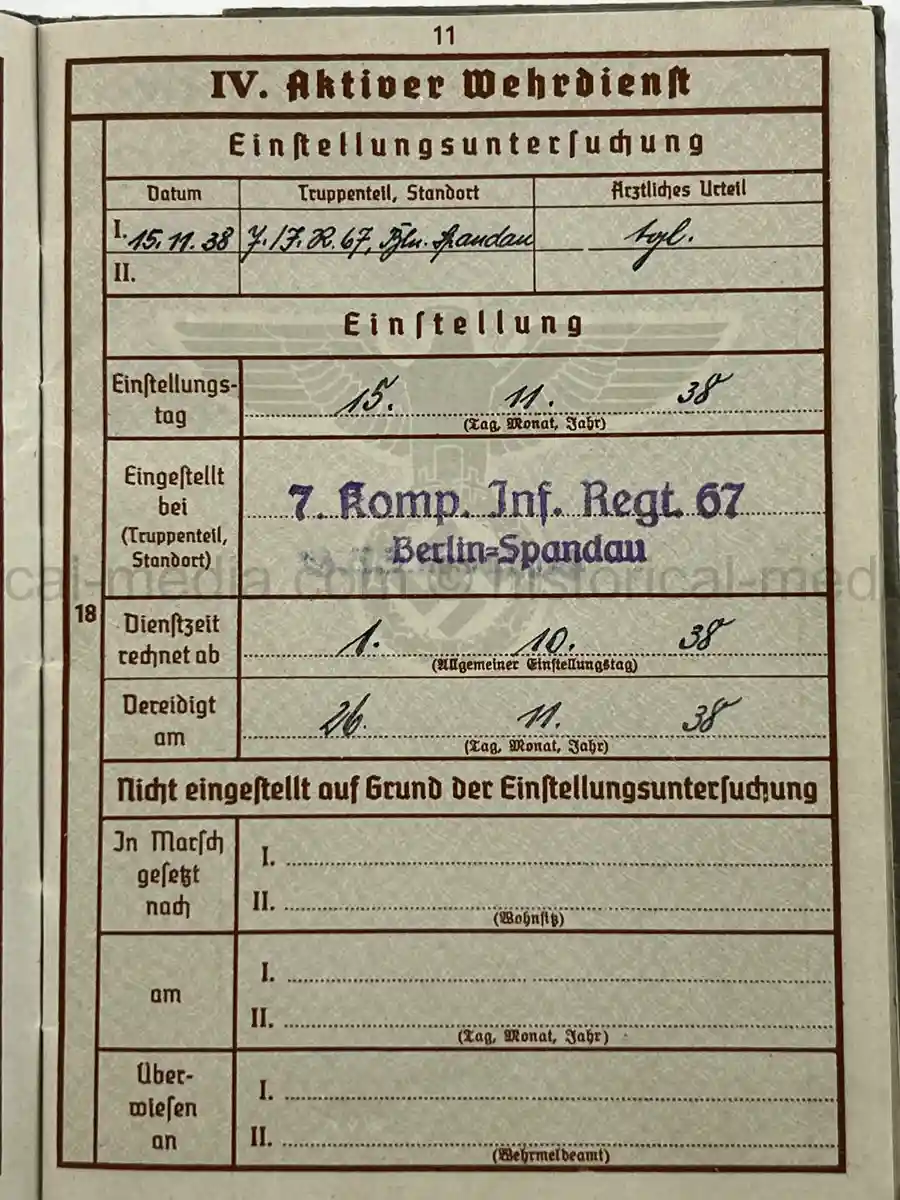
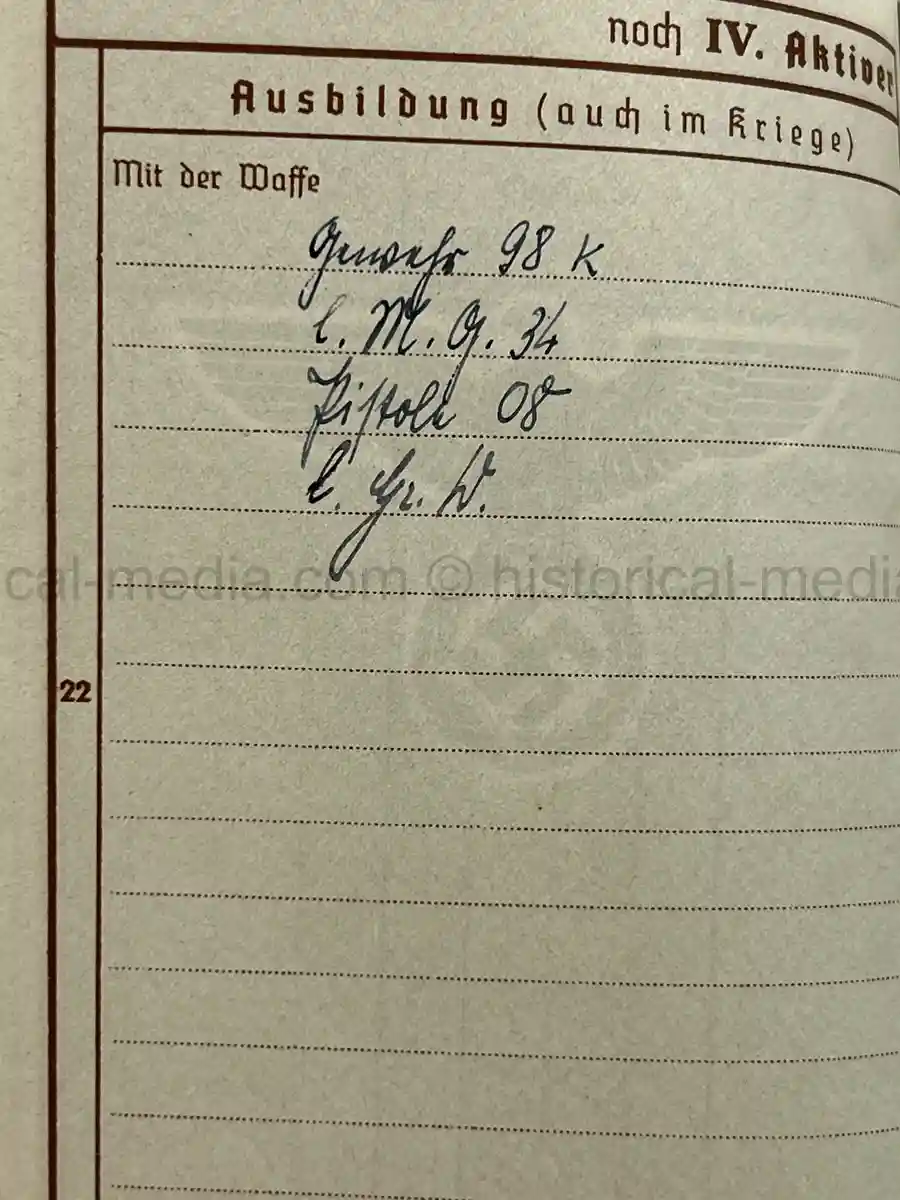
Following his Reichsarbeitsdienst (RAD) service, Franke entered active military service on November 15, 1938, with 7. Kompanie, Infanterie-Regiment 67 at Berlin-Spandau, taking his military oath on November 26, 1938. Weapons training entries include the Karabiner 98k, MG34, Pistole 08 and light grenade launcher.
UNIT ASSIGNMENTS
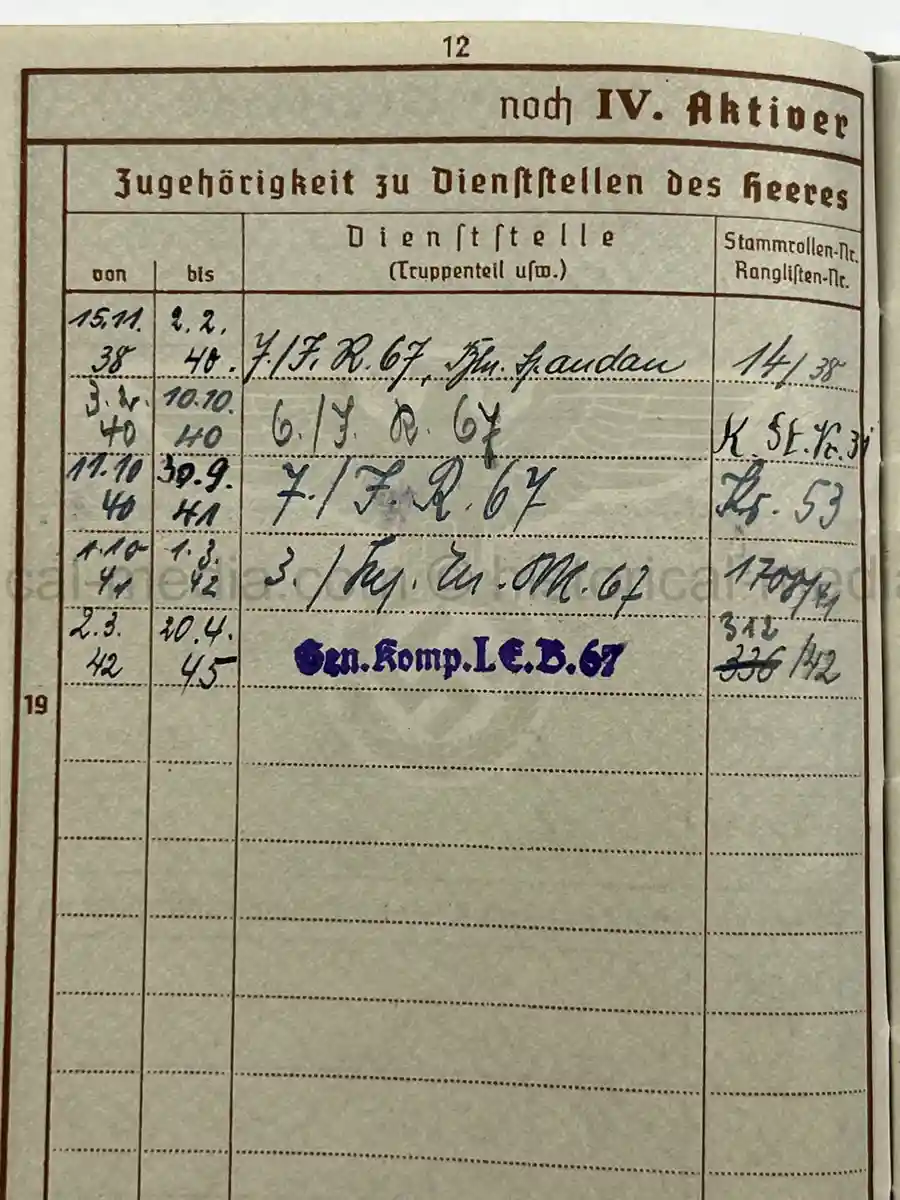
- 15.11.1938–02.02.1940 – 7./Infanterie-Regiment 67.
- 03.02.1940–10.10.1940 – 6./Infanterie-Regiment 67.
- 11.10.1940–30.09.1941 – 7./Infanterie-Regiment 67.
- 01.10.1941–01.03.1942 – 3./Infanterie-Ersatz-Bataillon 67.
- 02.03.1942–20.04.1945 – Genesenden-Kompanie, Infanterie-Ersatz-Bataillon 67.
Infanterie-Regiment 67 was established at Berlin-Spandau on October 15, 1935, as one of the three infantry regiments of the 23. Infanterie-Division, a prewar Berlin-Brandenburg formation headquartered in Potsdam. Generaloberst Hans von Seeckt, the influential former commander of the Reichswehr, was appointed honorary chief of the regiment in April 1936.
POLAND CAMPAIGN – 1939
Detailed handwritten campaign entries document Franke’s participation in the invasion of Poland with 7./Infanterie-Regiment 67:
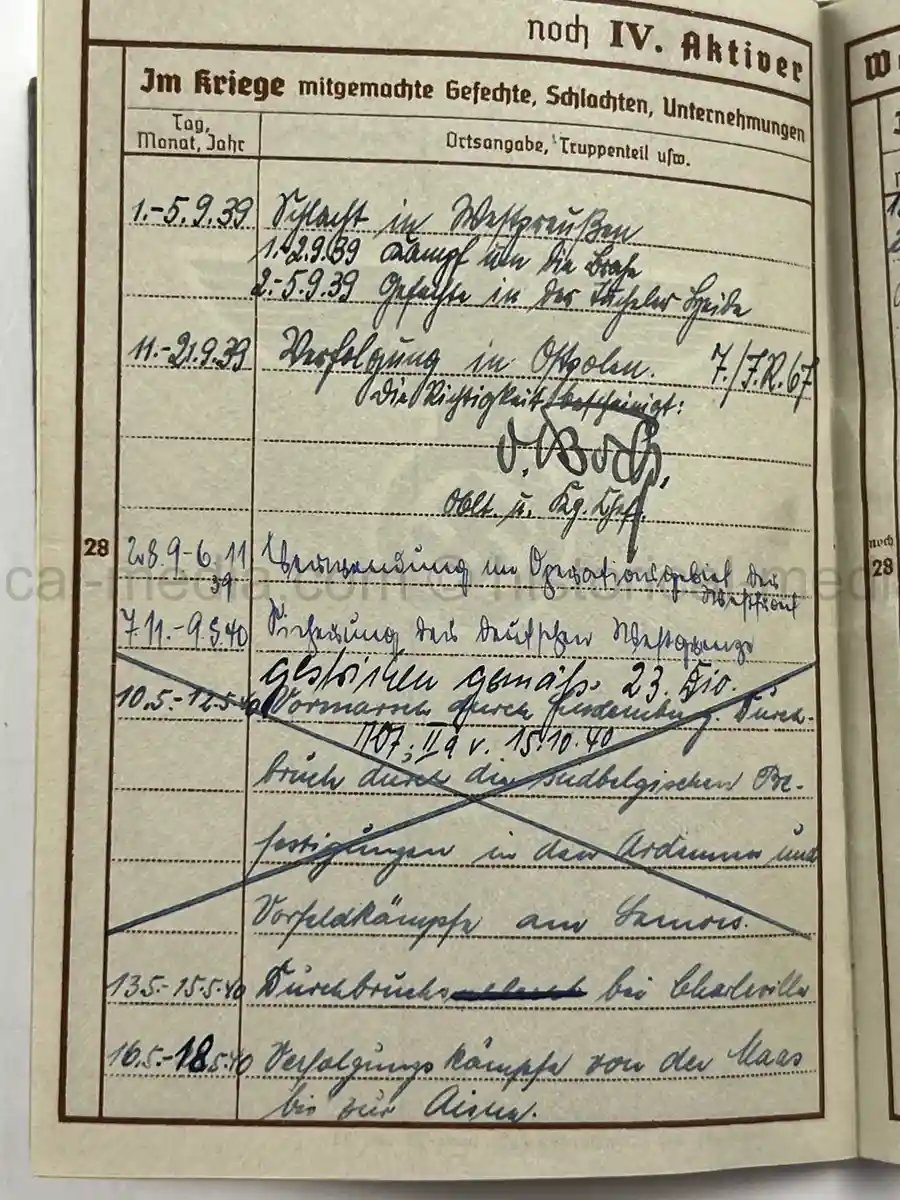
- September 1–5 – Schlacht in Westpreußen – Battle in West Prussia.
- September 1–2 – Kampf um die Brahe – Fighting for the Brahe River crossings.
- September 2–5 – Gefechte in der Tucheler Heide – Fighting in the Tuchola Forest.
- September 11–21 – Verfolgung in Ostpolen – Pursuit operations in eastern Poland.
During the Polish Campaign, the 23. Infanterie-Division served with the 4. Armee under Heeresgruppe Nord. Following operations through the Tuchola Forest and the advance toward Schwetz, the division was transferred through East Prussia and subsequently advanced from the Łomża region toward Białystok.
BELGIUM & FRANCE CAMPAIGN – 1940
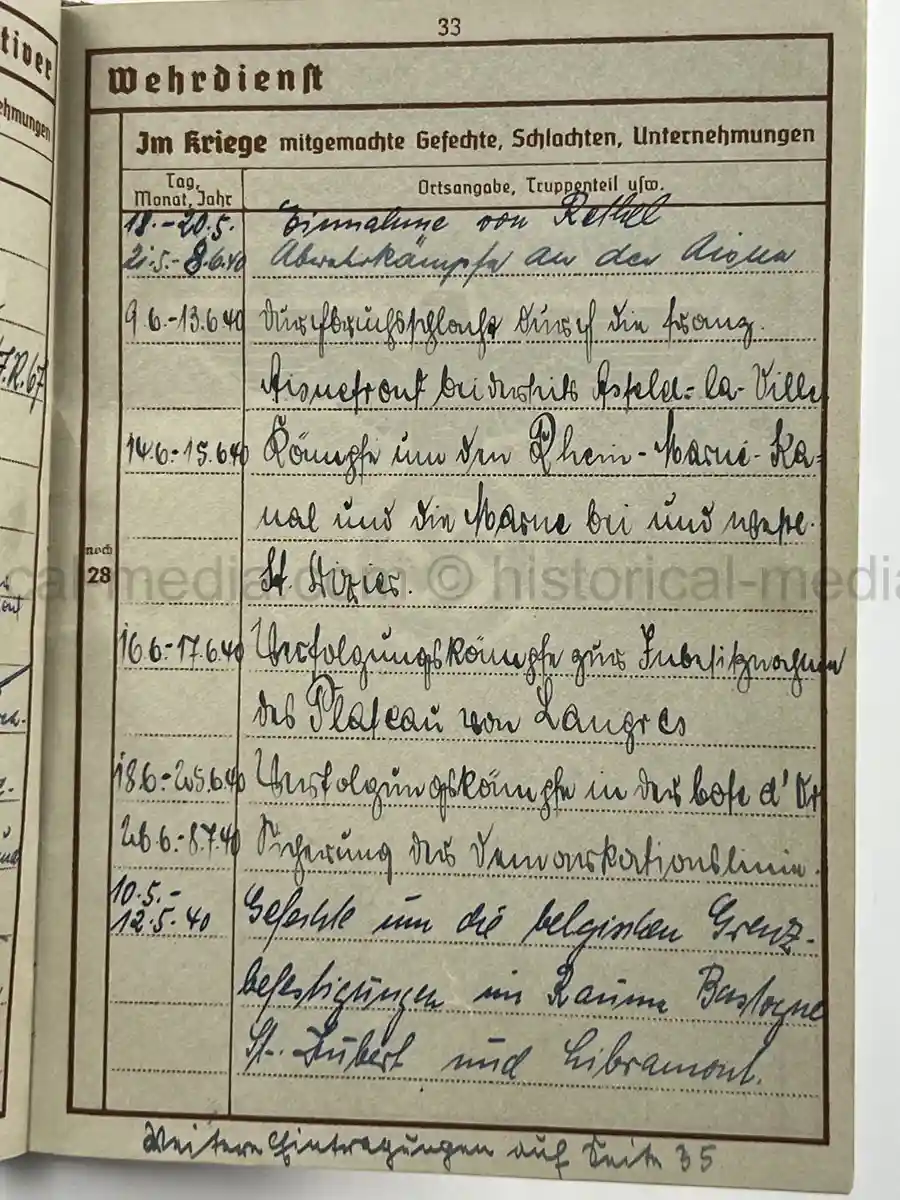
Especially extensive handwritten campaign entries document the Western Campaign, preceded by security duties along Germany’s western frontier from November 1939 through May 1940.
The recorded engagements include:
- May 10–12 – Fighting for the Belgian frontier fortifications in the Bastogne, St. Hubert and Libramont region.
- May 13–15 – Breakthrough operations near Charleville.
- May 16–18 – Pursuit battles from the Meuse to the Aisne.
- May 18–20 – Capture of Rethel.
- May 21–June 8 – Defensive fighting along the Aisne.
- June 9–13 – Breakthrough of the French Aisne positions near Asfeld-la-Ville.
- June 14–15 – Fighting for the Rhine-Marne Canal and the Marne River near St. Dizier.
- June 16–17 – Pursuit operations toward the Plateau de Langres.
- June 18–25 – Fighting in the Côte-d’Or region.
- June 26–July 8 – Security duties along the French demarcation line.
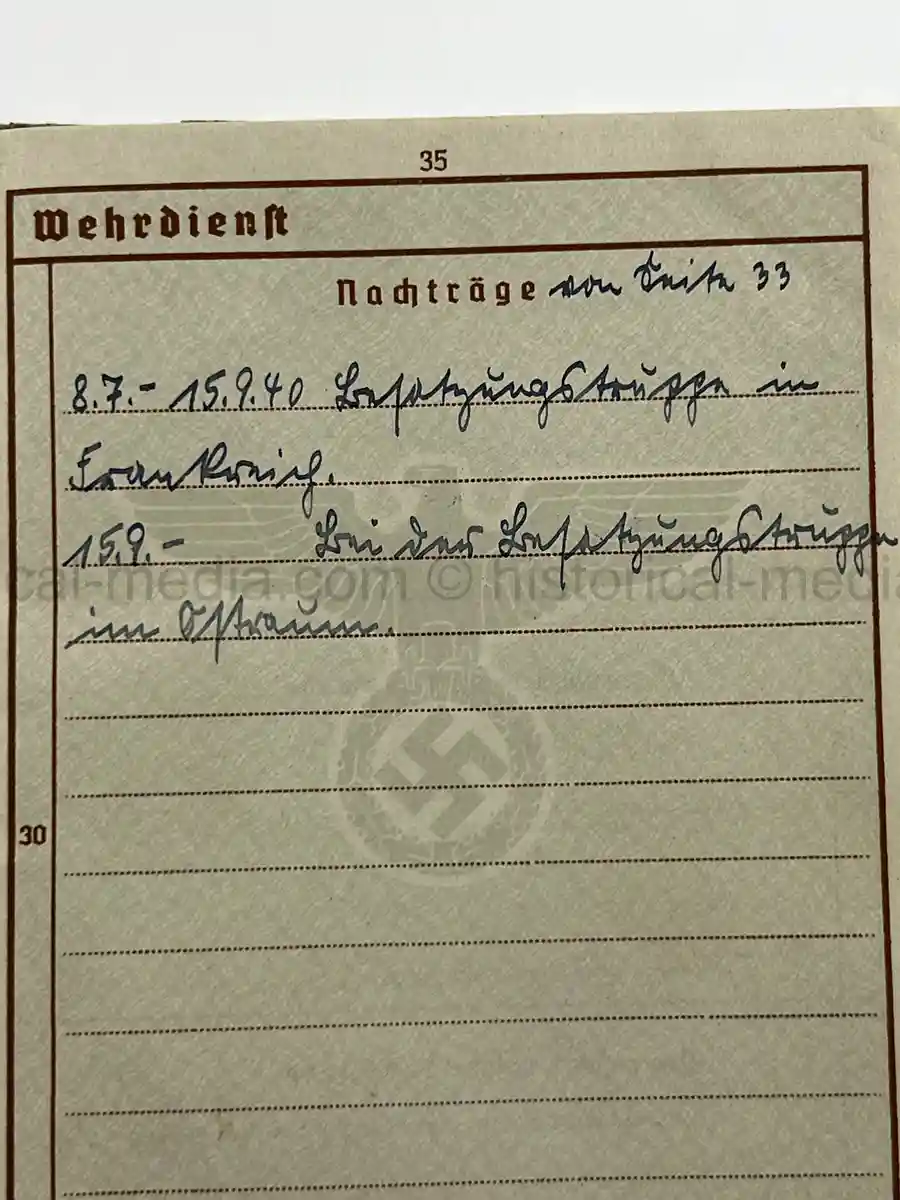
Further entries document occupation duties in France through September 15, 1940, followed by service in the eastern operational area.
OPERATION BARBAROSSA – WOUNDED AT MOGILEV – 1941
Following its transfer to East Prussia, the 23. Infanterie-Division participated in the invasion of the Soviet Union on June 22, 1941, serving under Heeresgruppe Mitte. The division took part in the major opening operations in the Białystok-Minsk sector before advancing farther into Soviet territory.
Franke’s participation in combat operations at Suraz on June 24, 1941, and in the forest fighting near Suprasl on June 28, 1941, is specifically documented in the accompanying company commander’s letter.
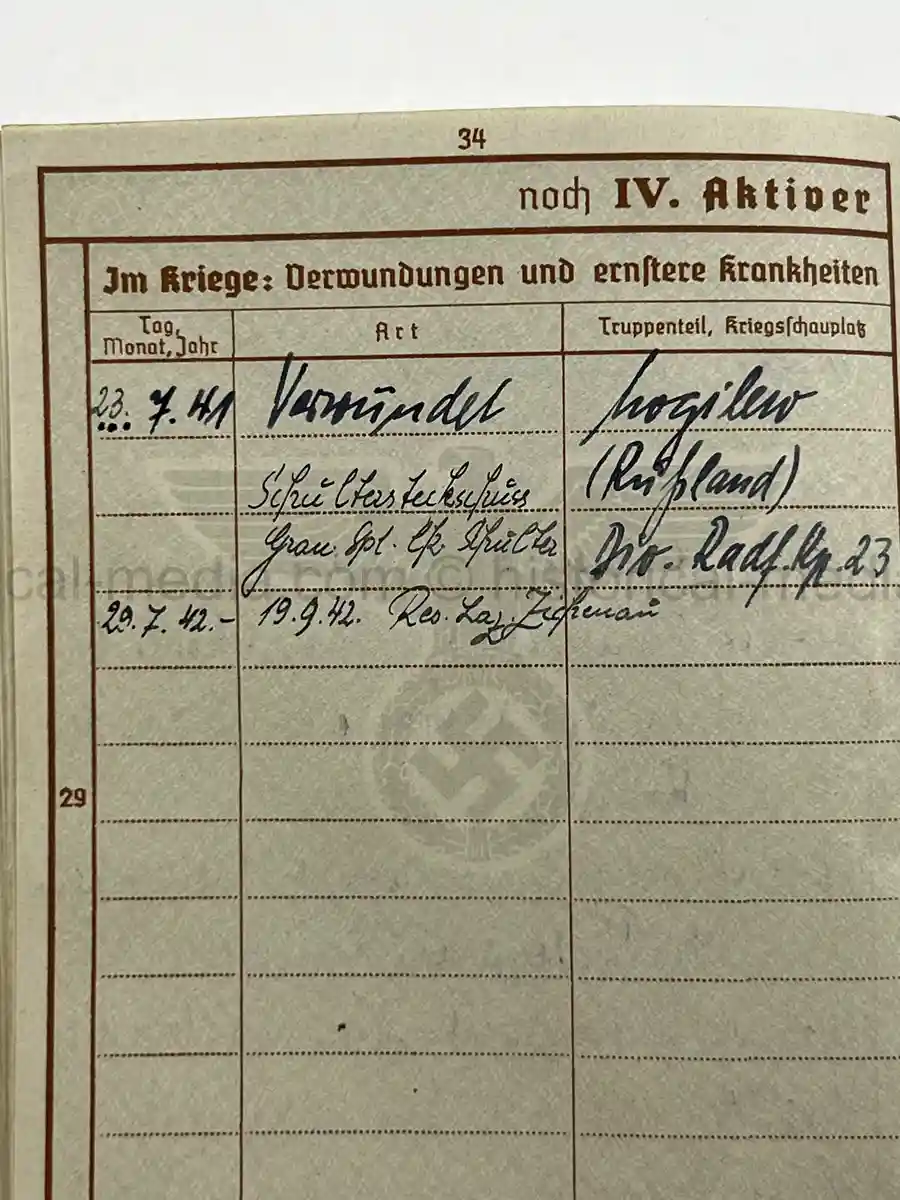
Of particular interest is the handwritten wound entry on page 34, which identifies MOGILEV as the location of his combat wound on July 23, 1941. This coincided with the prolonged fighting for the strategically important city on the Dnieper River. The medical entry references a splinter injury involving the left shoulder.
Following his wound, Franke was transferred to Infanterie-Ersatz-Bataillon 67. A further medical entry documents hospitalization from July 29 through September 19, 1942. He subsequently remained assigned to the battalion’s Genesenden-Kompanie (convalescent company).
ORIGINAL INFANTERIE-STURMABZEICHEN AWARD LETTER – AUGUST 8, 1941
A highlight of this grouping is an original typewritten letter from 7./Infanterie-Regiment 67, dated August 8, 1941, addressed personally to Obergefreiter Gerhard Franke and signed by his company commander, an Oberleutnant.
The letter informs Franke that his company is forwarding the Infantry Assault Badge awarded by the divisional commander on July 30, 1941, in recognition of his frontline participation in four specific combat engagements:
- Rancourt, France – 1940.
- Chaumont, France – 1940.
- Fighting in the town of Suraz, Russia – June 24, 1941.
- Forest fighting near Suprasl, Russia – June 28, 1941.
The company commander congratulates Franke on the decoration and extends the company’s greetings and wishes for his speedy recovery. The Infantry Assault Badge itself is listed as the original enclosure to the letter.
A particularly interesting document that goes considerably beyond a standard award certificate by identifying the individual combat engagements associated with the decoration. The original letter directly corresponds to the award entry in the Wehrpass.
AWARDS & DECORATIONS
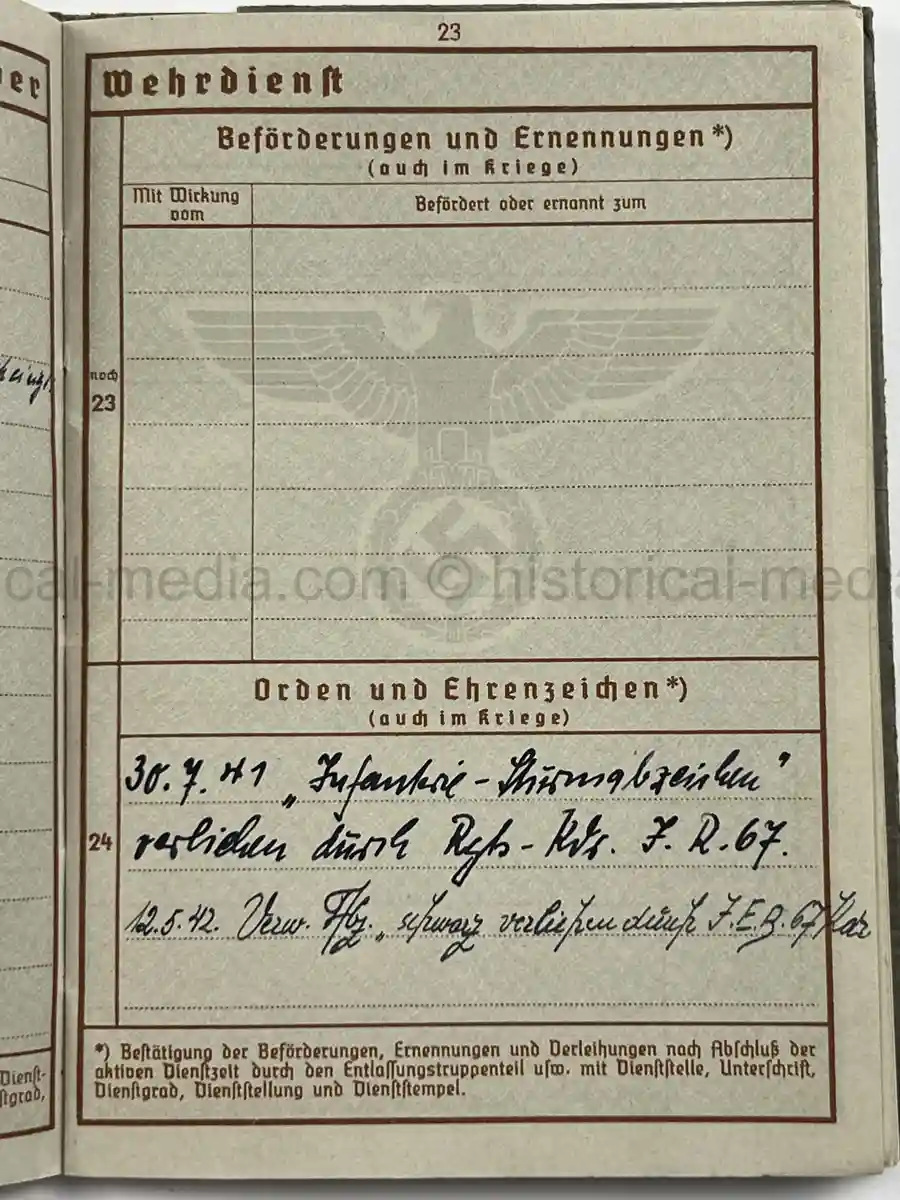
- 30.07.1941 – Infanterie-Sturmabzeichen – Infantry Assault Badge.
- 12.05.1942 – Verwundetenabzeichen in Schwarz – Black Wound Badge.
PROMOTIONS
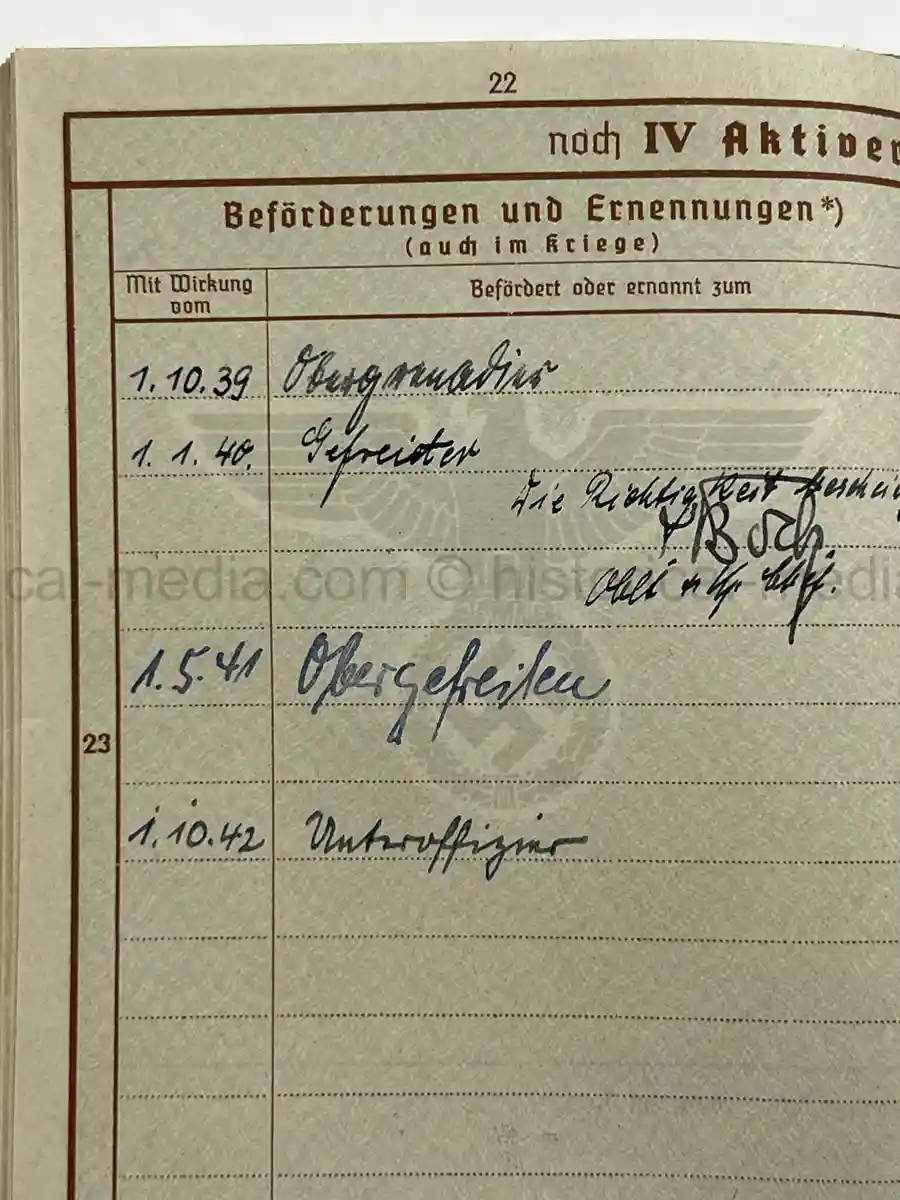
- 01.10.1939 – Obergrenadier.
- 01.01.1940 – Gefreiter.
- 01.05.1941 – Obergefreiter.
- 01.10.1942 – Unteroffizier.
DISCHARGED DURING THE BATTLE OF BERLIN – APRIL 20, 1945
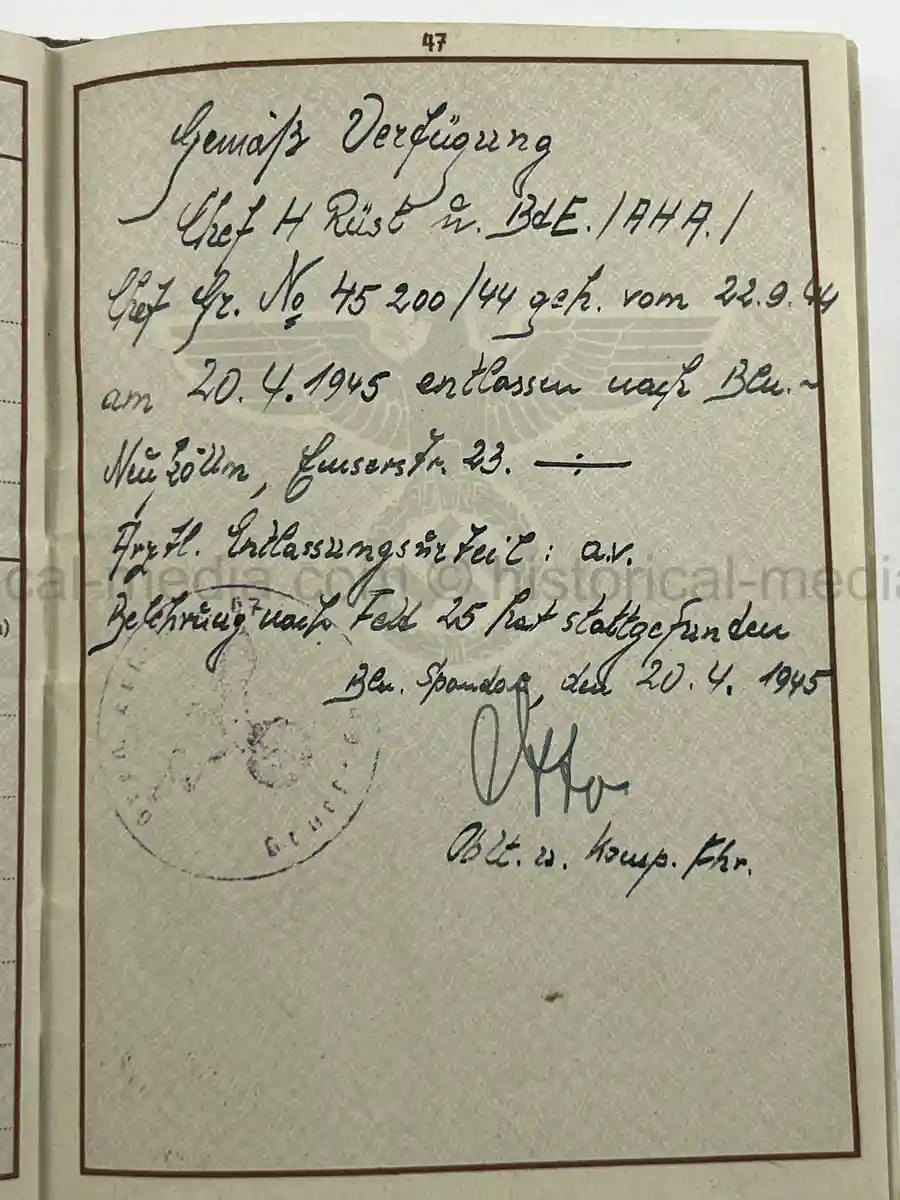
An exceptionally interesting final handwritten discharge entry on page 47 is dated April 20, 1945, at Berlin-Spandau. Franke was discharged to his home address at Emser Straße 23 in Berlin-Neukölln, just as Soviet forces were approaching the German capital during the final Battle of Berlin.
An excellent Wehrpass and accompanying document grouping covering prewar military service, three major WWII campaigns, a documented combat wound at Mogilev, two combat decorations and an exceptionally late discharge in Berlin. The original Infantry Assault Badge letter identifying four individual combat engagements in France and Russia is particularly noteworthy.
“`