
Description
WEHRPASS & MEDICAL DOCUMENT – 27. INFANTERIE-DIVISION – 10. PANZER-DIVISION – AUSTRIAN ANSCHLUSS, POLAND, FRANCE & BATTLE OF MOSCOW
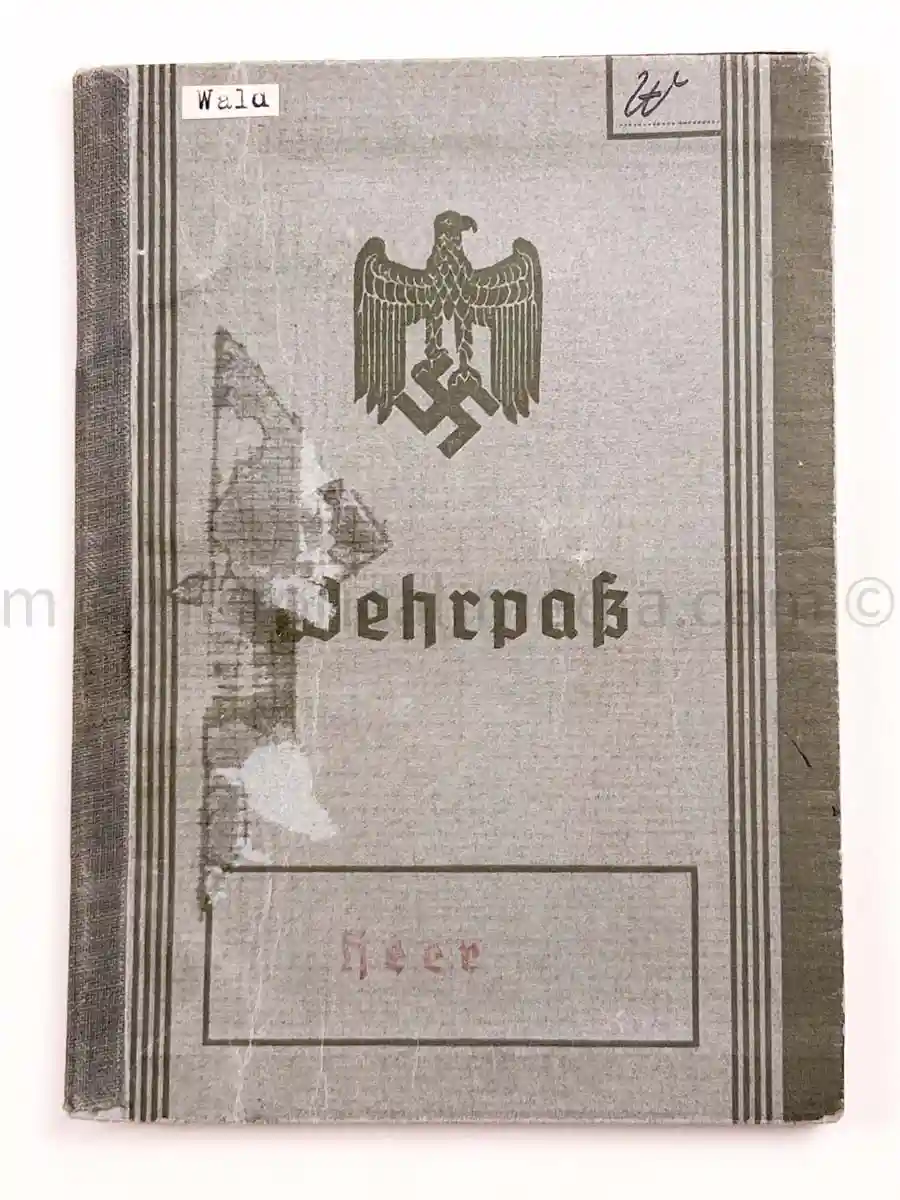
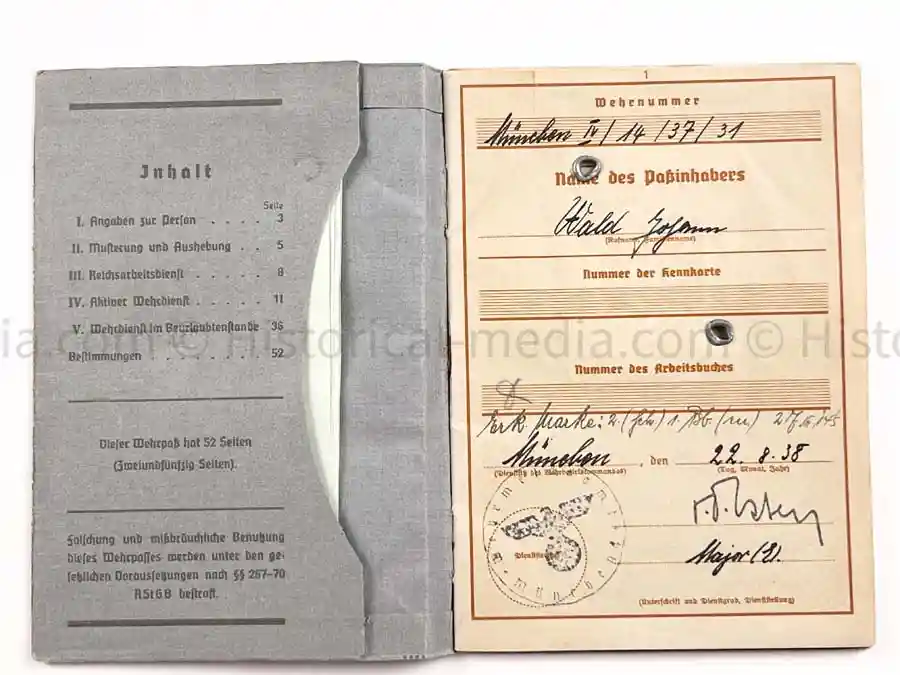
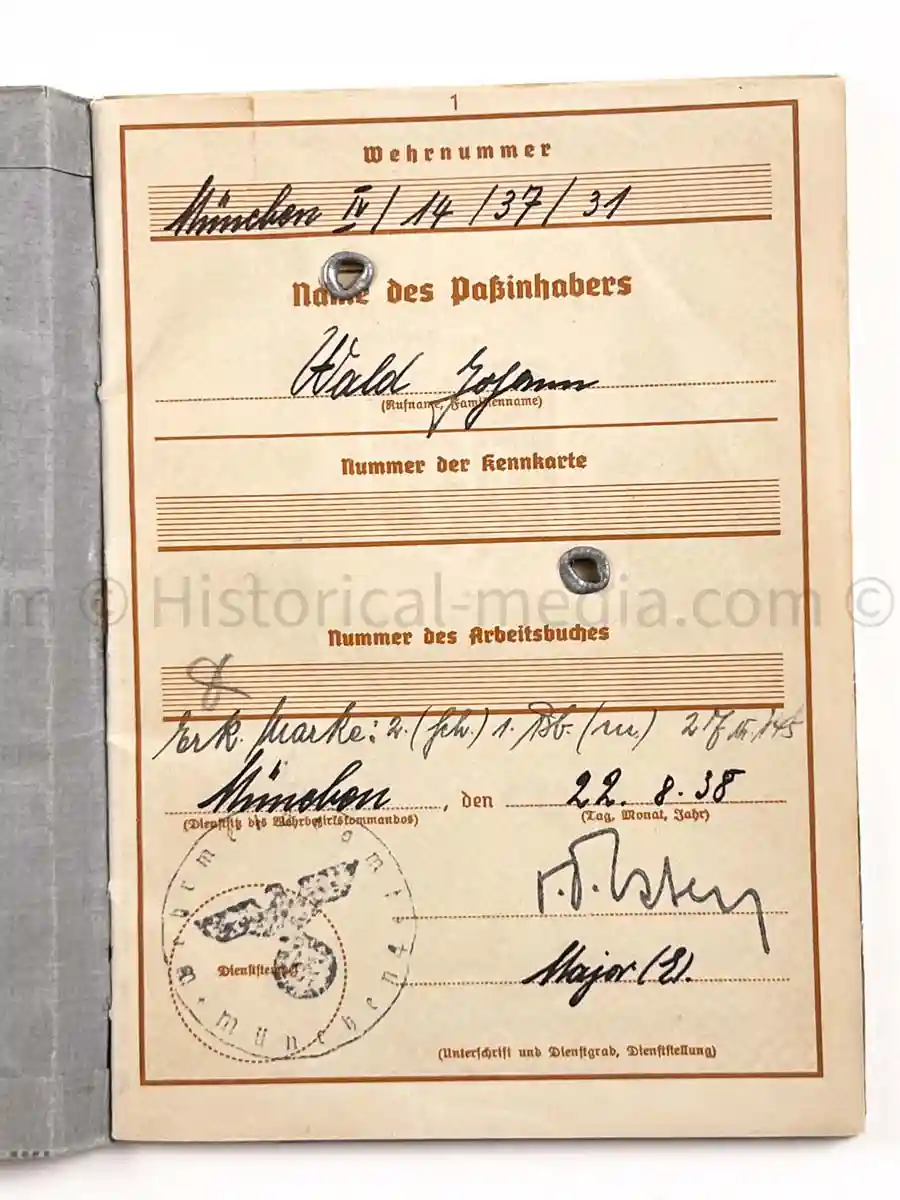
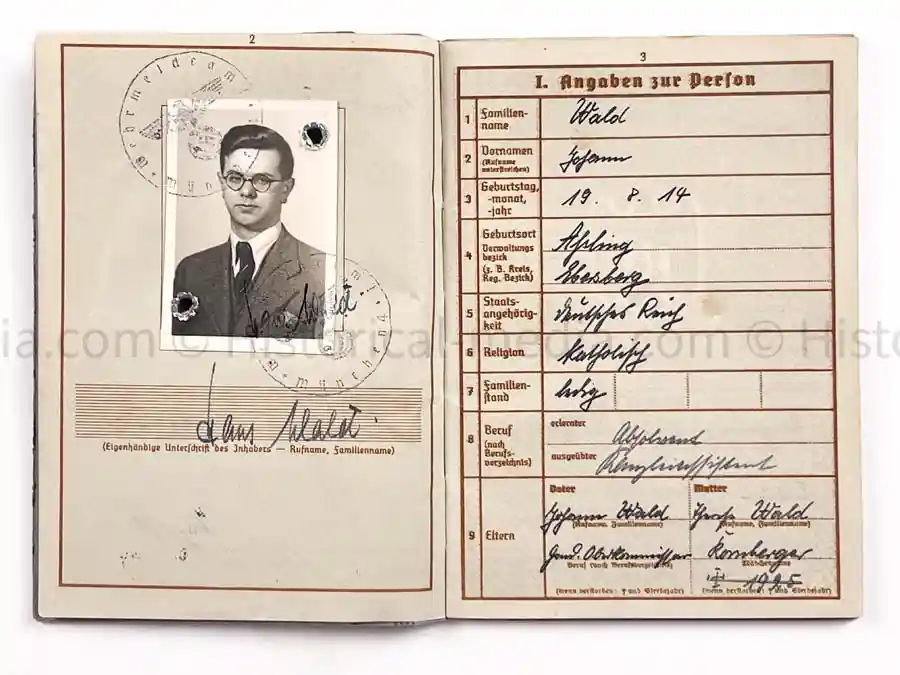
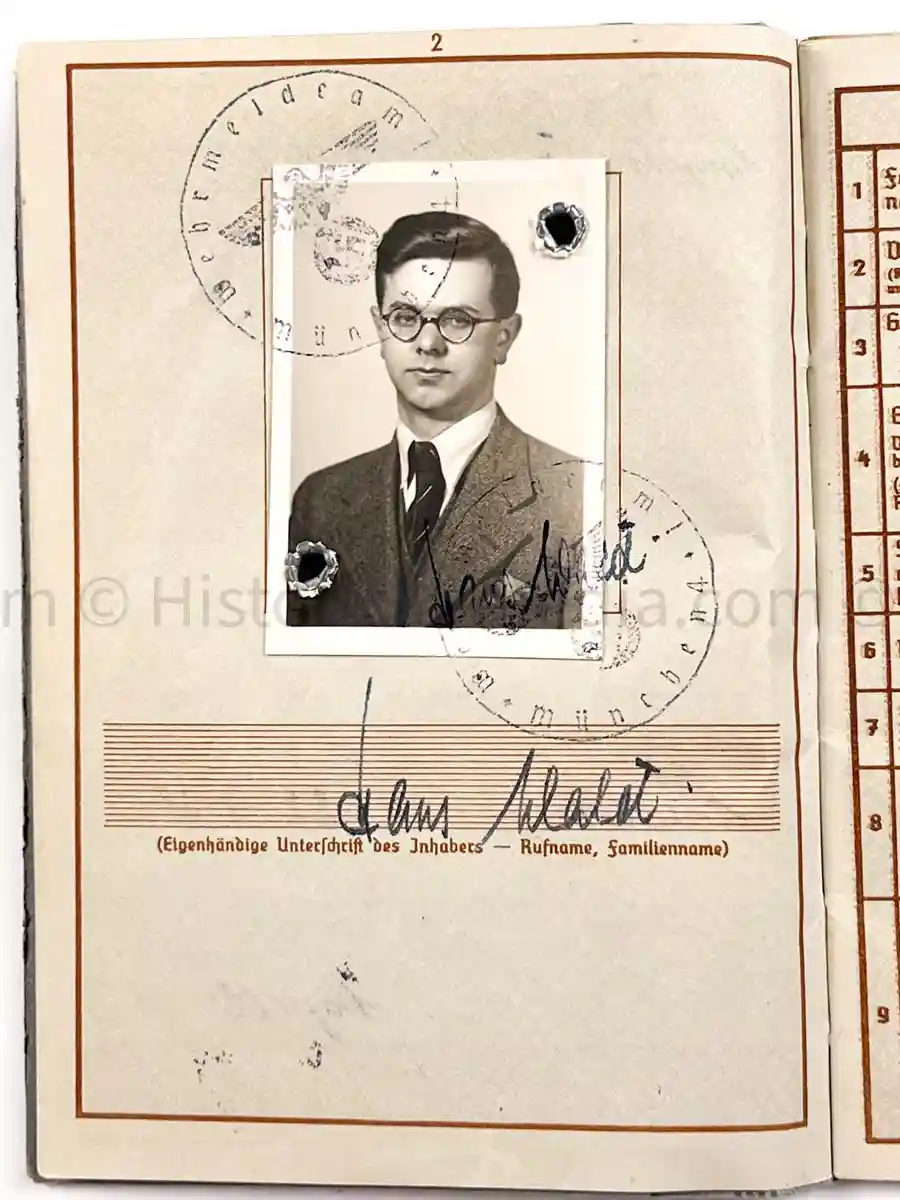
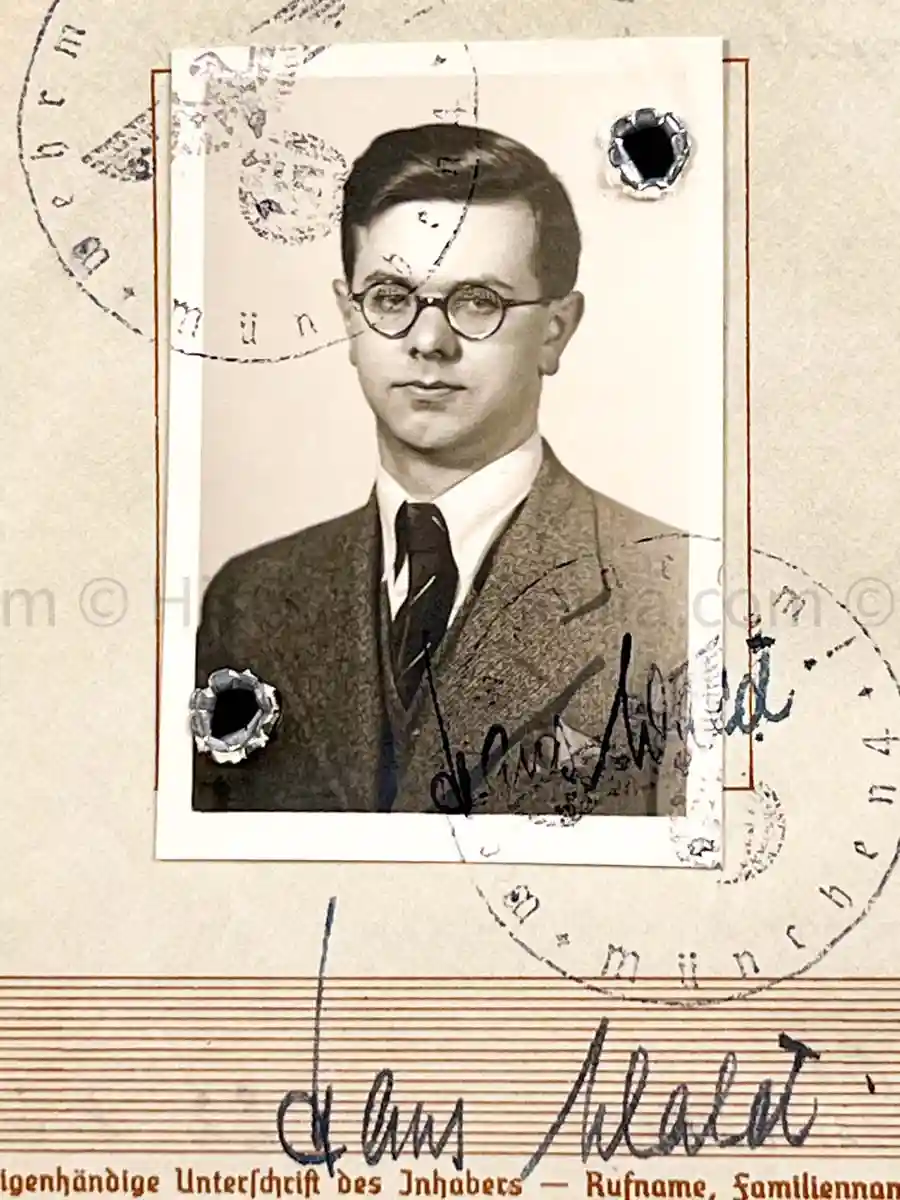
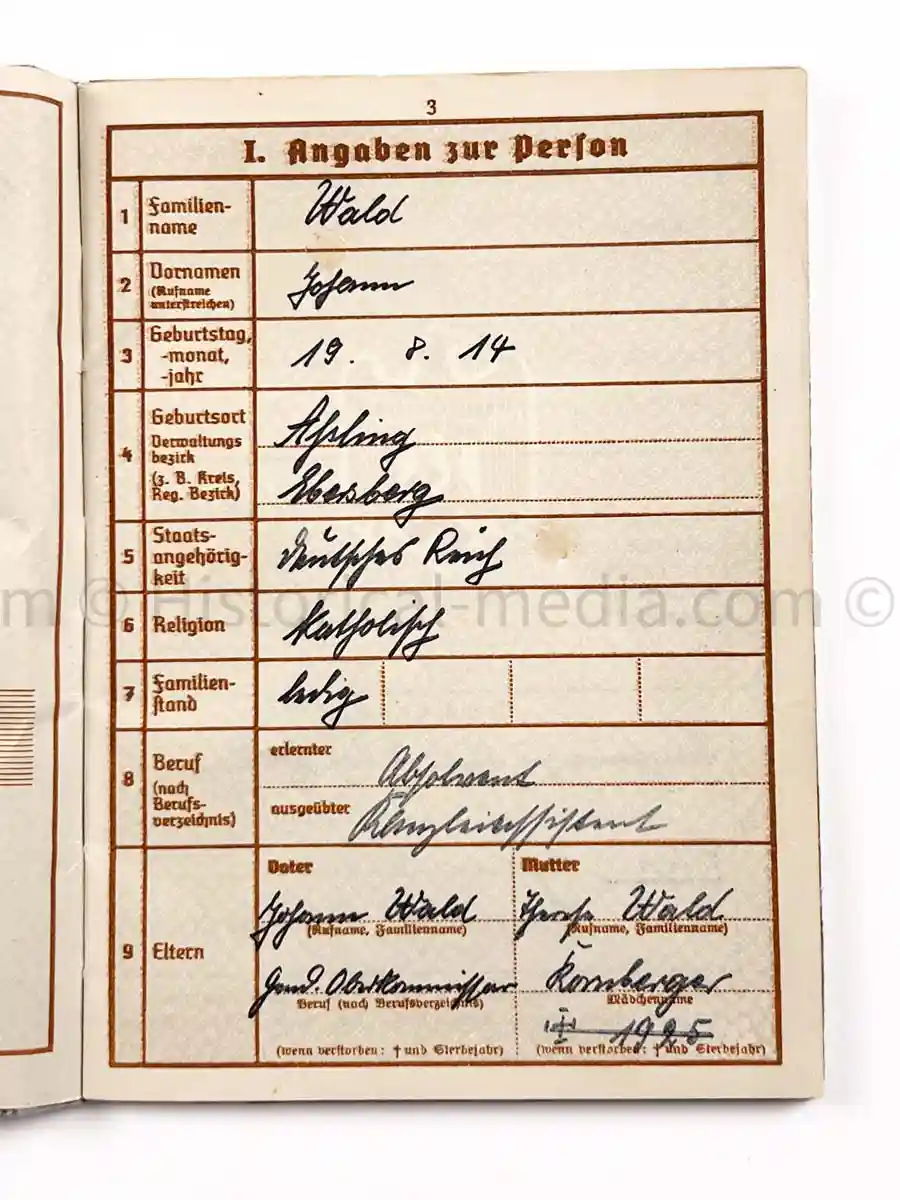
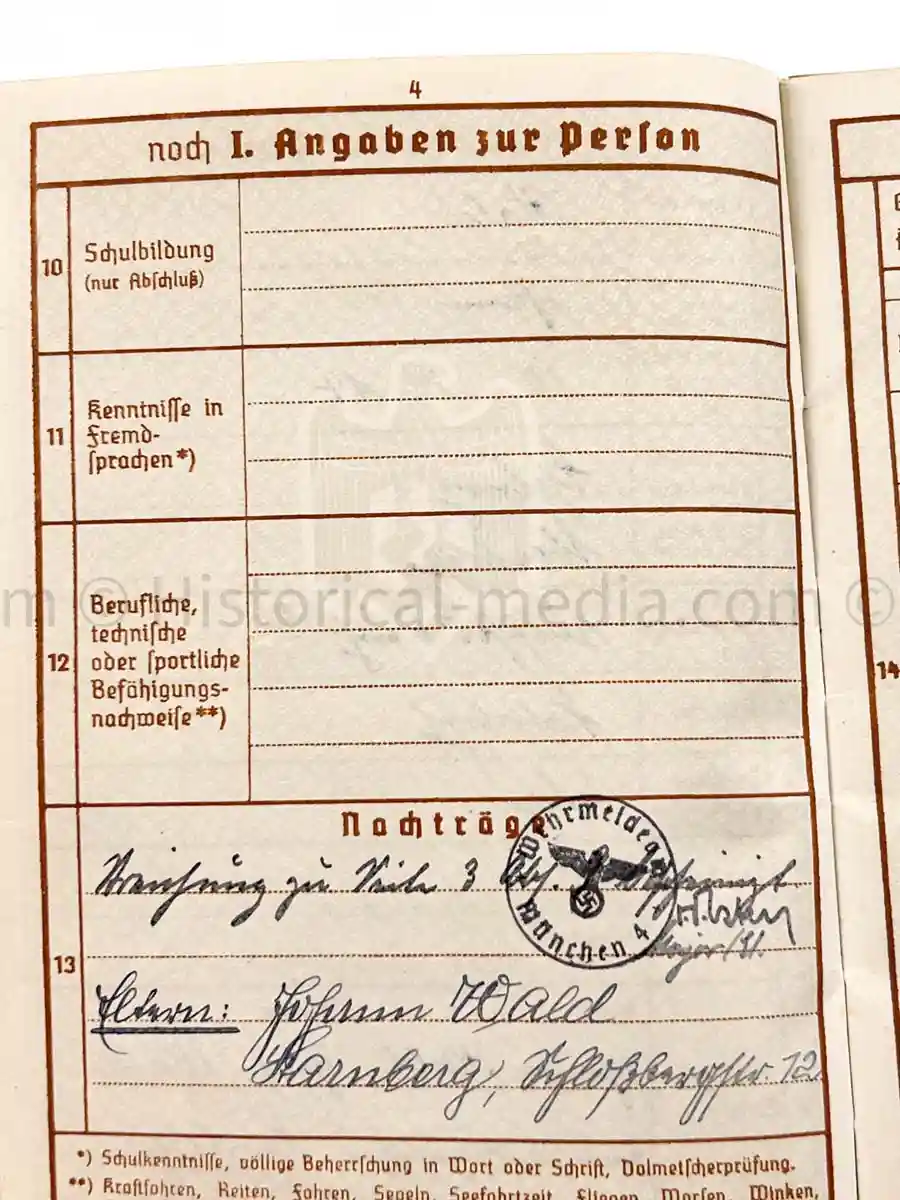
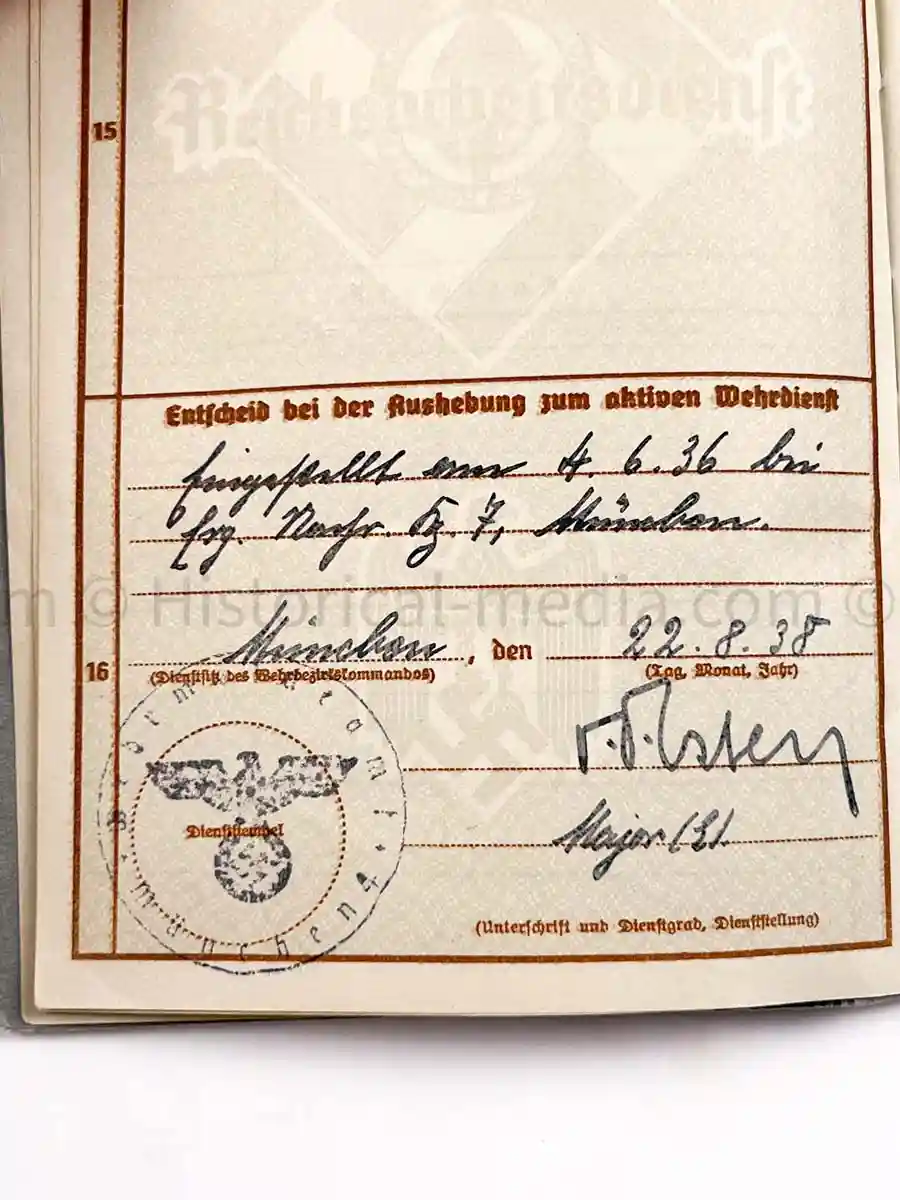
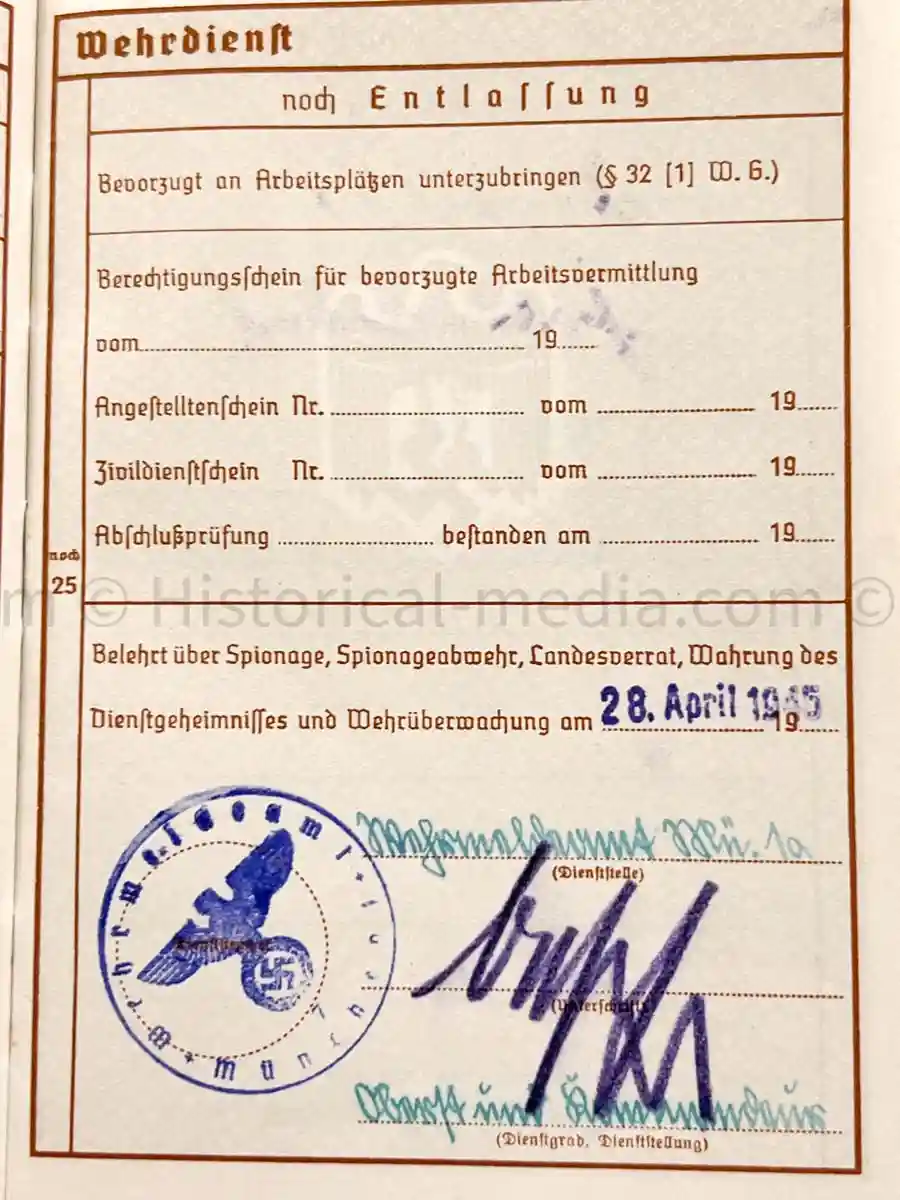
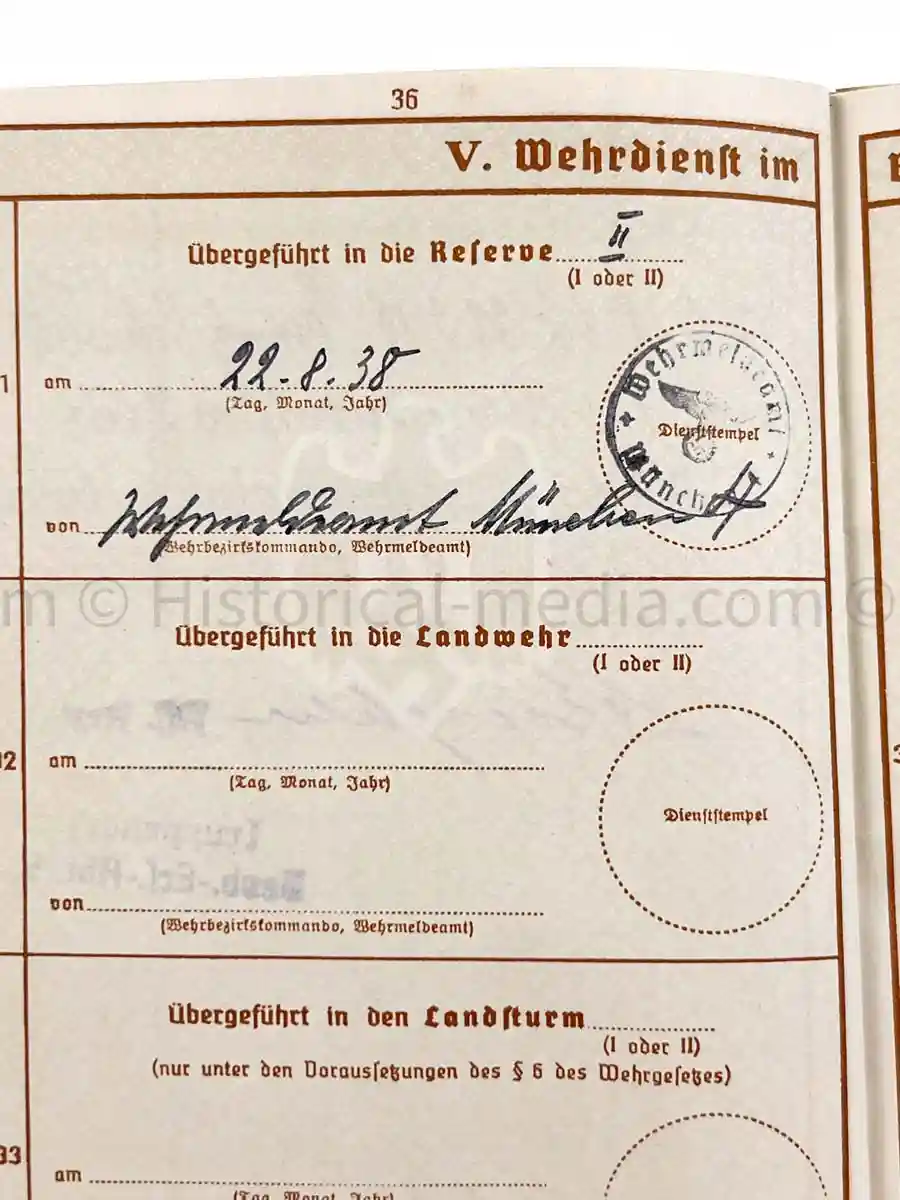
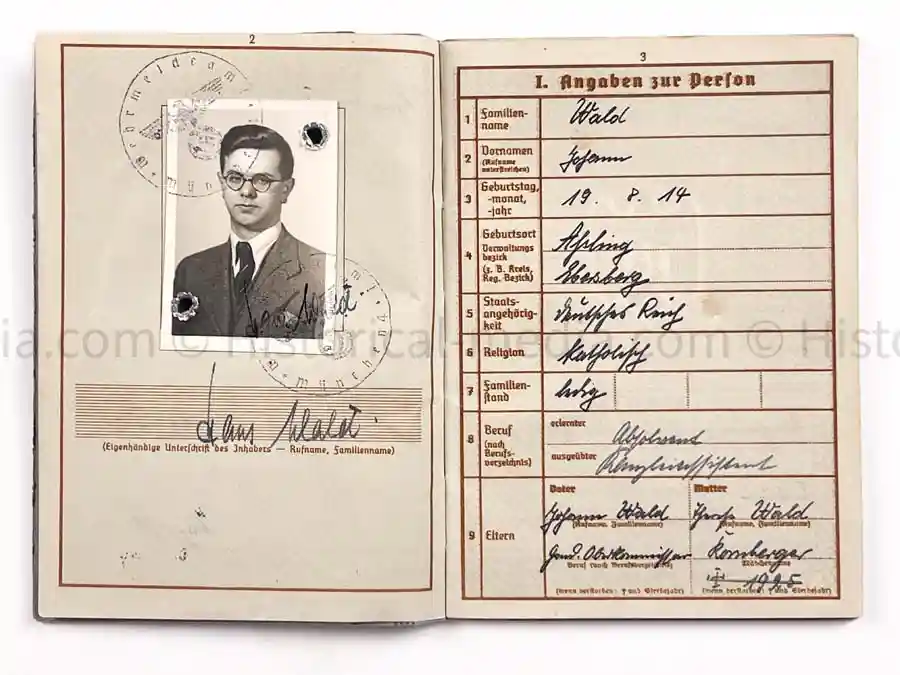
Extensively documented Heer Wehrpass issued to Feldwebel Johann (Hans) WALD, born August 19, 1914, in Aßling, Bavaria. The Wehrpass was issued in Munich on August 22, 1938, and contains his original signed civilian identification photograph. Particularly noteworthy are the prewar Austrian Anschluss entry, service with specialized artillery observation formations, extensive Eastern Front campaign entries documenting the German advance to MOSCOW in 1941, and his exceptionally late promotion and discharge entries dated April 28, 1945. Also included is an original military medical document dated July 21, 1942.
PREWAR SERVICE & AUSTRIAN ANSCHLUSS
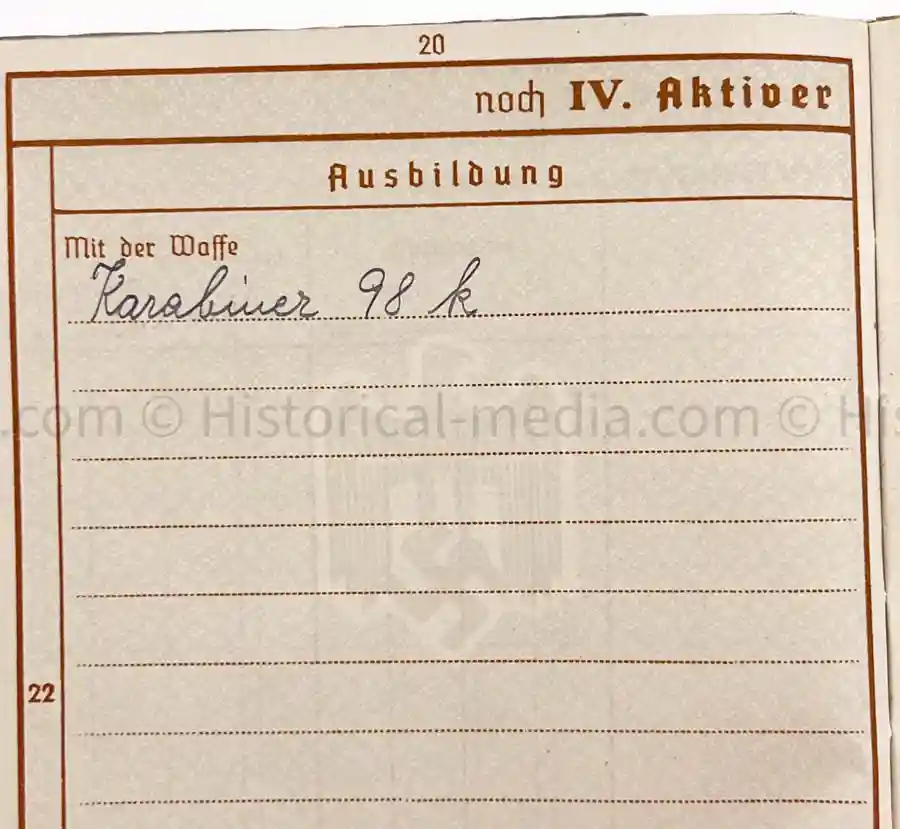
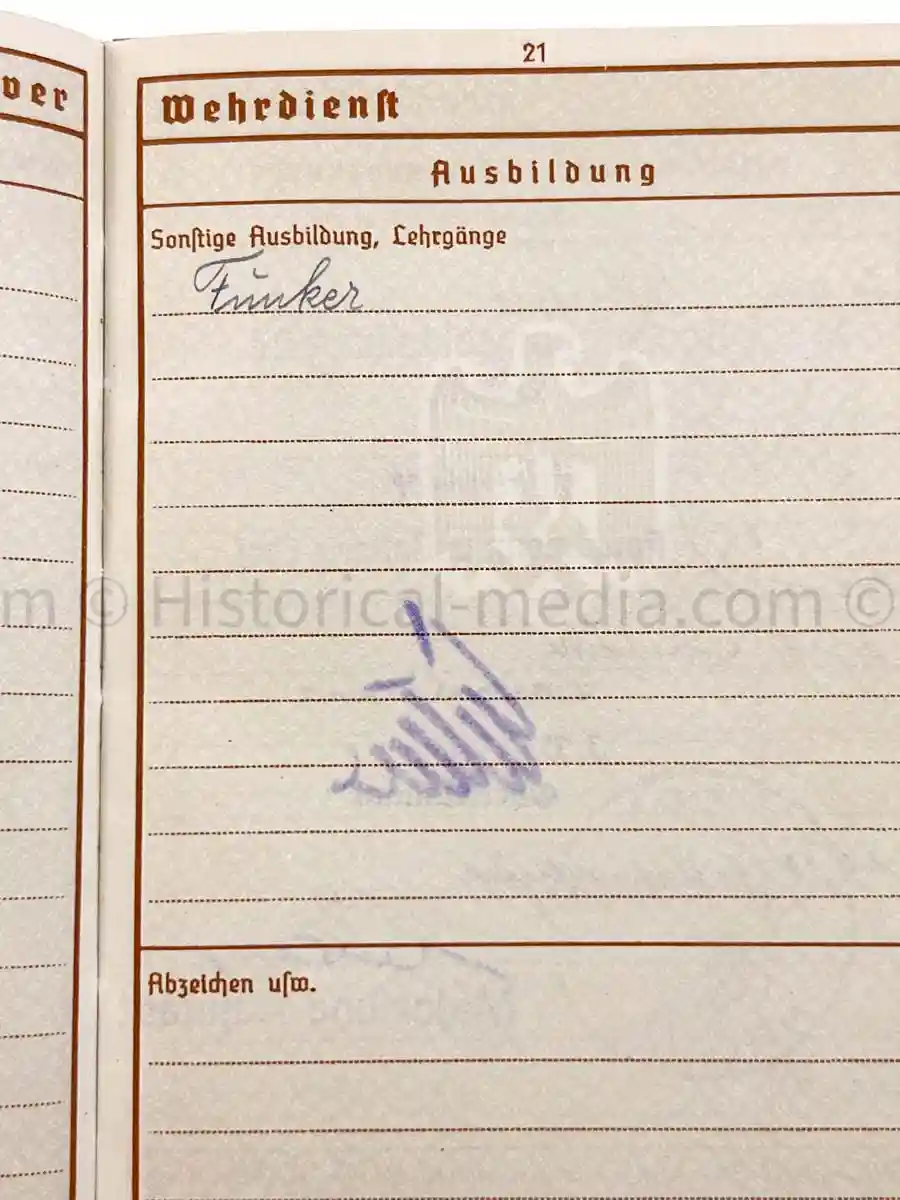
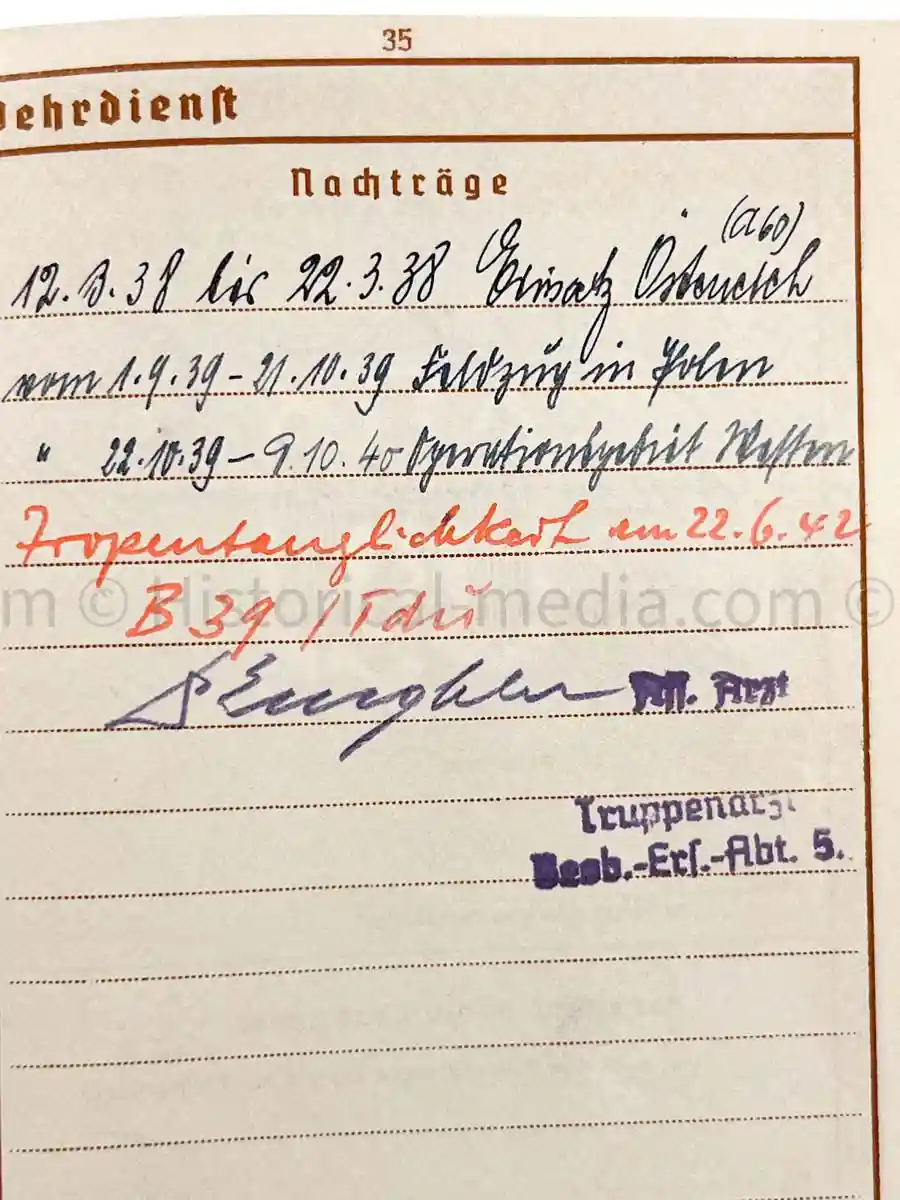
Wald’s military service began on June 4, 1936, with a signals training formation in Munich. Training entries document qualification with the Karabiner 98k and as a Funker (radio operator). An interesting handwritten entry on page 35 records his participation in the German occupation and annexation of Austria from March 12–22, 1938, the AUSTRIAN ANSCHLUSS.
UNIT ASSIGNMENTS
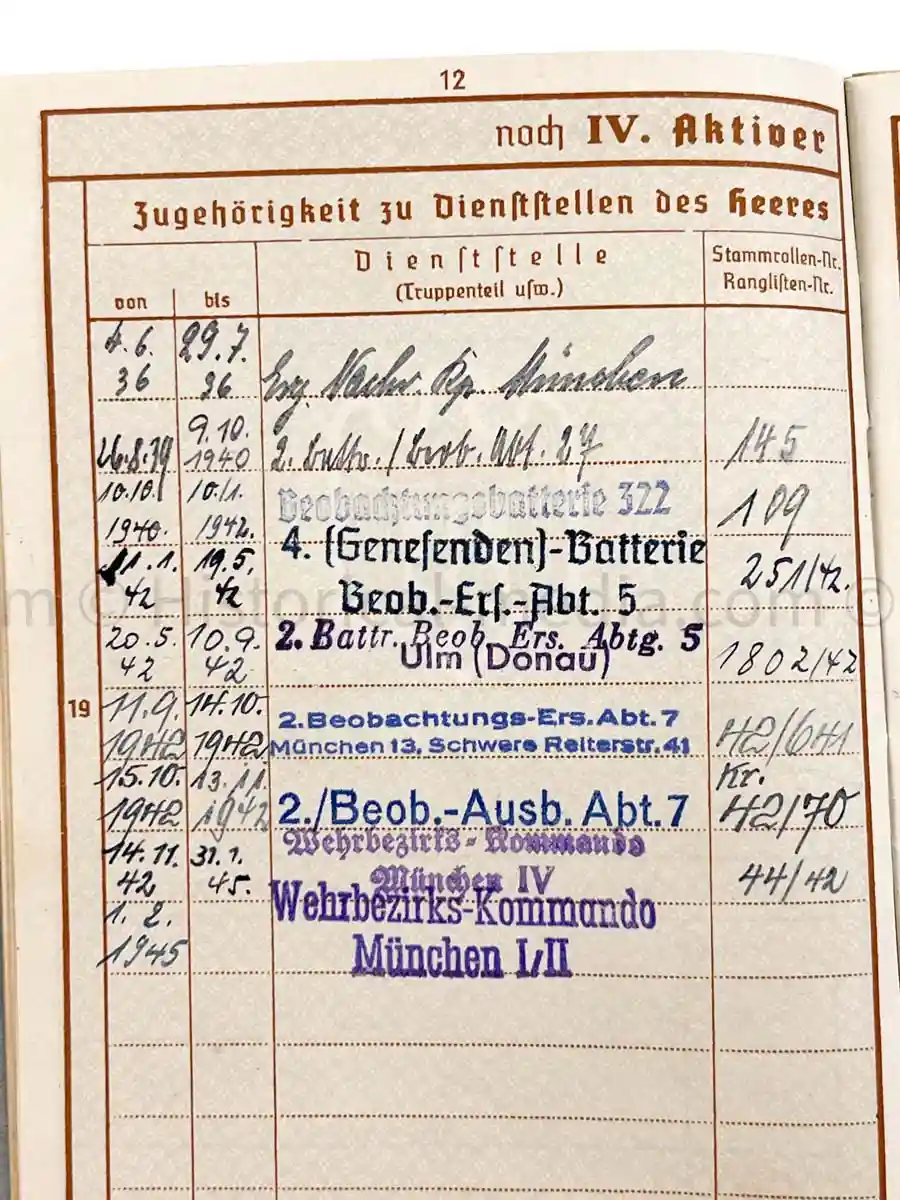
- 04.06.1936–29.07.1936 – Signals training formation, Munich.
- 26.08.1939–09.10.1940 – 2./Beobachtungs-Abteilung 27.
- 10.10.1940–10.01.1942 – Beobachtungsbatterie 322 (Panzer).
- 1942 – Beobachtungs-Ersatz-Abteilung 5, including its convalescent battery at Ulm.
- September–November 1942 – Beobachtungs-Ersatz-Abteilung 7 and Beobachtungs-Ausbildungs-Abteilung 7, Munich.
- 14.11.1942–31.01.1945 – Wehrbezirkskommando München IV.
- From 01.02.1945 – Wehrbezirkskommando München I/II.
ARTILLERY OBSERVATION SERVICE
Beobachtungs-Abteilung 27 was mobilized in Munich on August 26, 1939, for service with the 27. Infanterie-Division. Wald served with its 2. Batterie, a Schallmess-Batterie specializing in acoustic artillery reconnaissance. These specialized formations were responsible for locating enemy artillery positions through sound-ranging, providing targeting information for German artillery units. Accurate communications were essential to their operations, making Wald’s training as a radio operator particularly relevant to his assignment.
The unit subsequently became an independent Heerestruppe formation rather than remaining permanently attached to the 27. Infanterie-Division.
POLAND CAMPAIGN – 1939
Handwritten campaign entries document Wald’s participation in the invasion of Poland from September 1 through October 21, 1939. More specific entries include the crossing of the Vistula River on September 13 and further combat operations on September 23–24, 1939. The 27. Infanterie-Division participated in the Polish Campaign in the southern operational sector under Heeresgruppe Süd.
WESTERN FRONT & FRANCE CAMPAIGN – 1939–1940
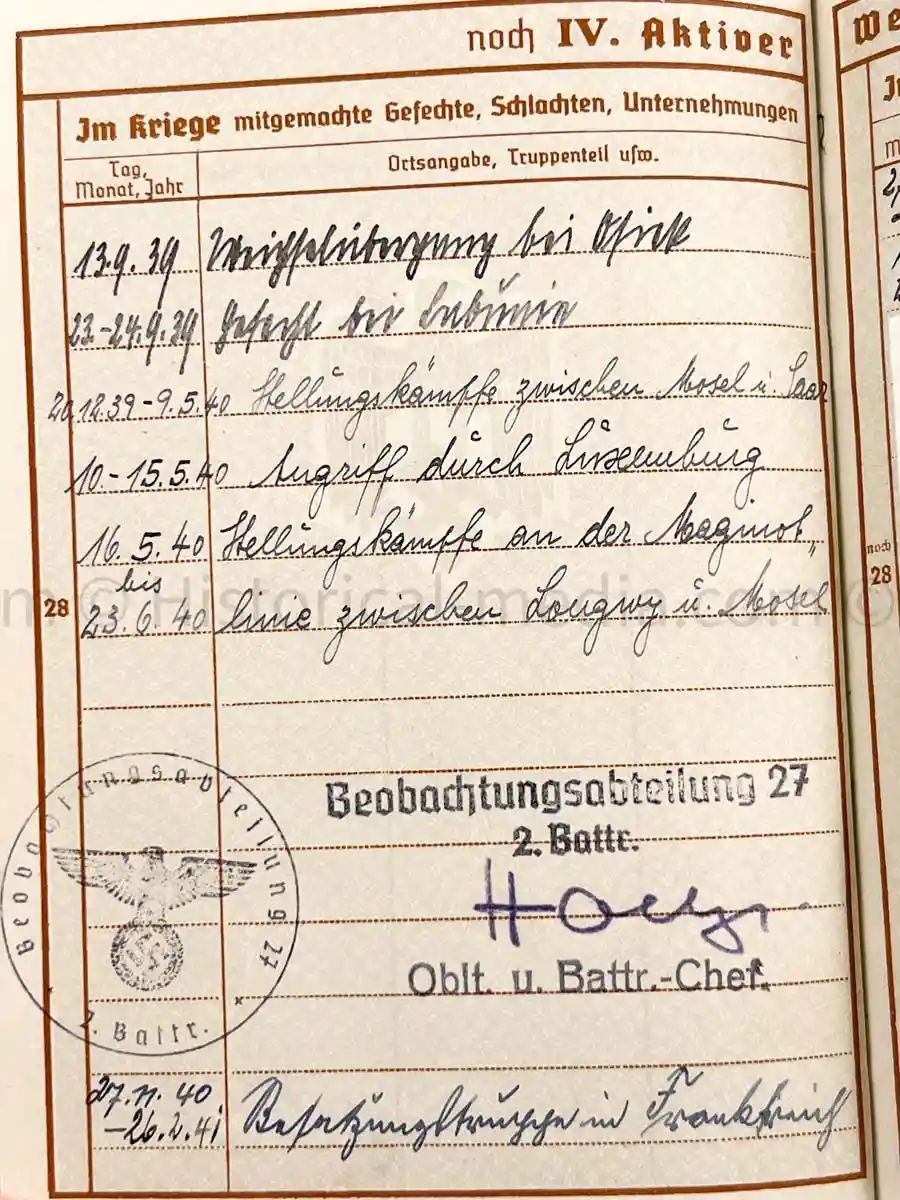
Following the Polish Campaign, Wald was transferred to the Western Front. Detailed handwritten campaign entries document positional fighting between the Moselle and Saar rivers from December 20, 1939, through May 9, 1940, followed by the advance through Luxembourg from May 10–15, 1940.
Especially interesting is the campaign entry documenting positional fighting along the MAGINOT LINE between Longwy and the Moselle River from May 16 through June 23, 1940. The entries are officially certified with the unit stamp and signature of the battery commander of 2./Beobachtungs-Abteilung 27.
Further entries document occupation duties in France from November 27, 1940, through February 26, 1941.
10. PANZER-DIVISION – OPERATION BARBAROSSA & THE BATTLE OF MOSCOW
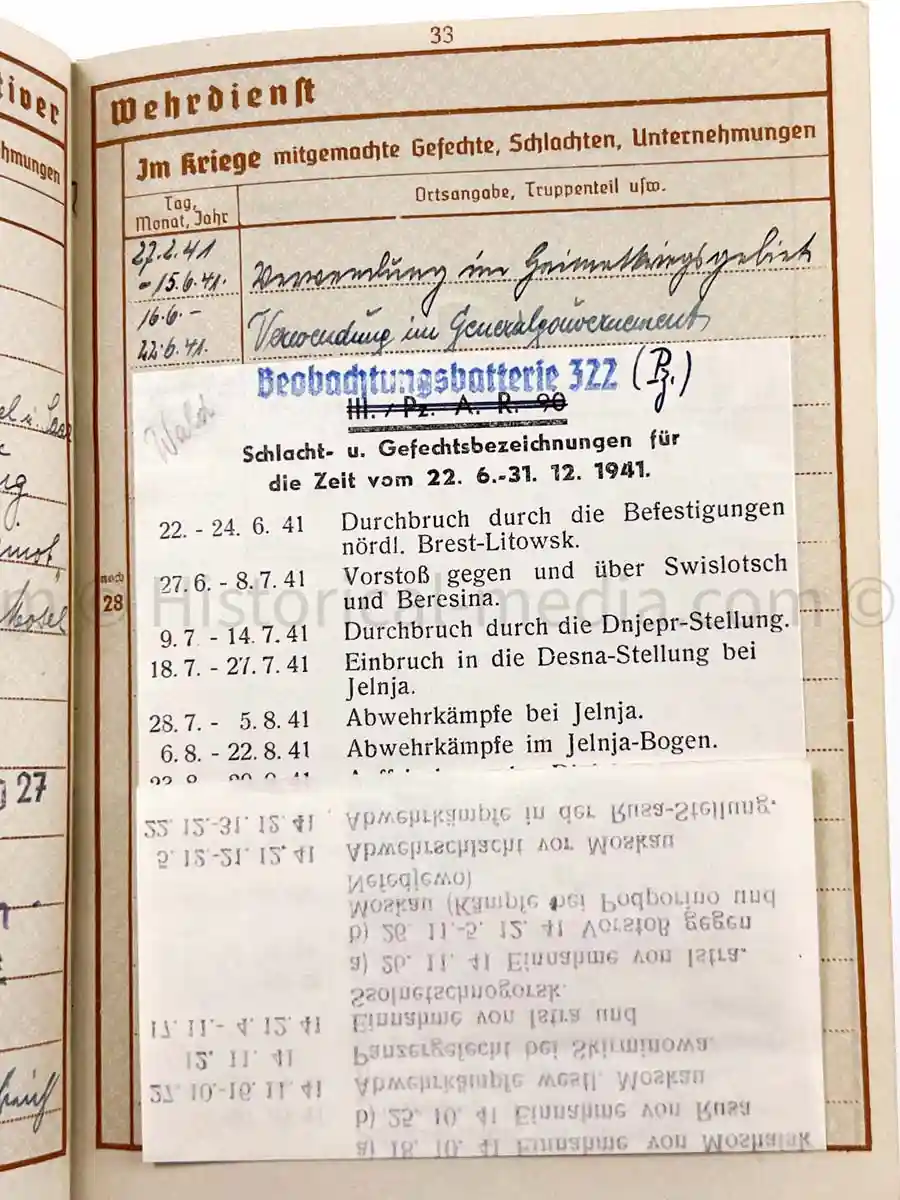
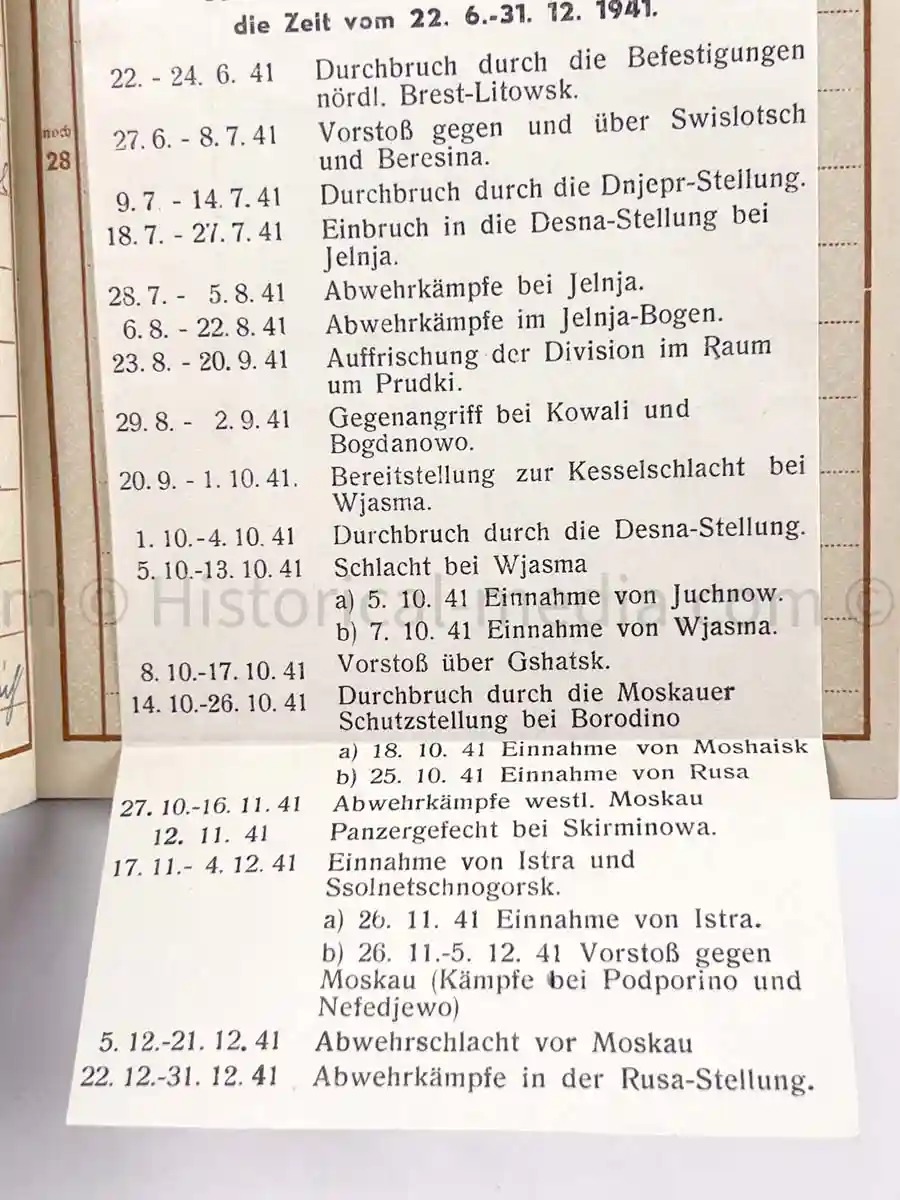
Perhaps the most significant feature of this Wehrpass is an extensive original foldout printed campaign insert documenting the operations of Beobachtungsbatterie 322 (Panzer) from June 22 through December 31, 1941.
This specialized armored artillery observation battery served with Artillerie-Regiment 90 of the 10. Panzer-Division and was subsequently redesignated Beobachtungs-Batterie (Panzer) 90 in 1942. The printed campaign insert bears the battery’s original unit stamp.
The exceptionally detailed campaign entries include:
- June 22–24 – Breakthrough of the Soviet frontier fortifications north of Brest-Litovsk.
- June 27–July 8 – Advance across the Swislotch and Beresina rivers.
- July 9–14 – Breakthrough of the Dnieper defensive positions.
- July 18–27 – Penetration of the Desna defensive positions at Yelnya.
- July 28–August 22 – Defensive fighting around Yelnya and the Yelnya salient.
- August 29–September 2 – Counterattacks near Kowali and Bogdanowo.
- September 20–October 1 – Preparations for the encirclement battle at Vyazma.
- October 5–13 – BATTLE OF VYAZMA, including the capture of Yukhnov and Vyazma.
- October 8–17 – Advance through Gzhatsk.
- October 14–26 – Breakthrough of the Moscow defensive positions at BORODINO, including the capture of Mozhaisk and Ruza.
- October 27–November 16 – Defensive fighting west of Moscow.
- November 12 – Tank engagement at Skirmanovo.
- November 17–December 4 – Operations against Istra and Solnechnogorsk.
- November 26–December 5 – Advance toward MOSCOW, including fighting at Podporino and Nefedyevo.
- December 5–21 – Defensive battle before Moscow.
- December 22–31 – Defensive fighting in the Ruza positions.
These entries document the 10. Panzer-Division’s participation in Operation Taifun, the German offensive against Moscow, and the subsequent defensive battles following the opening of the Soviet winter counteroffensive in December 1941. Particularly interesting is the reference to Borodino, the site of Napoleon’s famous 1812 battle during his own advance toward Moscow.
MEDICAL DOCUMENT & SUBSEQUENT SERVICE
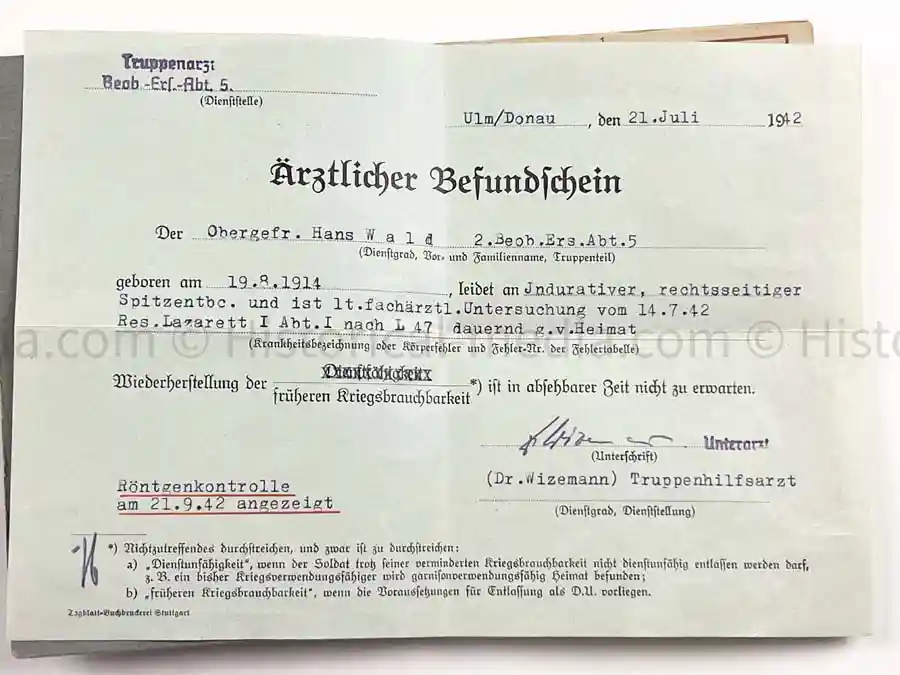
Also included is an original Ärztlicher Befundschein (Medical Examination Report), issued at Ulm on July 21, 1942, by the medical officer of Beobachtungs-Ersatz-Abteilung 5. The document records Wald’s diagnosis with pulmonary tuberculosis affecting the upper portion of his right lung. Following a specialist examination at Reserve-Lazarett I on July 14, 1942, he was classified as permanently suitable for garrison duties within Germany. The document specifically states that restoration of his previous fitness for military service was not anticipated in the foreseeable future.
A corresponding red-ink medical entry appears on page 35 of the Wehrpass. Following assignments to replacement and training formations, Wald spent the remainder of the war serving with military district administrative offices in Munich.
PROMOTIONS & DECORATIONS
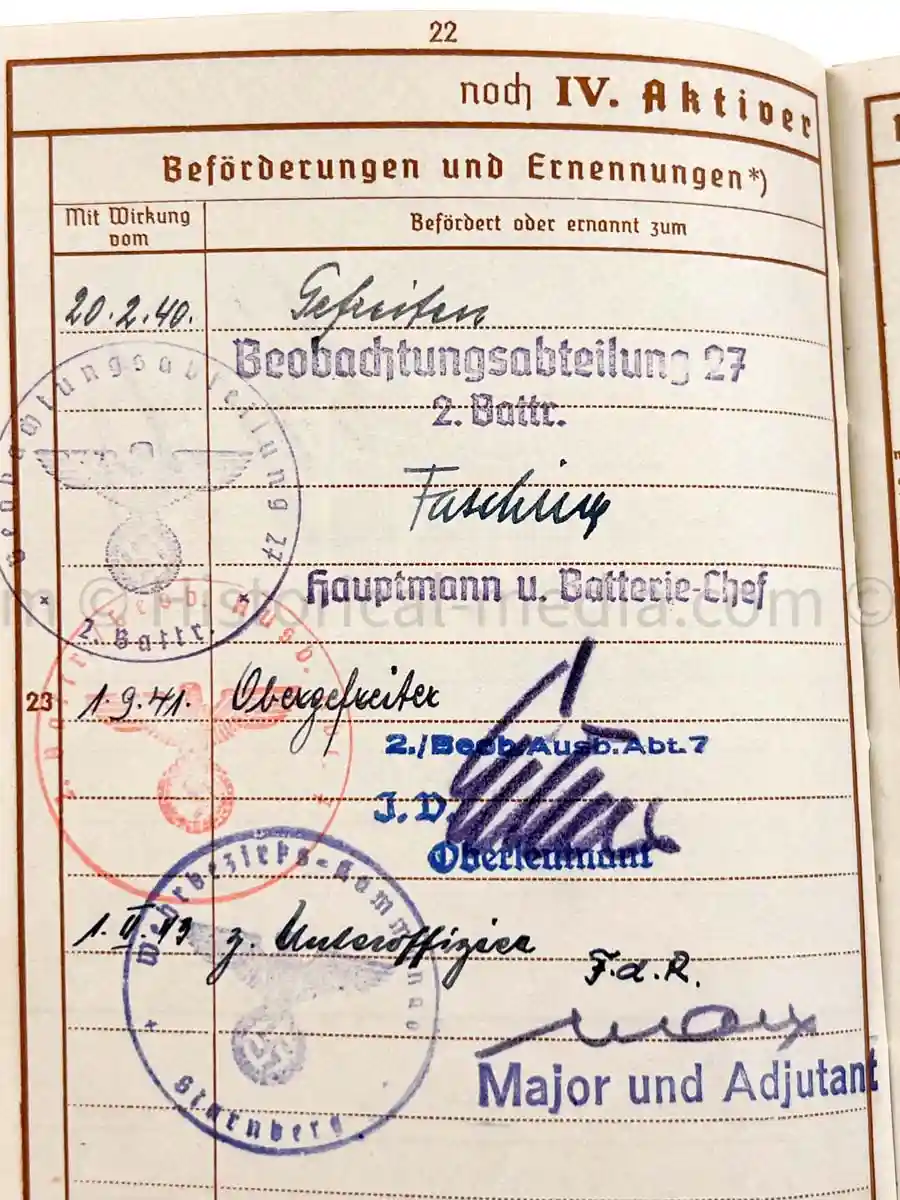
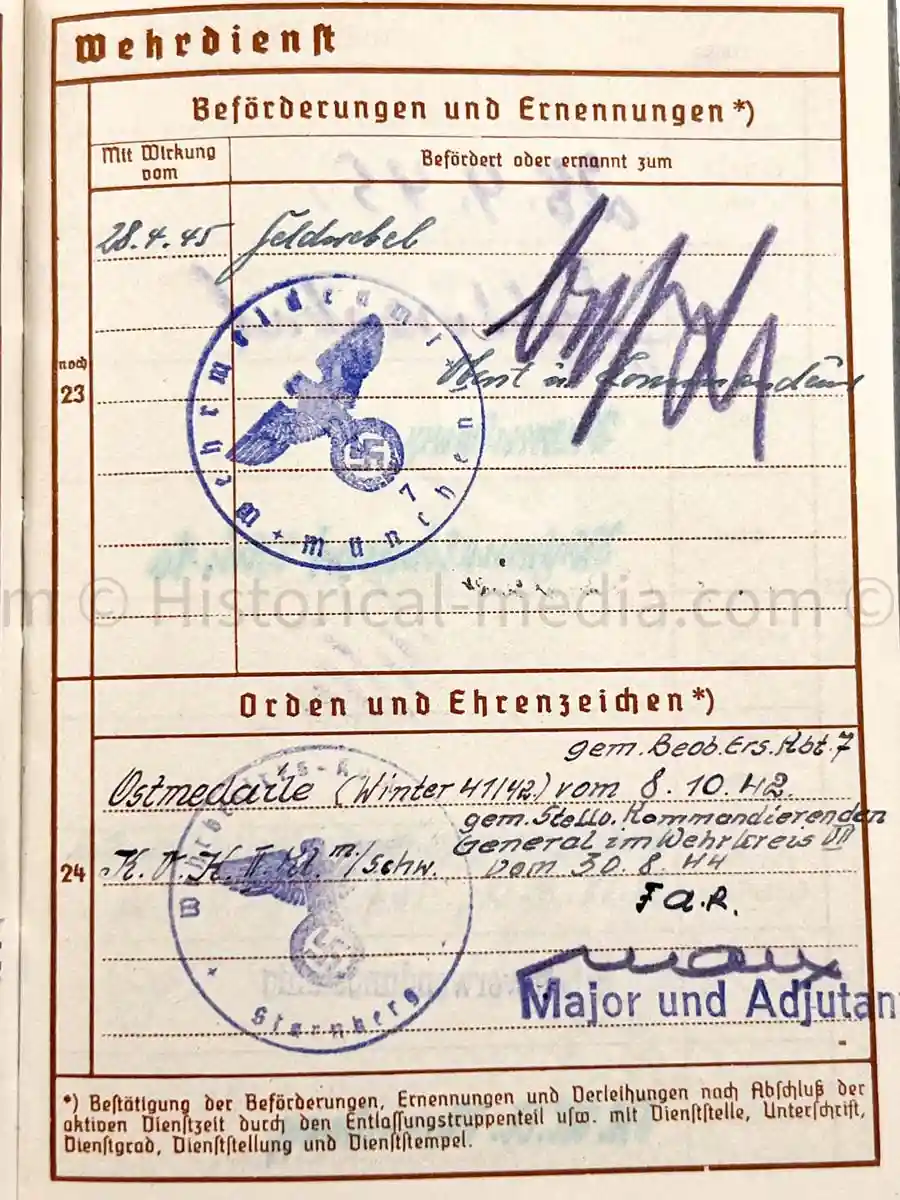
Promotion entries include Gefreiter on February 20, 1940, Obergefreiter on September 1, 1941, and Unteroffizier in 1943. Particularly noteworthy is his exceptionally late promotion to Feldwebel on April 28, 1945.
Recorded awards include:
- 08.10.1942 – Ostmedaille – Eastern Front Medal for the Winter Campaign of 1941/42.
- 30.08.1944 – Kriegsverdienstkreuz II. Klasse mit Schwertern – War Merit Cross 2nd Class with Swords.
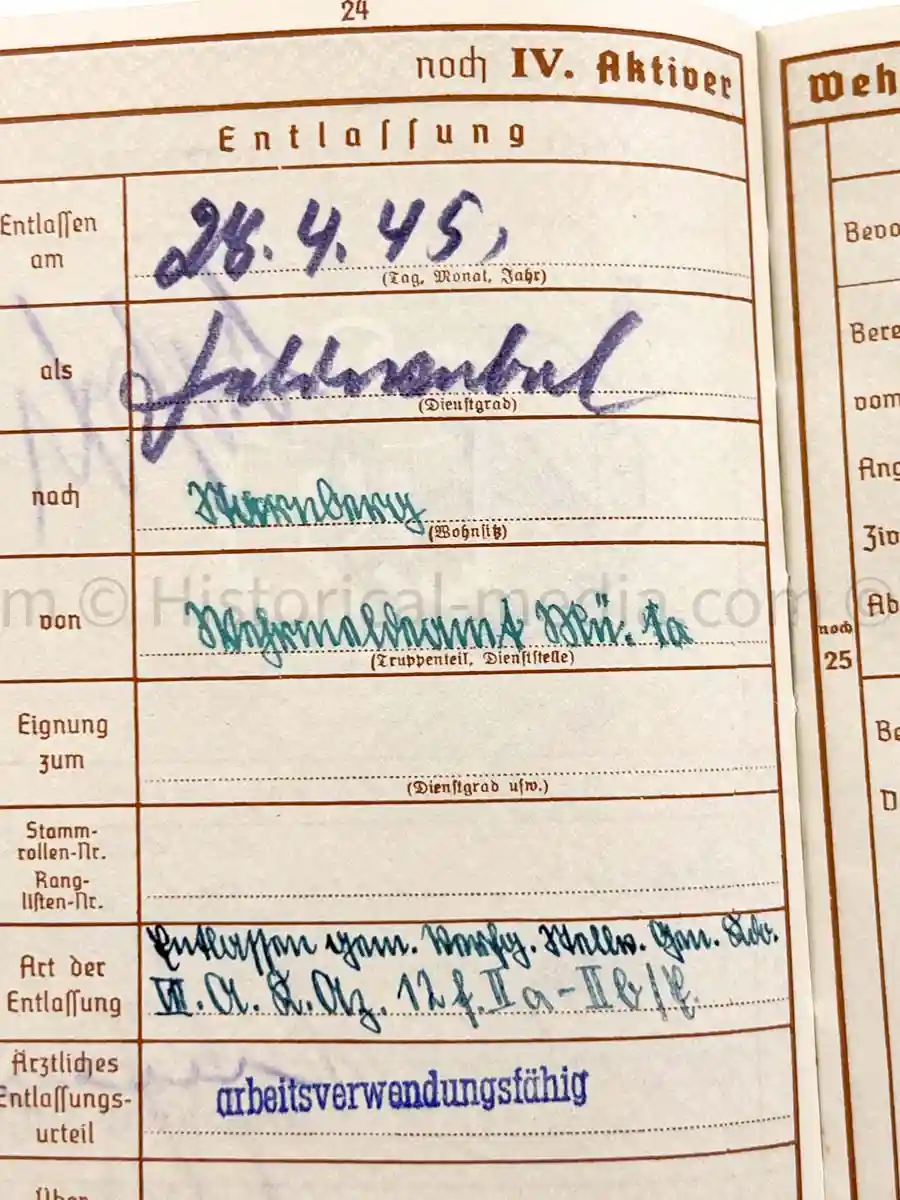
His final discharge entry is dated April 28, 1945, just two days before American forces occupied Munich and ten days before the unconditional German surrender.
An excellent Wehrpass and accompanying medical document covering the Austrian Anschluss, Polish and Western Campaigns, specialized artillery observation service and the German advance to Moscow in 1941. The extensive original foldout campaign insert documenting Operation Barbarossa, Operation Taifun and the Battle of Moscow is particularly noteworthy, as are the corresponding wartime medical document and exceptionally late April 1945 entries.