
Description
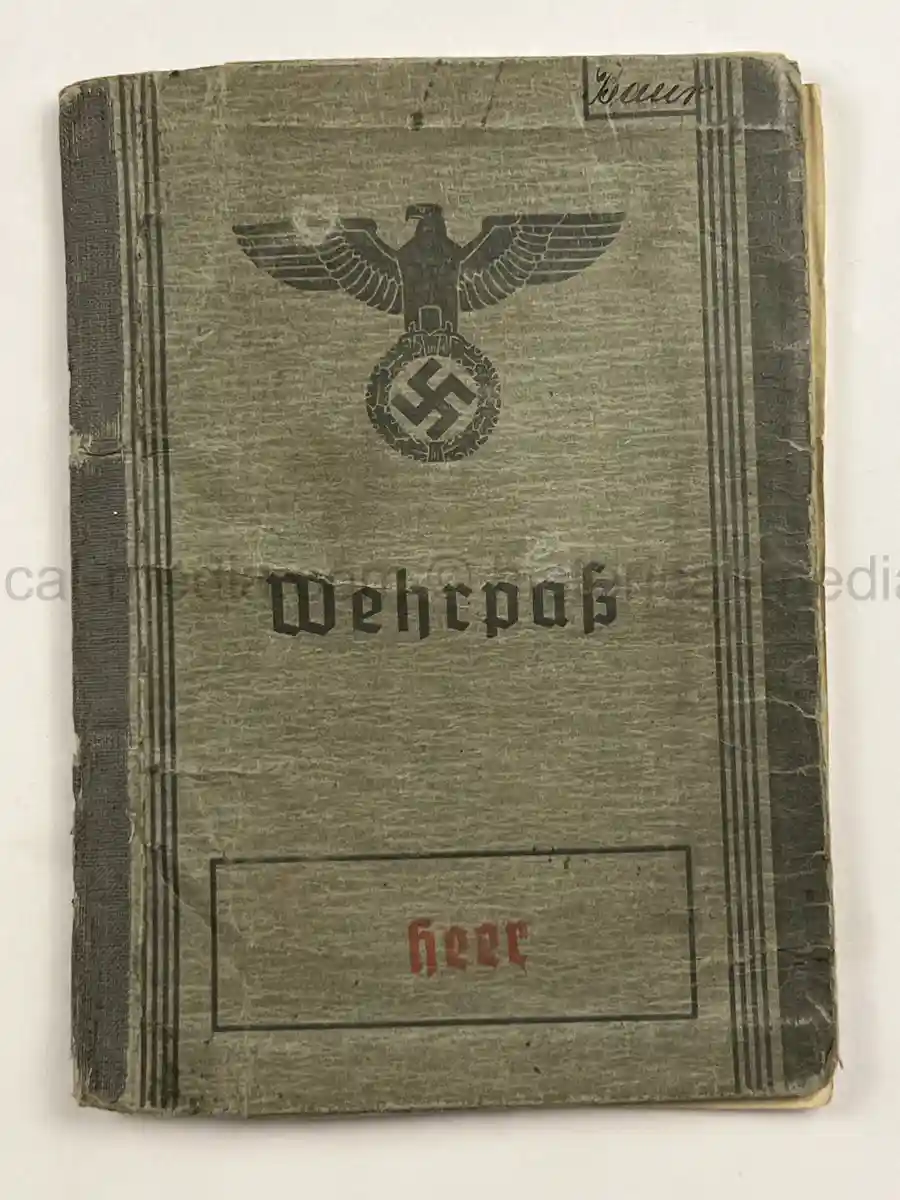
WEHRPASS – ERICH BAURIES – PIONIER-ZUG DER LANDESPOLIZEI DANZIG – WESTERPLATTE – 60. INFANTERIE-DIVISION – MAGINOT LINE – LENINGRAD – EISENBAHN-BAUBATAILLON 2
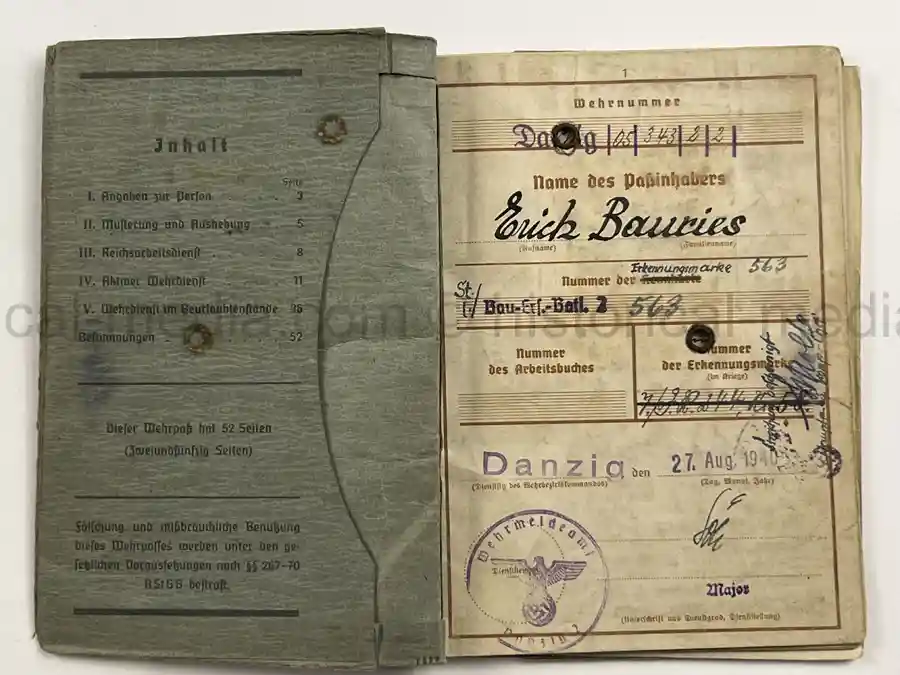
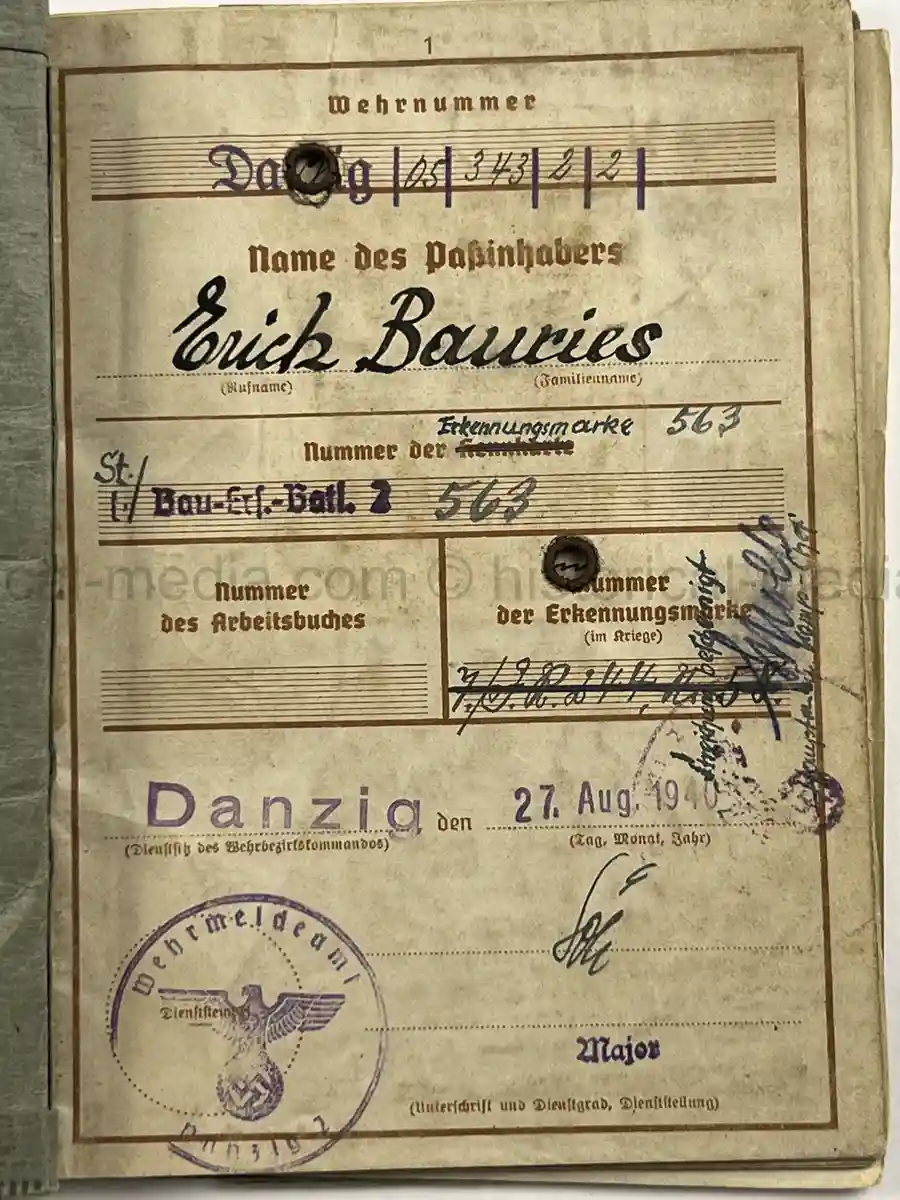
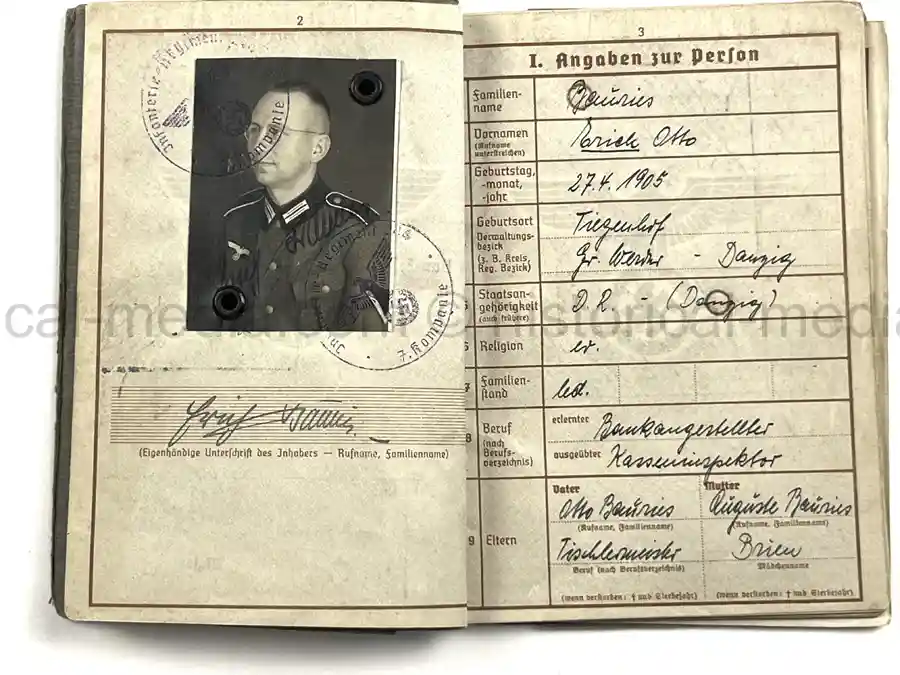
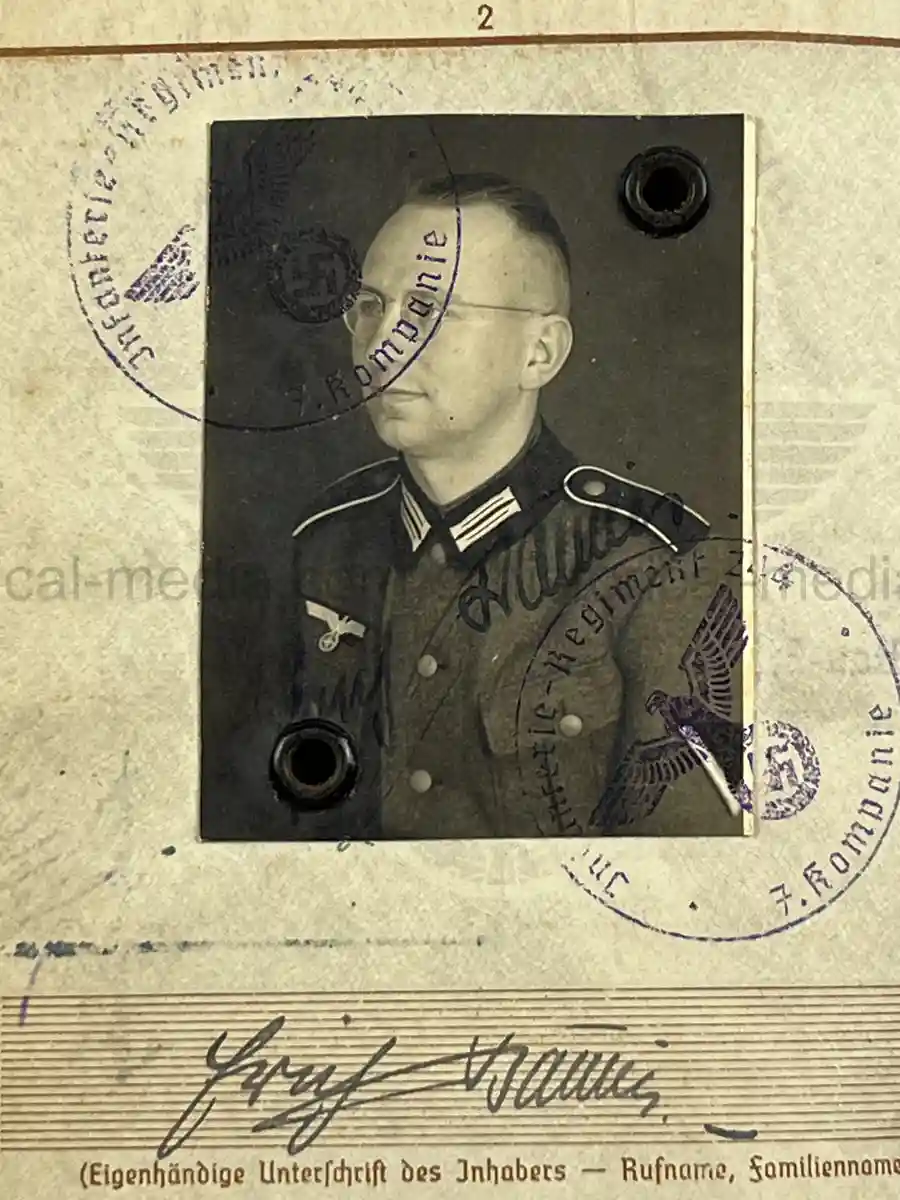
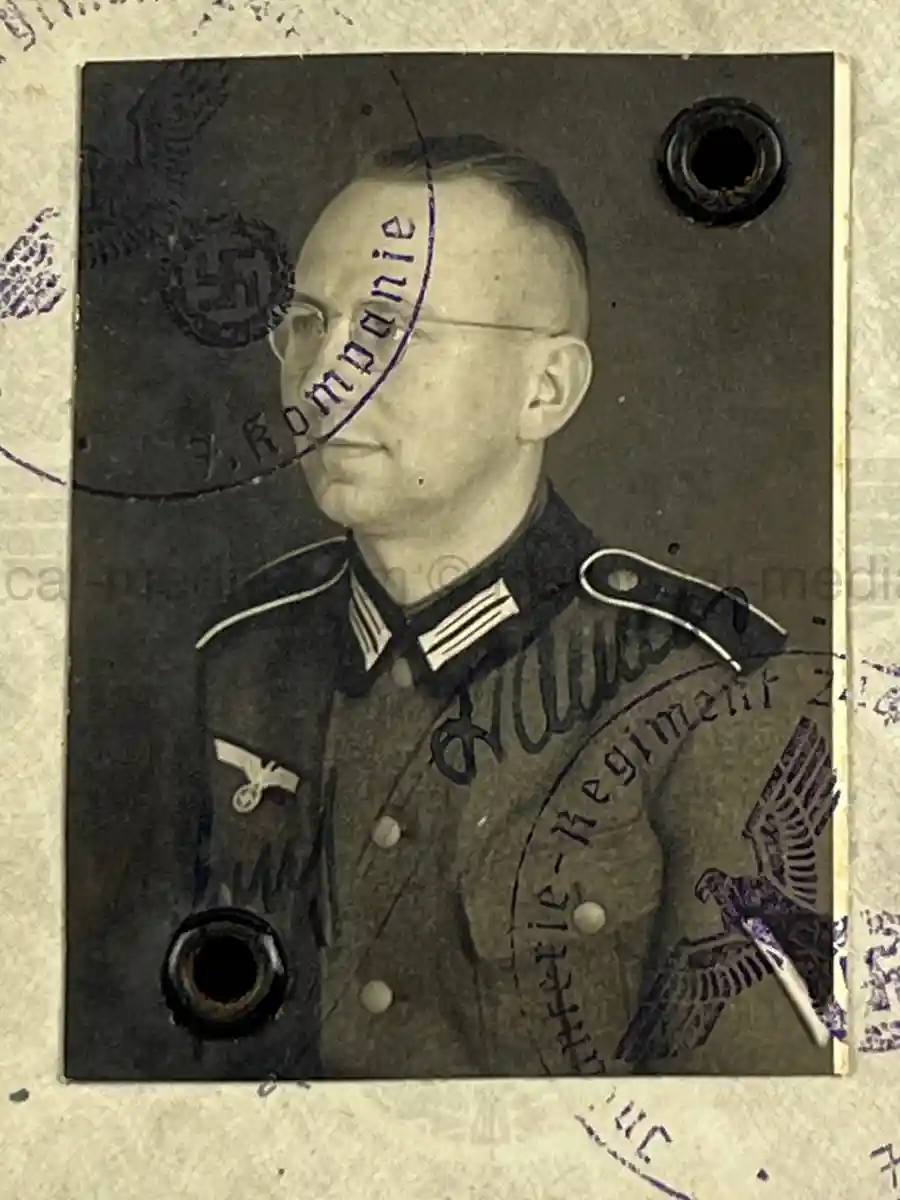
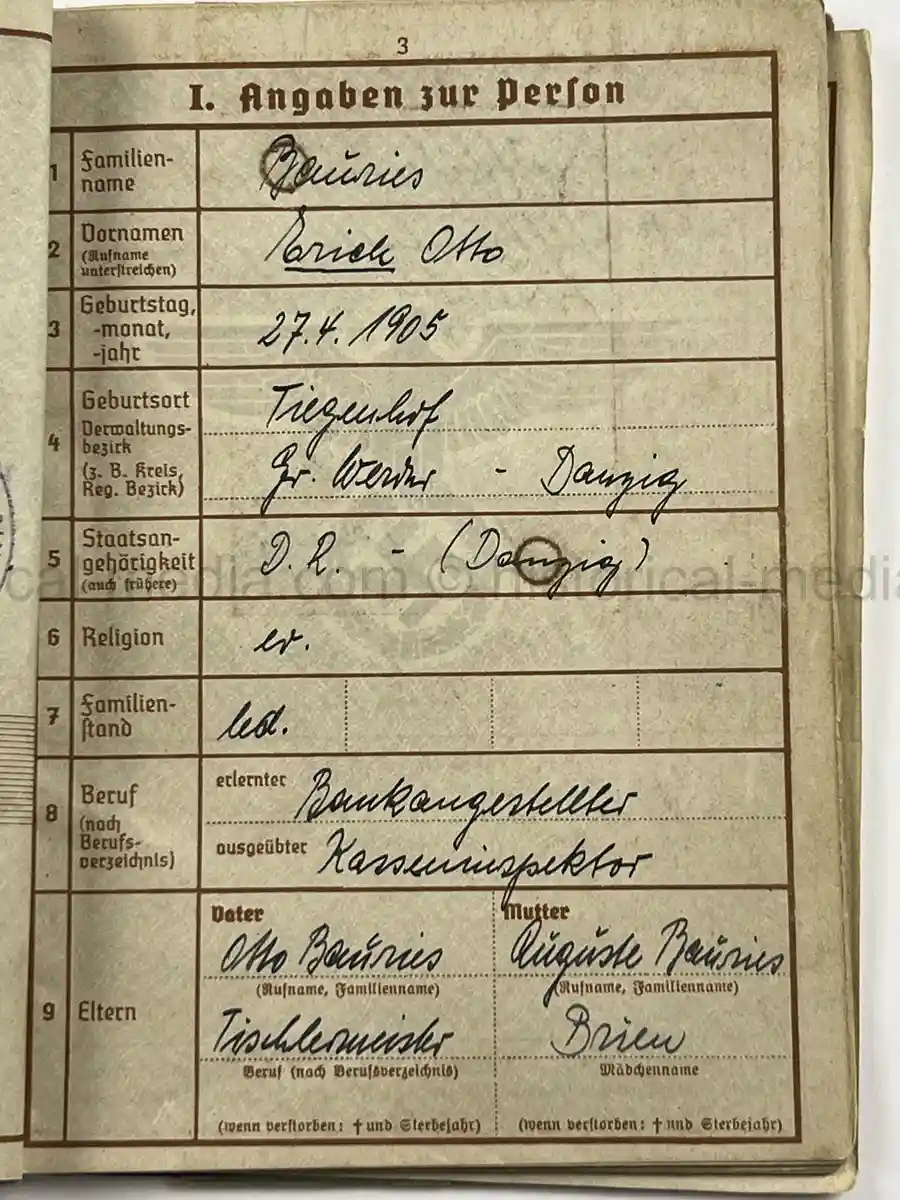
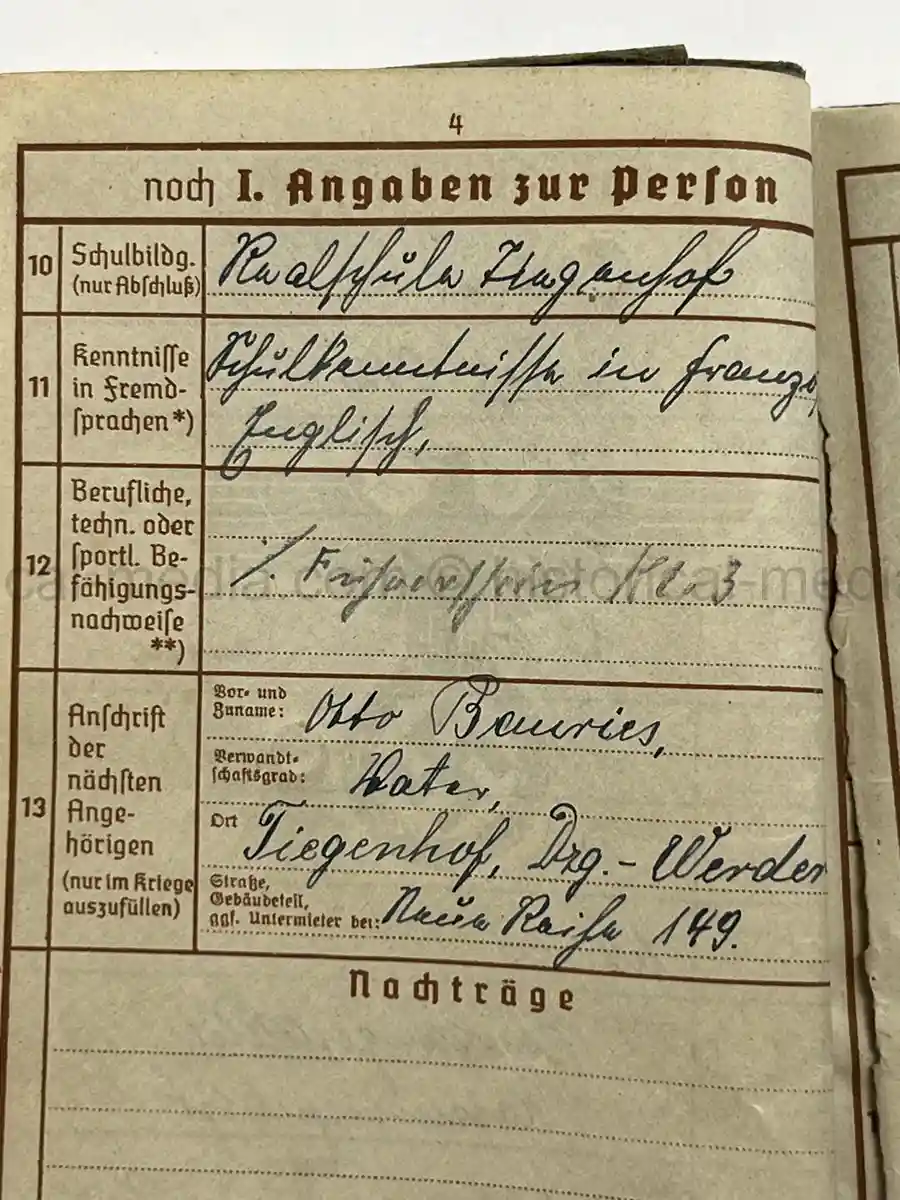
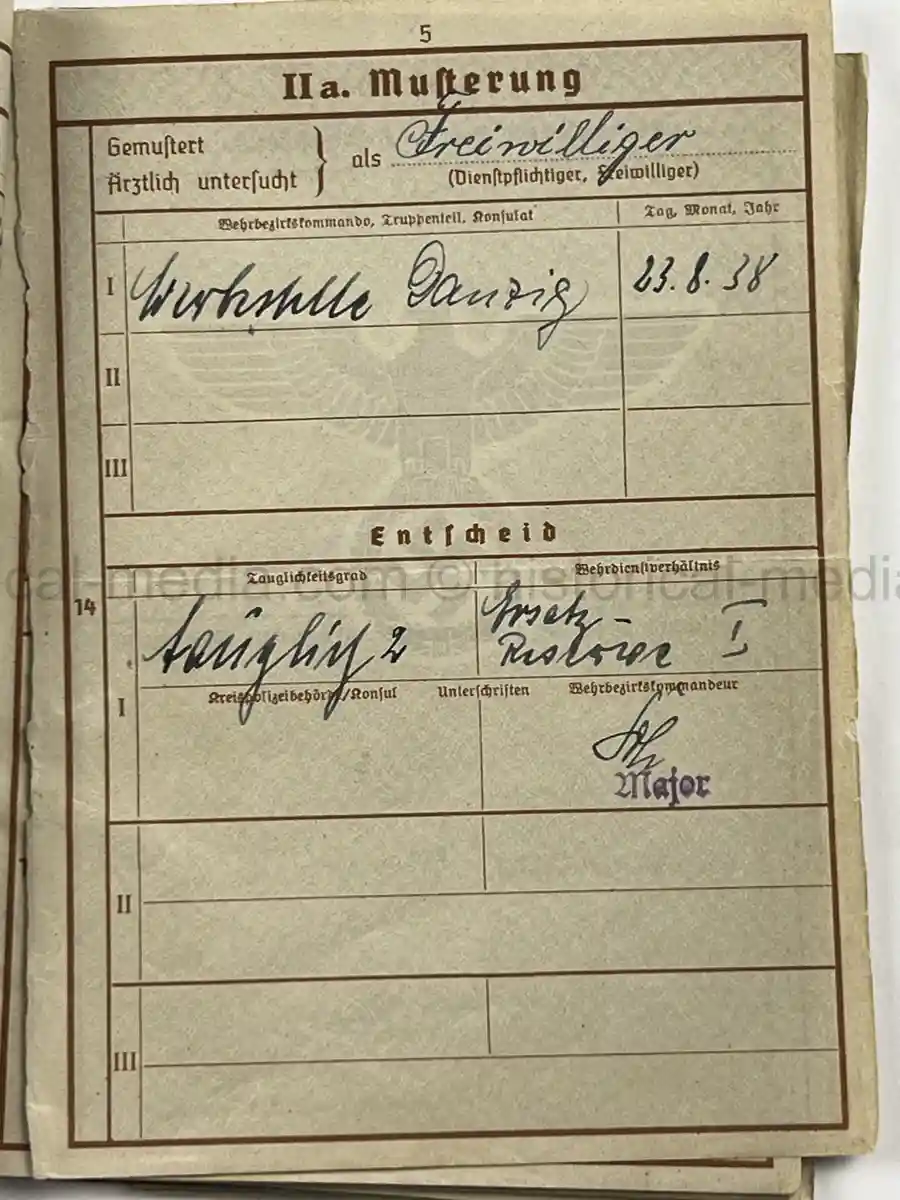
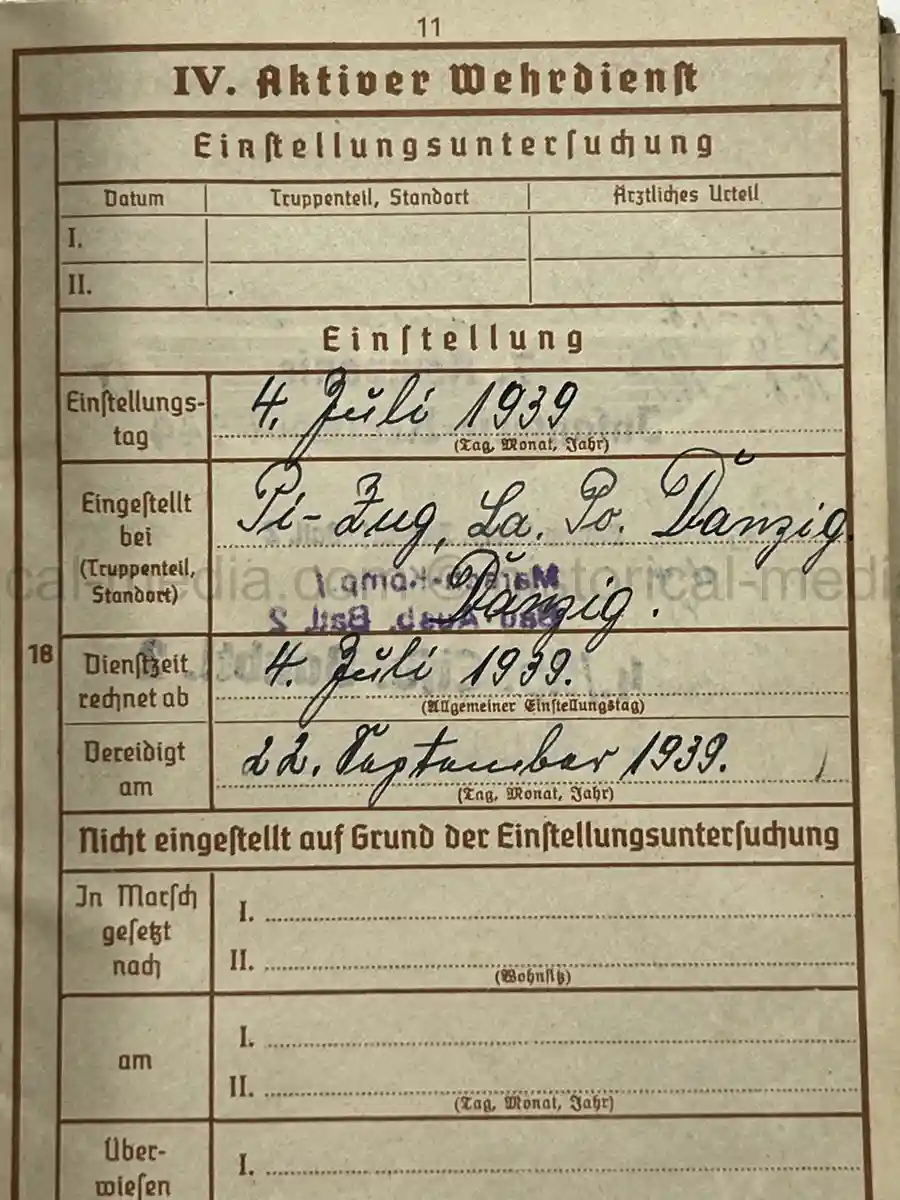
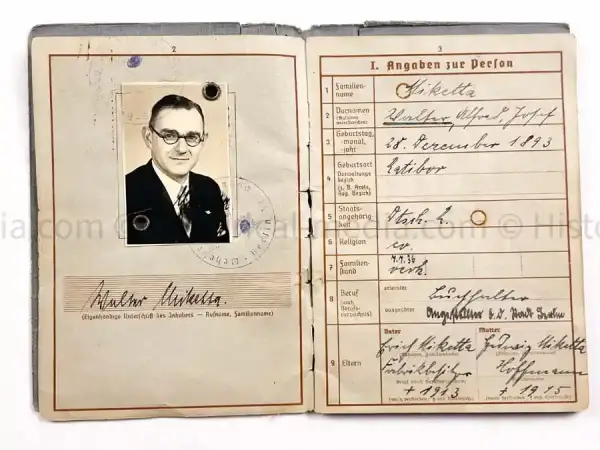
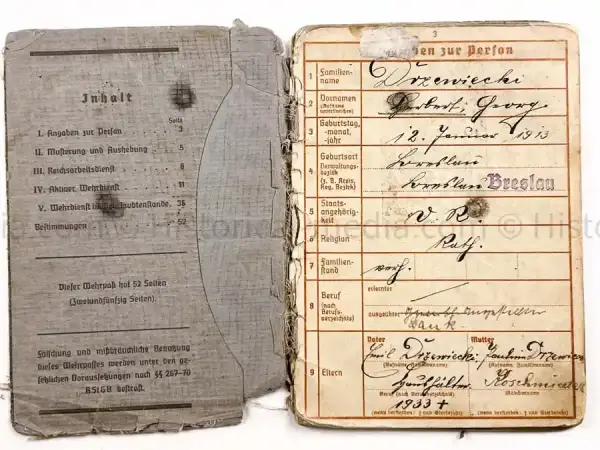
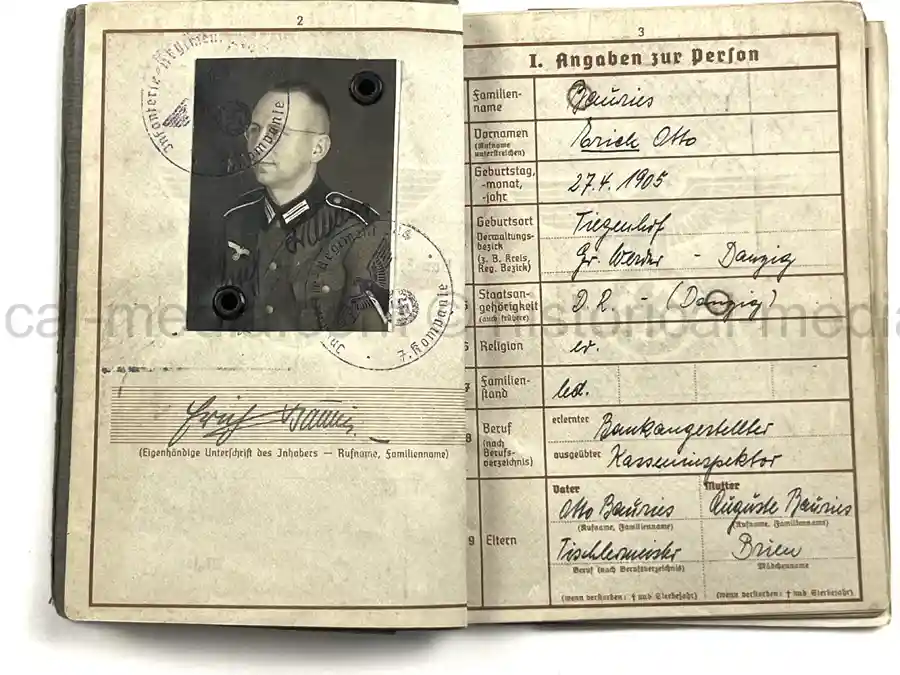
Historically interesting Heer Wehrpass issued to Obergefreiter Erich Otto BAURIES, born April 27, 1905, in Tiegenhof, Kreis Großes Werder, in the region that subsequently became part of the Free City of Danzig. A Bankangestellter (bank employee) by training and Kasseninspektor (cash inspector) by civilian profession, Bauries volunteered for service with the Danzig State Police immediately prior to the outbreak of WWII. The Wehrpass was issued at Danzig on August 27, 1940, and contains his original uniform identification photograph. Particularly noteworthy are his prewar Danzig police assignment, campaign entries covering the opening operations of WWII, service with the 60. Infanterie-Division during the Western Campaign and subsequent railway construction service on the northern Eastern Front.
LANDESPOLIZEI DANZIG – WESTERPLATTE & THE OUTBREAK OF WWII
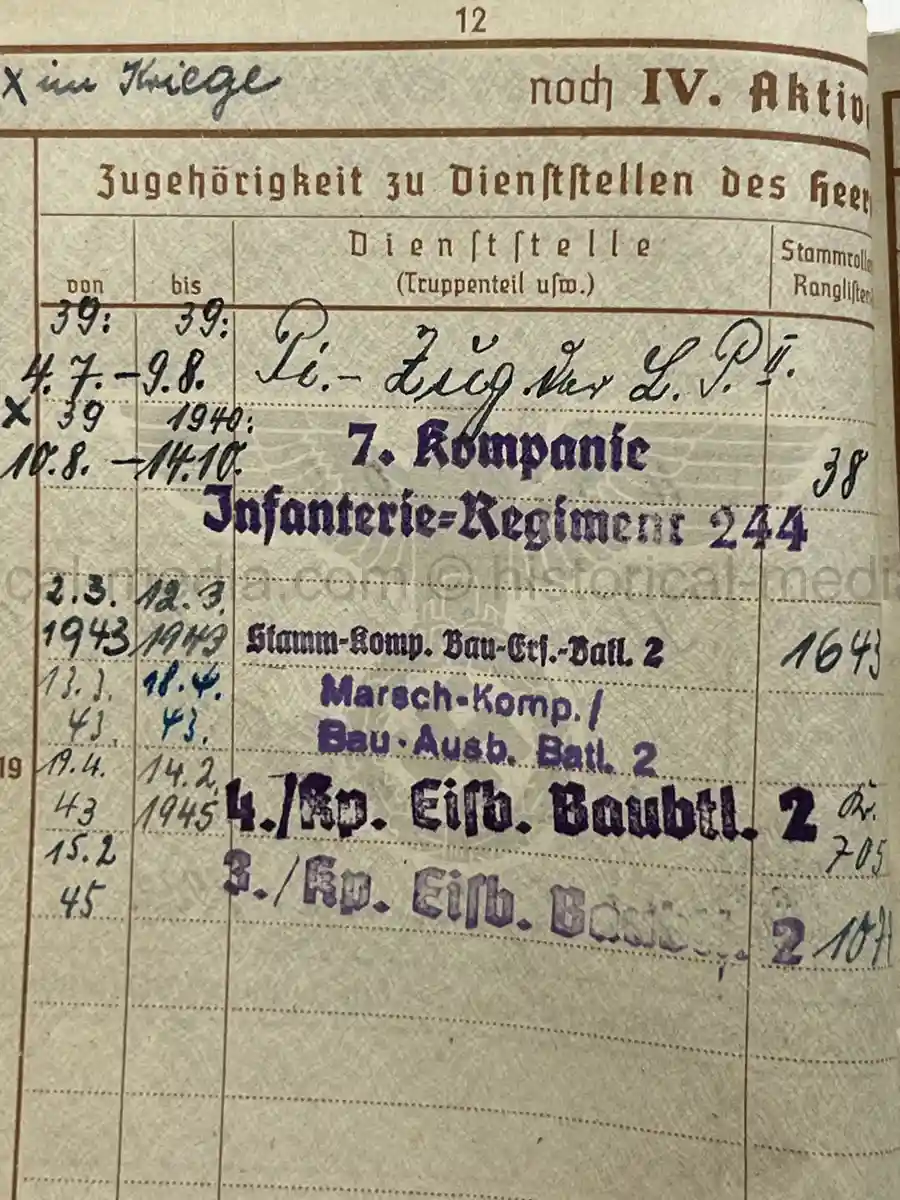
The particularly interesting first unit entry on page 12 records Bauries’ assignment to the Pionier-Zug der Landespolizei Danzig from July 4 through August 9, 1939. The Free City of Danzig, established under the Treaty of Versailles and administered under the protection of the League of Nations, was subject to restrictions on military activity. During the summer of 1939, its police formations were organized into increasingly militarized units in preparation for the impending German invasion of Poland.
The Landespolizei formations subsequently operated under Gruppe Eberhardt during the opening battles of WWII. Their operations included fighting around Danzig and the Polish military installations at Westerplatte. The German attack on Westerplatte on September 1, 1939, is generally regarded as one of the opening engagements of WWII in Europe. The Polish garrison resisted until September 7.
Bauries’ documented pioneer platoon assignment and subsequent service with the formations from which Infanterie-Regiment 244 originated provide a particularly interesting connection to these historic events.
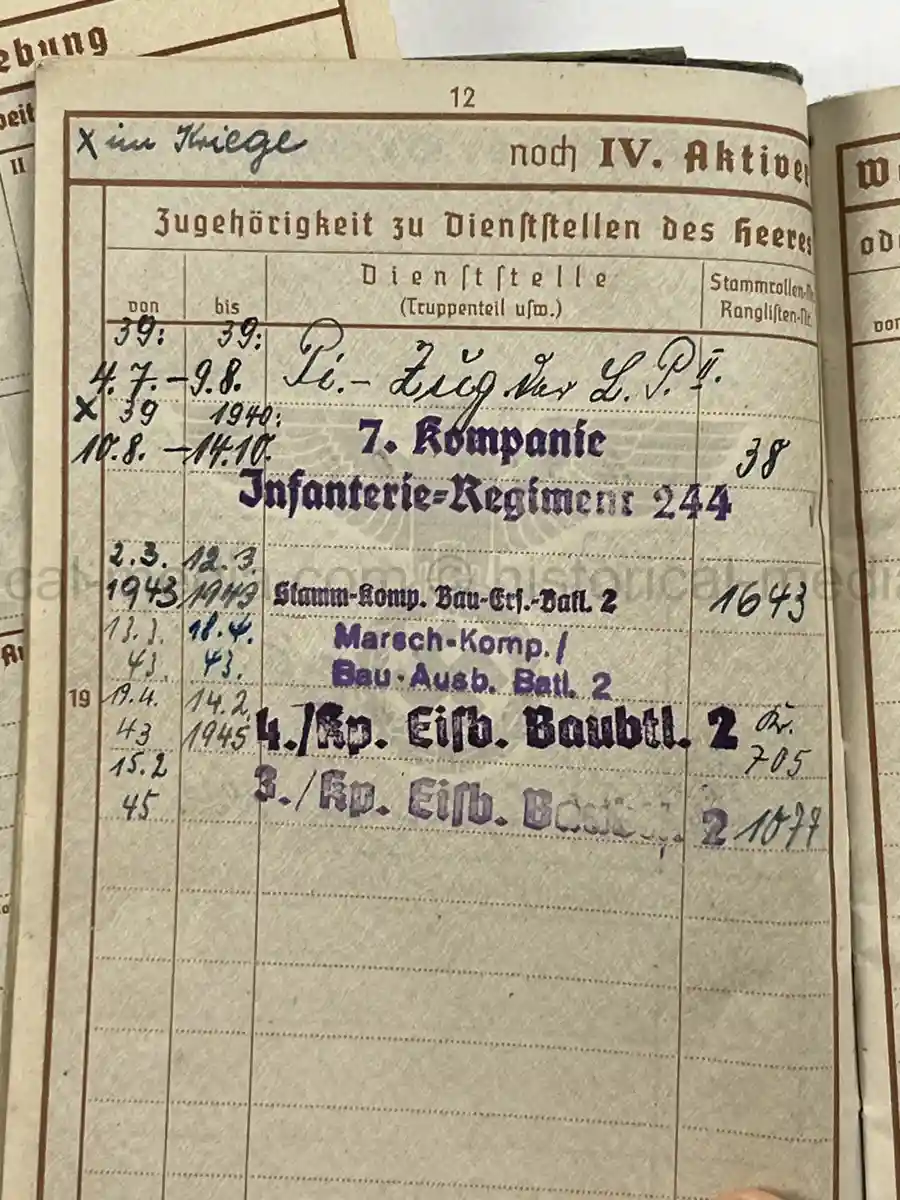
UNIT ASSIGNMENTS
- 04.07.1939–09.08.1939 – Pionier-Zug der Landespolizei Danzig.
- 10.08.1939–14.10.1940 – 7./Infanterie-Regiment 244, including service with its predecessor formation.
- 02.03.1943–12.03.1943 – Stamm-Kompanie, Bau-Ersatz-Bataillon 2.
- 13.03.1943–18.04.1943 – Marsch-Kompanie, Bau-Ausbildungs-Bataillon 2.
- 19.04.1943–14.02.1945 – 4./Eisenbahn-Baubataillon 2.
- From 15.02.1945 – 3./Eisenbahn-Baubataillon 2.
POLAND CAMPAIGN – DANZIG, GDINGEN & OXHÖFT
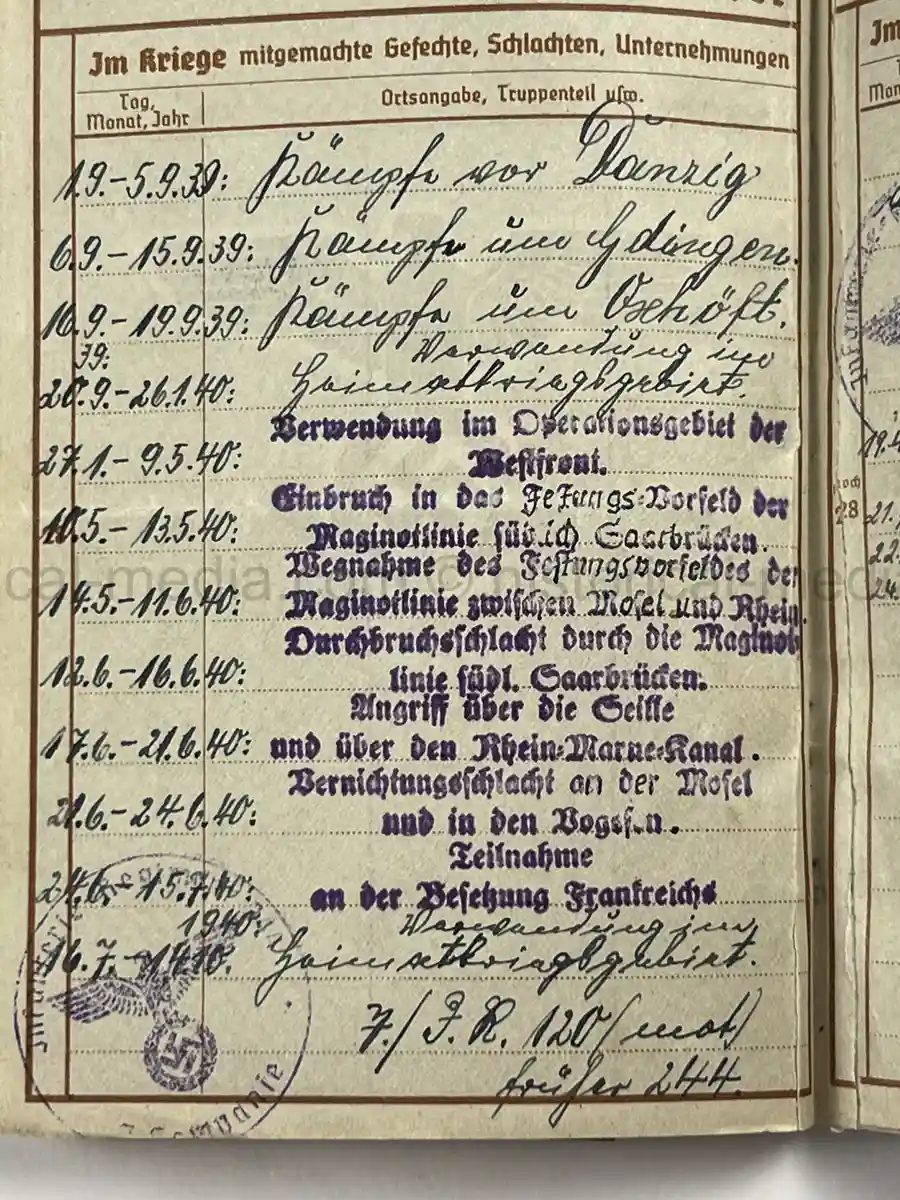
Campaign entries document Bauries’ participation in the opening operations around Danzig and the subsequent fighting for Gdingen (Gdynia) and Oxhöft (Oksywie). The latter was the scene of prolonged Polish resistance during September 1939 as German forces sought to establish control of the Baltic coastal region.
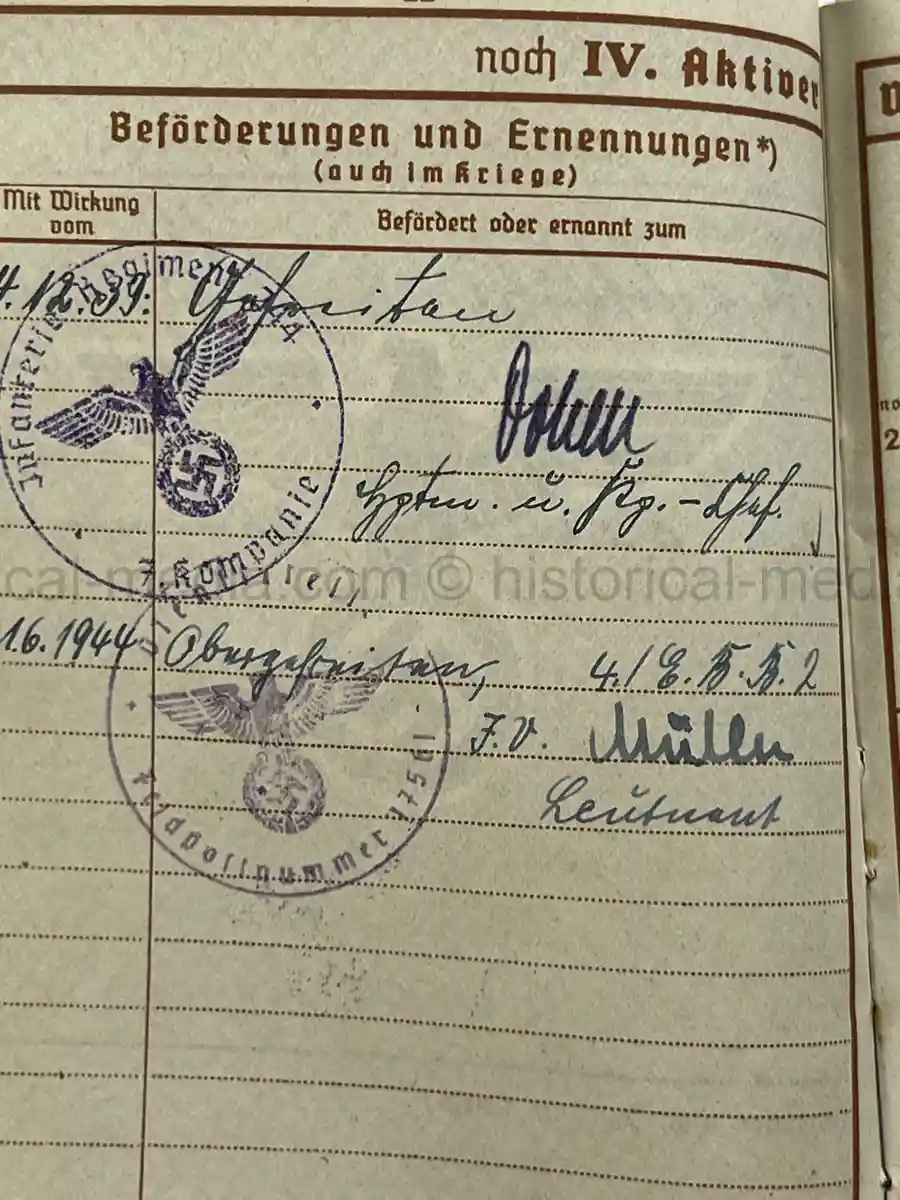
Following the Polish Campaign, Polizei-Regiment 2 Danzig was incorporated into the regular German Army as Infanterie-Regiment 244 in October 1939 and assigned to the newly established 60. Infanterie-Division. Bauries was promoted to Gefreiter on December 4, 1939, with the promotion entry authenticated by the original stamp of 7./Infanterie-Regiment 244.
WESTERN CAMPAIGN – MAGINOT LINE 1940
Following its transfer to the Western Front, Infanterie-Regiment 244 participated in the French Campaign with the 60. Infanterie-Division. Campaign entries document the penetration of the MAGINOT LINE south of Saarbrücken and the subsequent advance toward the Rhine-Marne Canal. The regiment participated in the June 1940 offensive against the French fortified positions before advancing into the Vosges region.
Following the French Campaign, the division was reorganized as a motorized infantry formation. Infanterie-Regiment 244 was motorized in August 1940 and redesignated Infanterie-Regiment 120 on September 15, 1940, retaining its association with the 60. Infanterie-Division (mot.).
EISENBAHN-BAUBATAILLON 2 – EASTERN FRONT 1943–1945
Following a break in his recorded active military service, Bauries returned to military duty in March 1943 with Bau-Ersatz-Bataillon 2. After a brief period with its associated training and replacement formations, he joined 4./Eisenbahn-Baubataillon 2 on April 19, 1943.
Railway construction battalions were responsible for constructing, repairing and maintaining railway infrastructure in German-occupied territories. Their activities were particularly important on the Eastern Front, where the extensive distances, damage to existing railway infrastructure and differences between German and Soviet railway gauges presented considerable logistical difficulties.
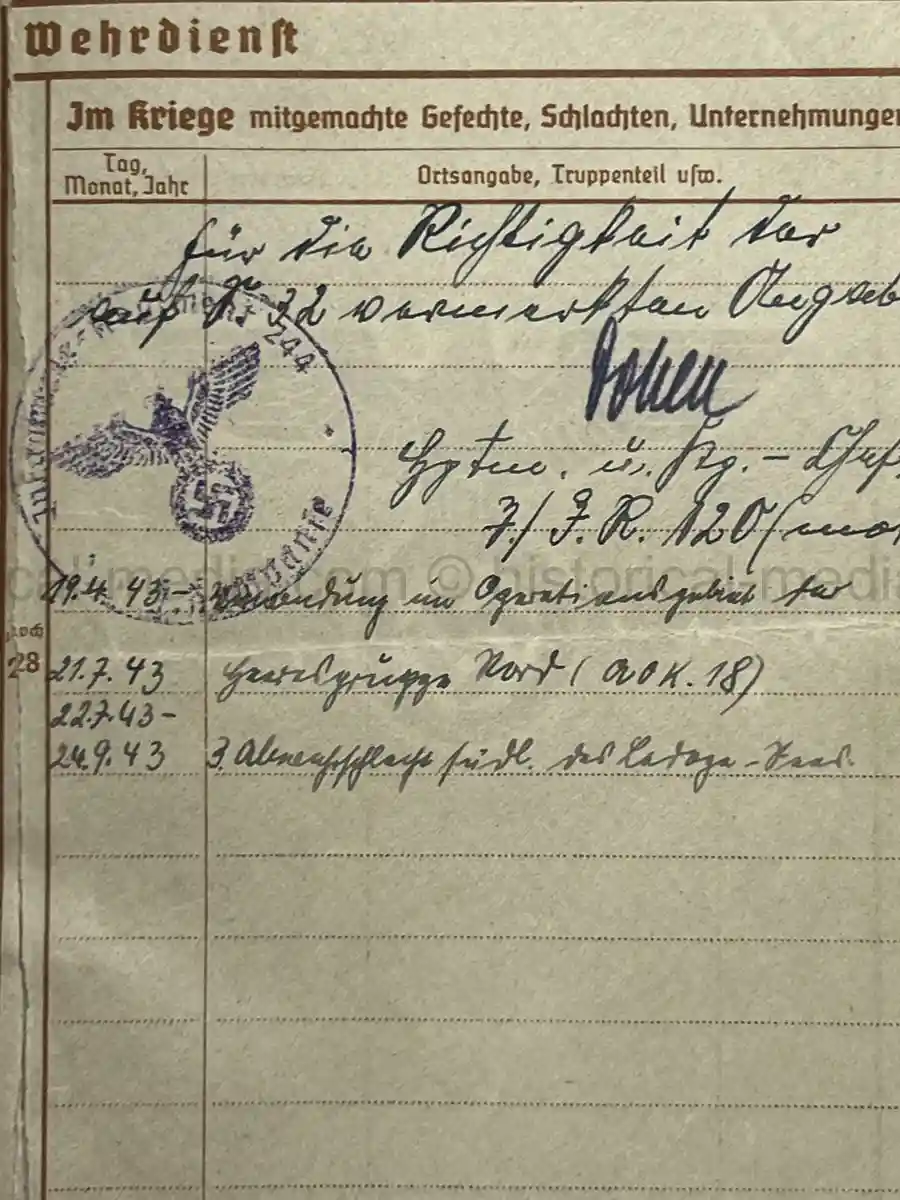
His Eastern Front campaign entries identify service within the operational area of the 18. Armee of Heeresgruppe Nord, including the Third Defensive Battle south of Lake Ladoga. These operations formed part of the prolonged fighting in the Leningrad and Lake Ladoga sectors during 1943.
SPECIALIZED TRAINING & QUALIFICATIONS
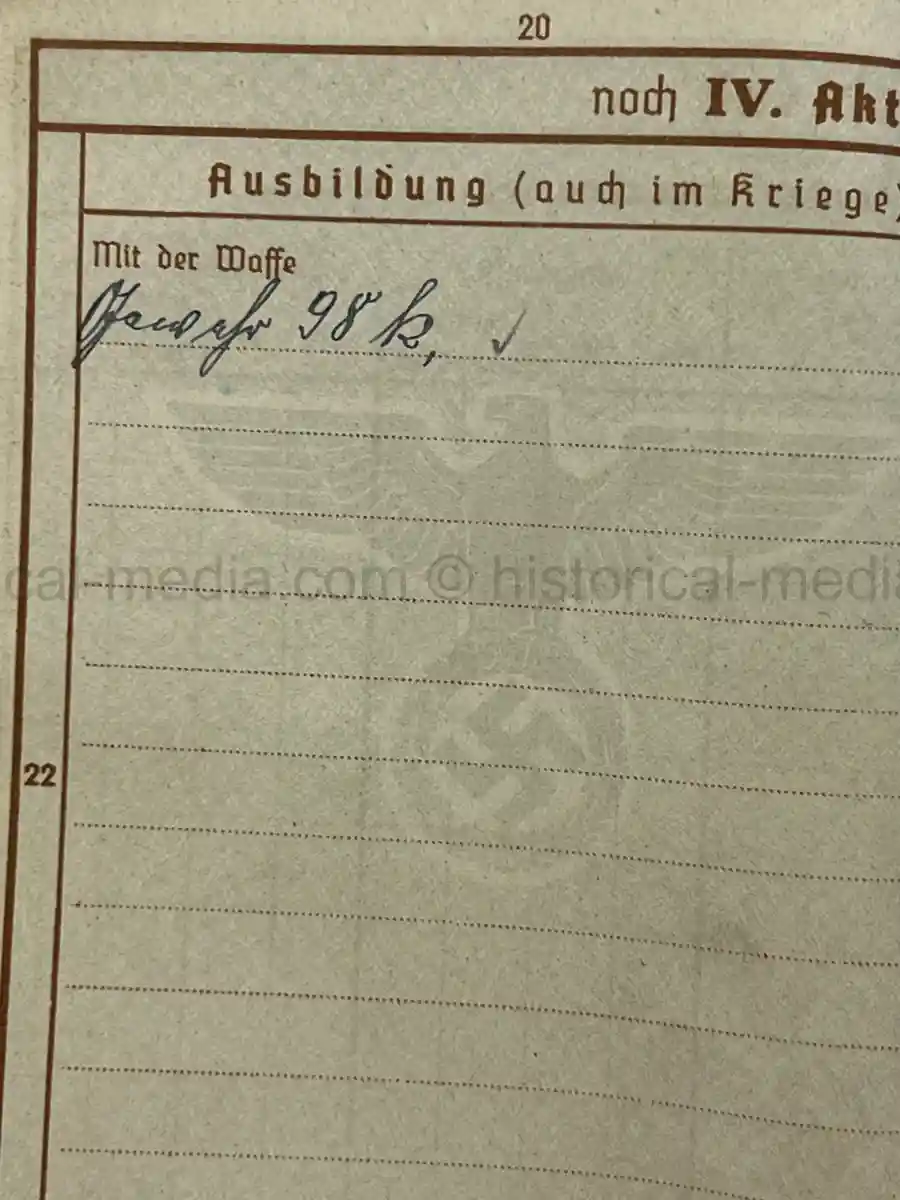
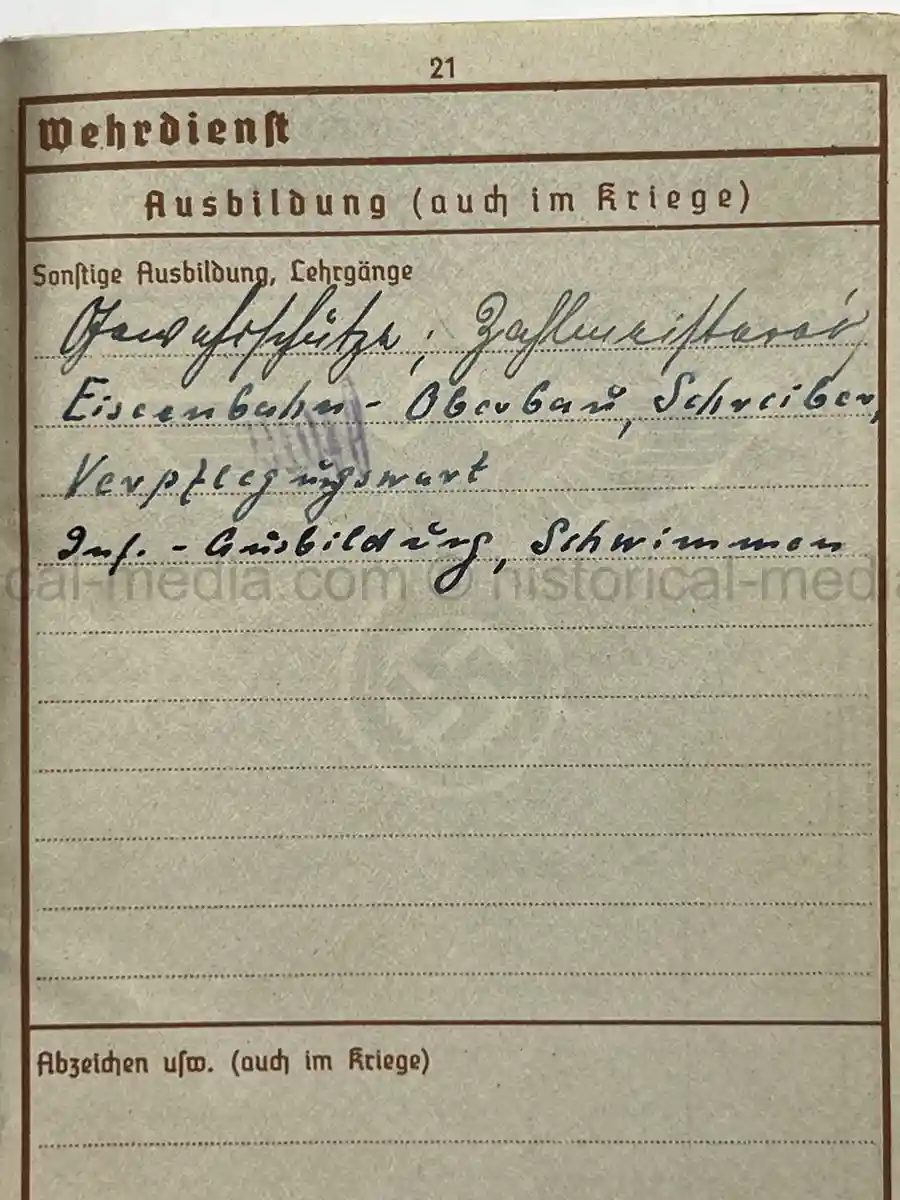
An interesting series of handwritten entries on pages 20–21 records qualification with the Karabiner 98k, pioneer training, Zahlmeisterei (military paymaster administration), Eisenbahn-Oberbau (railway track construction), Schreiber (clerical duties), Verpflegungswart (provisions administration), infantry training and swimming. His civilian experience in banking and cash administration was particularly relevant to his military administrative qualifications.
PROMOTIONS & DECORATIONS
- 04.12.1939 – Gefreiter.
- 01.06.1944 – Obergefreiter.
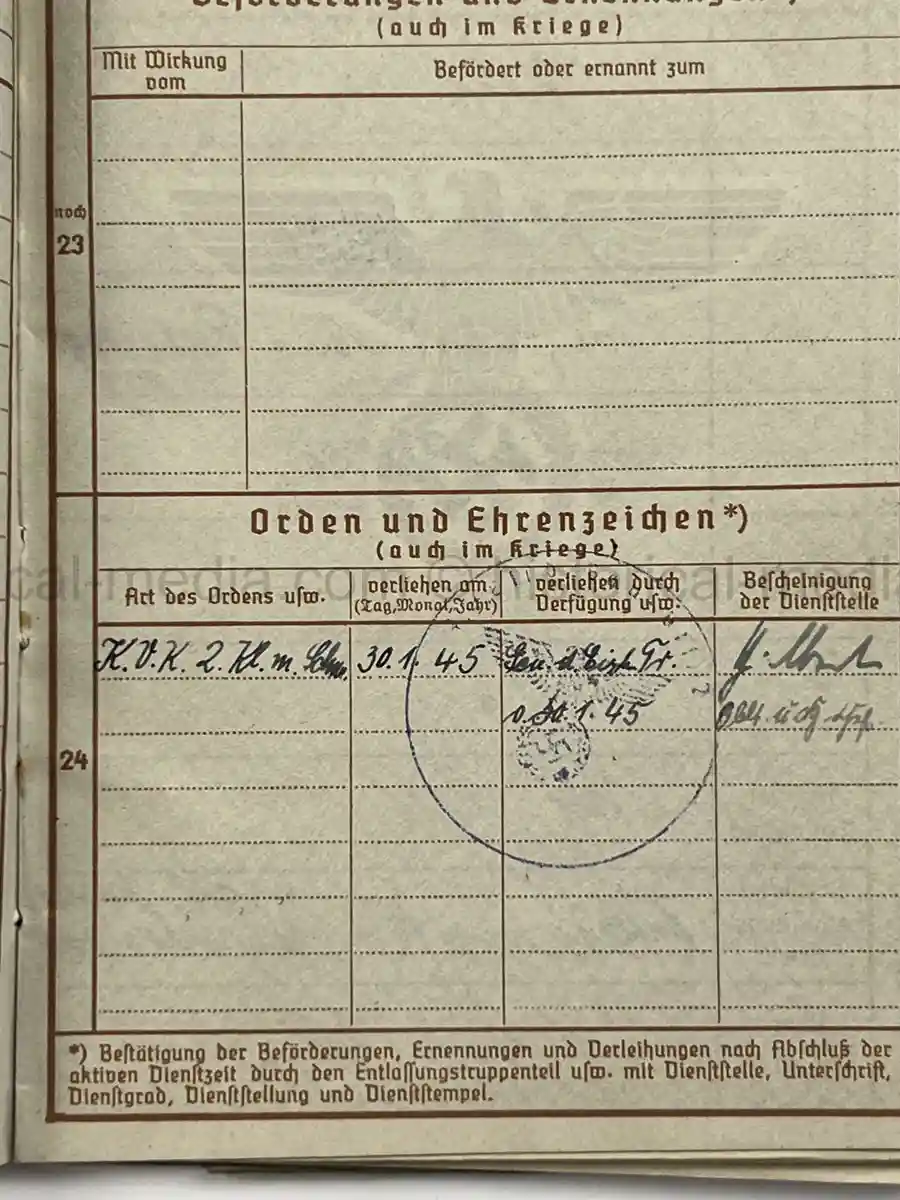
- 30.01.1945 – Kriegsverdienstkreuz II. Klasse mit Schwertern – War Merit Cross 2nd Class with Swords.
His final recorded unit assignment was to 3./Eisenbahn-Baubataillon 2 on February 15, 1945. An interesting late-war award of the Kriegsverdienstkreuz II. Klasse mit Schwertern is recorded just weeks before this transfer.
Additional findings from the individual pages:
-
Exact Polish Campaign dates: September 1–5, 1939, Danzig; September 6–15, Gdingen; September 16–19, Oxhöft.
-
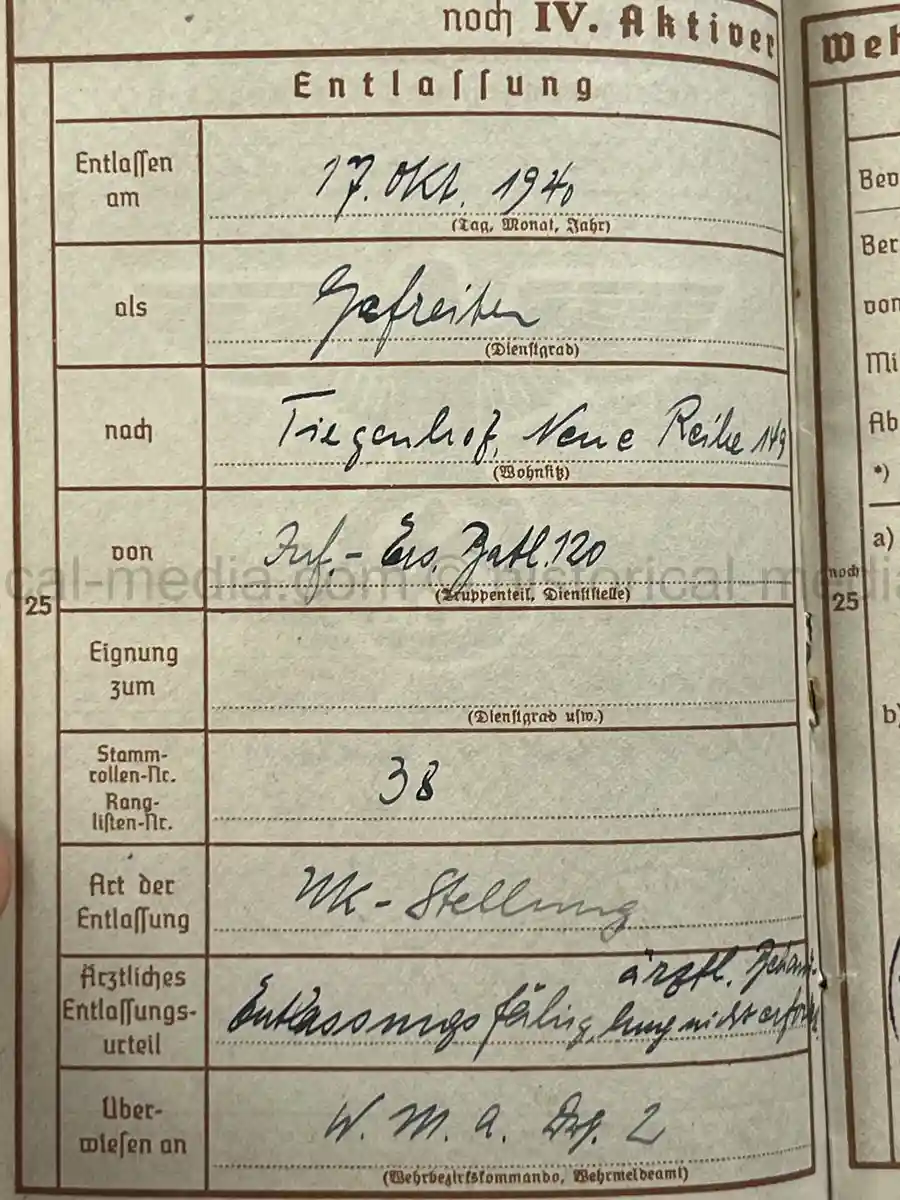
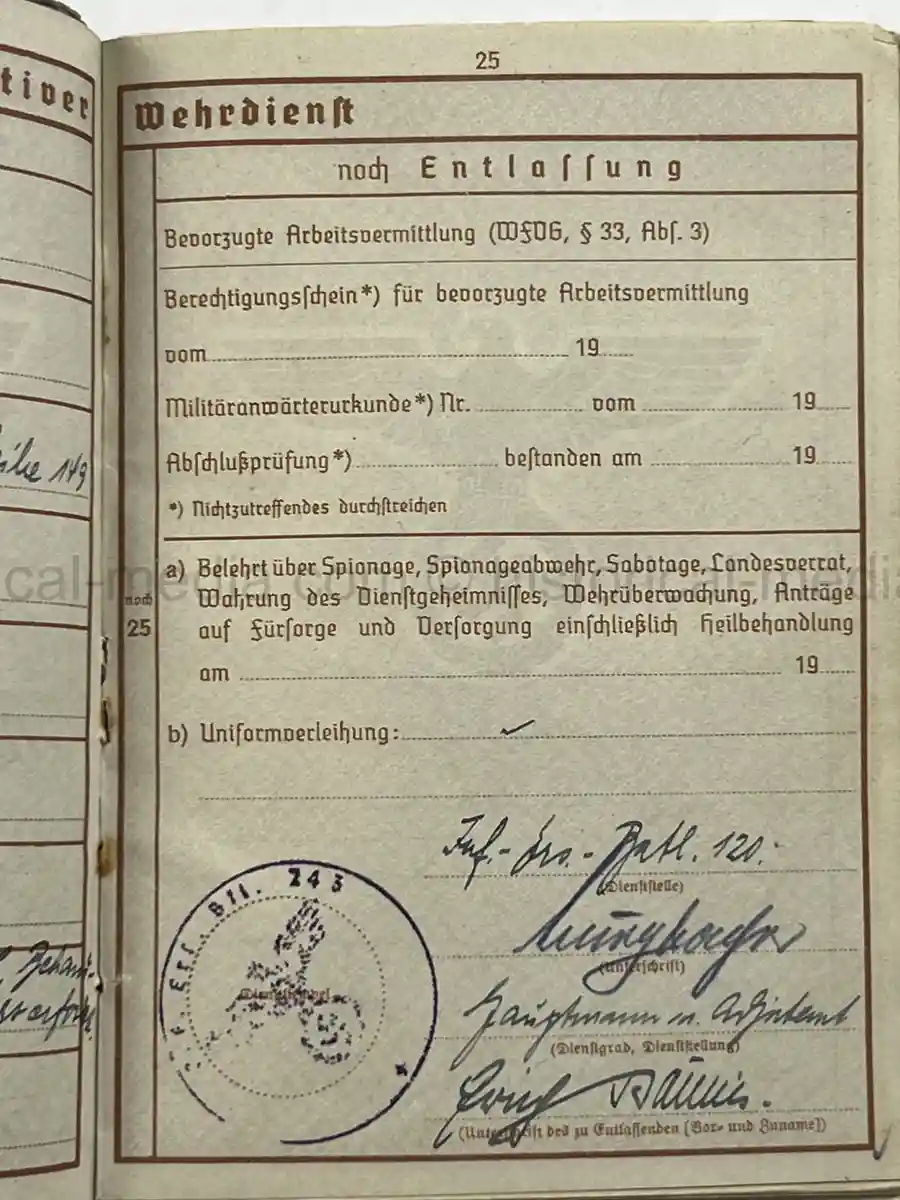
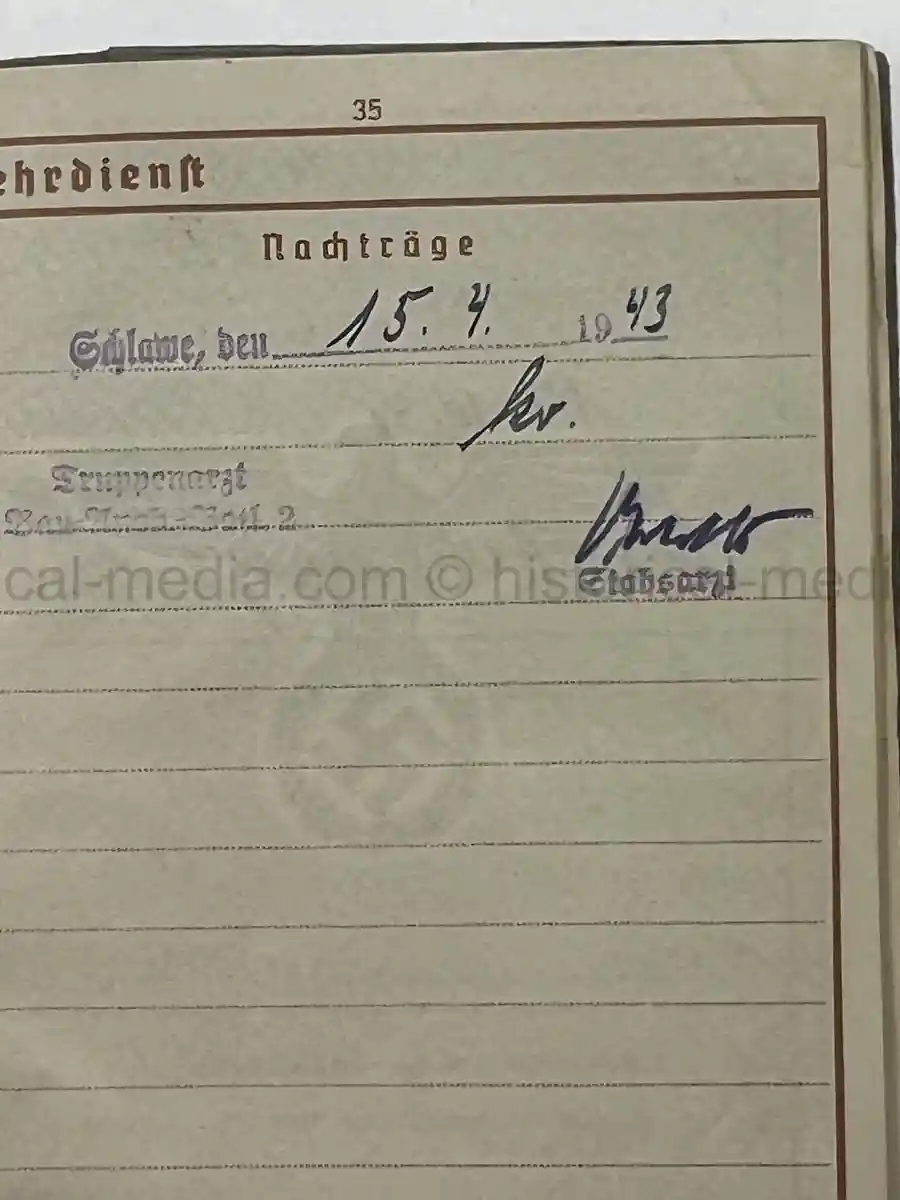
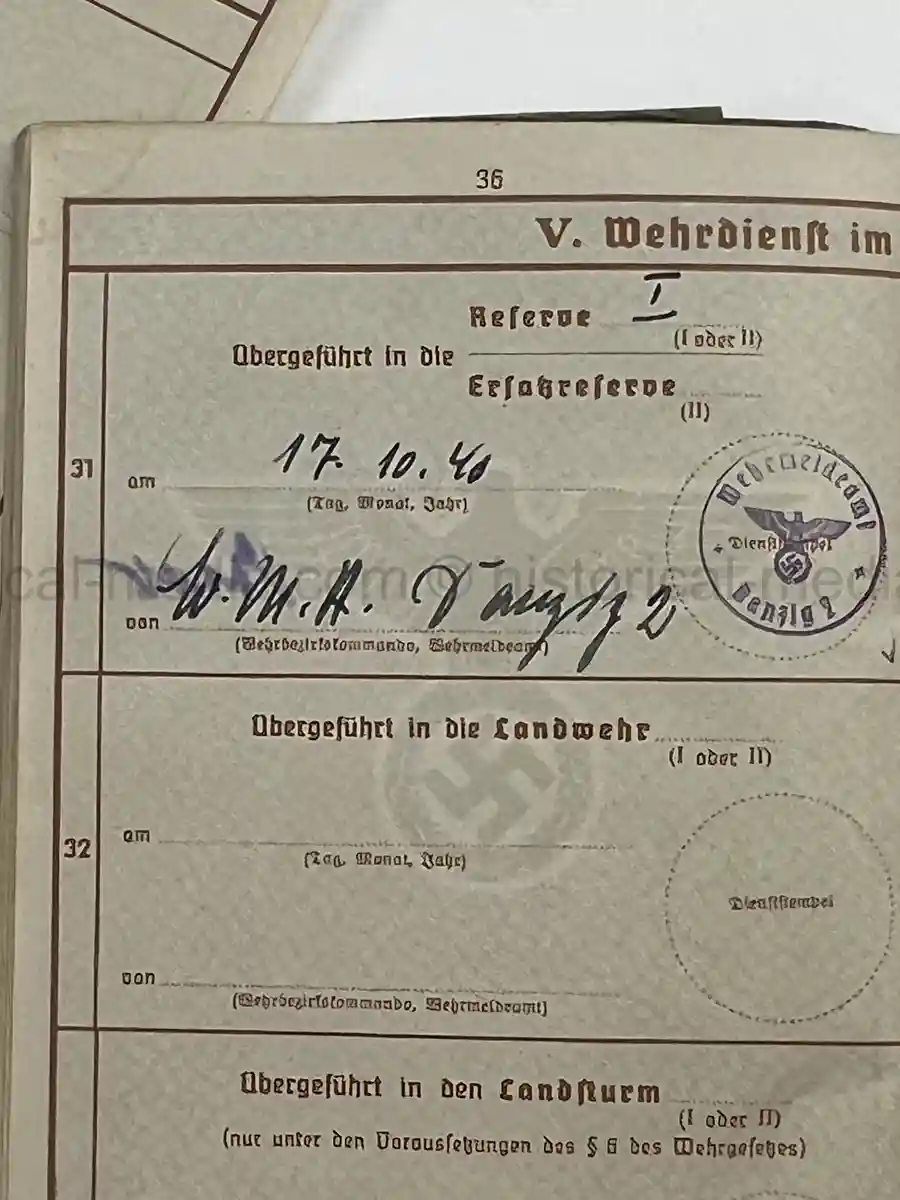
Discharged October 17, 1940: Page 24 records his release under an Uk-Stellung (indispensable civilian employment classification), explaining the interruption in military service until March 1943.
-
Maginot Line: Particularly detailed stamped campaign entries cover the breakthrough south of Saarbrücken from June 12–16, 1940.
-
Lake Ladoga: The campaign entry specifically dates his participation in the Third Defensive Battle south of Lake Ladoga to July 22–September 24, 1943. Your original reference to Operation Iskra is incorrect; that offensive occurred in January 1943.
-
Westerplatte: The historical connection is supported by the unit history, but Westerplatte itself is not explicitly named in his personal campaign entries.
An interesting Wehrpass documenting the transformation of the prewar Danzig police formations into regular German Army units, with a historical connection to the opening battles of WWII at Westerplatte, the Polish coastal campaign, the assault on the Maginot Line and subsequent railway construction and logistical service with Heeresgruppe Nord. The original Landespolizei Danzig pioneer platoon entry is the particularly distinguishing feature of this document.