
Description
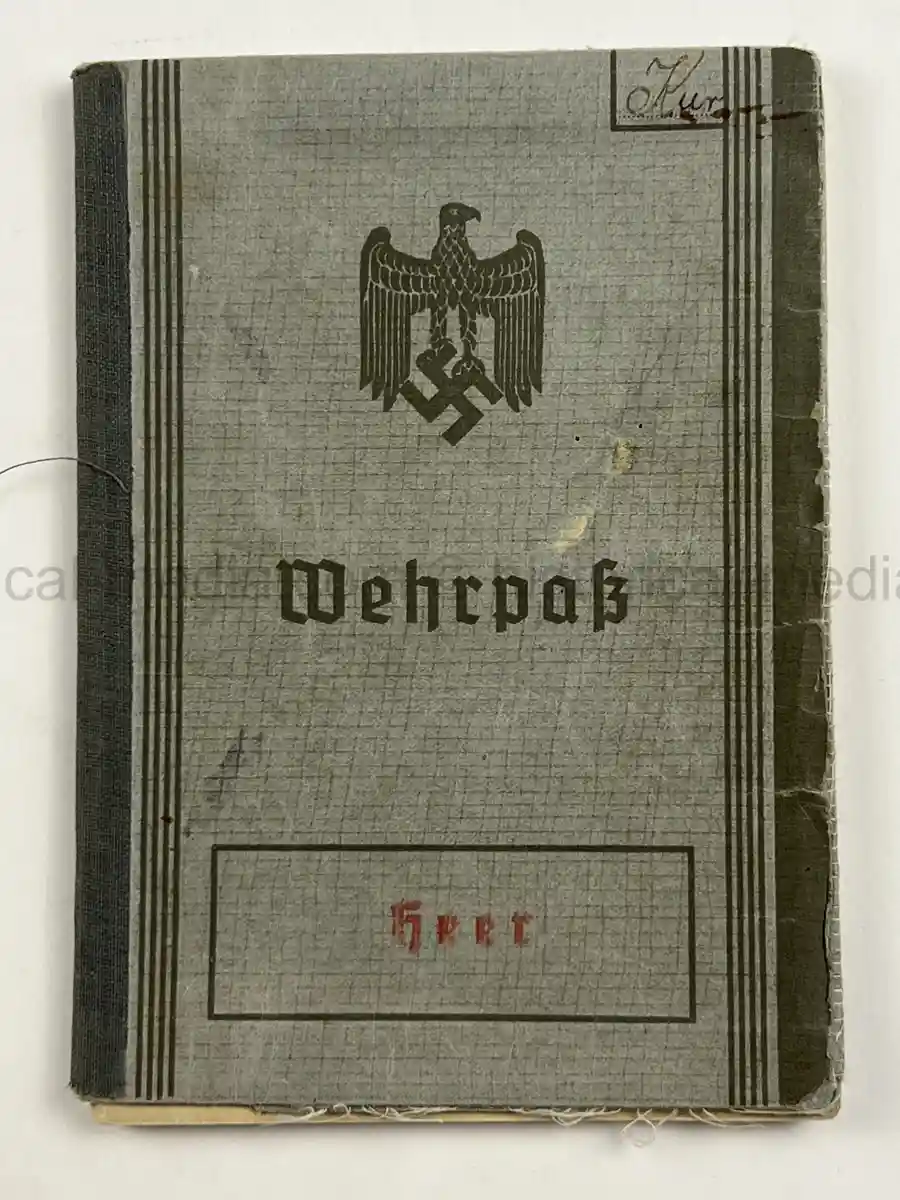
WEHRPASS – 252. INFANTERIE-DIVISION – VETERINÄR-KOMPANIE 252 – WWI GARDЕ-JÄGER – POLAND CAMPAIGN – EKII – TWICE WOUNDED
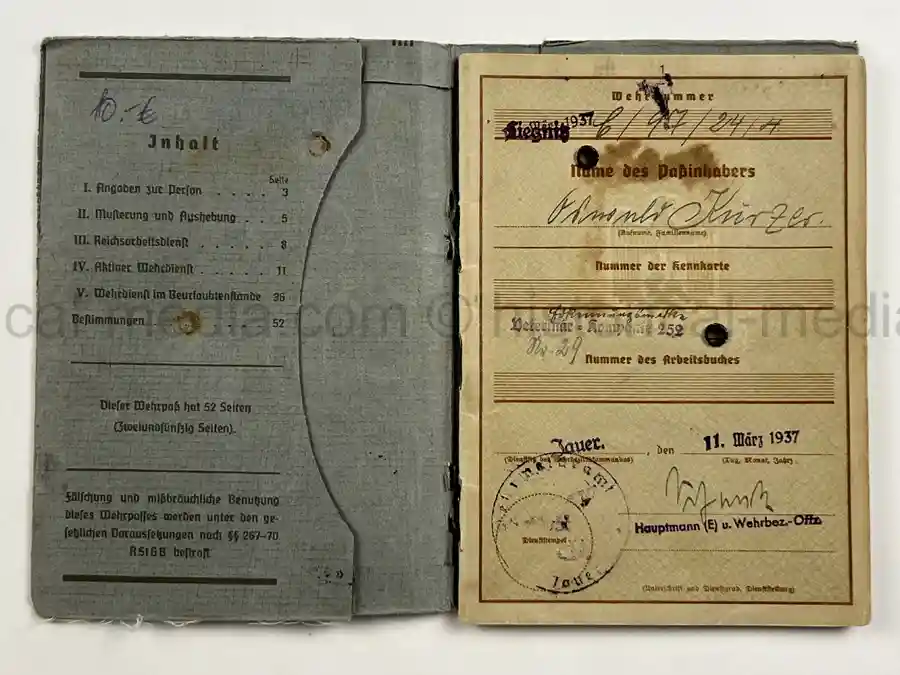
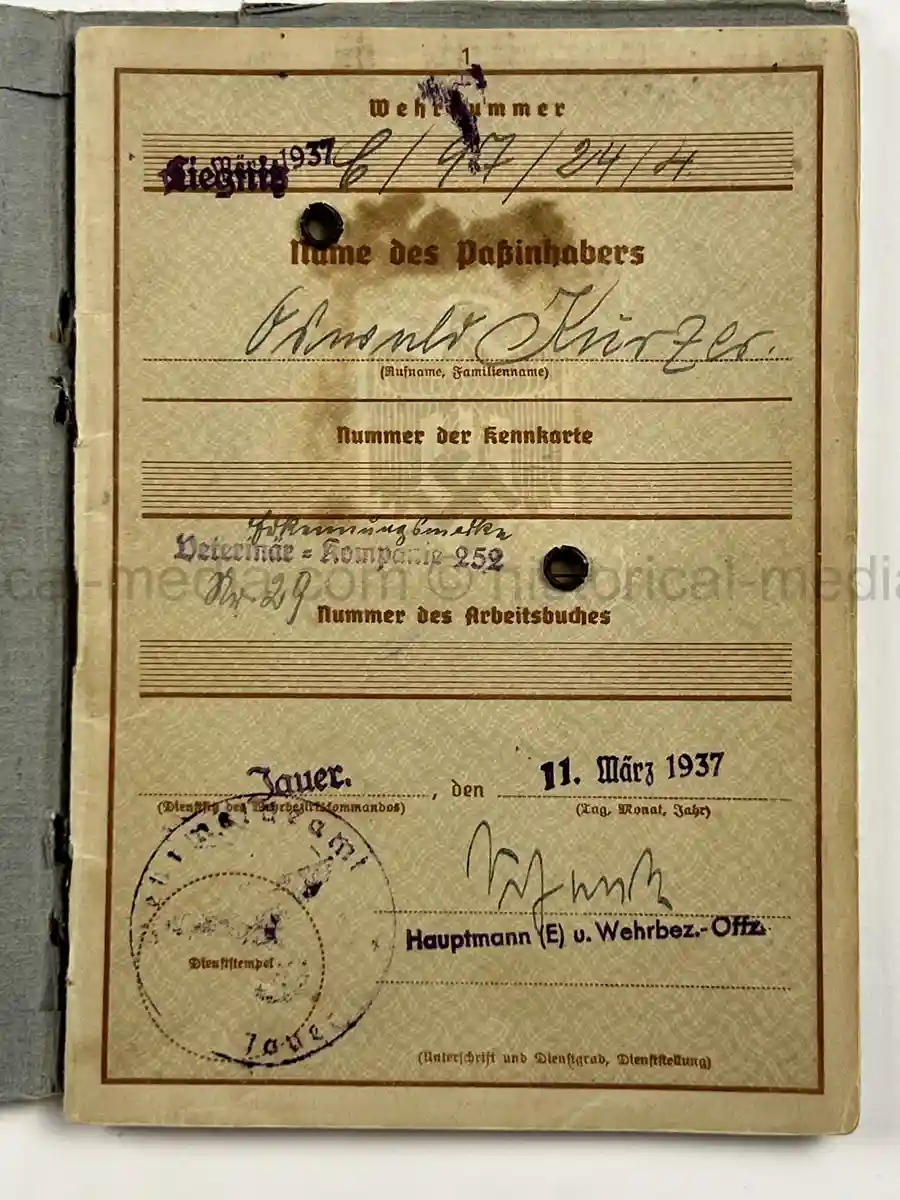
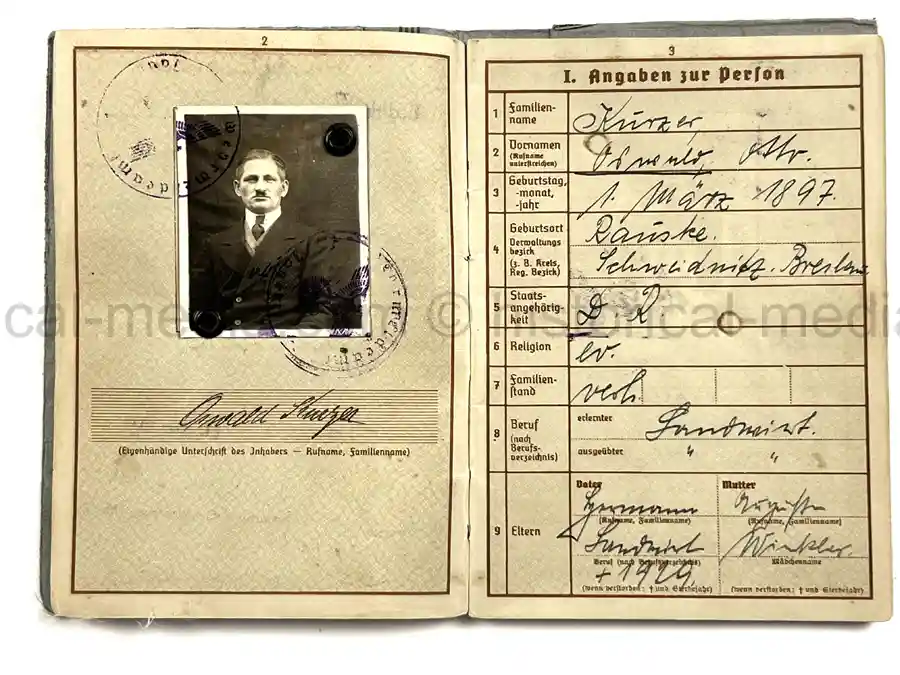
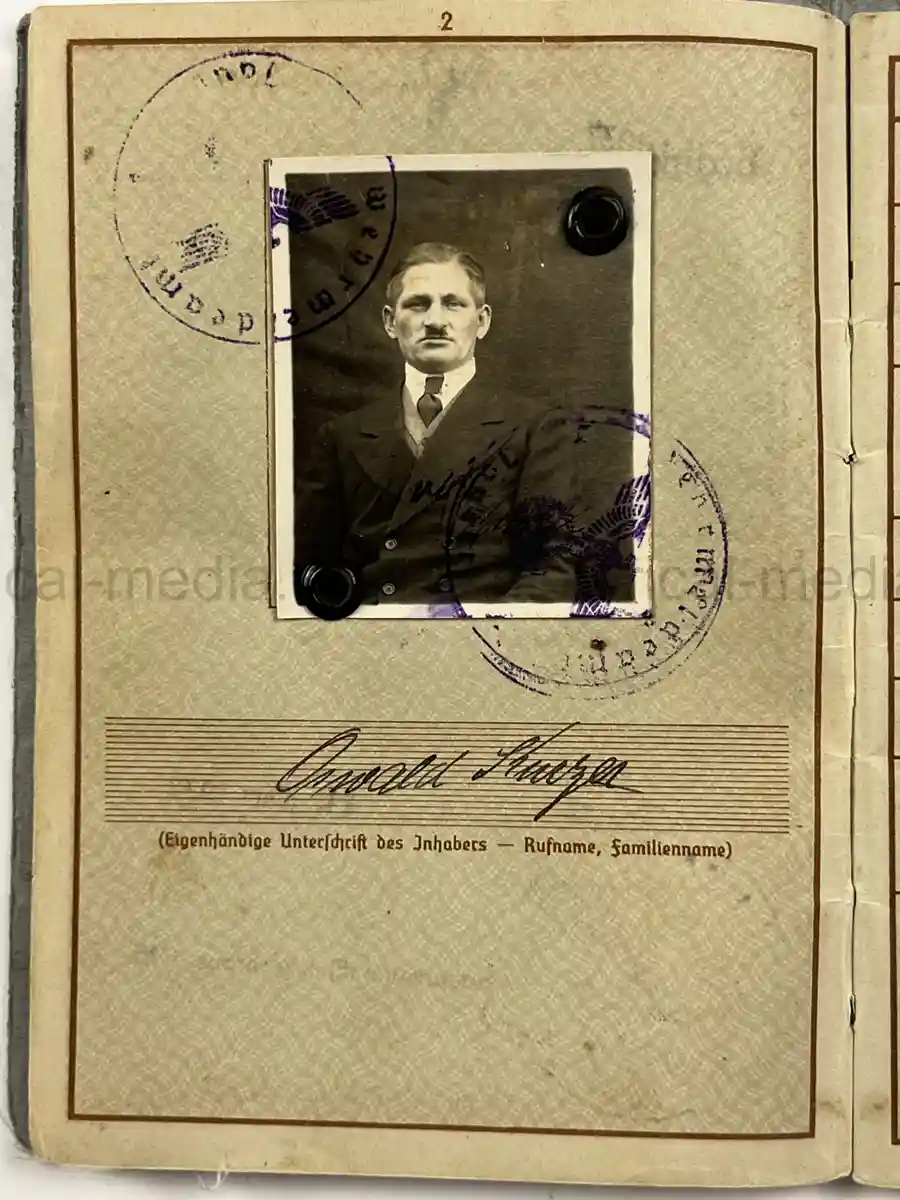
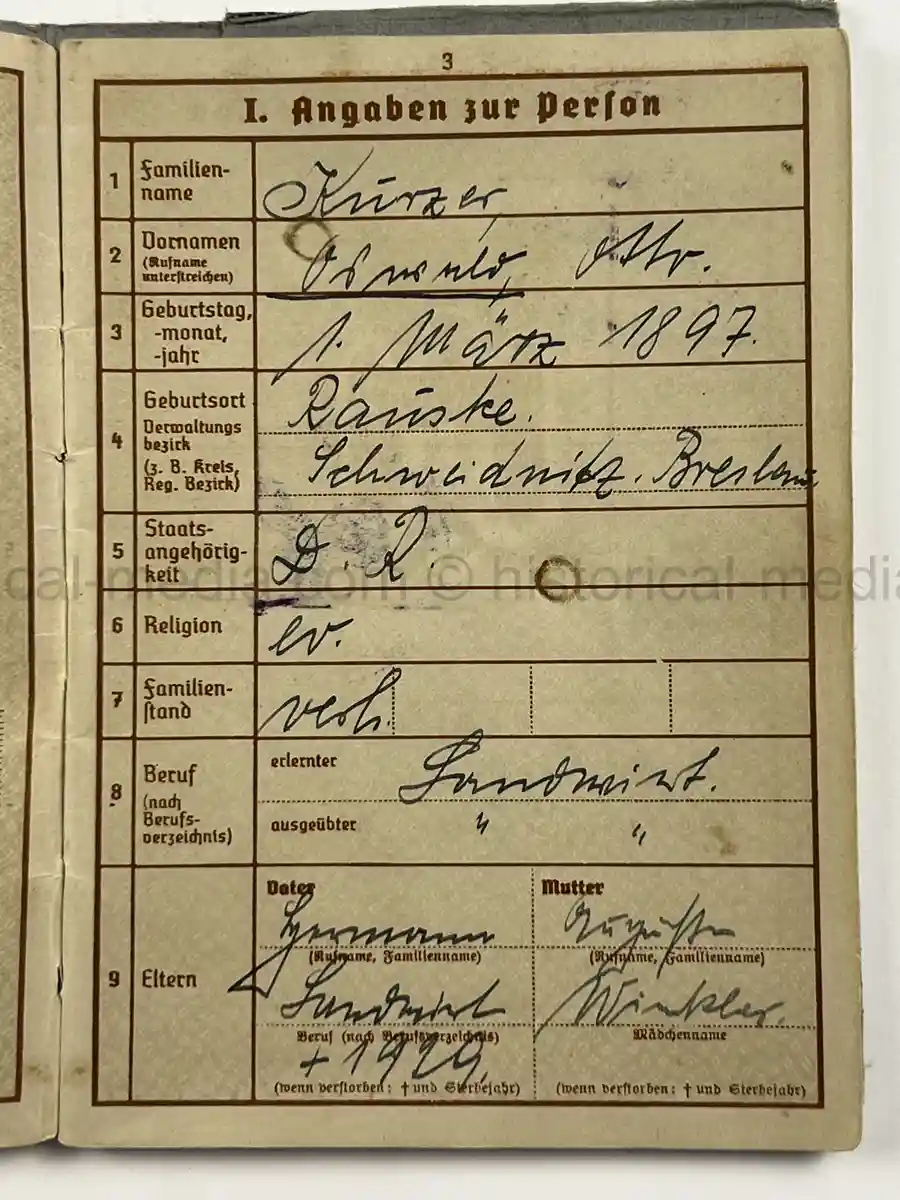
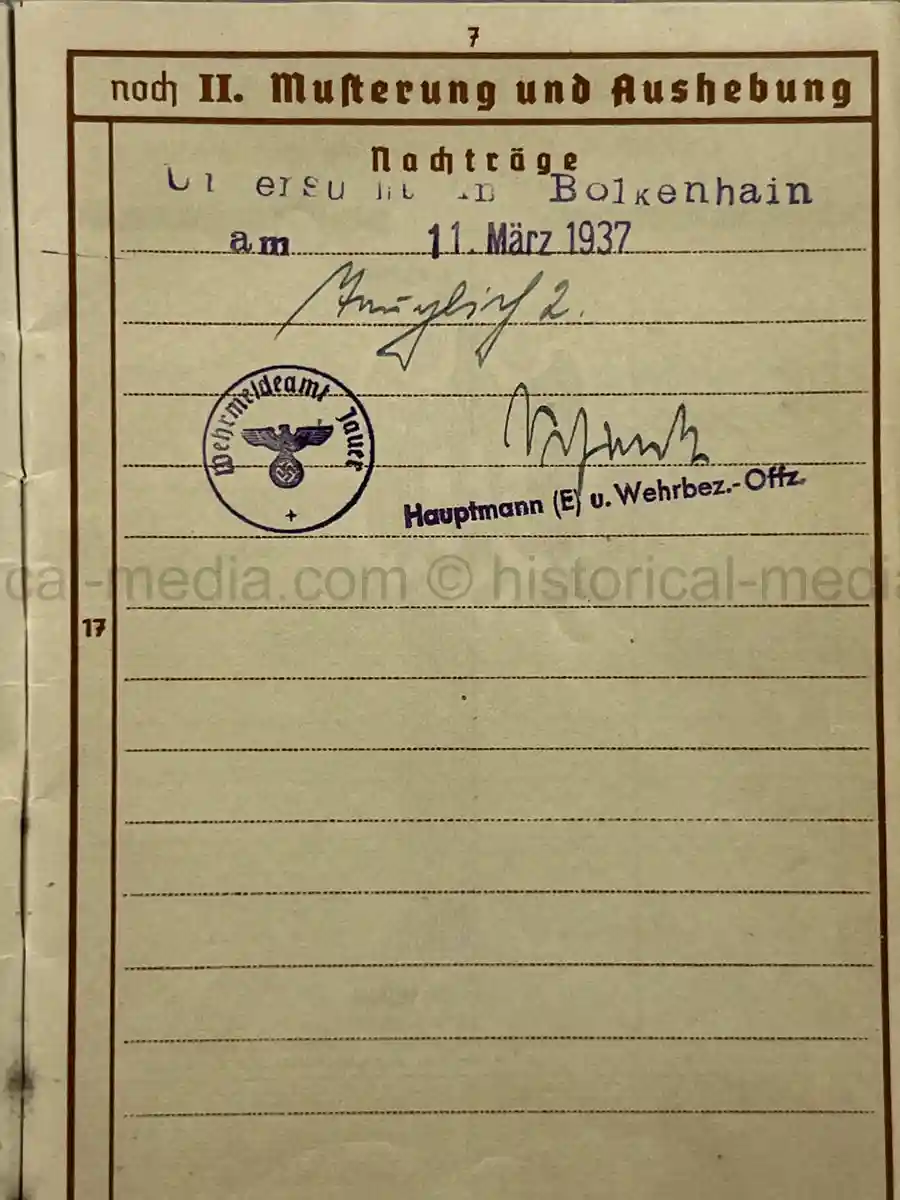
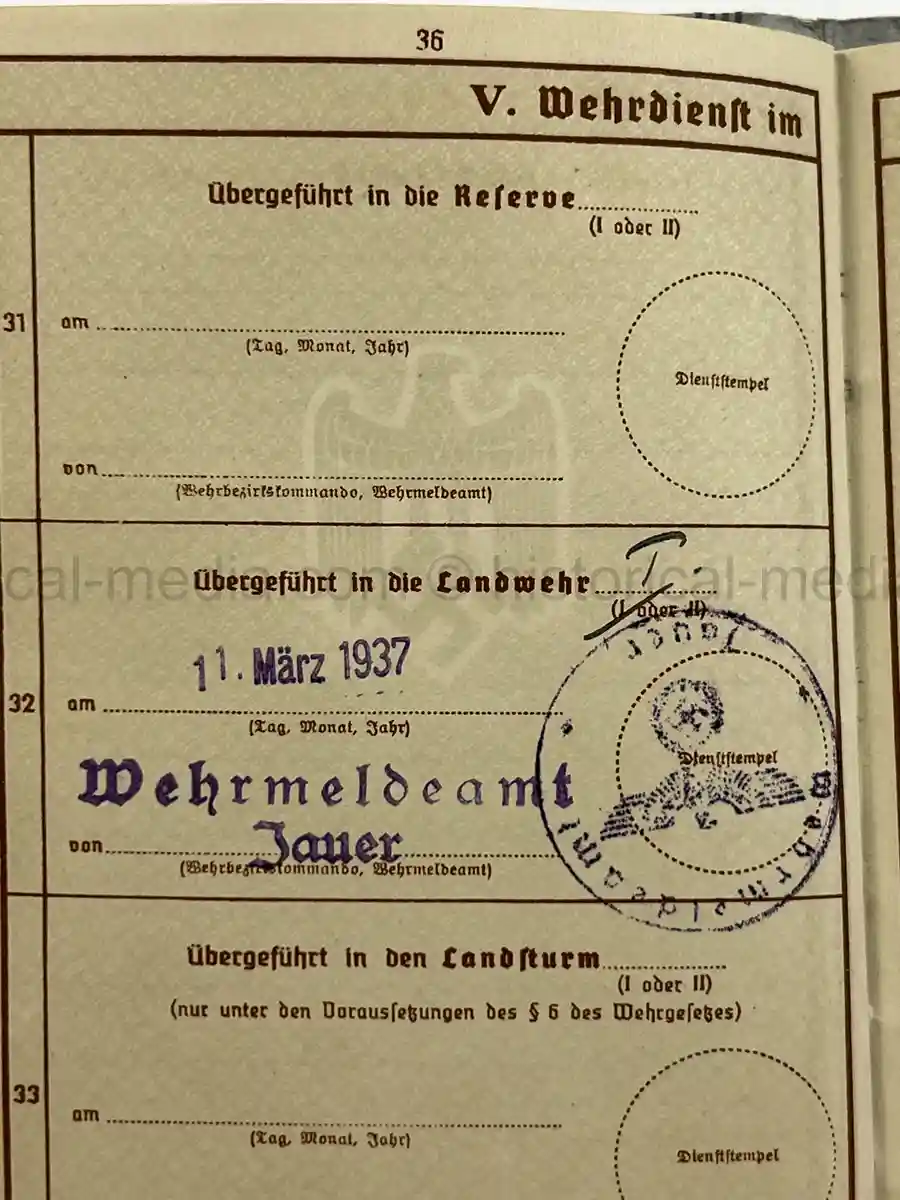
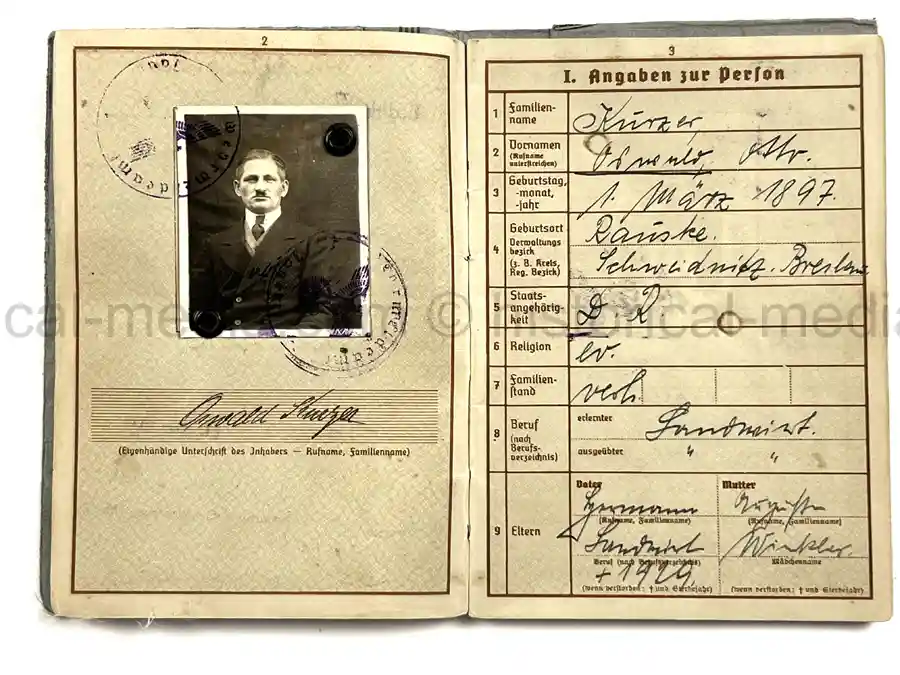
Interesting Heer Wehrpass issued to Unteroffizier Arnold Kürzer, born March 1, 1897, in the Schweidnitz district of Lower Silesia. A farmer (Landwirt) by civilian profession, Kürzer was a decorated veteran of the First World War who was recalled for military service at the outbreak of WWII. The Wehrpass was issued at Jauer on March 11, 1937, and retains his original civilian identification photograph and personal signature. Particularly interesting are the entries documenting his service with Imperial German Jäger formations, two WWI wounds, the 1914 Iron Cross 2nd Class and subsequent participation in the 1939 Poland Campaign.
FIRST WORLD WAR SERVICE – 1914–1918
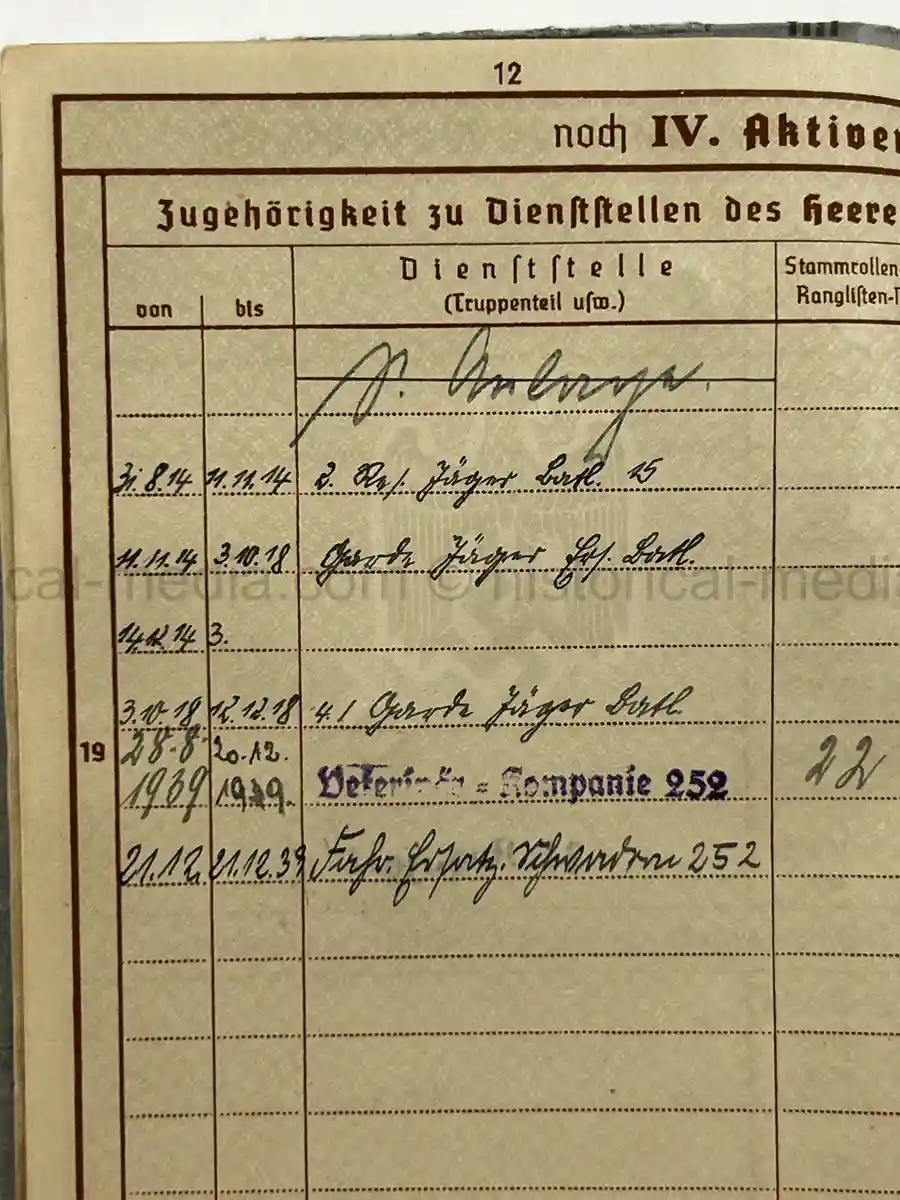
Kürzer entered military service in August 1914 at just 17 years of age. His Imperial German military assignments are recorded on page 12 and include:
- 2.Kompanie, Jäger-Bataillon 15.
- Garde-Jäger-Ersatz-Bataillon.
- 4. Kompanie, Garde-Jäger-Bataillon.
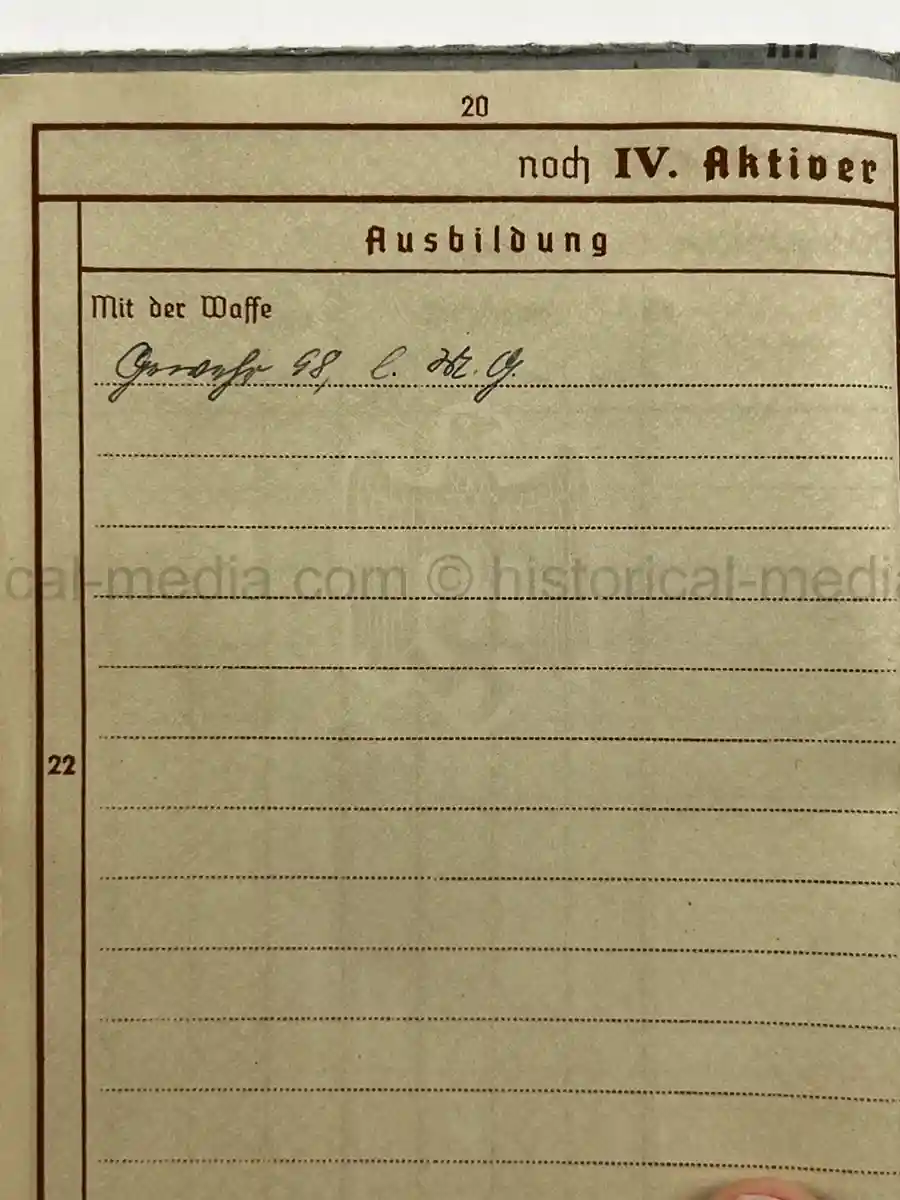
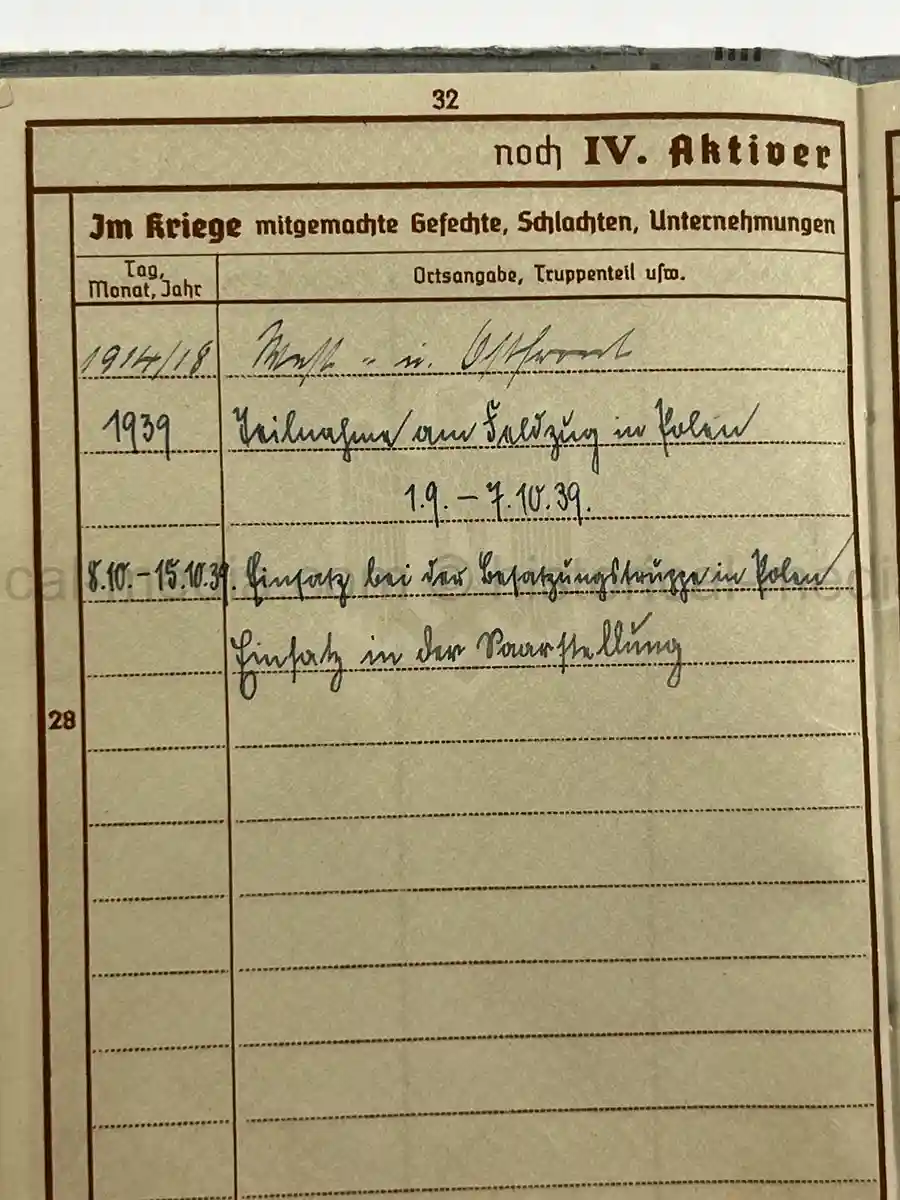
His military service continued through December 1918. Page 32 records his participation in operations on both the Western and Eastern Fronts during WWI. Weapons training entries include the Gewehr 98 and light machine gun.
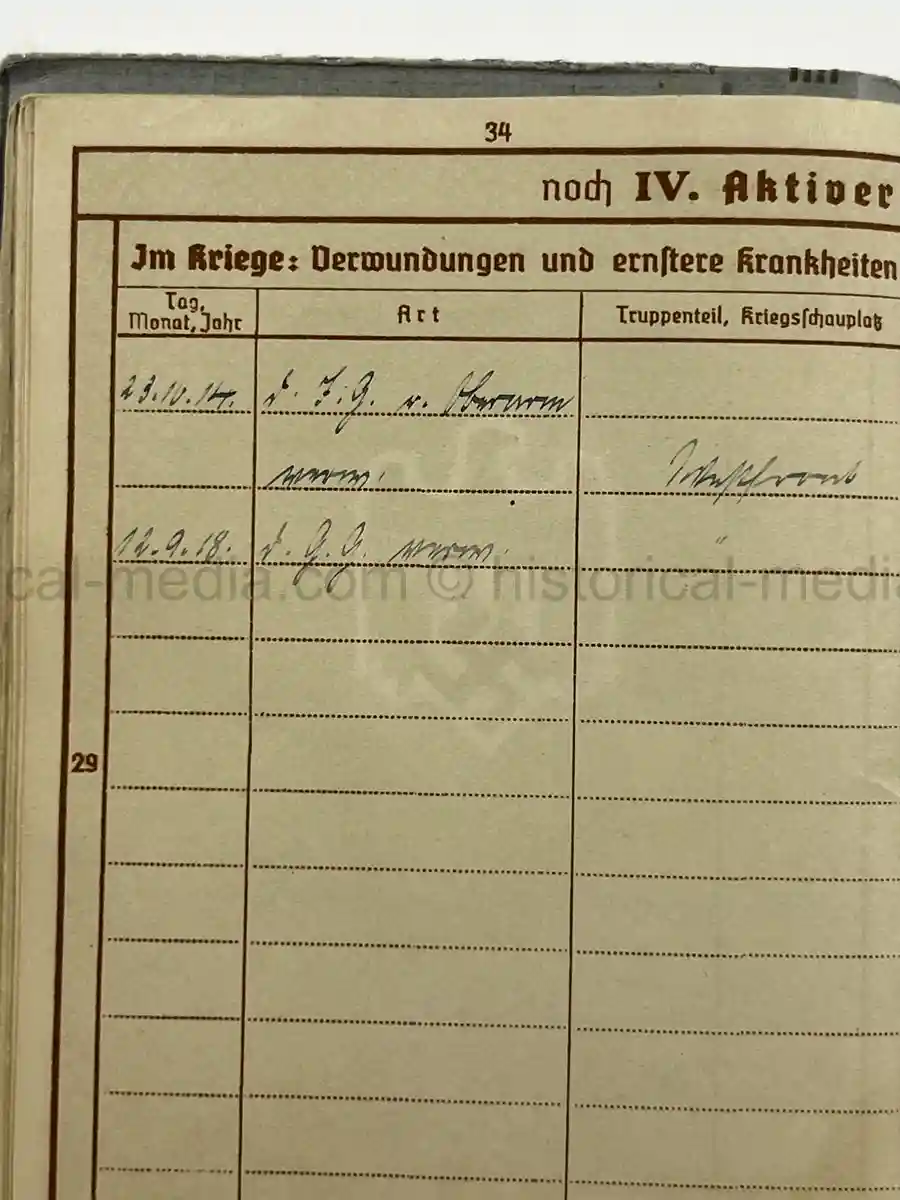
Especially interesting are two wartime wound entries on page 34, dated November 23, 1914, and September 14, 1918, with the Western Front identified in the corresponding campaign column.
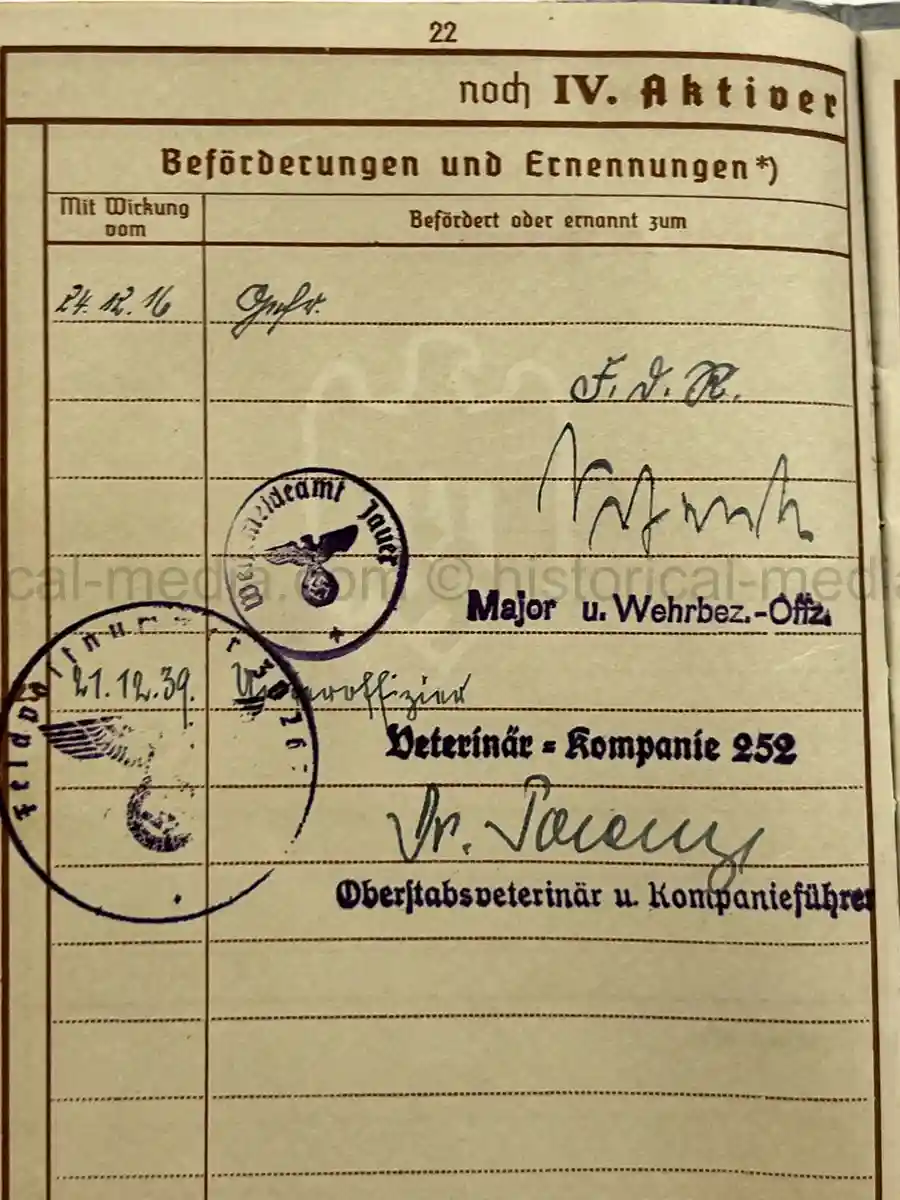
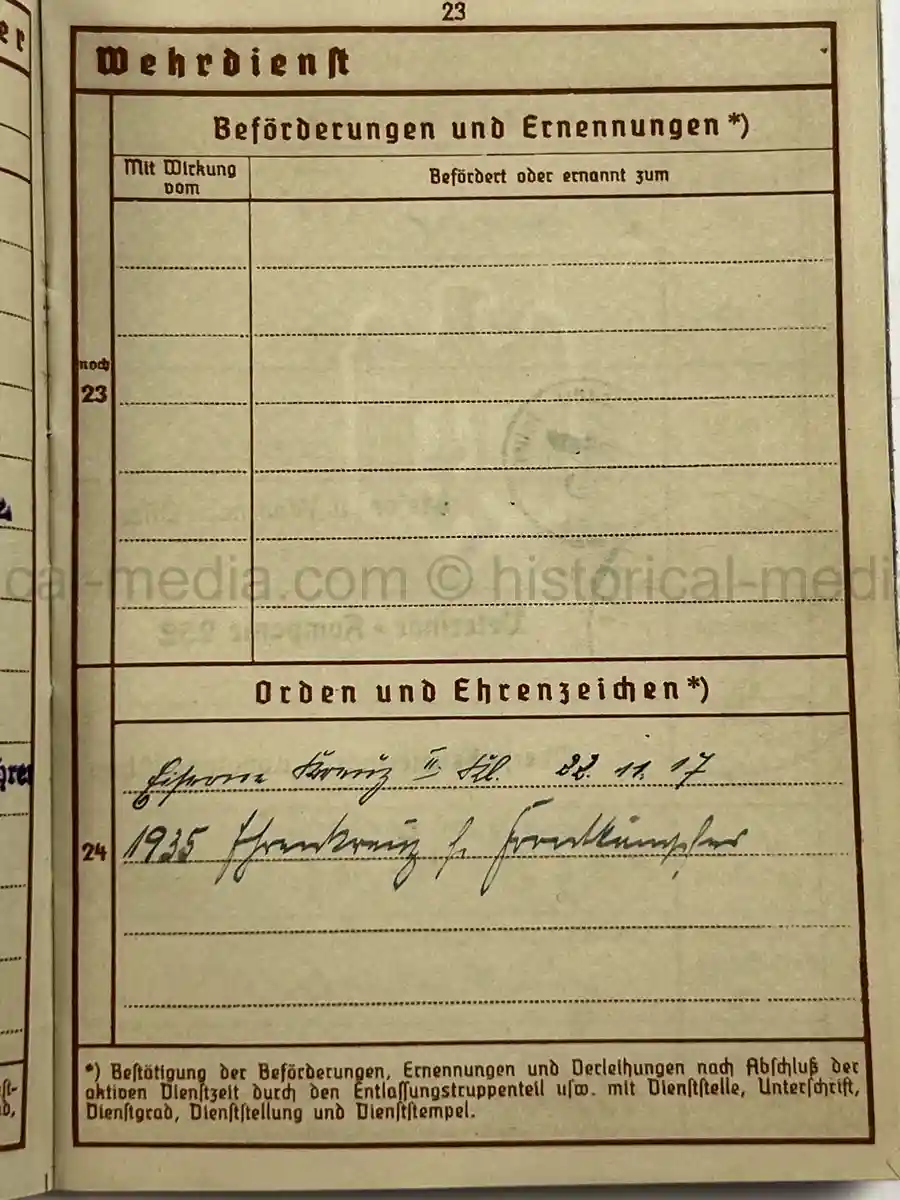
He was promoted to Gefreiter in December 1916 and awarded the Eisernes Kreuz II. Klasse on November 22, 1917. In 1935, he received the Ehrenkreuz für Frontkämpfer in recognition of his First World War combat service.
SECOND WORLD WAR SERVICE – 252. INFANTERIE-DIVISION
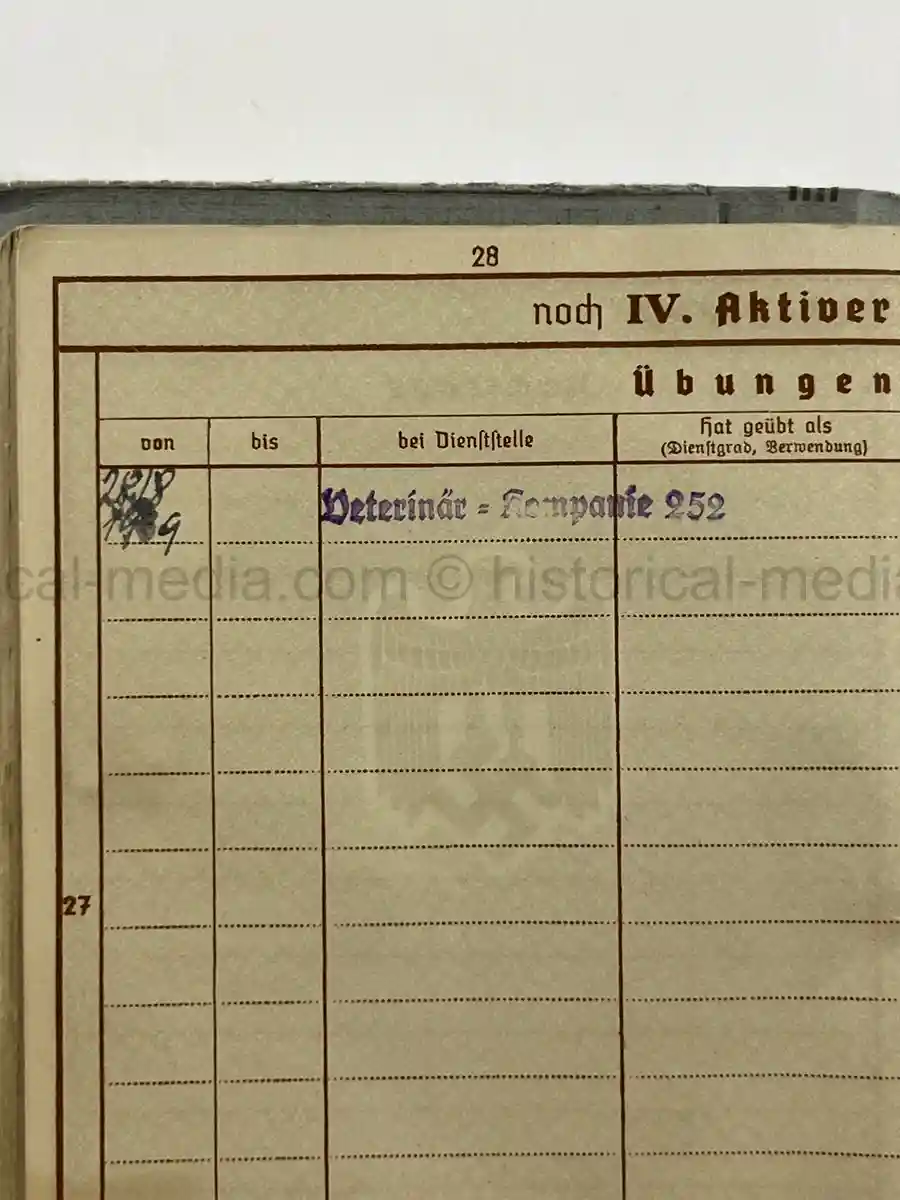
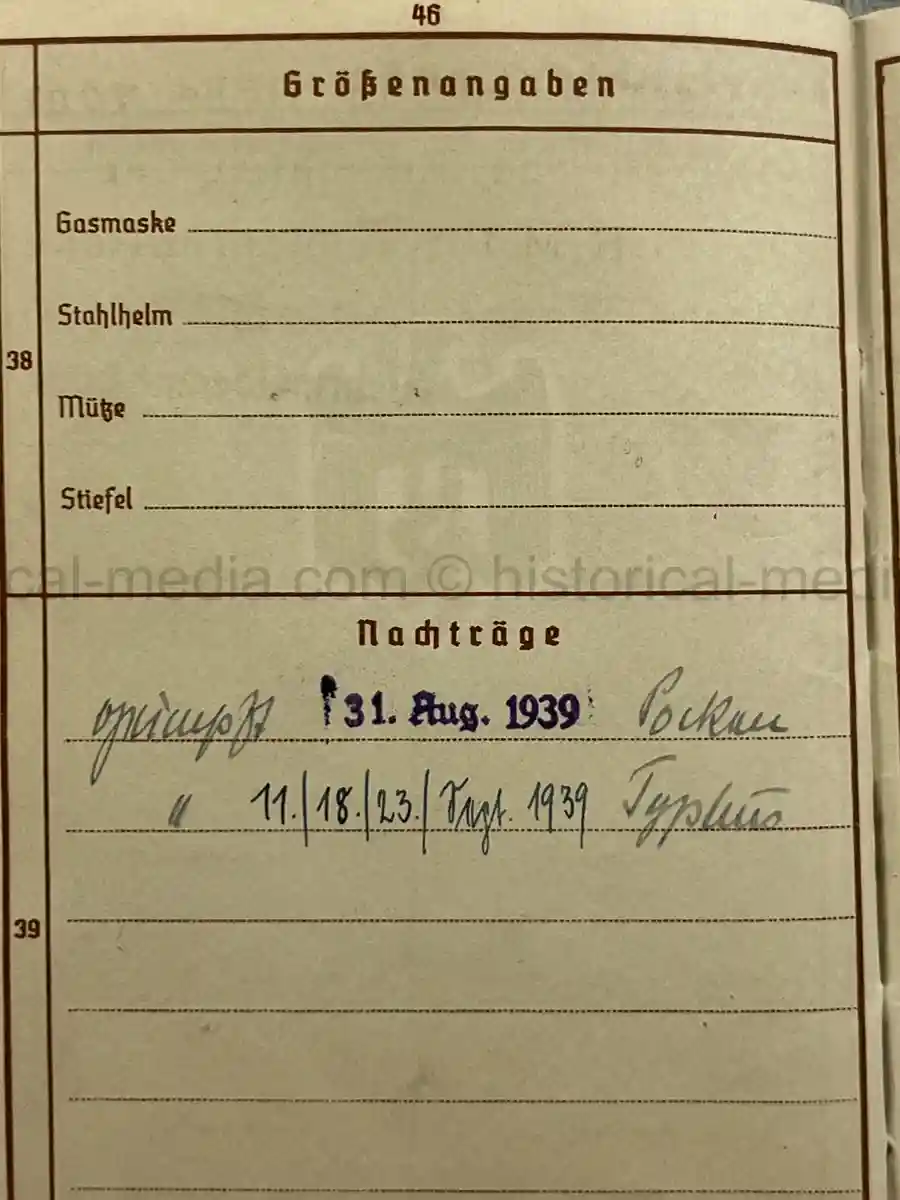
Kürzer was recalled to active military service on August 28, 1939, at 42 years of age, joining Veterinär-Kompanie 252 of the newly mobilized 252. Infanterie-Division.
Veterinary companies were essential components of German infantry divisions, which remained heavily dependent upon horses for the transportation of artillery, ammunition, equipment and supplies. Their responsibilities included the treatment of injured and sick horses and maintaining the operational effectiveness of the division’s horse-drawn transport. Kürzer’s civilian background in agriculture would have been particularly relevant to service with such a formation.
POLAND CAMPAIGN – 1939
The 252. Infanterie-Division was formed on August 26, 1939, as a fourth-wave infantry division in Wehrkreis VIII, drawing heavily upon Silesian personnel. Commanded by Generalleutnant Diether von Boehm-Bezing, the division was assigned to the reserve of Heeresgruppe Süd during the Polish Campaign. Advancing into Poland from Silesia, it reached the Posen region and subsequently undertook occupation and security duties.
Kürzer’s handwritten campaign entries on page 32 document:
- 01.09.1939–07.10.1939 – Teilnahme am Feldzug in Polen – Participation in the Polish Campaign.
- 08.10.1939–15.10.1939 – Einsatz bei der Besatzungstruppe in Polen – Service with the occupation forces in Poland.
- Einsatz in der Saarstellung – Service in the Saar defensive positions.
The last entry is particularly interesting, documenting his subsequent Western Front service following the division’s transfer from Poland to the Saar region, where German forces occupied defensive positions opposite France during the early months of the war.
DISCHARGE & SUBSEQUENT MILITARY REGISTRATION
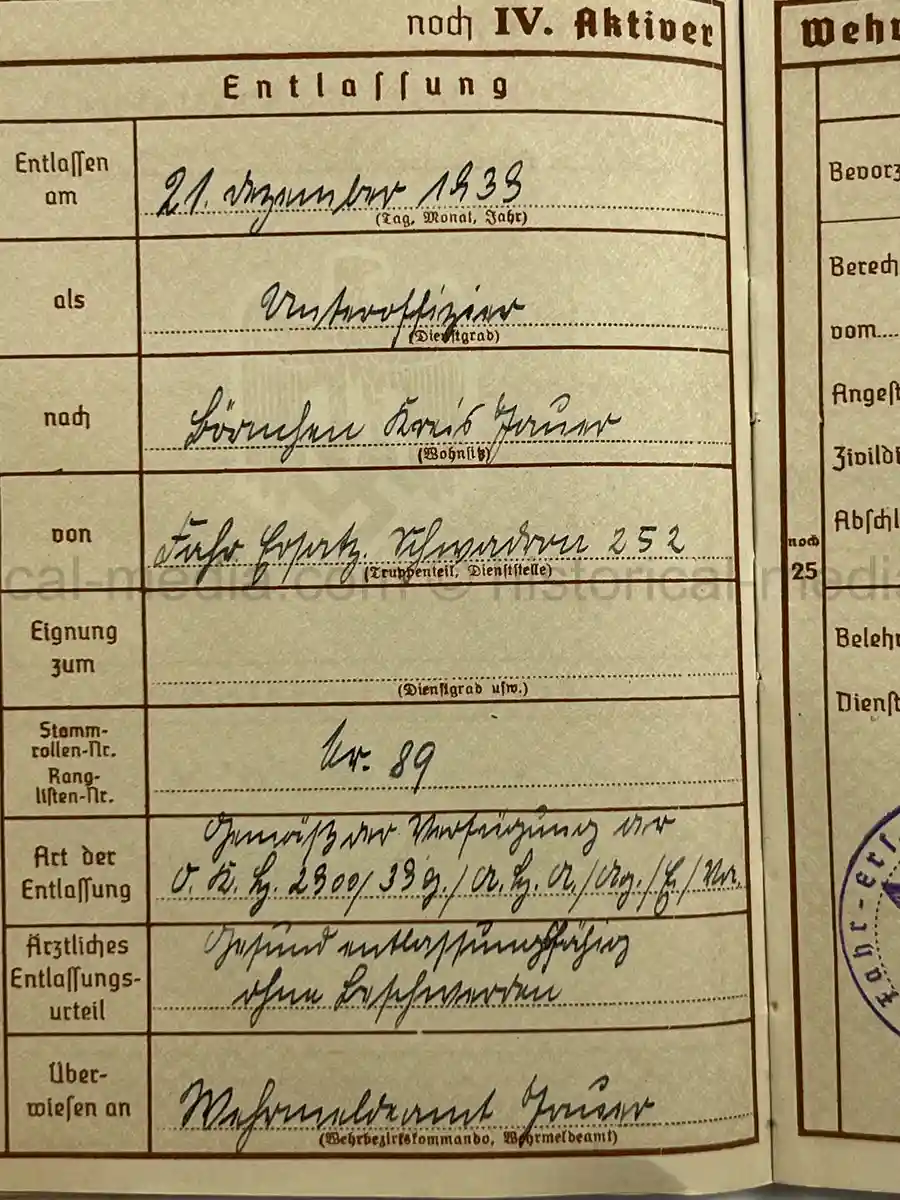
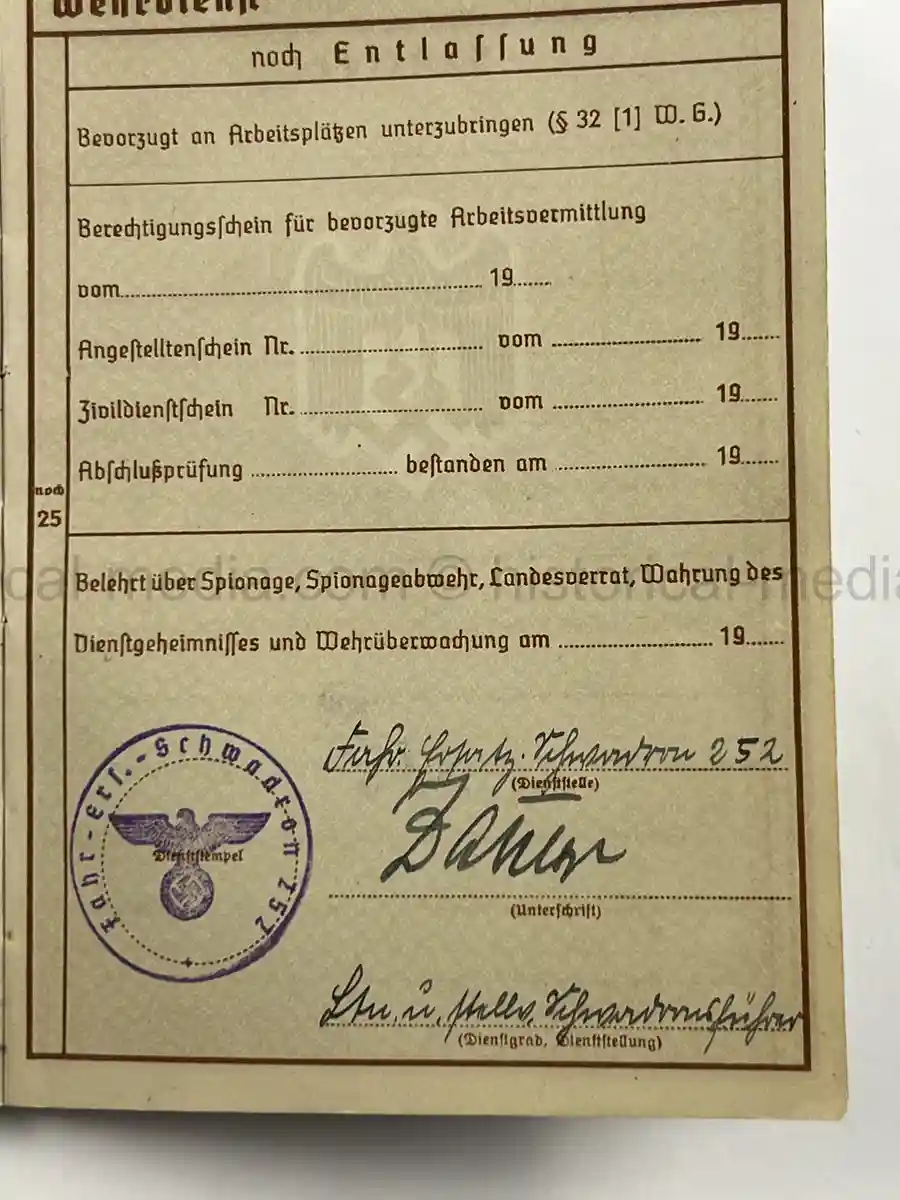
Kürzer served with Veterinär-Kompanie 252 until December 20, 1939, transferring to Fahr-Ersatz-Schwadron 252 the following day. He was promoted to Unteroffizier and discharged from active military service on December 21, 1939.
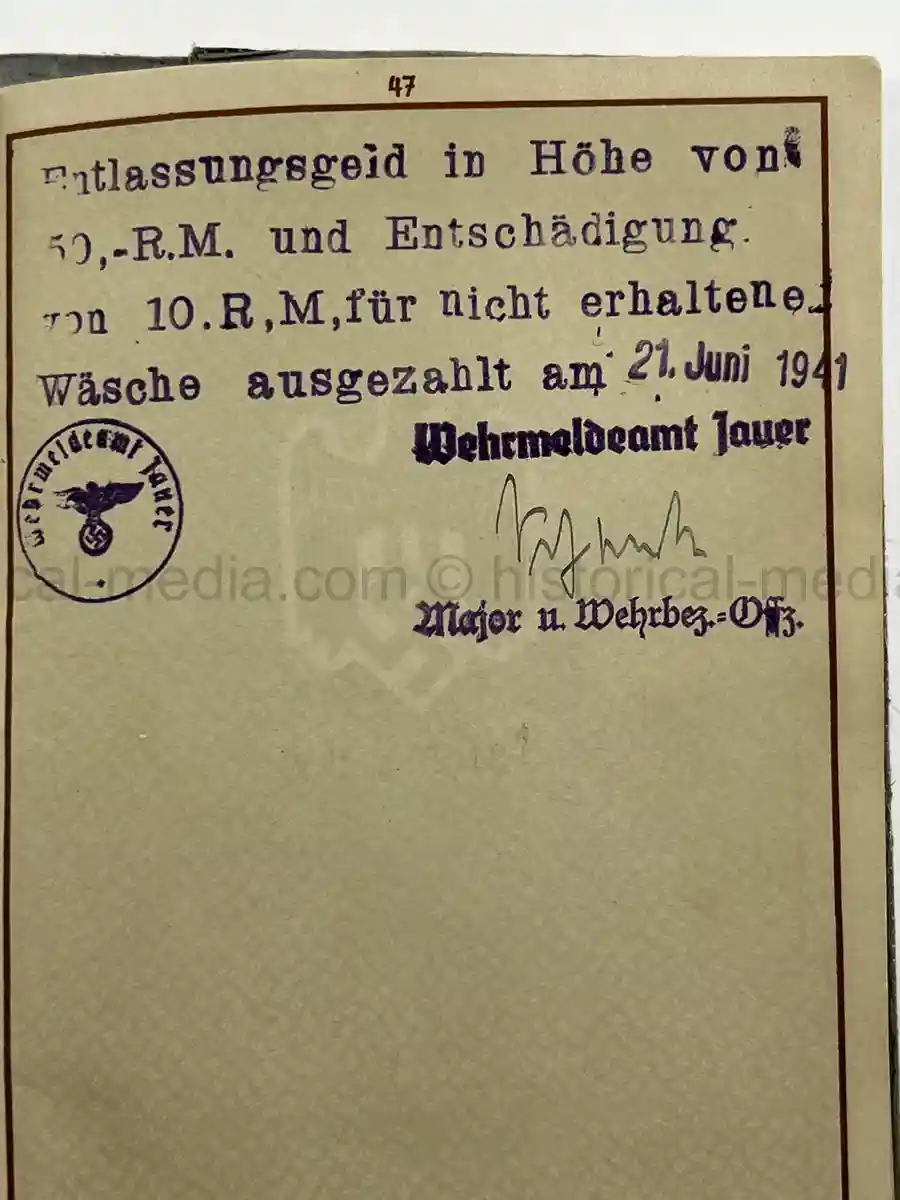
An interesting additional stamped entry on page 47 records the payment of 50 Reichsmarks in discharge money and a further 10 Reichsmarks in compensation for clothing not received, paid on June 21, 1941, by Wehrmeldeamt Jauer.
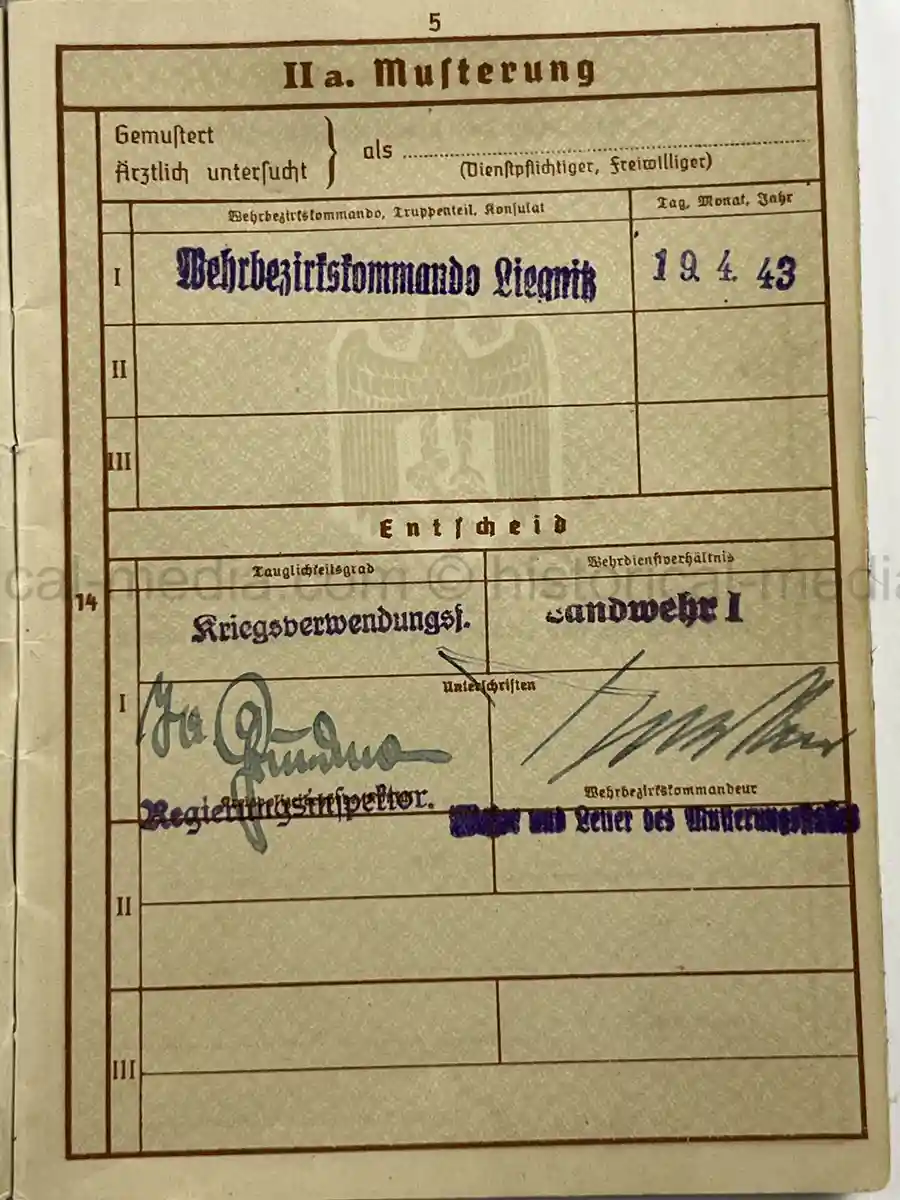
A subsequent military examination at Wehrbezirkskommando Liegnitz on April 19, 1943, classified him as kriegsverwendungsfähig (fit for wartime service) and Landwehr I.
AWARDS & DECORATIONS
- 22.11.1917 – Eisernes Kreuz II. Klasse 1914 – Iron Cross 2nd Class.
- 1935 – Ehrenkreuz für Frontkämpfer – Honor Cross for Frontline Combatants.
A particularly interesting Wehrpass documenting military service in both World Wars, with Imperial German Garde-Jäger assignments, two documented WWI wounds, the 1914 Iron Cross, the 1939 Poland Campaign and subsequent service along the Saar defensive positions. An interesting example of the mobilization of older, experienced First World War veterans during the opening months of WWII, as well as the important role played by the German Army’s divisional veterinary formations.