
Description
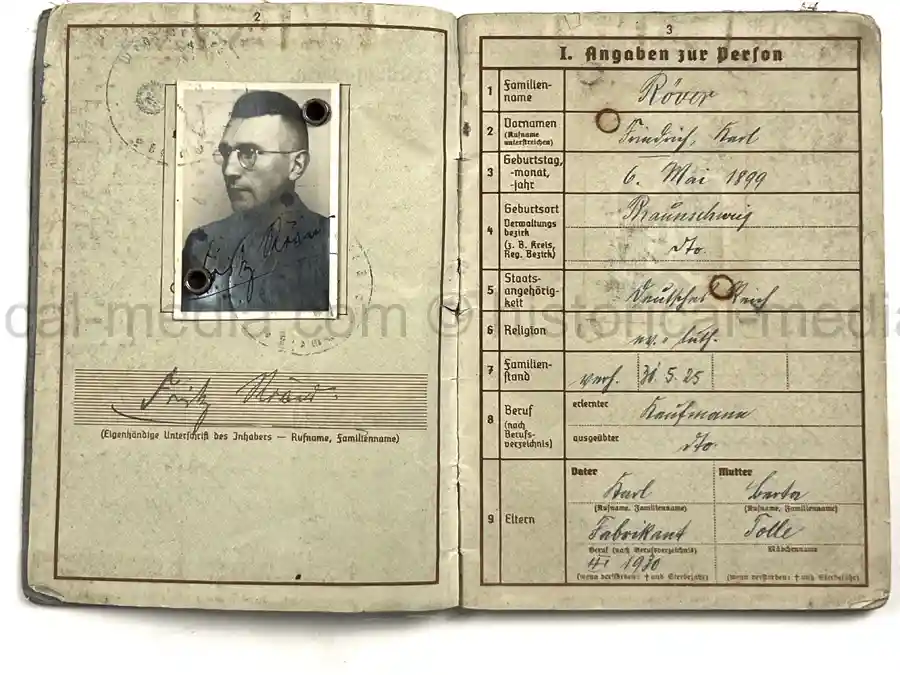
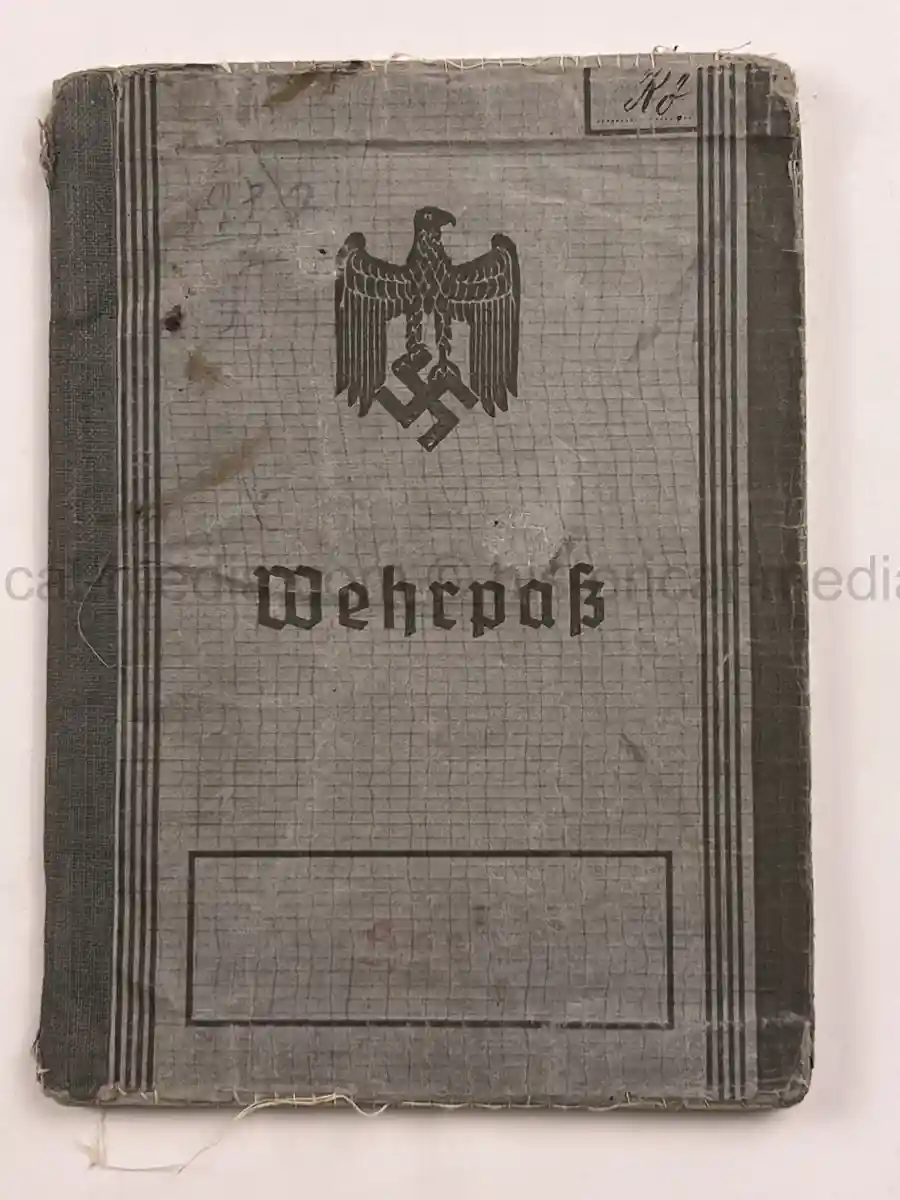
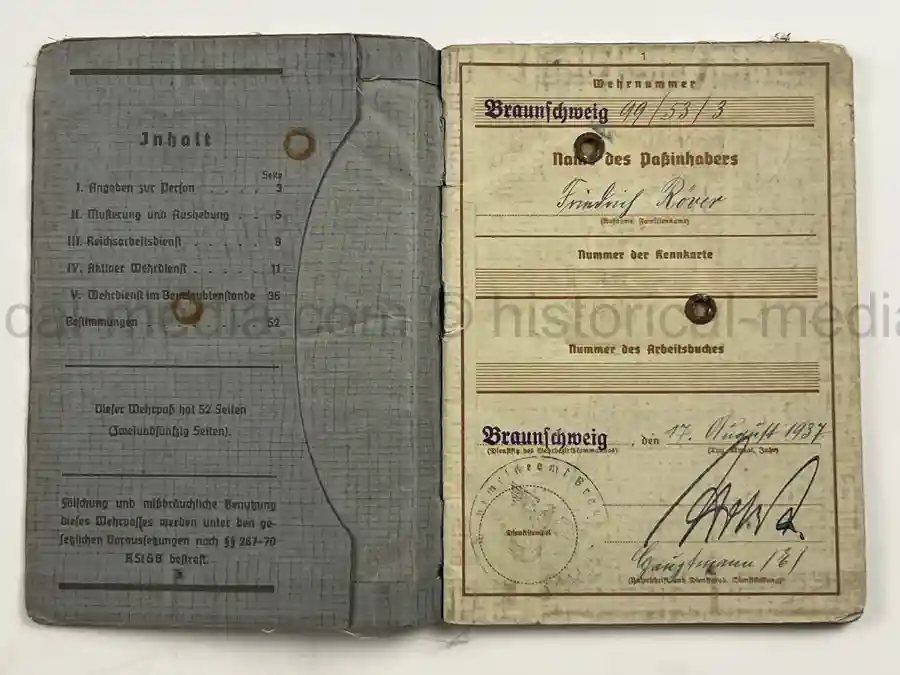
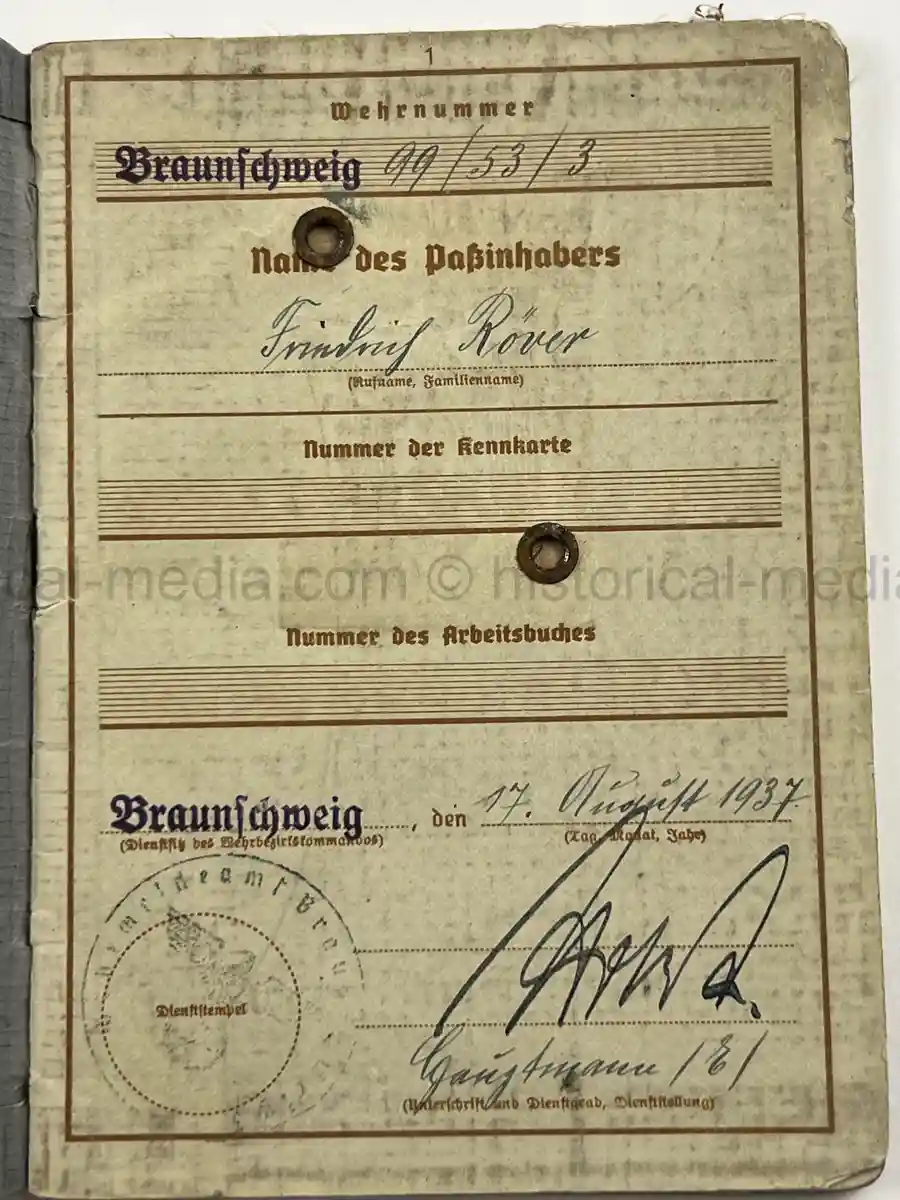
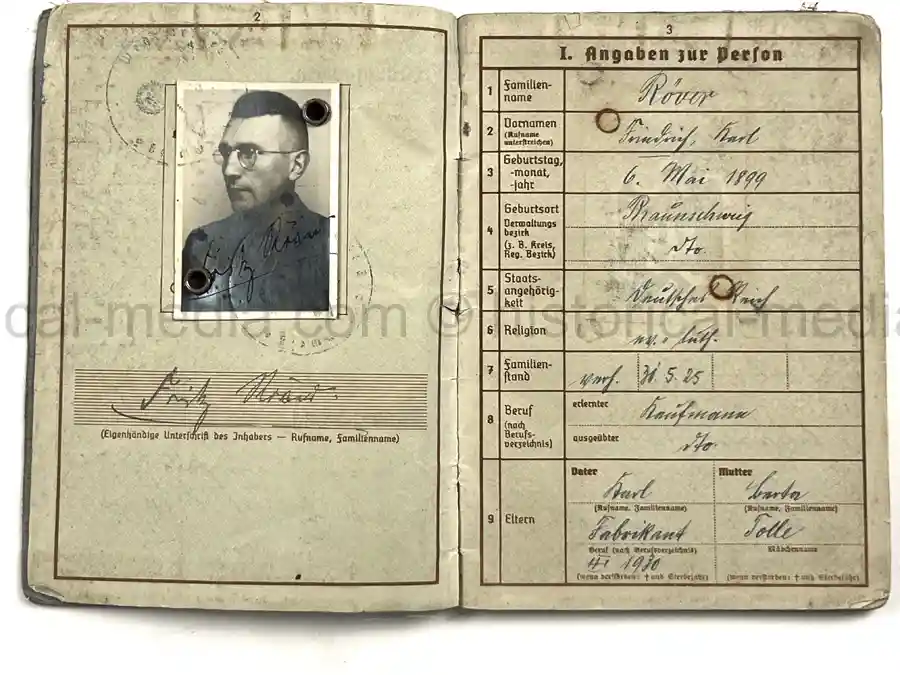
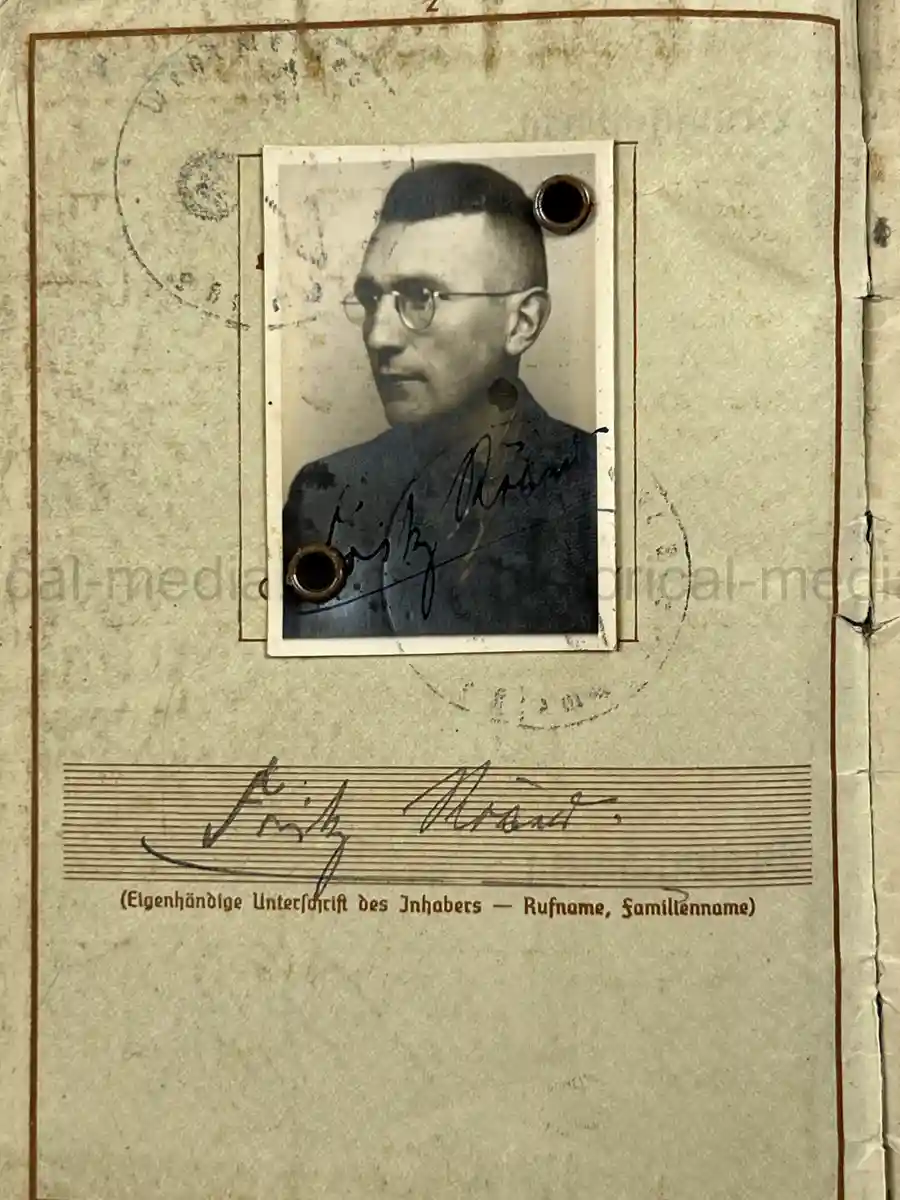
WEHRPASS – FRIEDRICH KARL RÖVER – ARTILLERIE-REGIMENT 67 – XI. ARMEEKORPS – WWI ARTILLERY VETERAN – POLAND 1939 – BATTLE OF THE BZURA & WARSAW
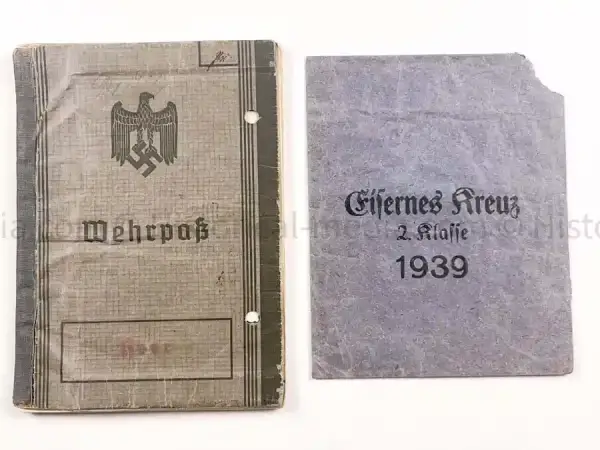
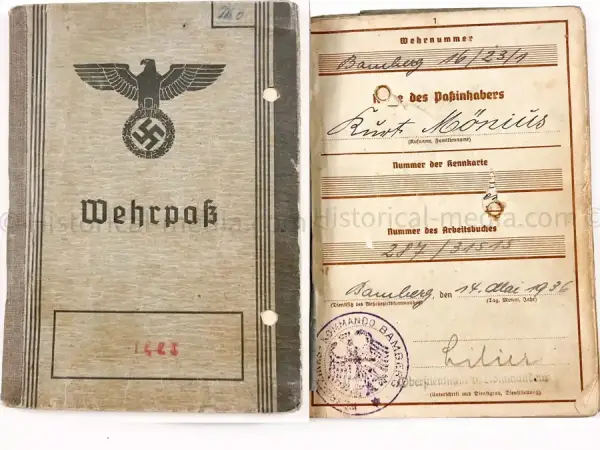
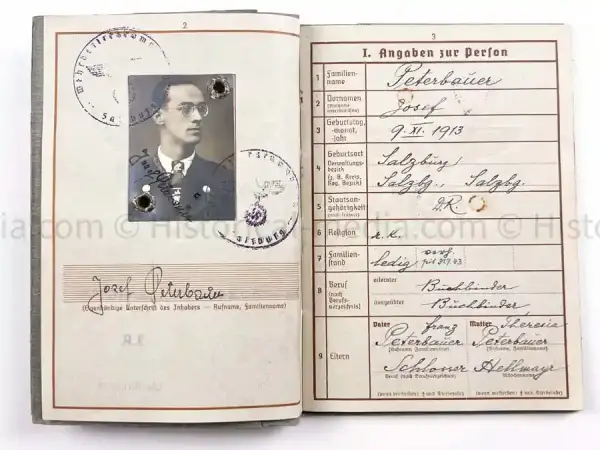
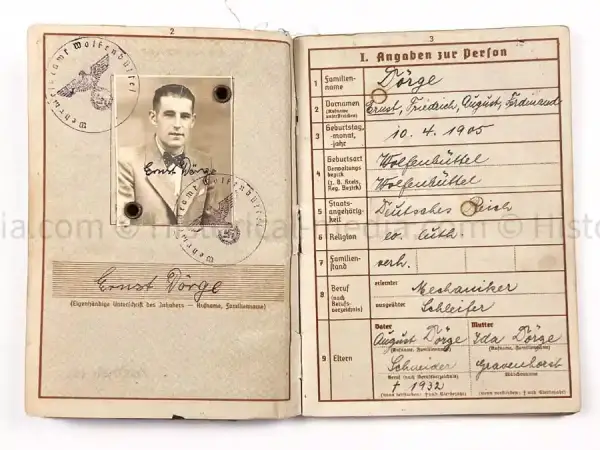
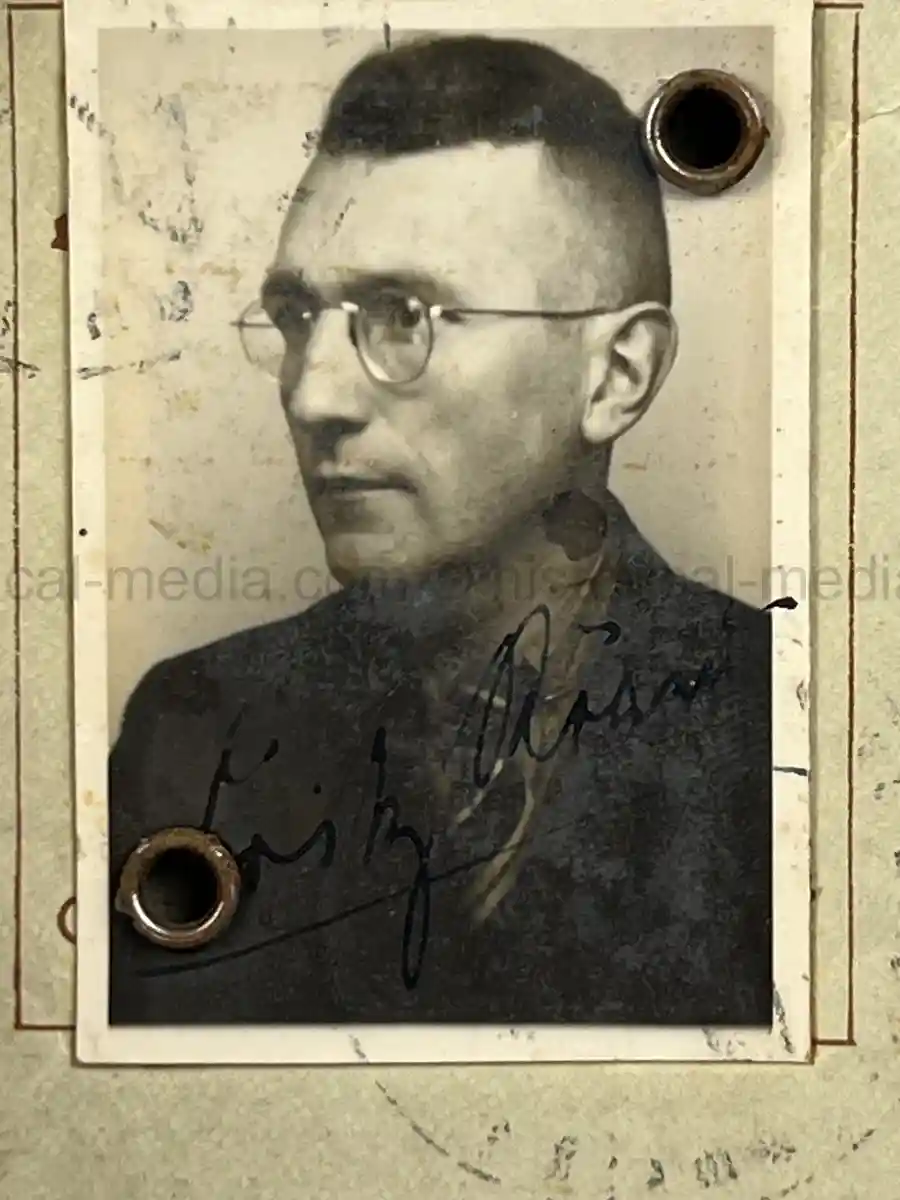
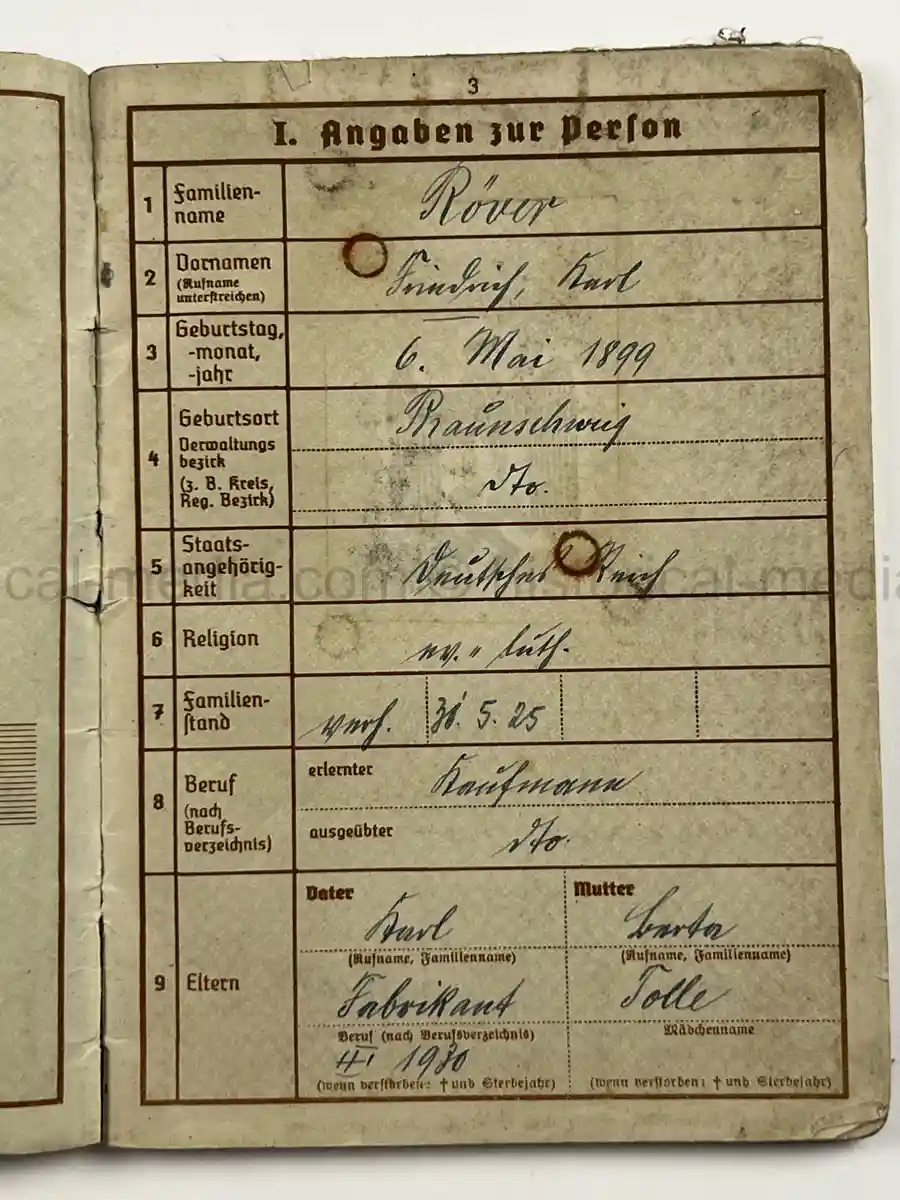
Interesting Heer Wehrpass issued to Unteroffizier Friedrich Karl RÖVER, born May 6, 1899, in Braunschweig. A Kaufmann (merchant) by civilian profession, Röver was a veteran of the Imperial German heavy artillery who was recalled to active military service immediately prior to the invasion of Poland in 1939. Particularly noteworthy are his extensive WWI artillery assignments, training with the heavy 21 cm Mörser and detailed handwritten campaign entries documenting the Battle of the Bzura and the final German assault on Warsaw.
FIRST WORLD WAR SERVICE – IMPERIAL GERMAN HEAVY ARTILLERY
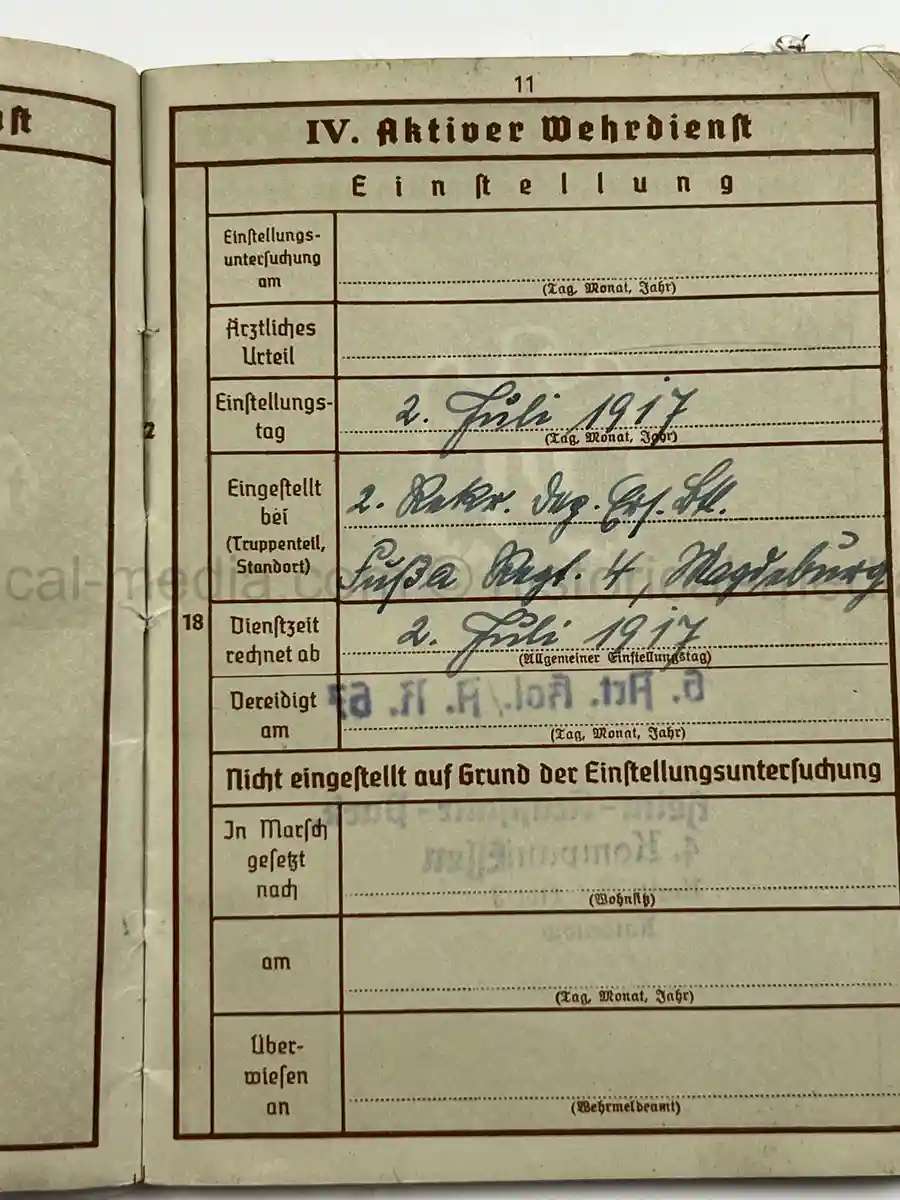
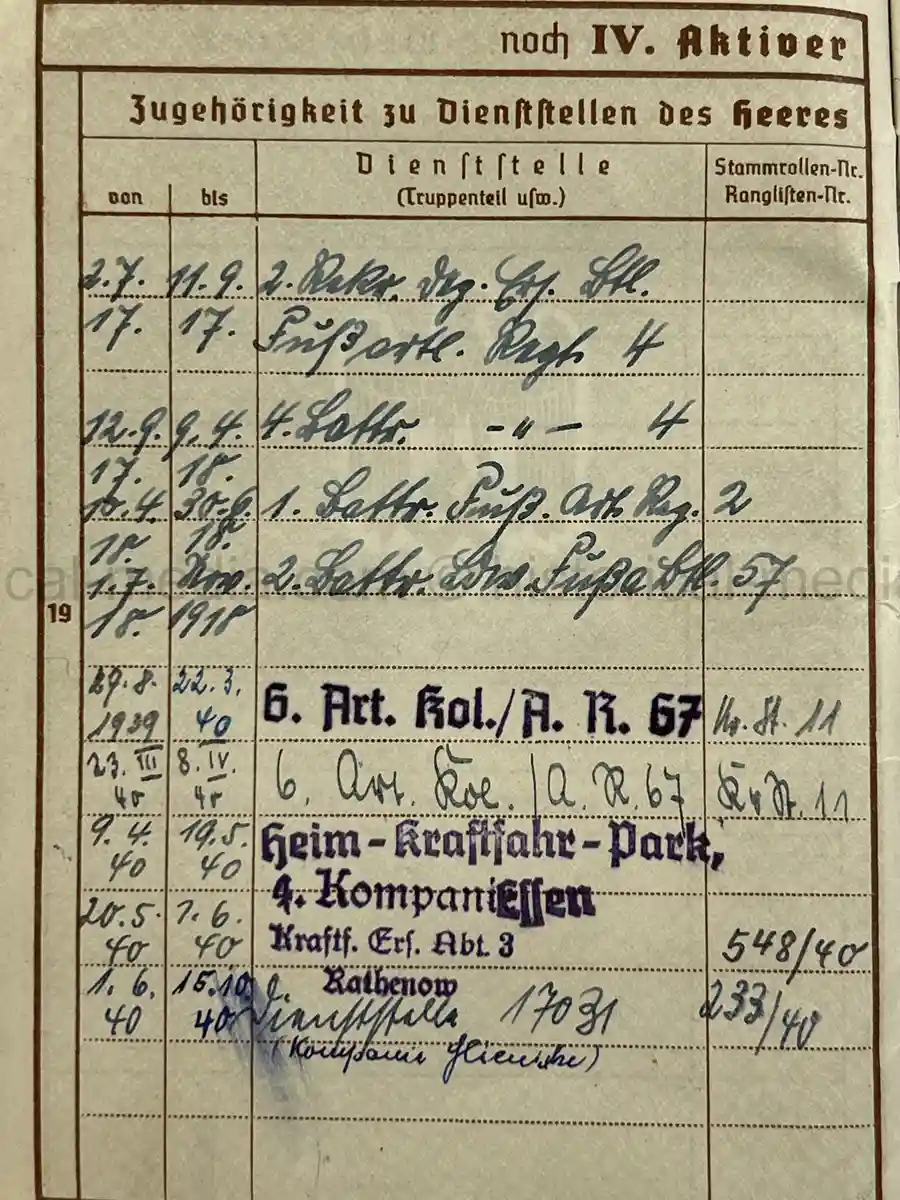
Röver entered military service on July 2, 1917, at the age of 18, with Fußartillerie-Regiment 4 at Magdeburg. His subsequent Imperial German military assignments included:
- Fußartillerie-Regiment 4.
- 1.Batterie, Fußartillerie-Regiment 2.
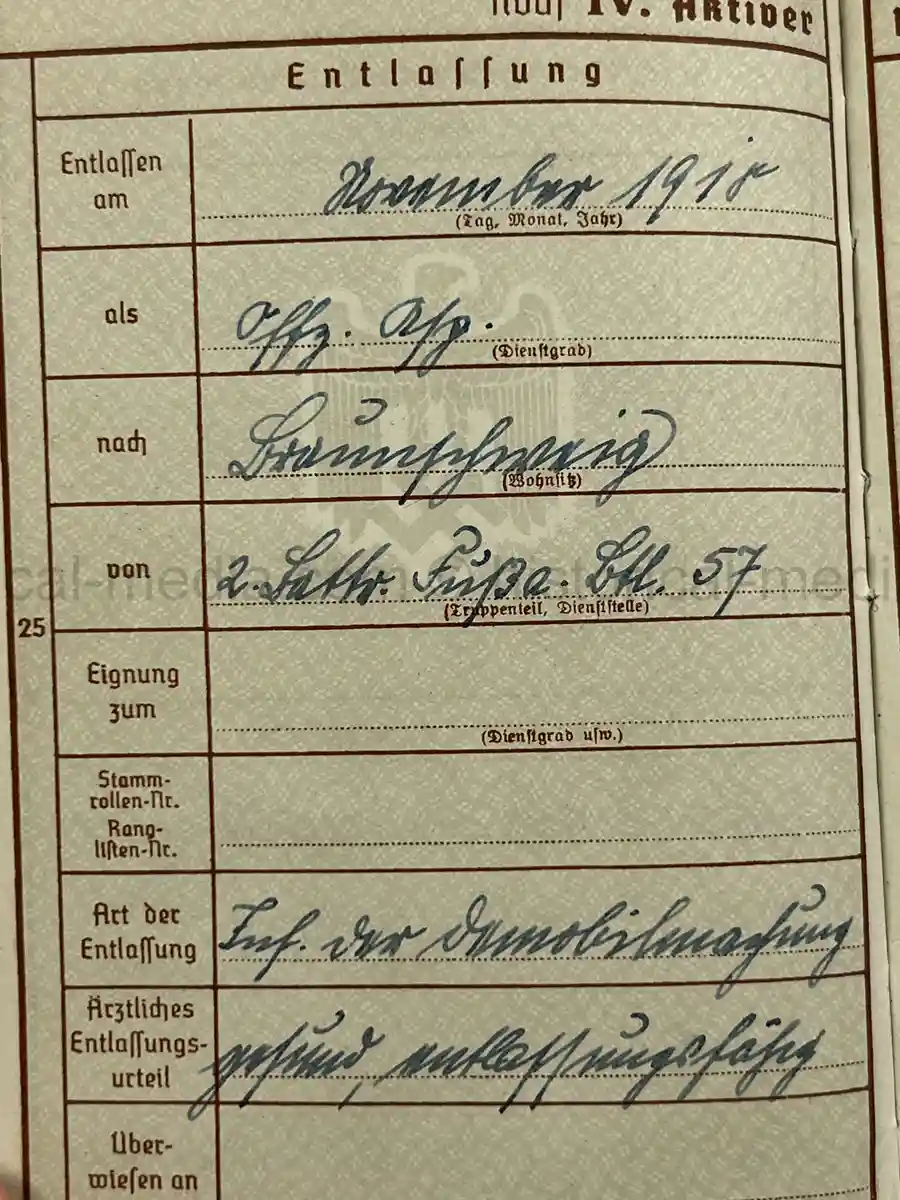
- 2.Batterie, Fußartillerie-Bataillon 57.
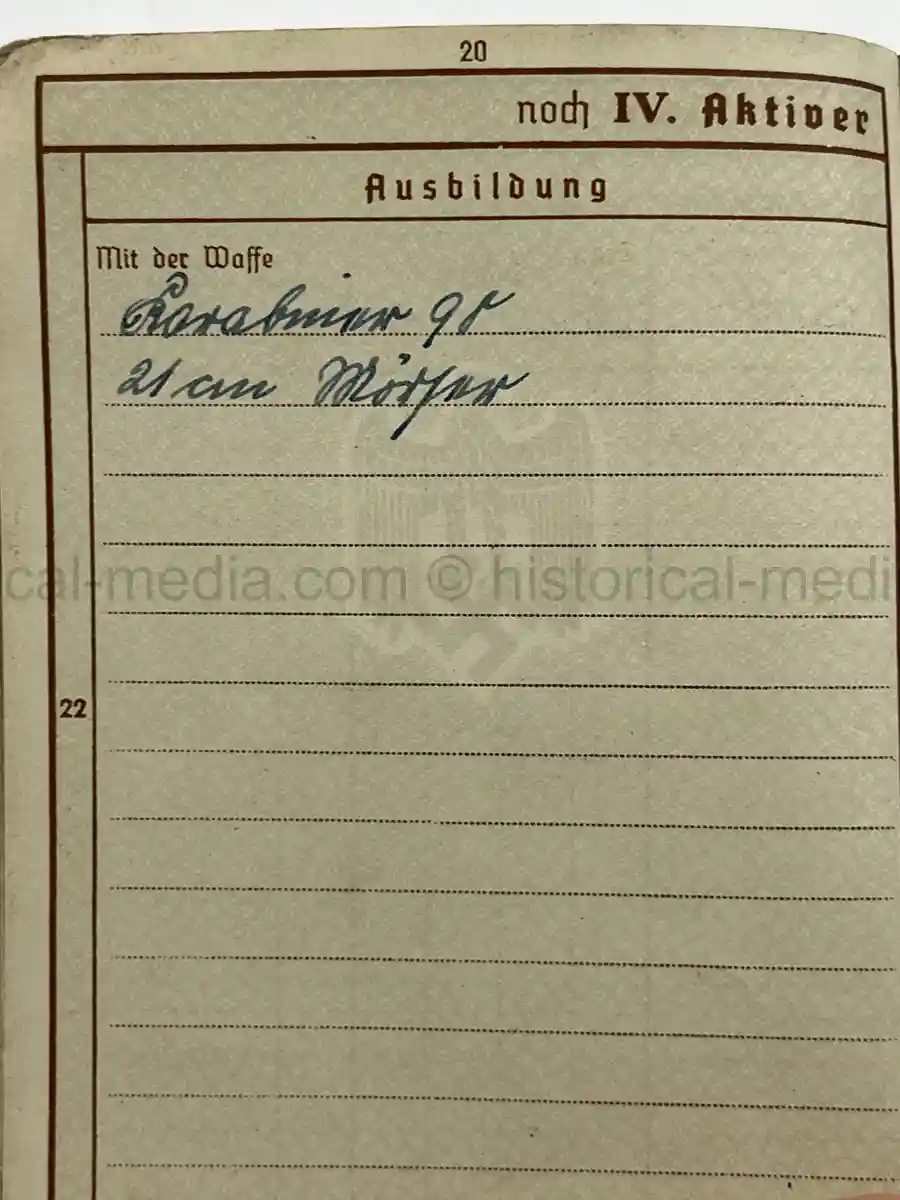
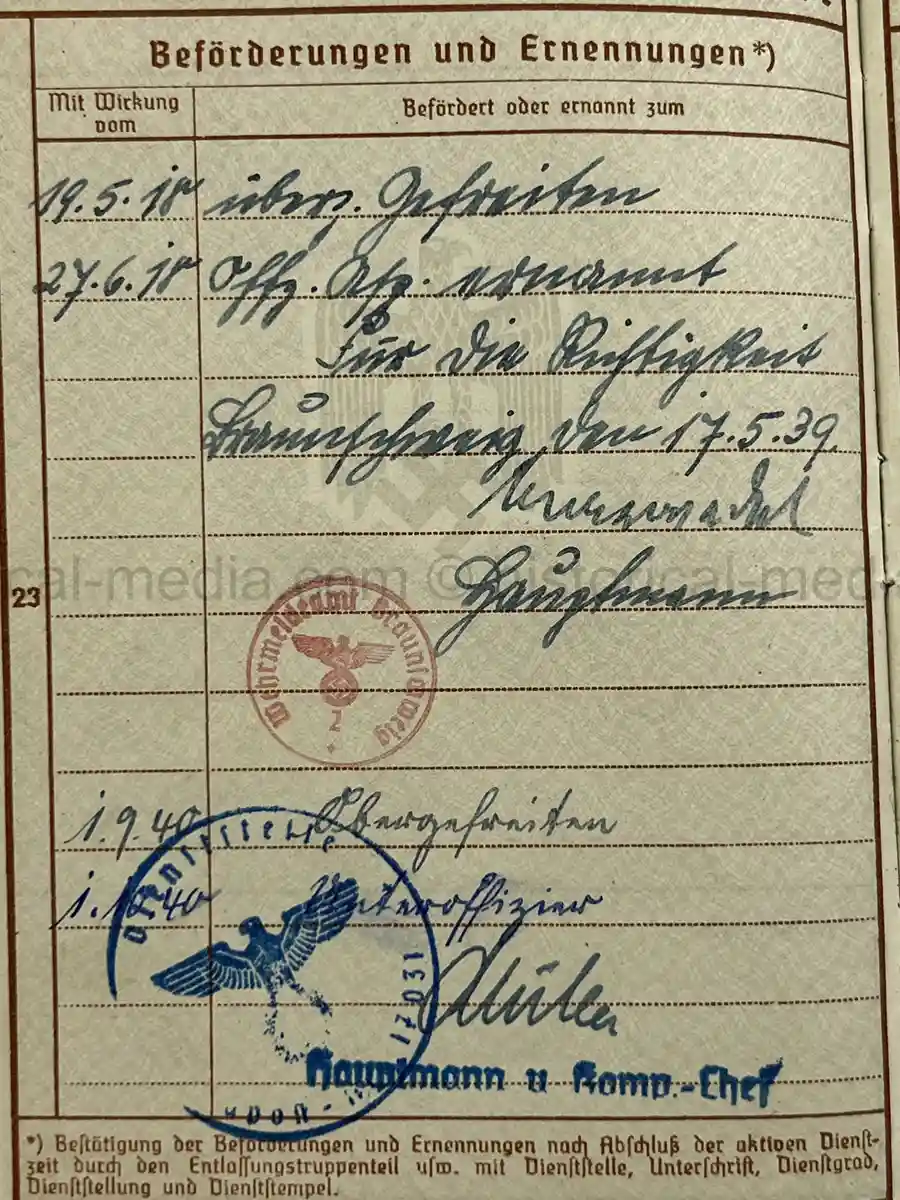
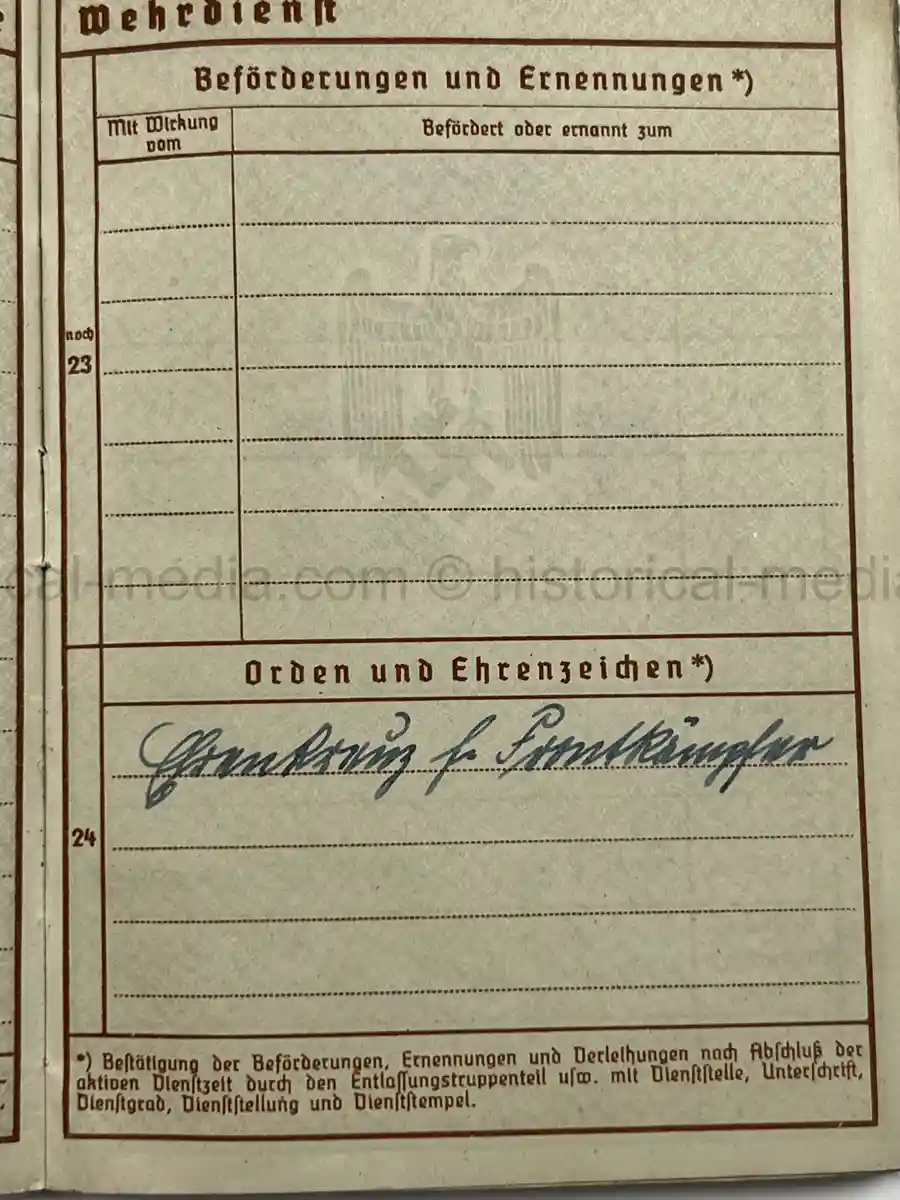
An interesting weapons training entry on page 20 records qualification with the Karabiner 98 and heavy 21 cm Mörser, one of the principal heavy artillery weapons employed by the Imperial German Army during WWI. Promoted in May 1918 and appointed Offiziersaspirant (officer candidate) on June 27, 1918, Röver was discharged in November 1918 and returned to Braunschweig. Awarded the Ehrenkreuz für Frontkämpfer (Hindenburg Cross with Swords) for his WWI combat service.
SECOND WORLD WAR SERVICE – ARTILLERIE-REGIMENT 67
Röver was recalled to active military service on August 29, 1939, joining 6. Artillerie-Kolonne, Artillerie-Regiment 67. The II. Abteilung of Artillerie-Regiment 67 was established at Braunschweig on October 6, 1936, through the redesignation of II./Artillerie-Regiment 55. Organized as a mixed motorized heavy artillery formation, the Abteilung was assigned to XI. Armeekorps upon mobilization in August 1939. Artillery columns were responsible for transporting ammunition and essential supplies to the artillery batteries, playing an important logistical role during rapidly advancing offensive campaigns.
POLAND CAMPAIGN – 1939
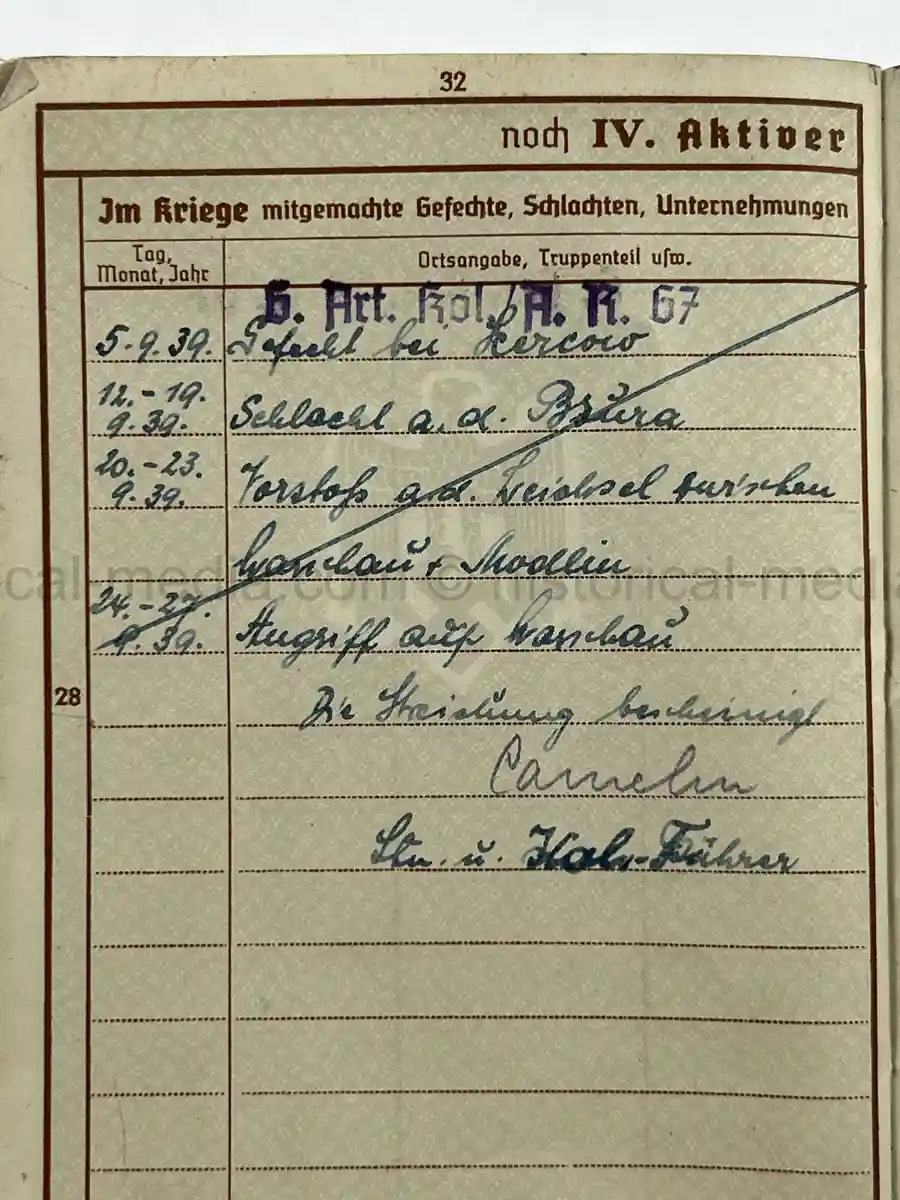
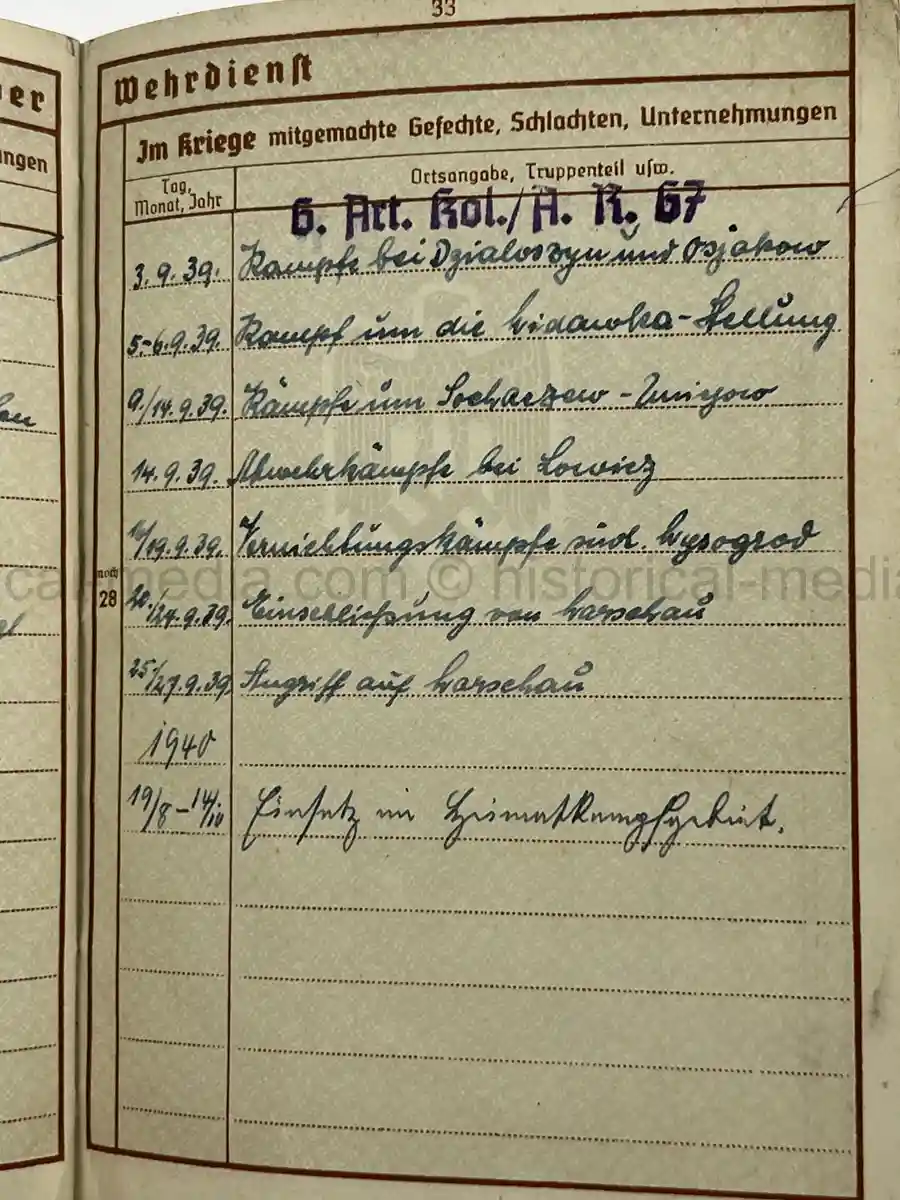
Two pages of detailed handwritten campaign entries, both bearing the stamp of 6. Artillerie-Kolonne, Artillerie-Regiment 67, document his service during the Polish Campaign:
- September 3 – Fighting at Dzialoszyn and Osjakow.
- September 5–6 – Fighting for the Widawka defensive positions.
- September 9–14 – Fighting in the Sochaczew sector.
- September 14 – Defensive fighting at Lowicz.
- September 14–19 – Schlacht an der Bzura – Battle of the Bzura.
- September 16–19 – Encirclement battles south of Wyszogrod.
- September 20–23 – Advance toward the Vistula between Warsaw and Modlin.
- September 22–24 – Encirclement of Warsaw.
- September 24–27 – Angriff auf Warschau – Assault on Warsaw.
Particularly noteworthy are the entries relating to the BATTLE OF THE BZURA, the largest battle of the 1939 Polish Campaign. The Polish Poznan and Pomorze armies launched a major counteroffensive against the advancing German forces in September 1939. The resulting battles involved extensive German artillery and air operations before the remaining Polish formations were encircled or attempted to withdraw toward Warsaw. Röver’s campaign entries subsequently document his unit’s participation in the final operations against Warsaw, culminating in the surrender of the Polish capital in late September 1939.
SUBSEQUENT MILITARY ASSIGNMENTS – 1940
Following his service with Artillerie-Regiment 67, Röver transferred to several motor vehicle and administrative formations:
- 09.04.1940–19.05.1940 – 4. Kompanie, Heim-Kraftfahr-Park Essen.
- 20.05.1940–07.06.1940 – Kraftfahr-Ersatz-Abteilung 3, Rathenow.
- June–October 1940 – Dienststelle 17031, Kaserne Glienicke.
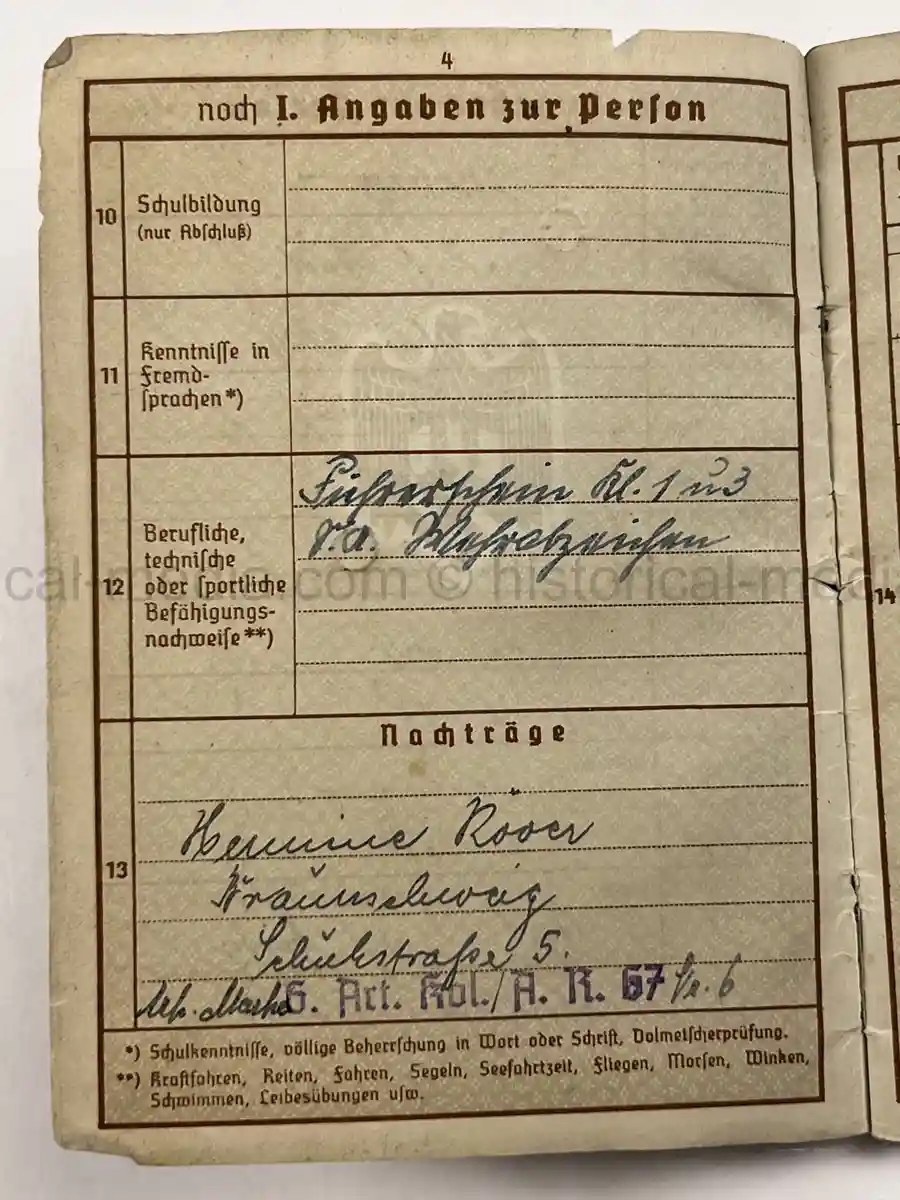
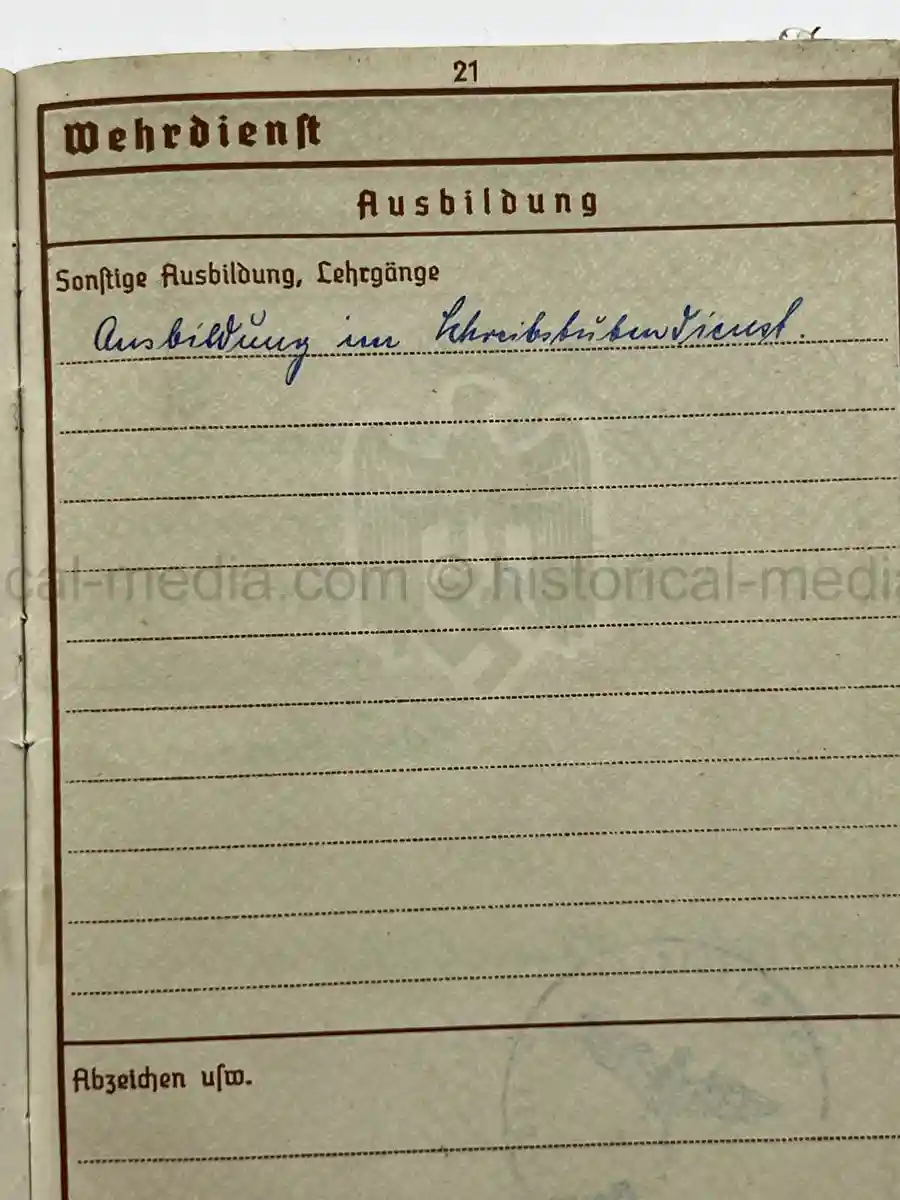
A further training entry records Ausbildung im Schreibstubendienst, indicating military clerical and administrative training. His civilian qualifications included Class 1 and Class 3 driver’s licenses. An additional campaign entry records service in the Heimatkriegsgebiet (home war territory) from August 19 through October 14, 1940.
PROMOTIONS & DISCHARGE
- 19.05.1918 – WWI promotion entry.
- 27.06.1918 – Offiziersaspirant.
- 01.09.1940 – Obergefreiter.
- 01.10.1940 – Unteroffizier.
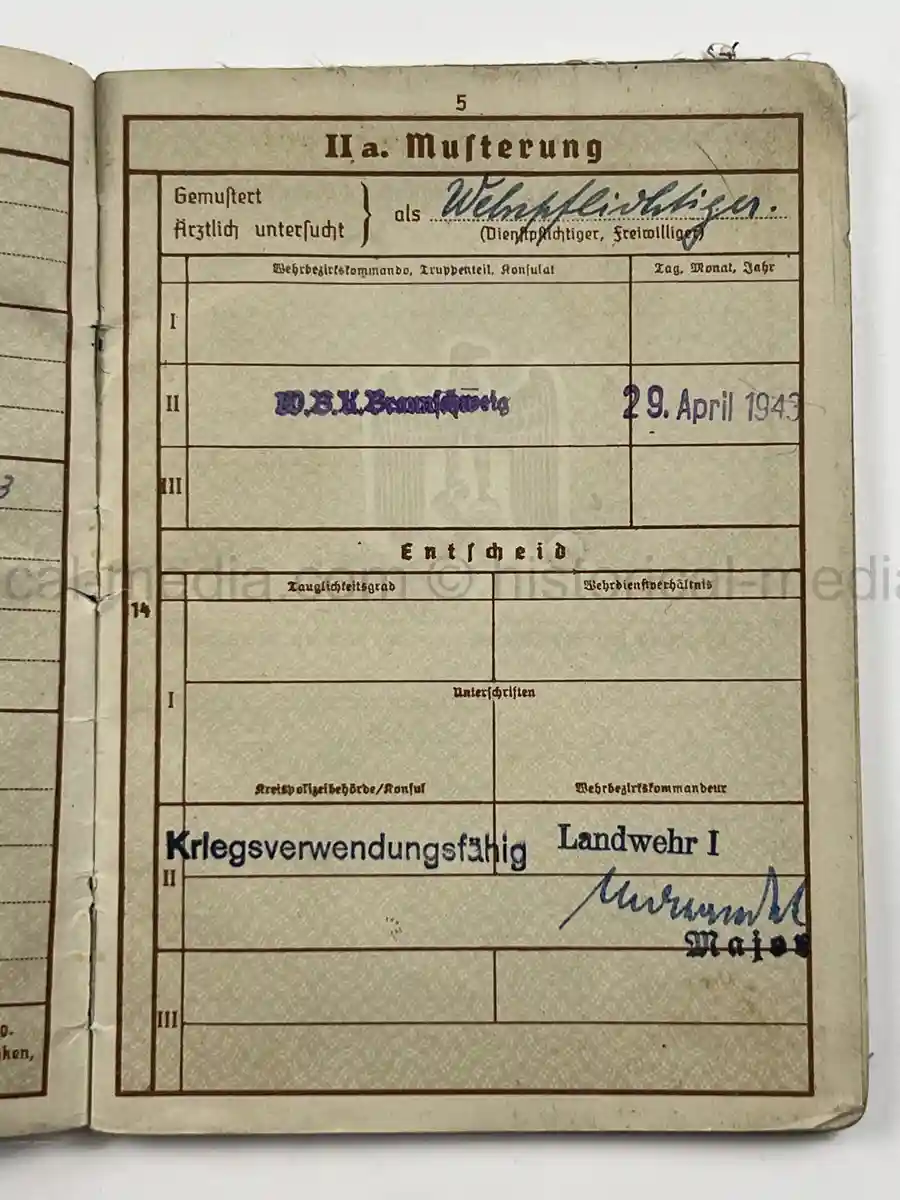
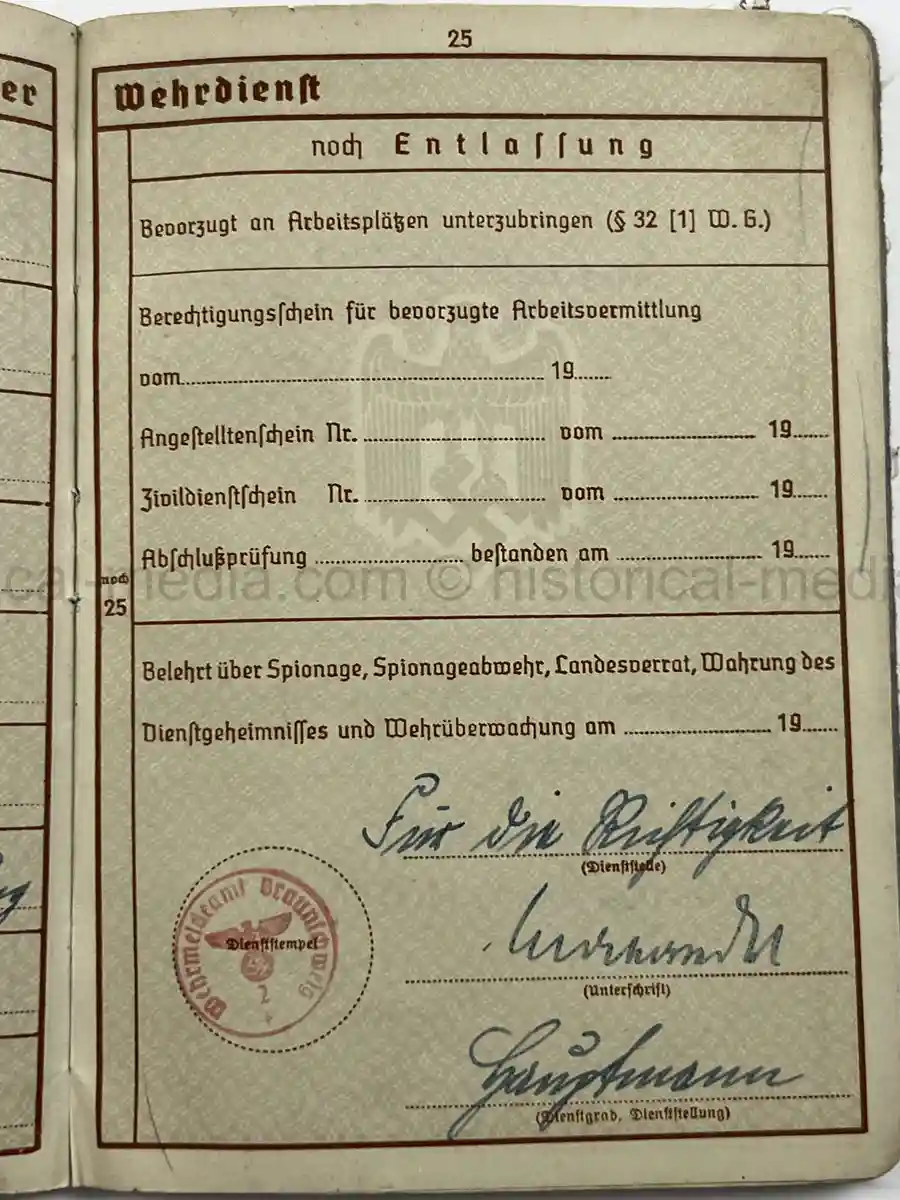
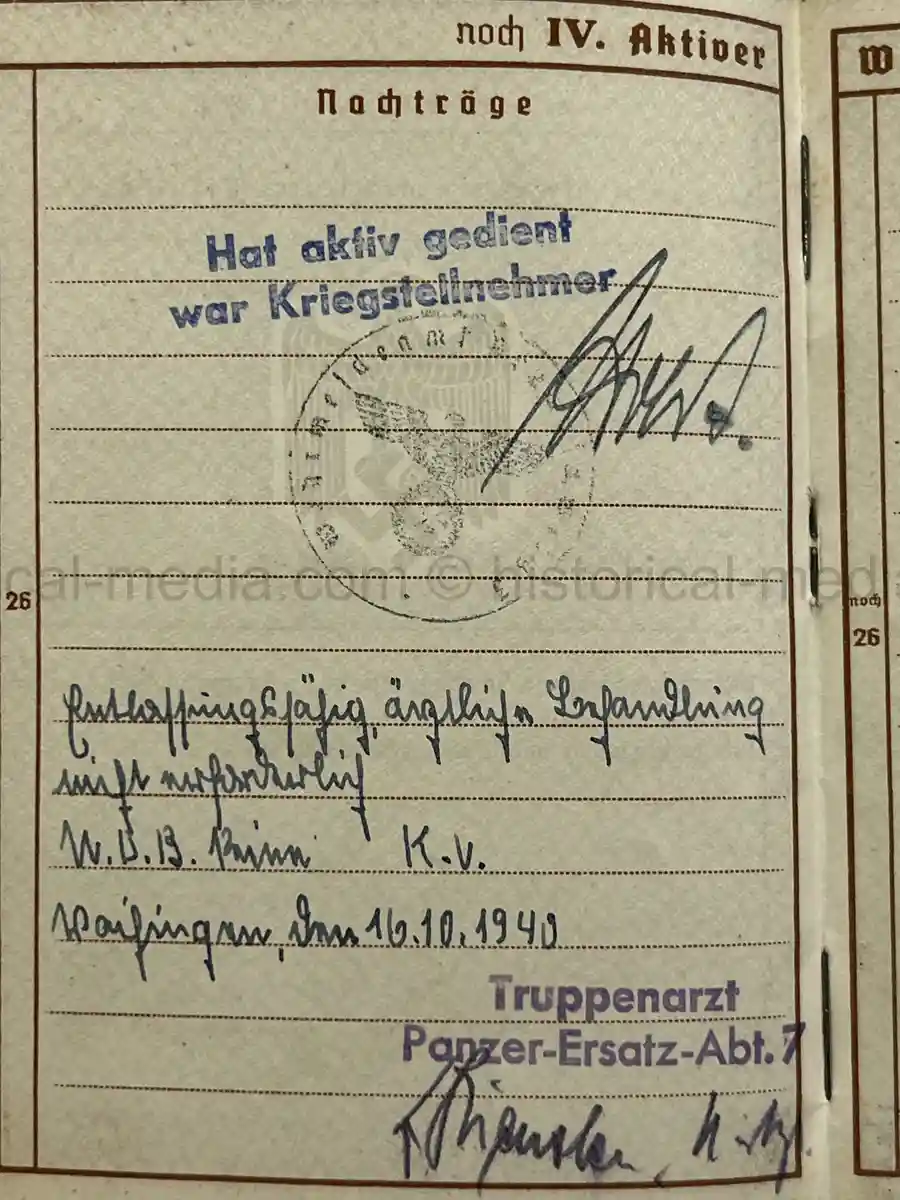
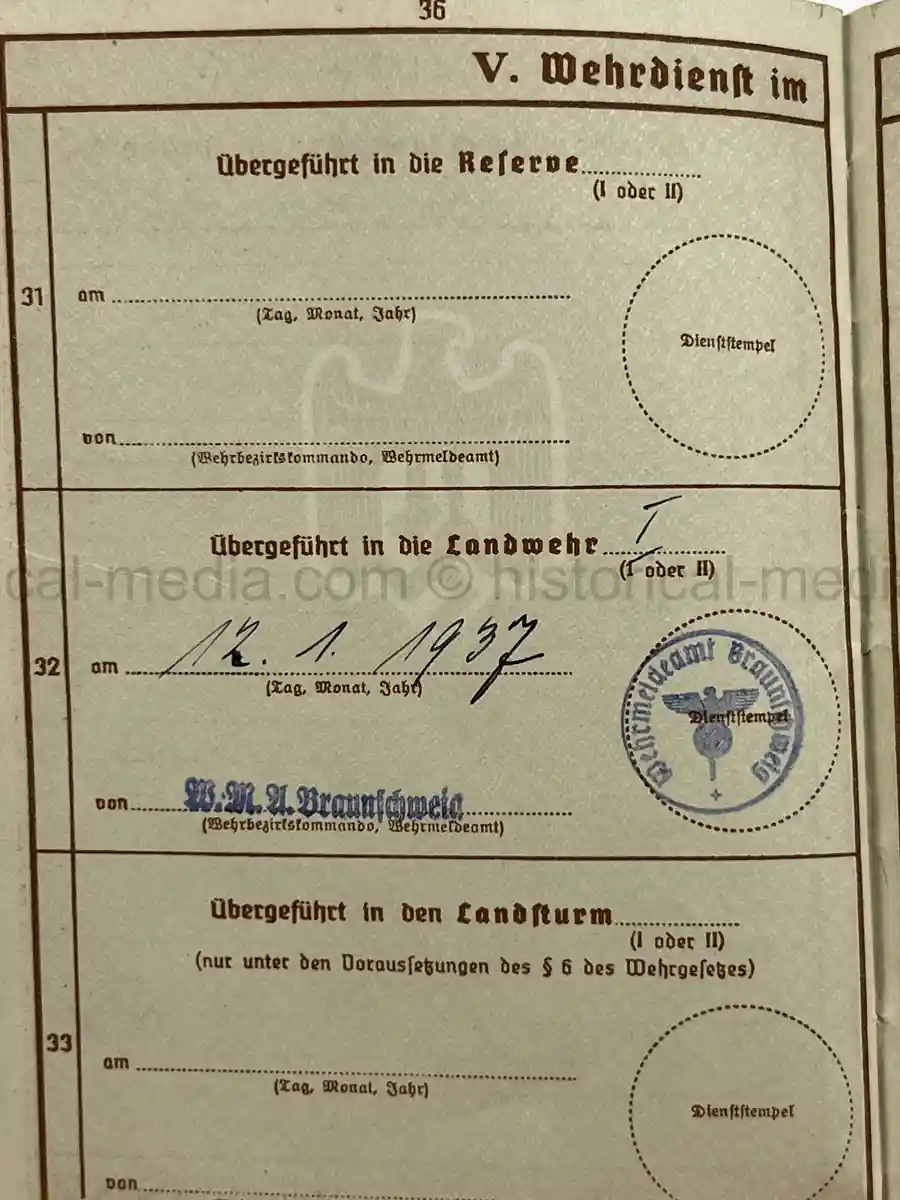
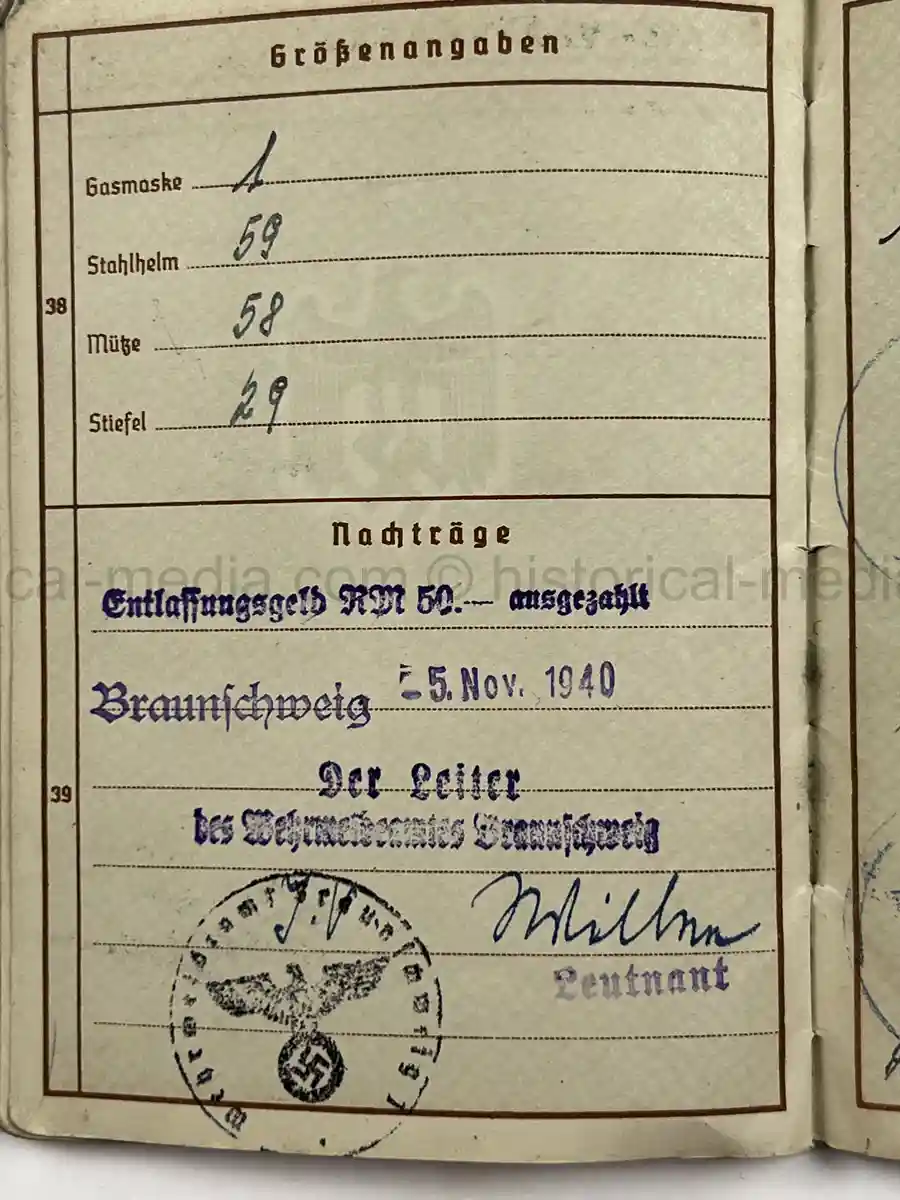
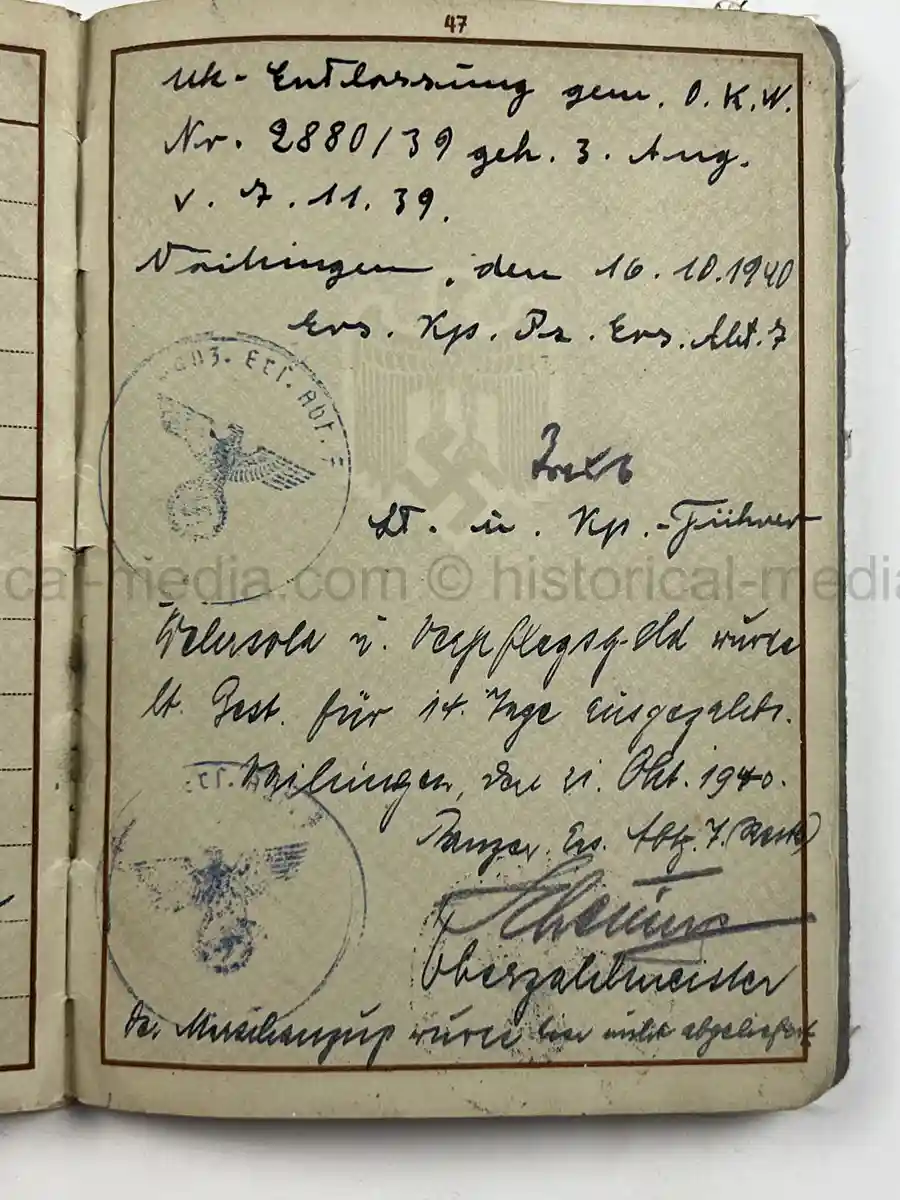
An interesting medical and discharge entry dated October 16, 1940, at Vaihingen bears the stamp of the Truppenarzt, Panzer-Ersatz-Abteilung 7. Additional entries on page 47 document his release from active military service under an OKW directive and related discharge payments, including a payment of 50 Reichsmarks at Braunschweig in November 1940. On April 29, 1943, he underwent another military examination at Braunschweig and was classified as Kriegsverwendungsfähig – Landwehr I (fit for wartime service, first-line Landwehr).
An interesting Wehrpass documenting heavy artillery service in BOTH WORLD WARS, with Imperial German Fußartillerie assignments, qualification with the heavy 21 cm Mörser, a WWI officer candidate appointment and extensive WWII campaign entries relating to the Battle of the Bzura, Modlin and the final assault on Warsaw in September 1939.
“`