
Description
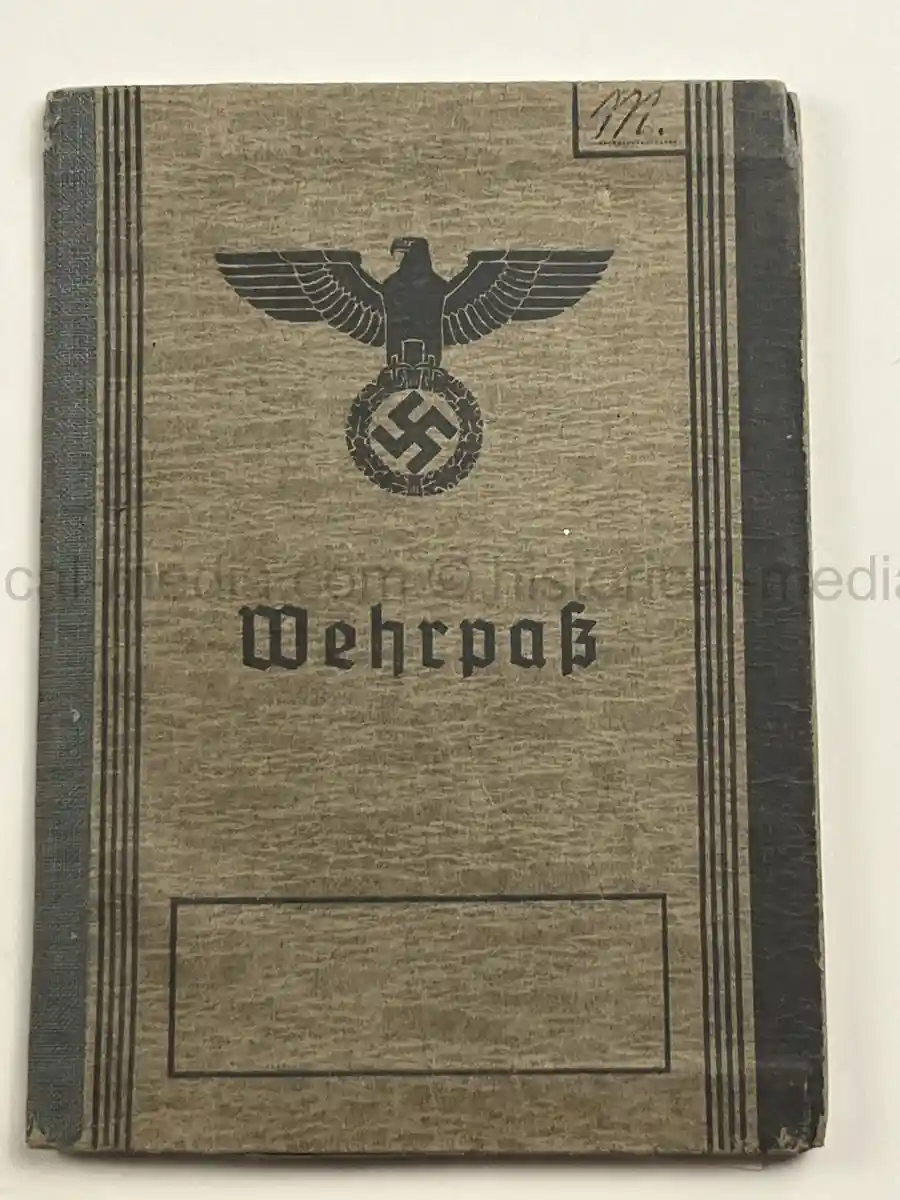
WEHRPASS – GERHARD MERTA – UNTEROFFIZIER – PANZERJÄGER ABT. 298 – SCHNELL ABT. 387 – WESTFELDZUG & EASTERN FRONT – KIA 1943
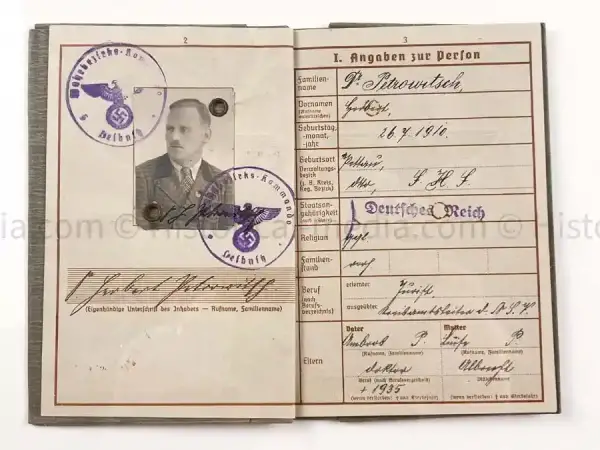
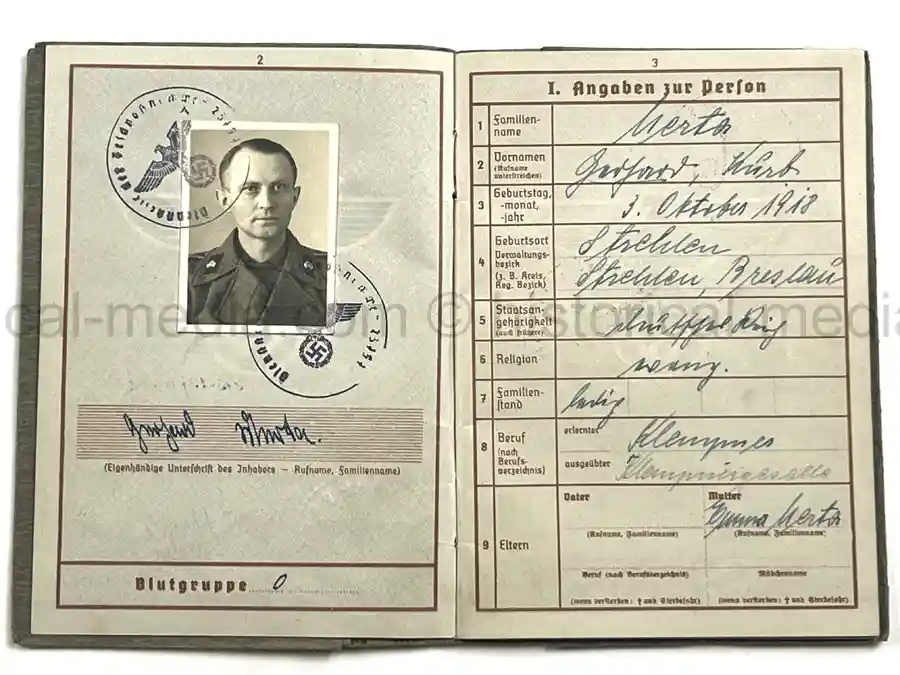
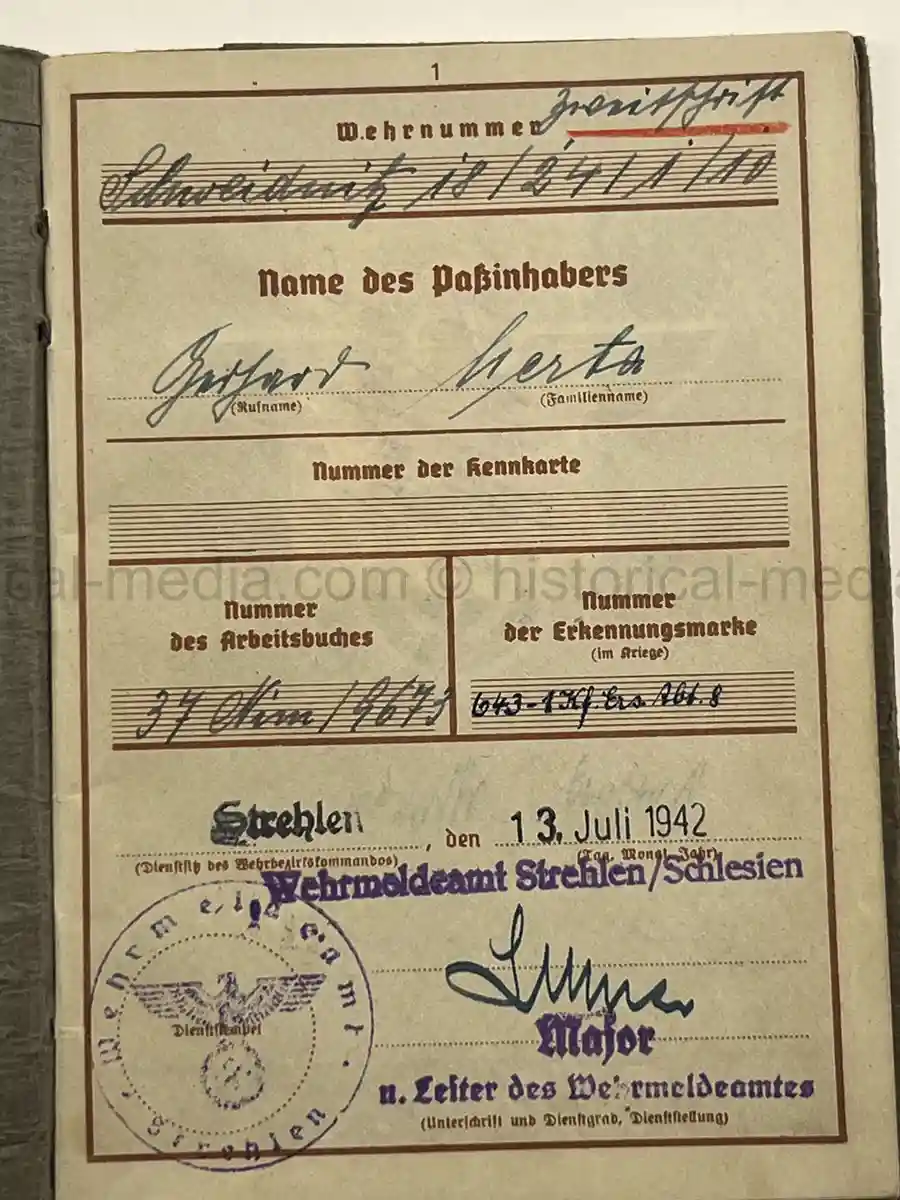
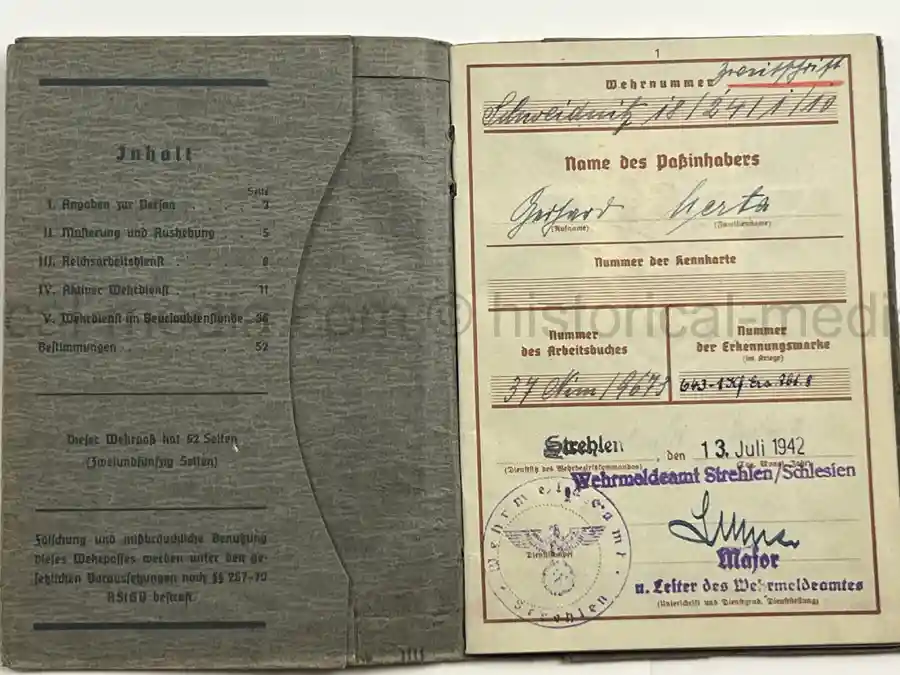
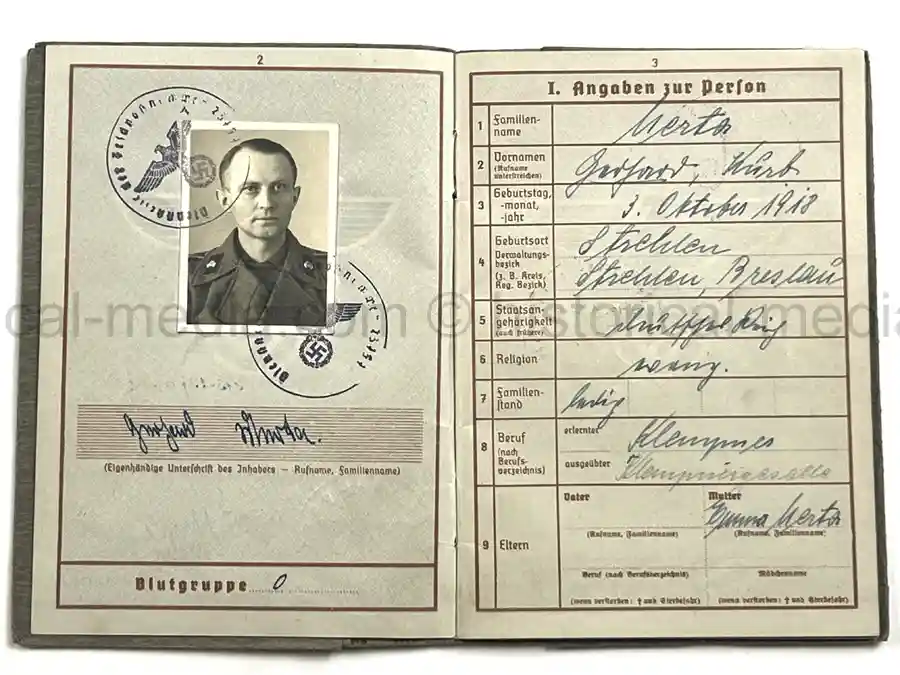
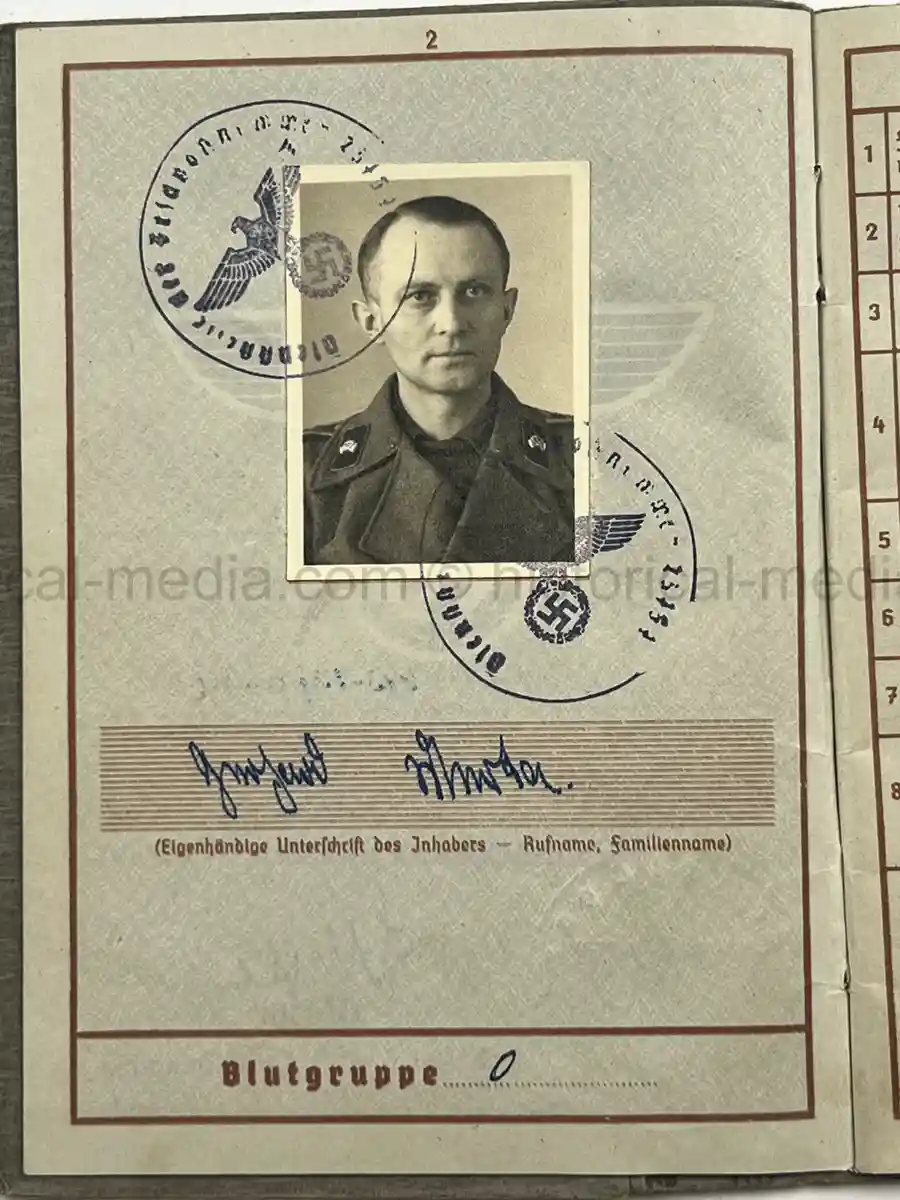
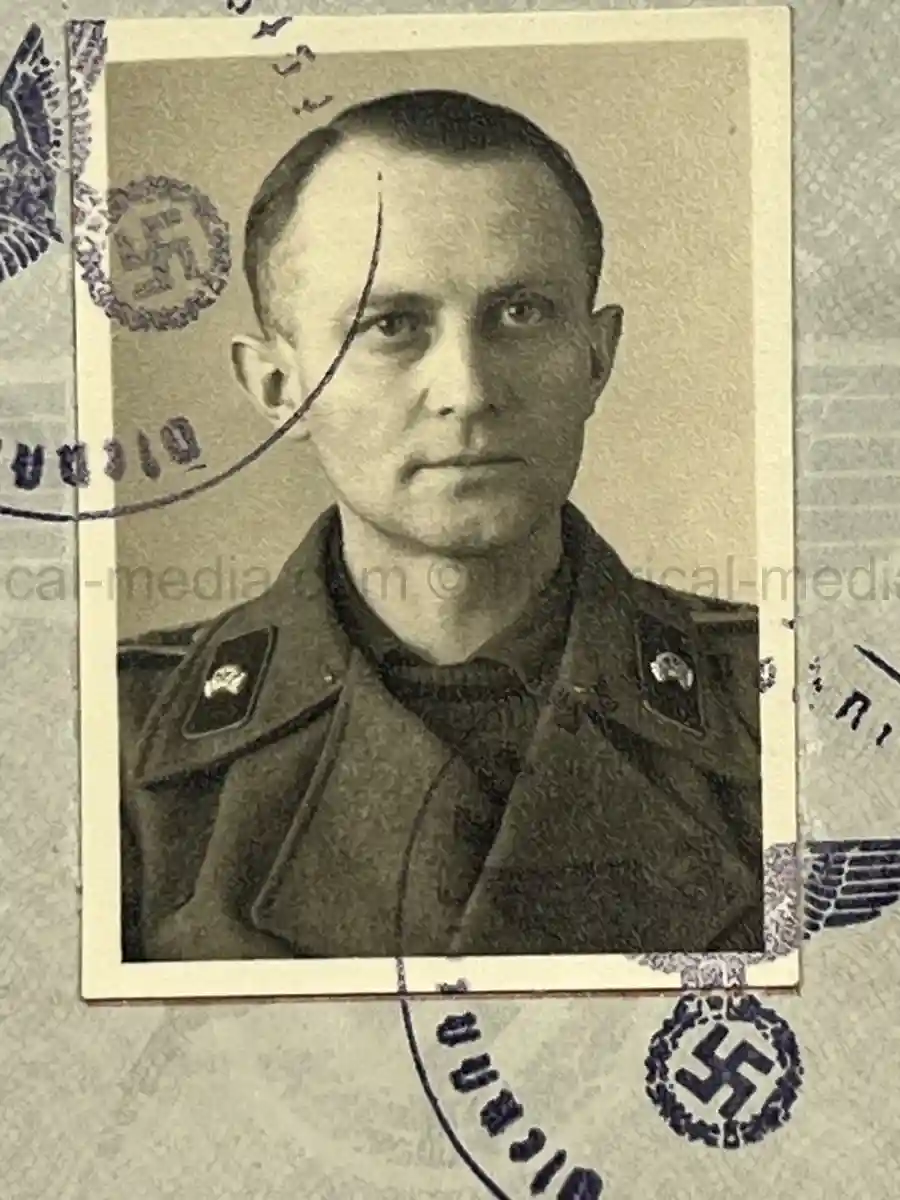
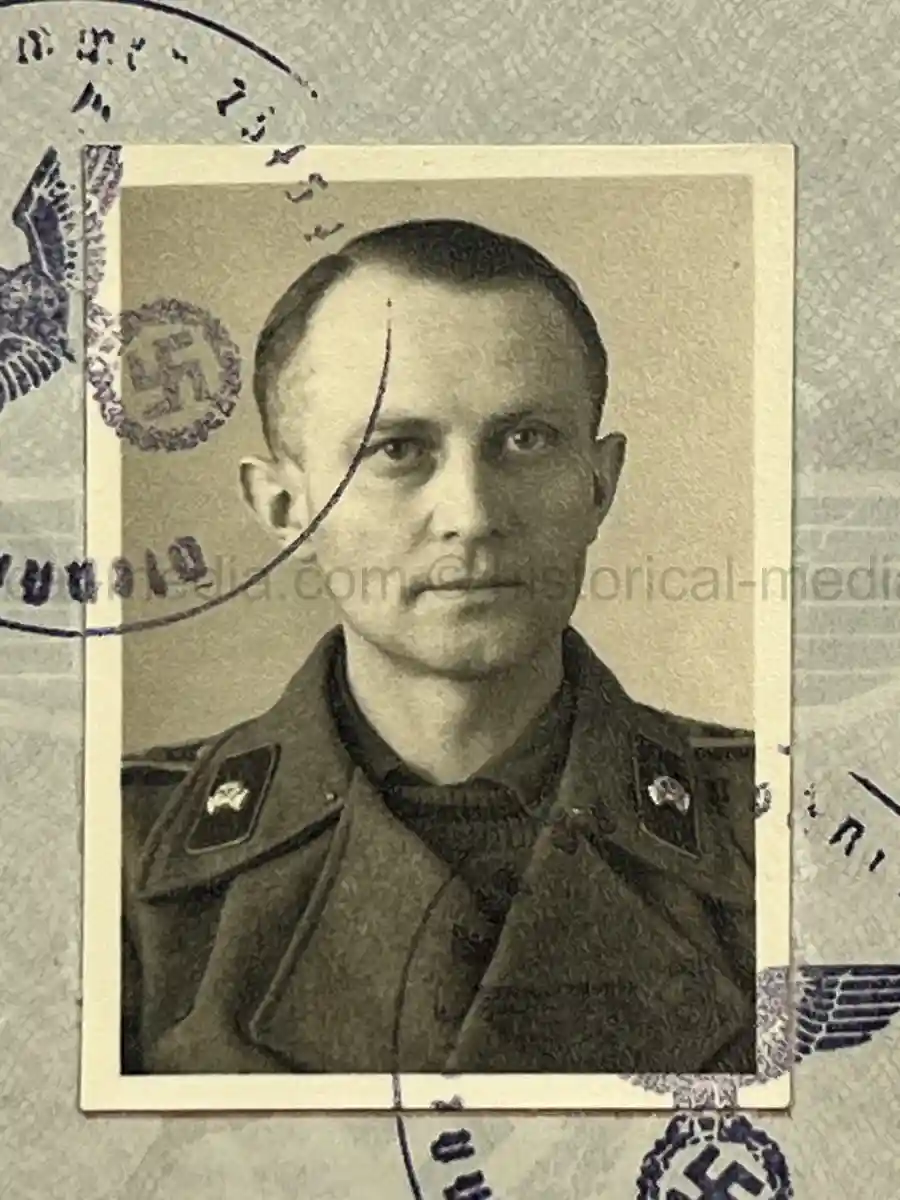
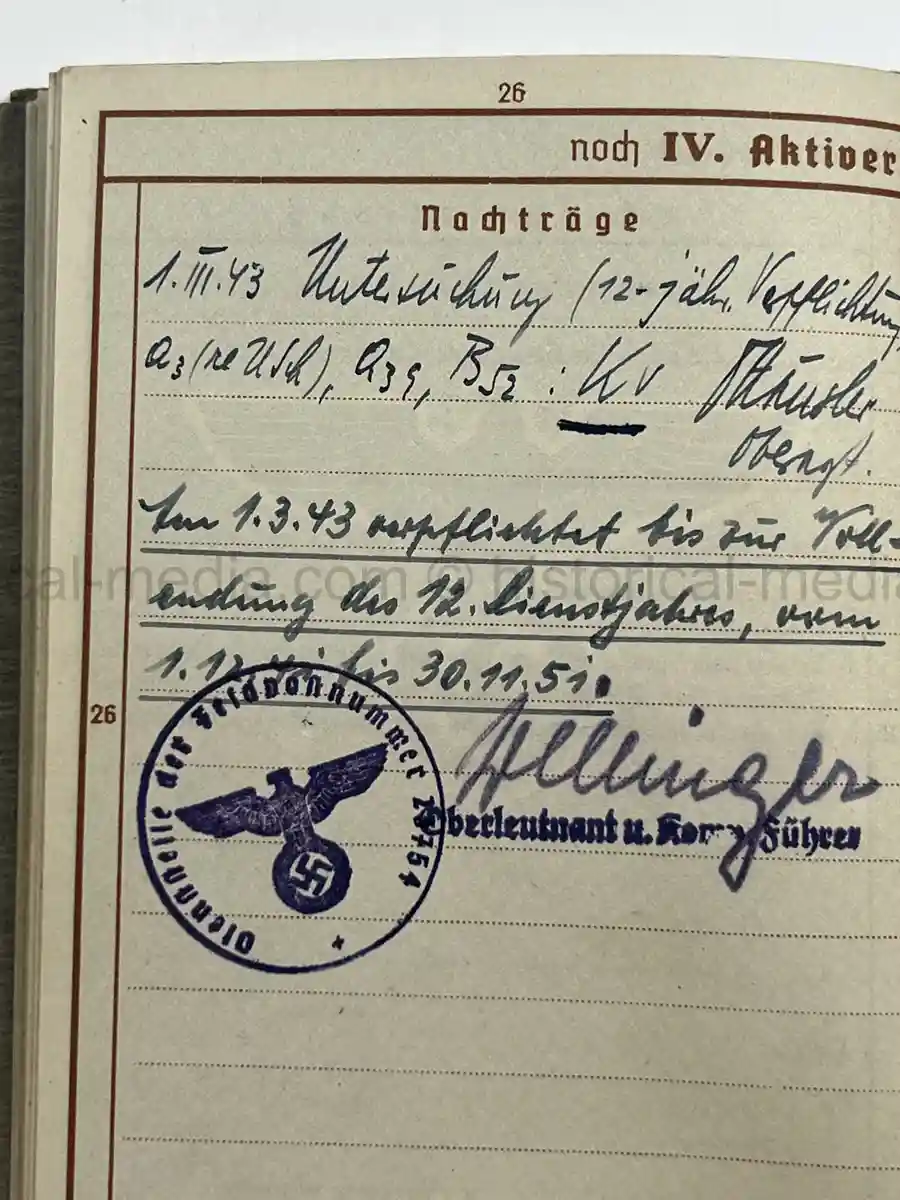
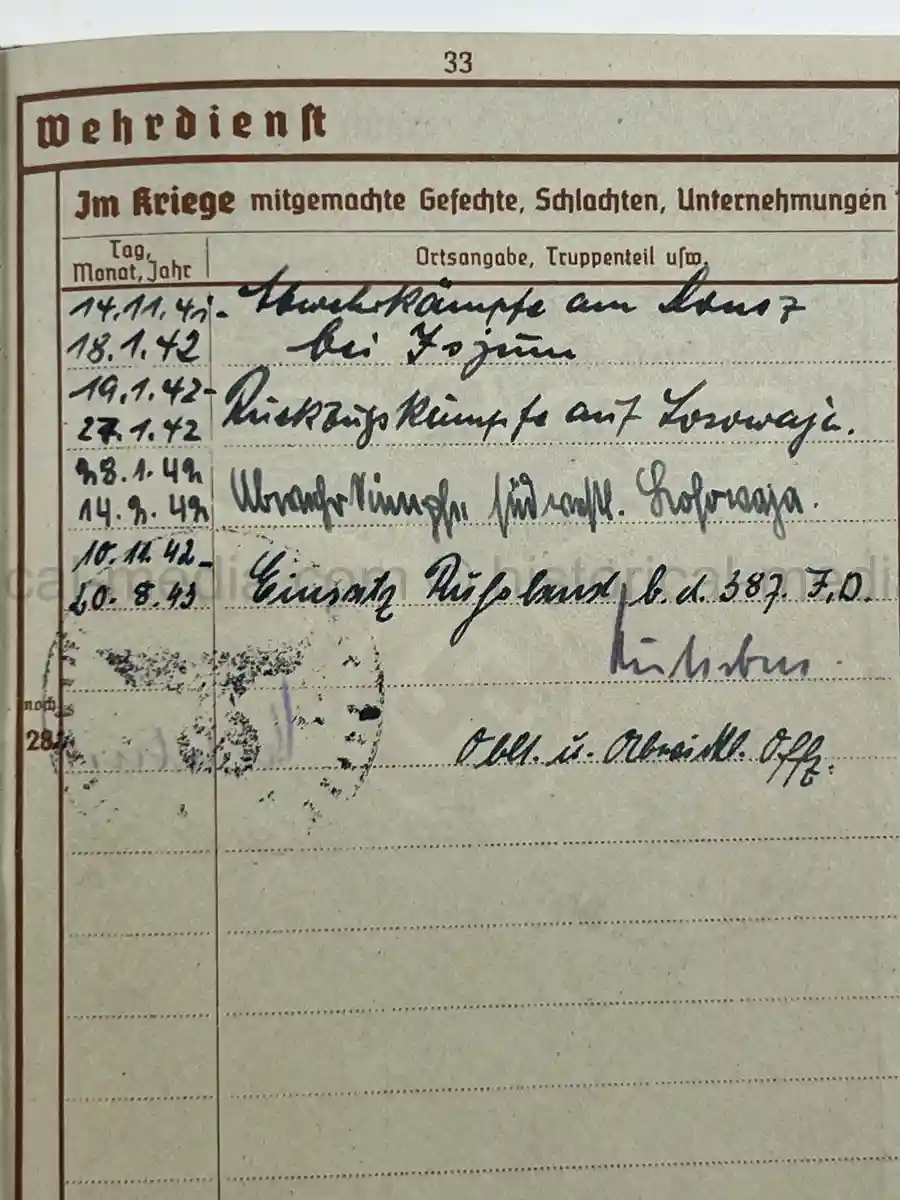
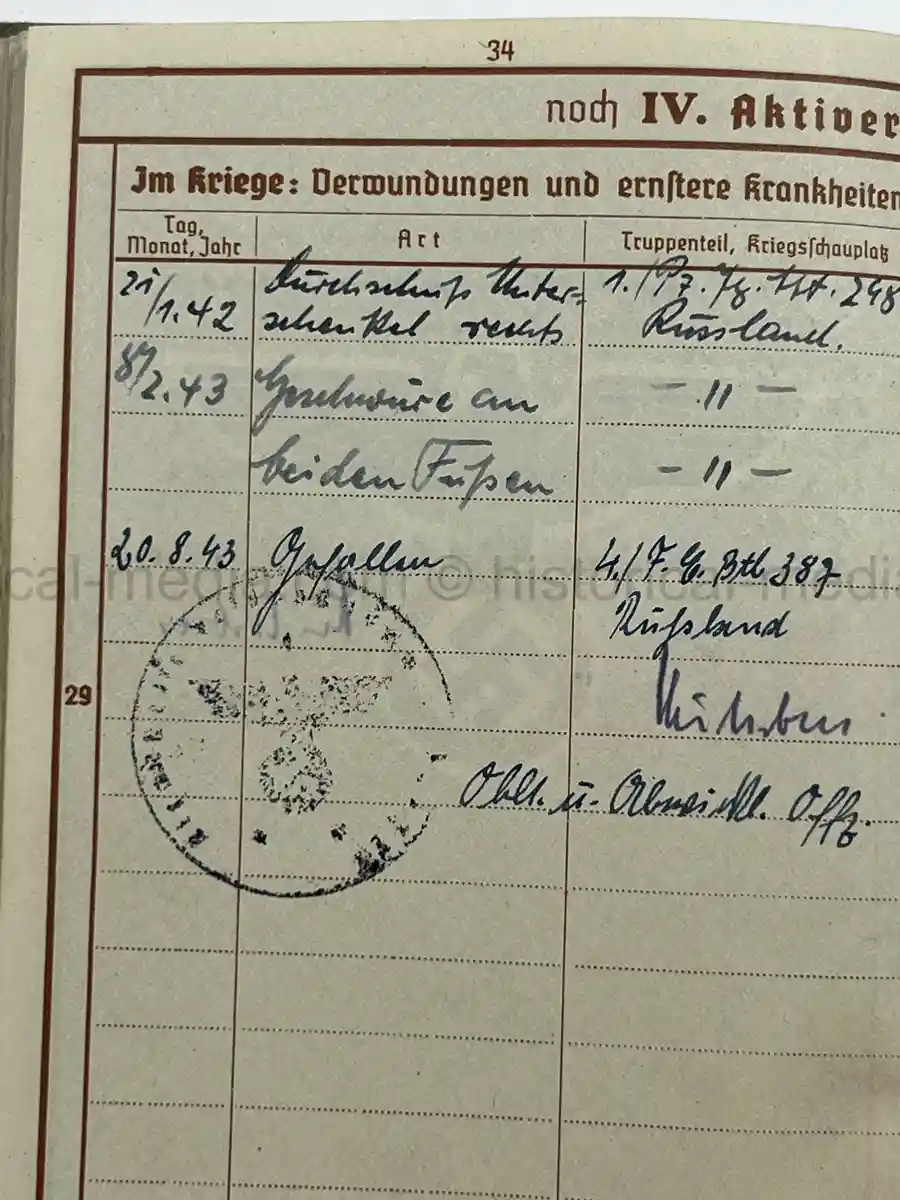
Gerhard Merta’s Wehrpass documents the full wartime career of a German Army soldier born 3 October 1918 in Strehlen, Silesia, who entered service prior to the outbreak of the Second World War and served continuously through the Westfeldzug and extensive combat on the Eastern Front, where he was ultimately killed in action on 20 August 1943 (recorded in the Wehrpass, page 34). The Wehrpass includes a clear identification photograph showing Merta wearing a feldgrau wrap-style tunic associated with Sturmgeschütz and armored vehicle crews, adding strong visual and collector appeal. His service shows a progression from early infantry assignments into Panzerjäger (anti-tank) units, with later wartime transfers into formations associated with the 298. and 387. Infanterie-Divisions. Particularly notable are the detailed campaign entries documenting the 1940 campaign in France, sustained Eastern Front combat, multiple wounds, and his eventual battlefield death during the critical summer fighting of 1943.
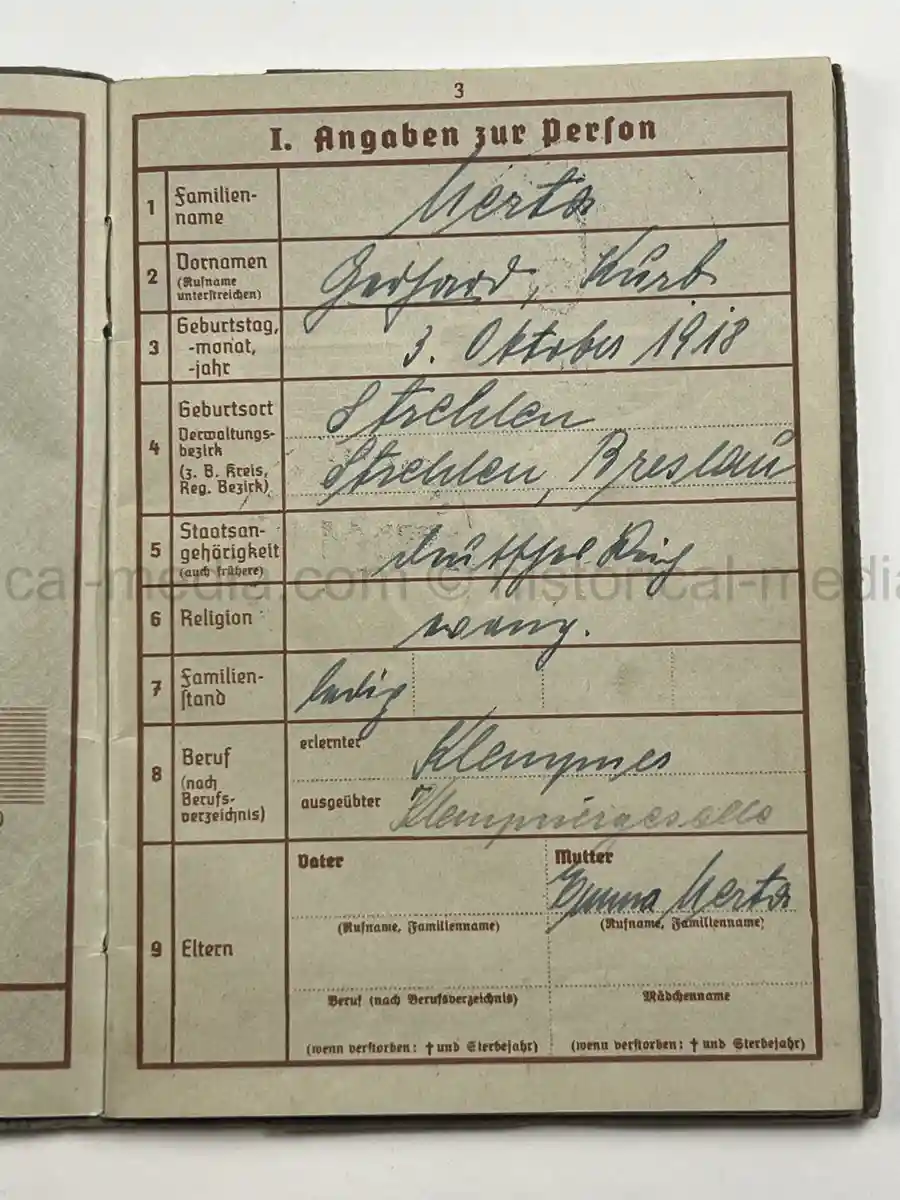
Personal Details:
- Name: Gerhard Merta
- Date of Birth: 3 October 1918
- Place of Birth: Strehlen, Silesia (Breslau district)
- Nationality: German
- Religion: none listed
- Marital Status: single
- Occupation: laborer (Hilfsarbeiter)
- Blood Group: O
- Wehrpass issued: 13 July 1942 (Wehrmeldeamt Strehlen)
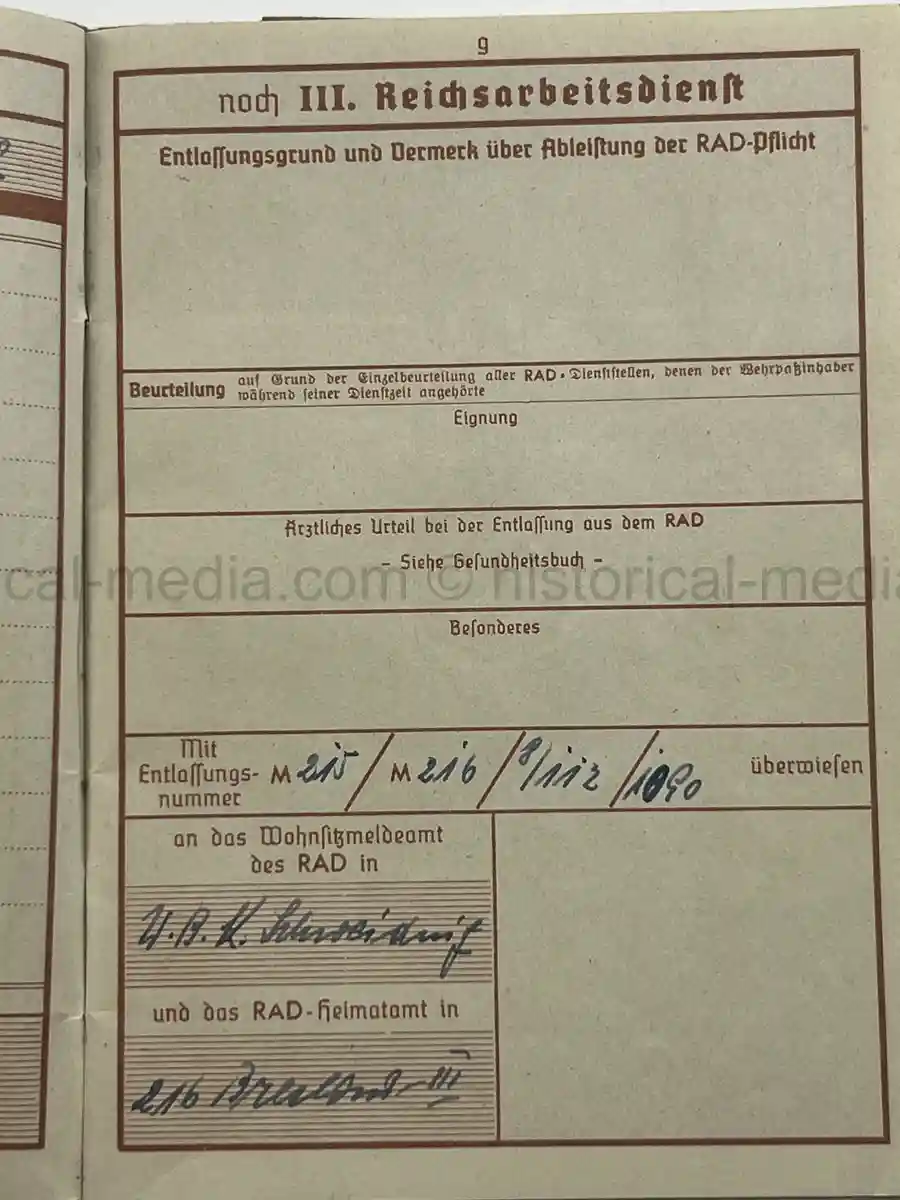
RAD / Pre-Military Service:
- Reichsarbeitsdienst (RAD) service completed prior to army induction
- Administrative discharge and transfer entries recorded
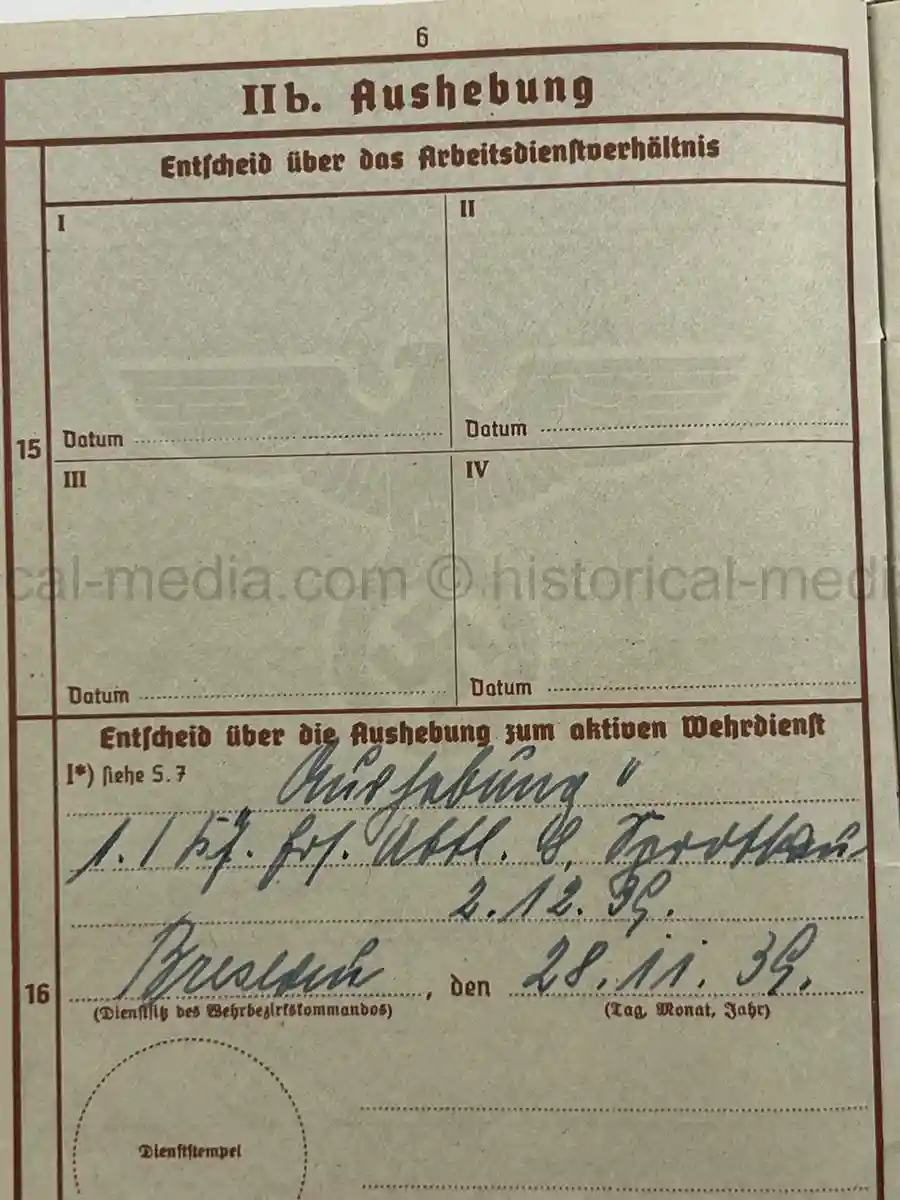
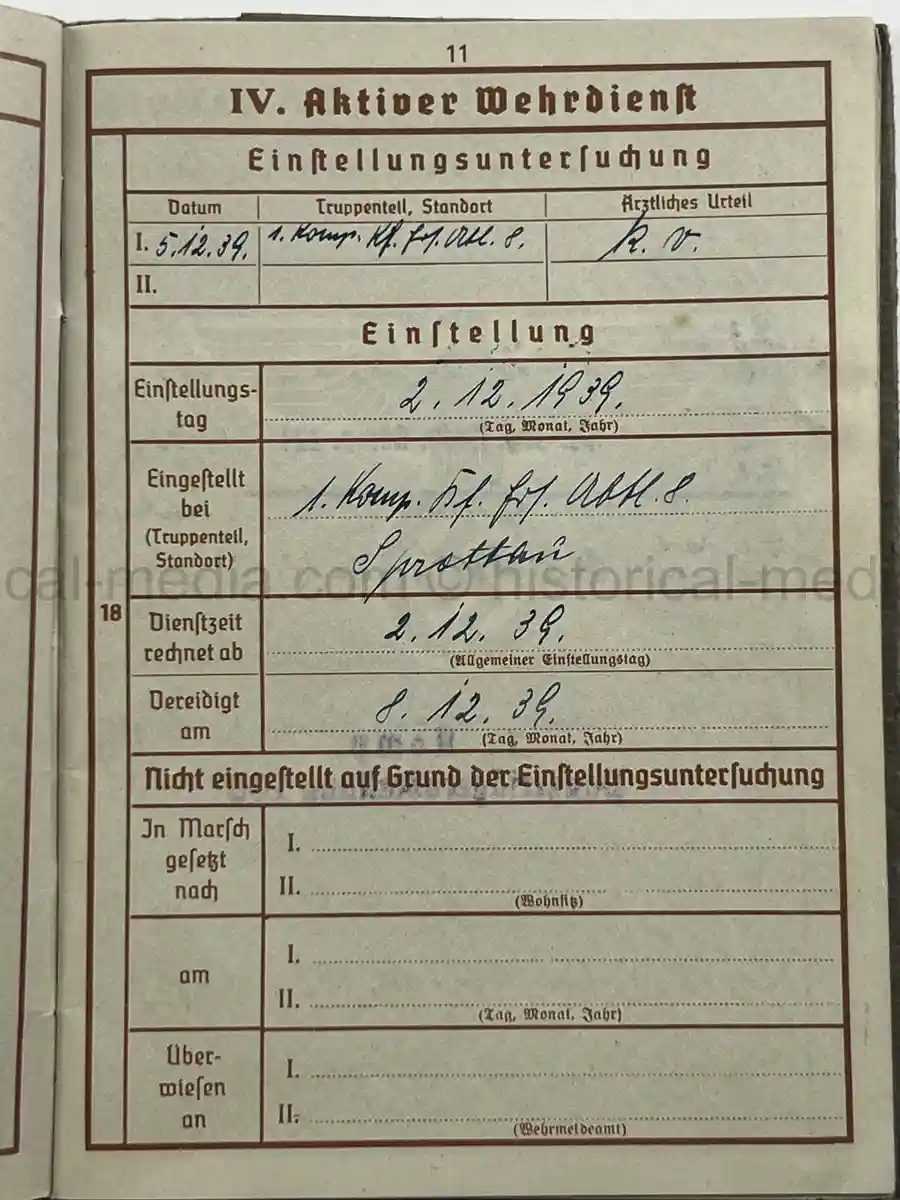
Army Induction:
- Entered active service: December 1938
- Initial assignment: 1. Kompanie, Infanterie-Regiment 8
- Sworn in: December 1938
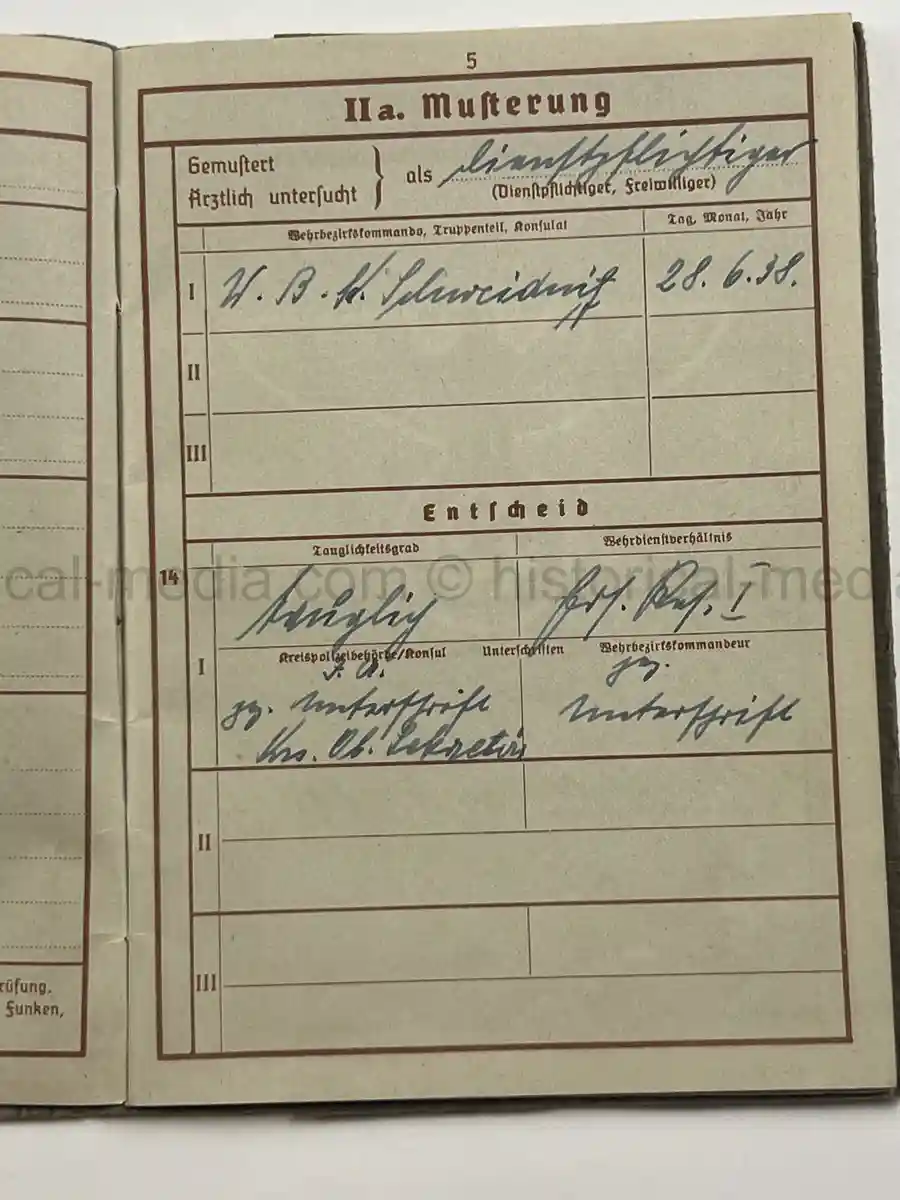
- Classified fit for frontline service
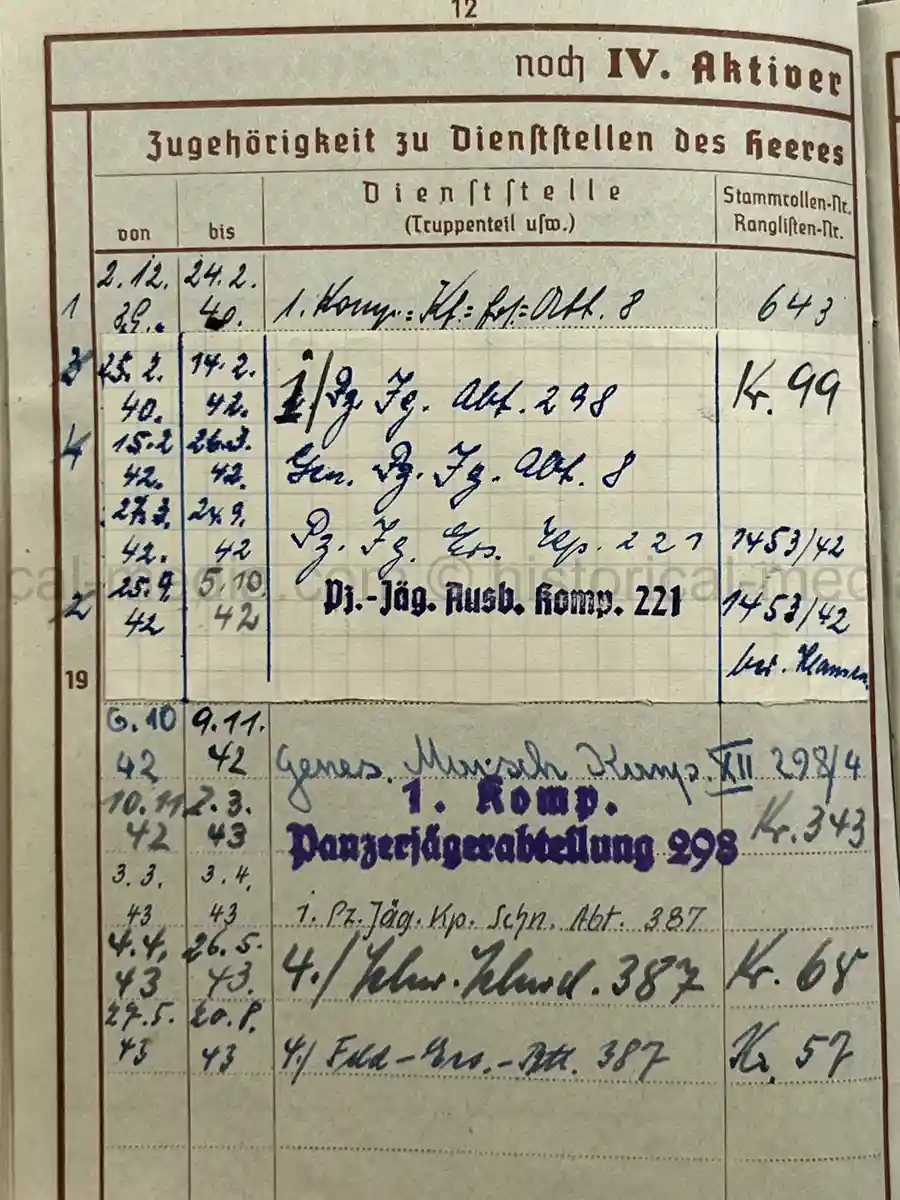
Unit Service (as recorded):
- Infanterie-Regiment 8
- Infantry and early wartime transfers
- Panzerjäger-Kompanie 221
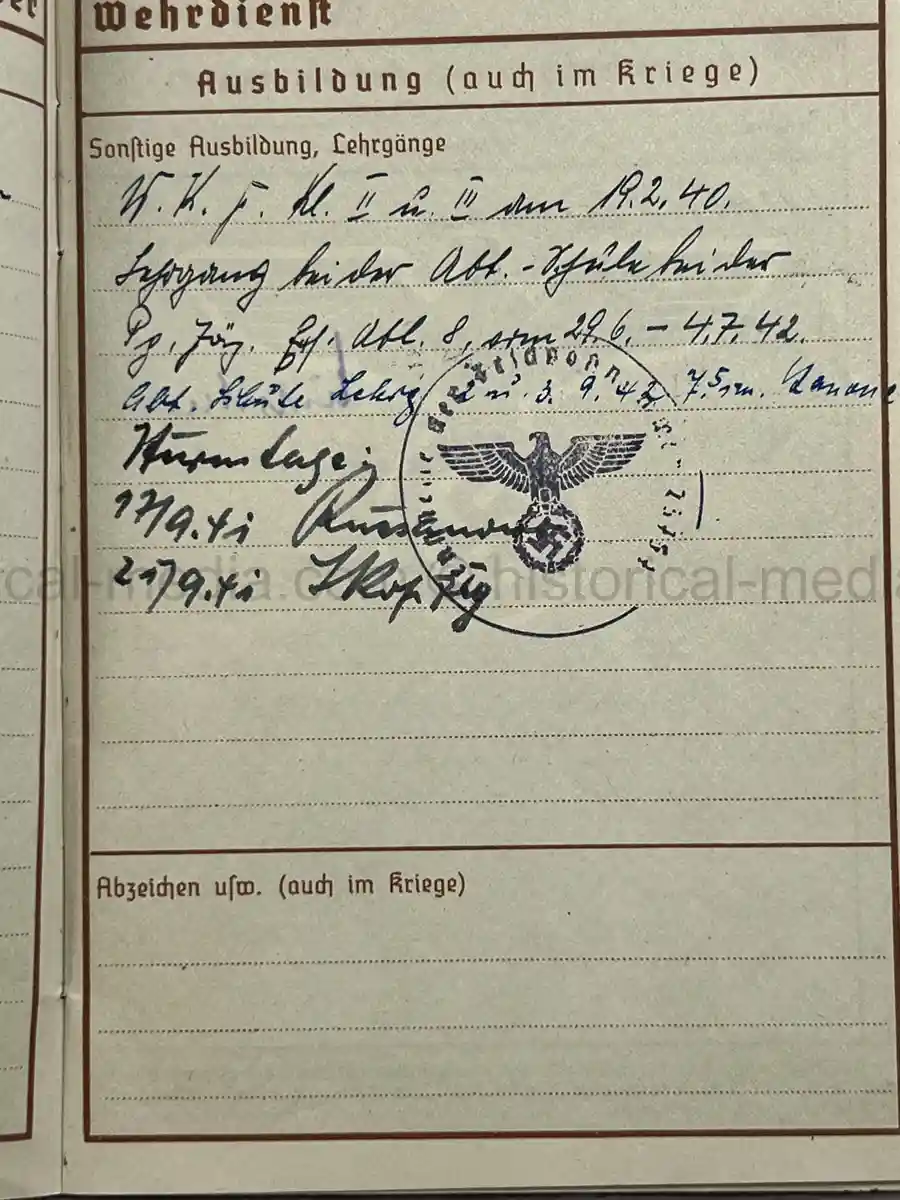
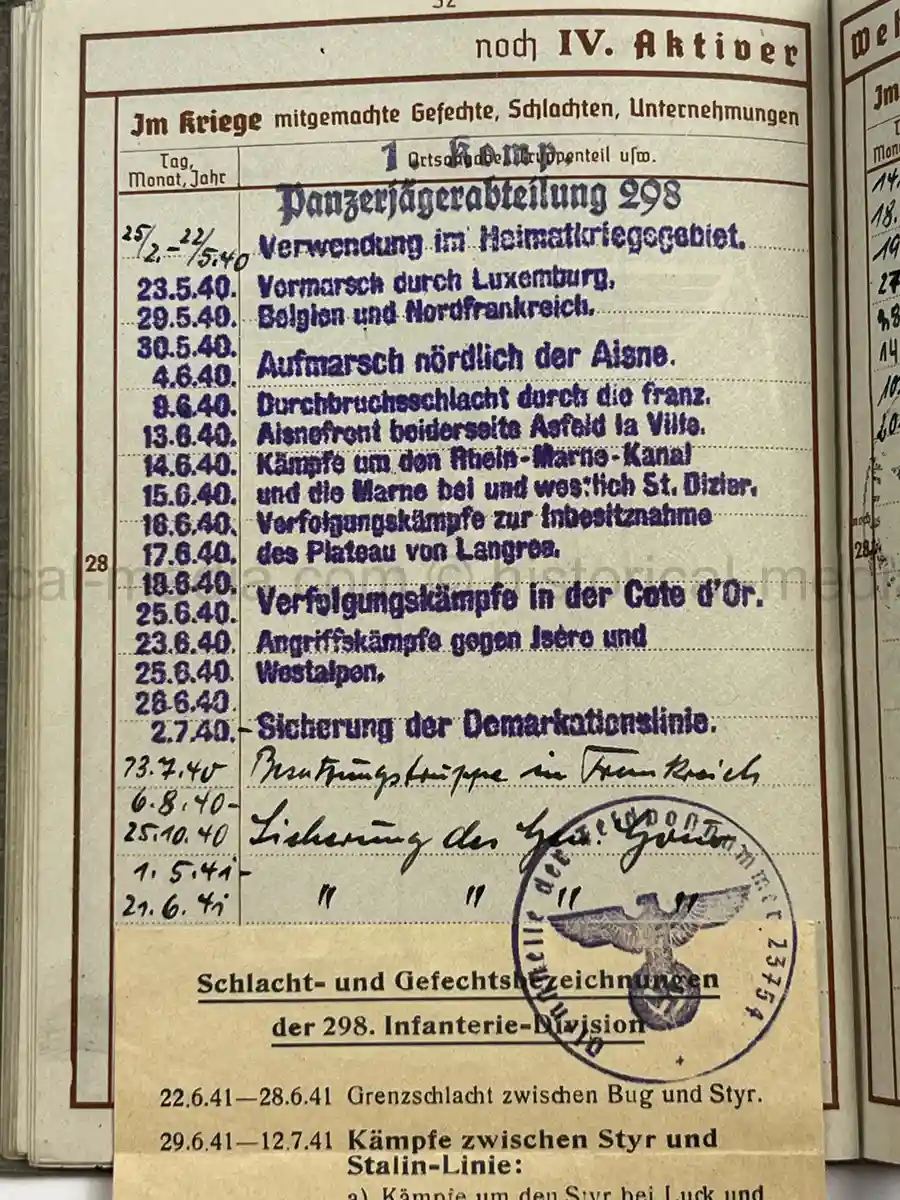
- Panzerjäger-Abteilung 298
- Genesenden / replacement formations
- Schnelle Abteilung 387
- Grenadier-Regiment 387 (4. Kompanie)
- Feldersatz-Bataillon 387
Unit Context (Notable):
- Panzerjäger-Abteilung 298:
- Anti-tank battalion equipped with towed anti-tank guns
- Frontline role engaging Soviet armor
- Often deployed in critical defensive positions
- Schnelle Abteilung 387:
- Mobile formation (bicycle or motorized elements)
- Indicates continued use in fast-moving or flexible combat roles
- Overall service reflects:
- Frontline infantry → anti-tank combat → mobile/replacement formations
Training & Qualifications:
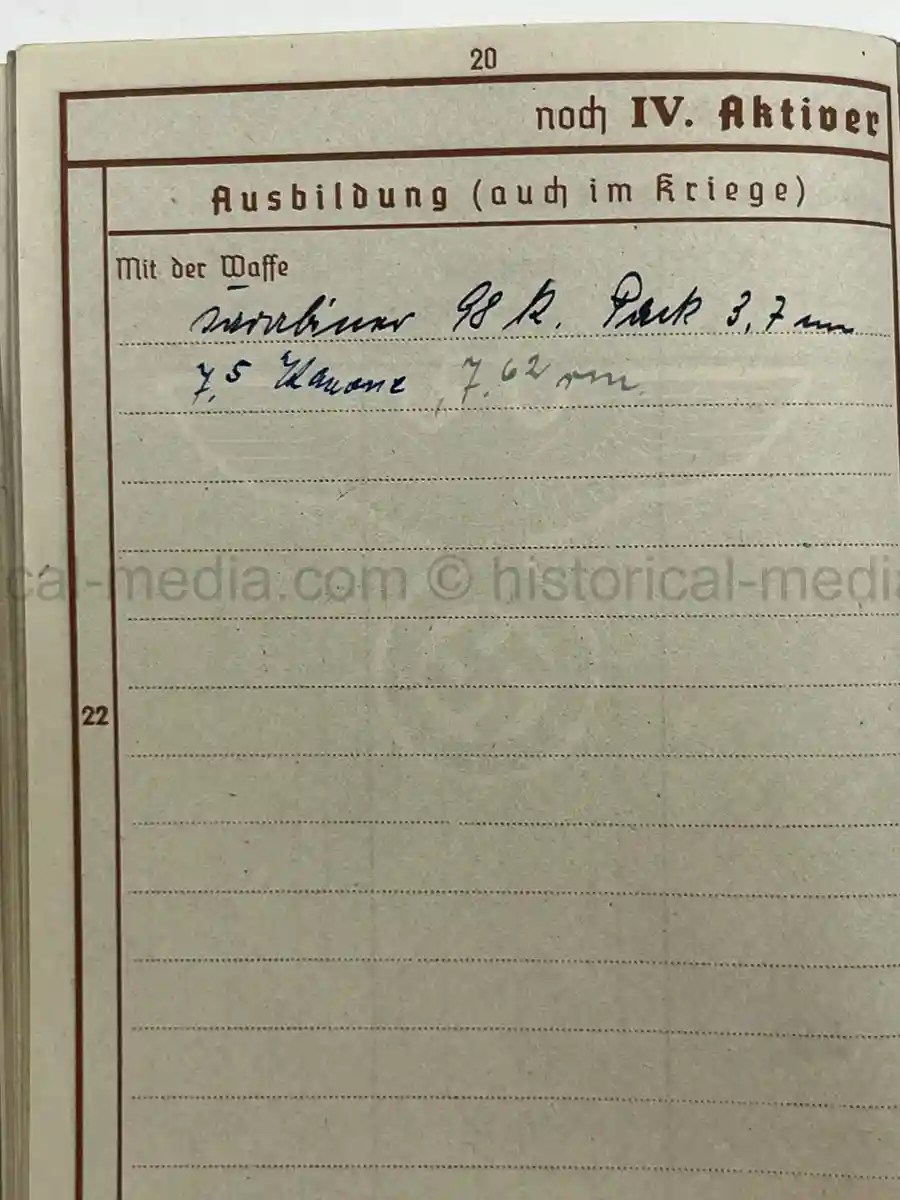
- Infantry weapons training
- Karabiner 98k rifle
- Pistol (7.65mm / 7.62mm noted)
- Continued wartime training recorded
Promotions:
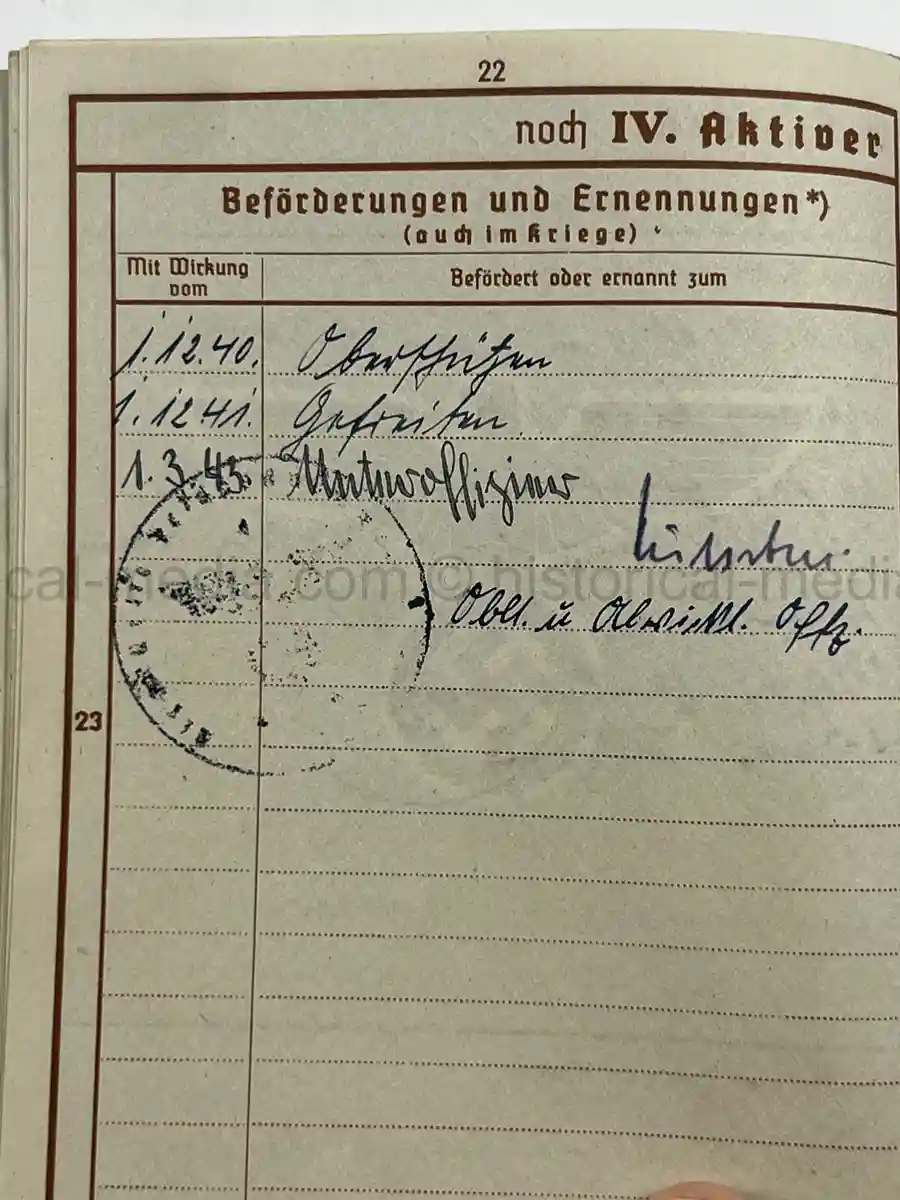
- Schütze – December 1940
- Gefreiter – December 1941
- Unteroffizier – later wartime promotion
Awards & Decorations (as entered):
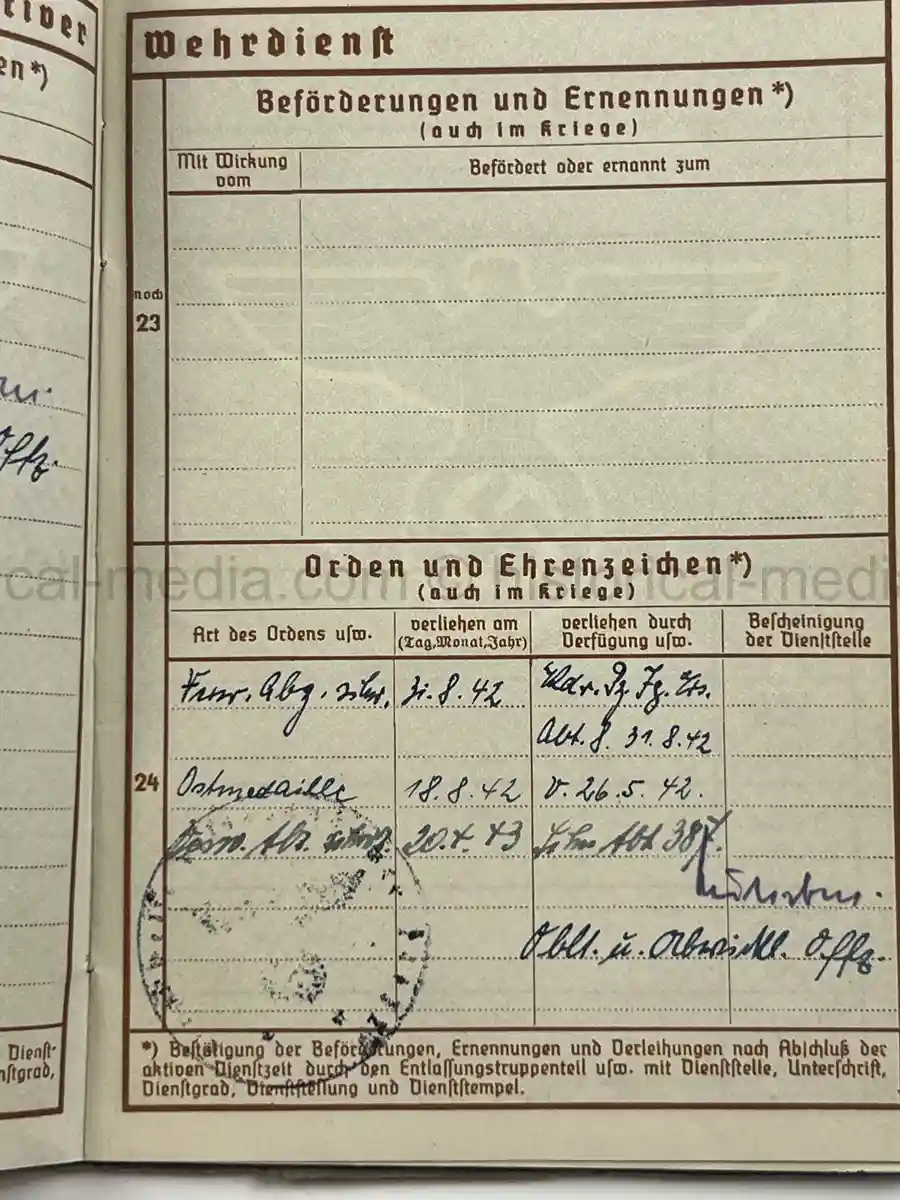
- Eastern Front Medal (Ostmedaille) – 18 August 1942
- Wound Badge in BLACK
- Wound Badge in Silver
Combat Service – Westfeldzug (1940):
- Advance through Luxembourg, Belgium, and northern France
- Fighting along the Aisne front
- Breakthrough operations against French defensive lines
- Engagements near Rethel and along the Marne–Rhine Canal
- Pursuit operations toward the Langres plateau
- Fighting in the Côte d’Or region
- Securing the demarcation line after the campaign
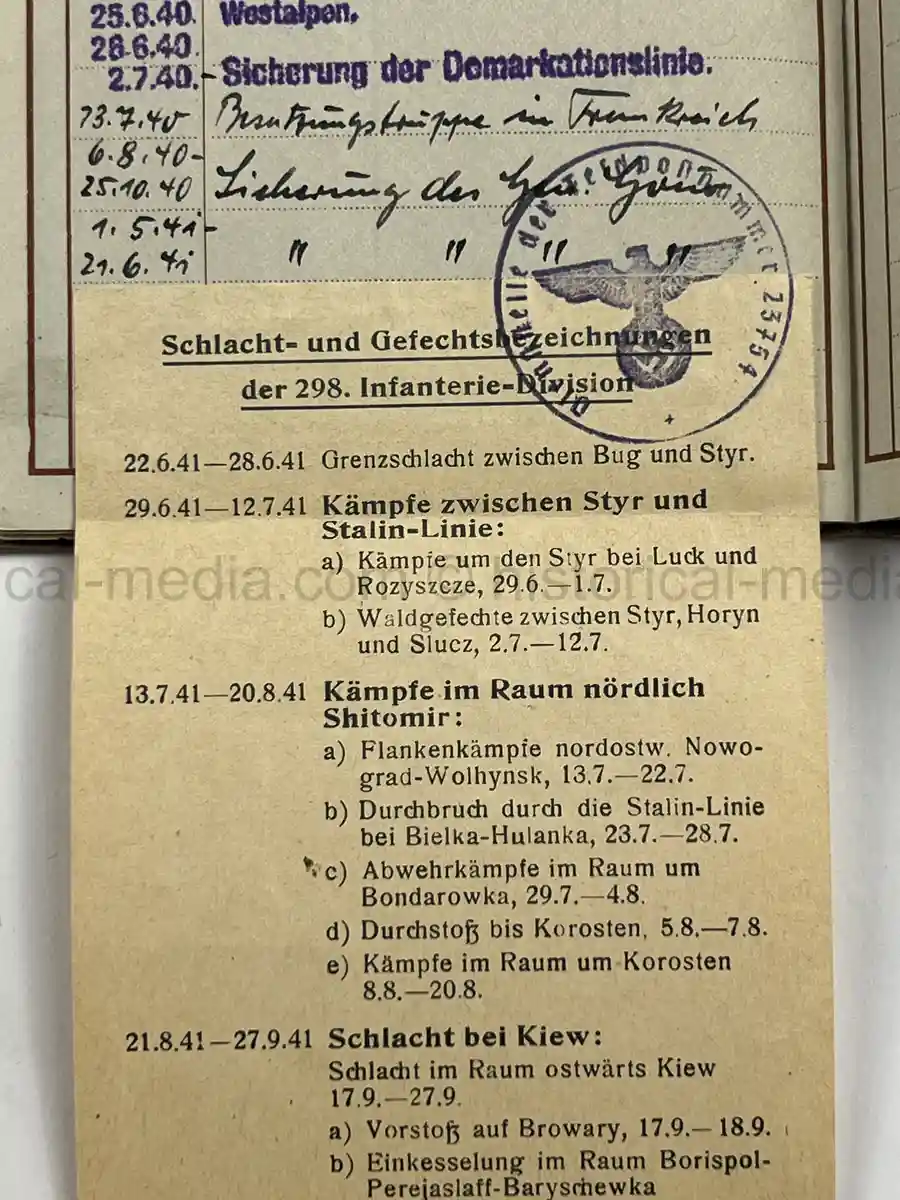
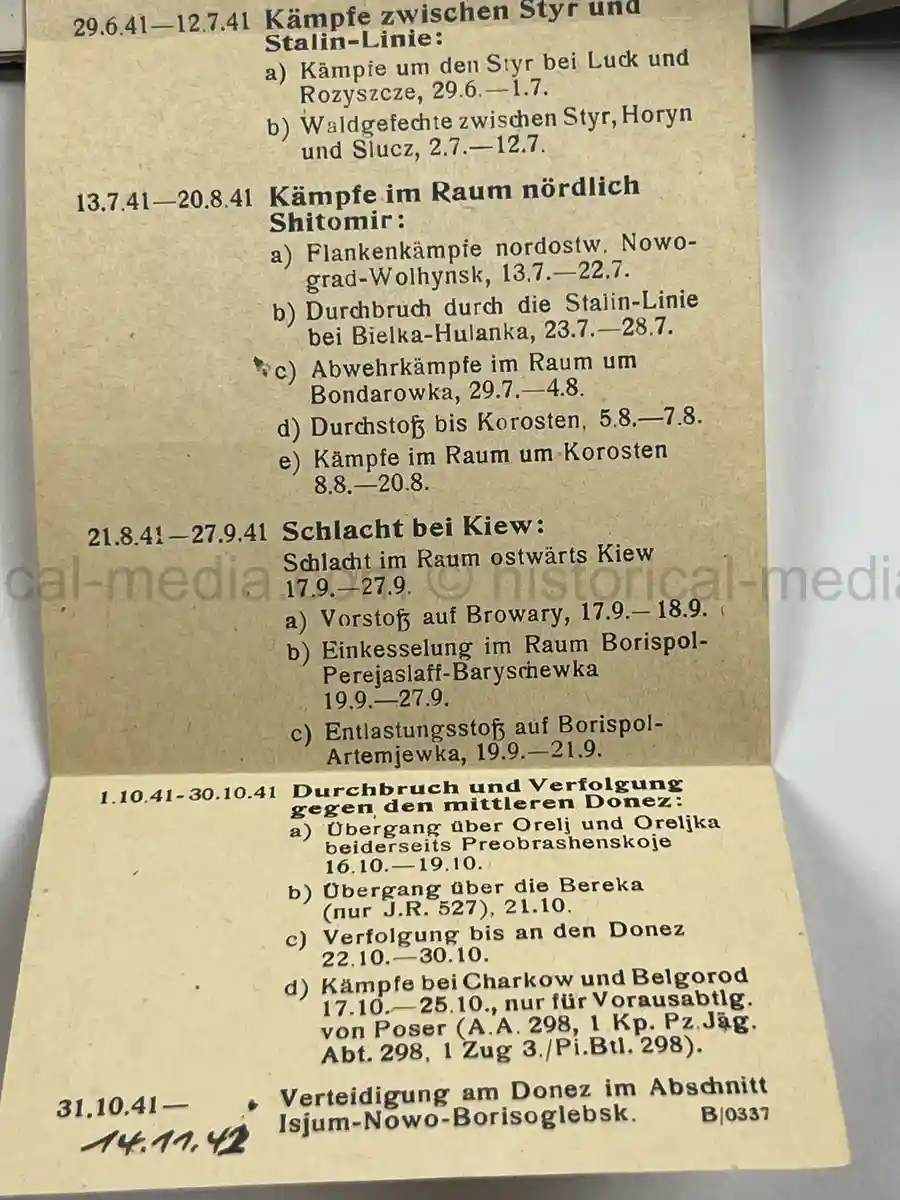
Combat Service – Eastern Front:
- June 1941: Bug–Styr operations
- Breakthrough of the Stalin Line
- Fighting in the Zhitomir sector
- Engagements around Korosten
- Participation in operations connected to the Battle of Kiev
- Advance into the Donets basin
- Fighting in Kharkov and Belgorod sectors
- Defensive operations along the Izyum (Donets) line
Wounds & Medical:
- January 1942: Gunshot wound to right upper arm (Russia)
- February 1943: Frostbite to both feet
- August 1943: illness recorded
Killed in Action:
- Killed in action – 20 August 1943 (page 34)
- Occurred during:
- Soviet summer offensives following the Battle of Kursk
- Period of heavy fighting in the Kharkov / Donets region
- Represents:
- Final loss after continuous frontline service from 1938
Combat Context – Final Operations (August 1943):
- Date aligns with:
- Belgorod–Kharkov offensive (Operation Polkovodets Rumyantsev)
- Based on recorded campaign locations, Merta was operating in:
- Kharkov / Donets / Izyum sectors
- These areas saw:
- Intense defensive combat
- Rapid Soviet advances
- High German casualties
- As a Panzerjäger and infantry NCO, he would have been engaged in:
- Anti-tank combat
- Close-range defensive fighting
- Rearguard or holding actions during retreat
Additional Notes:
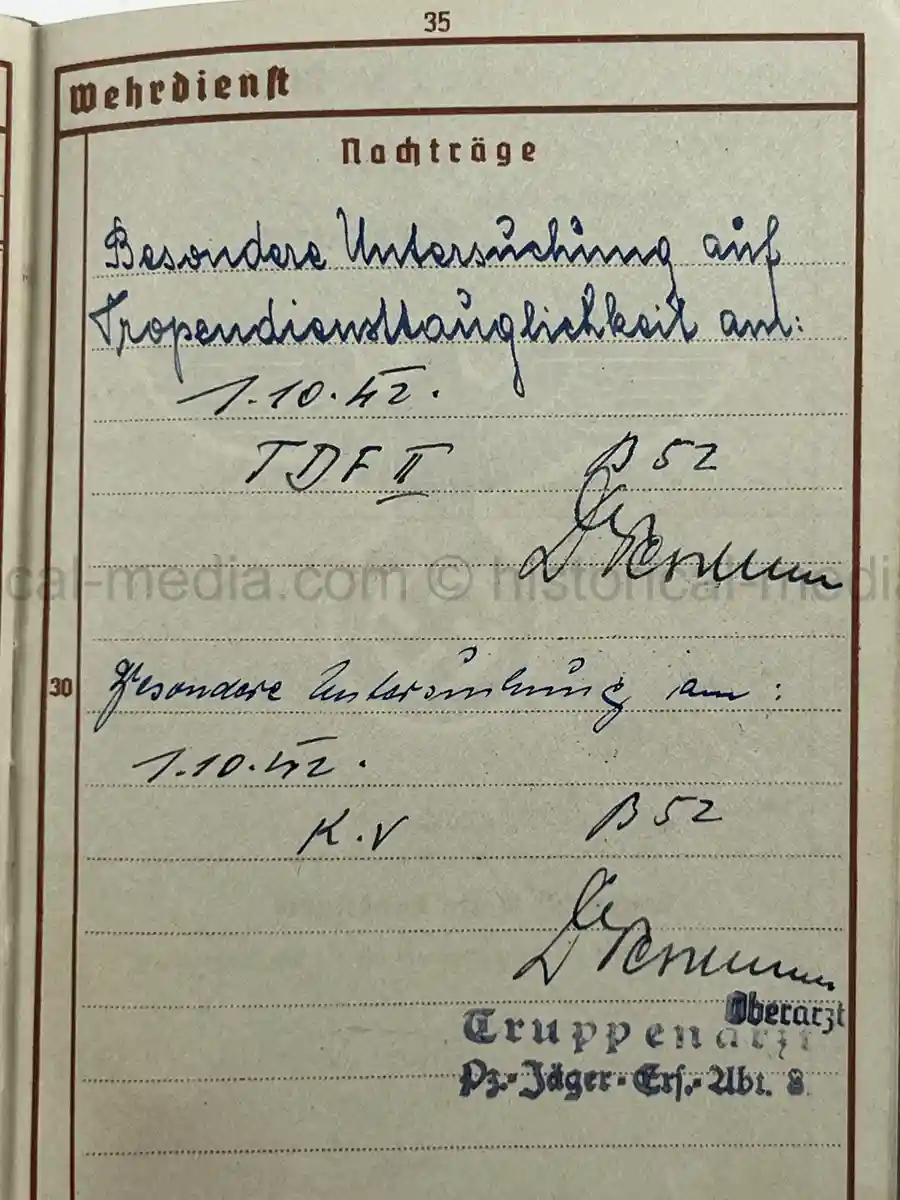
- Evaluated for tropical service suitability (October 1942)
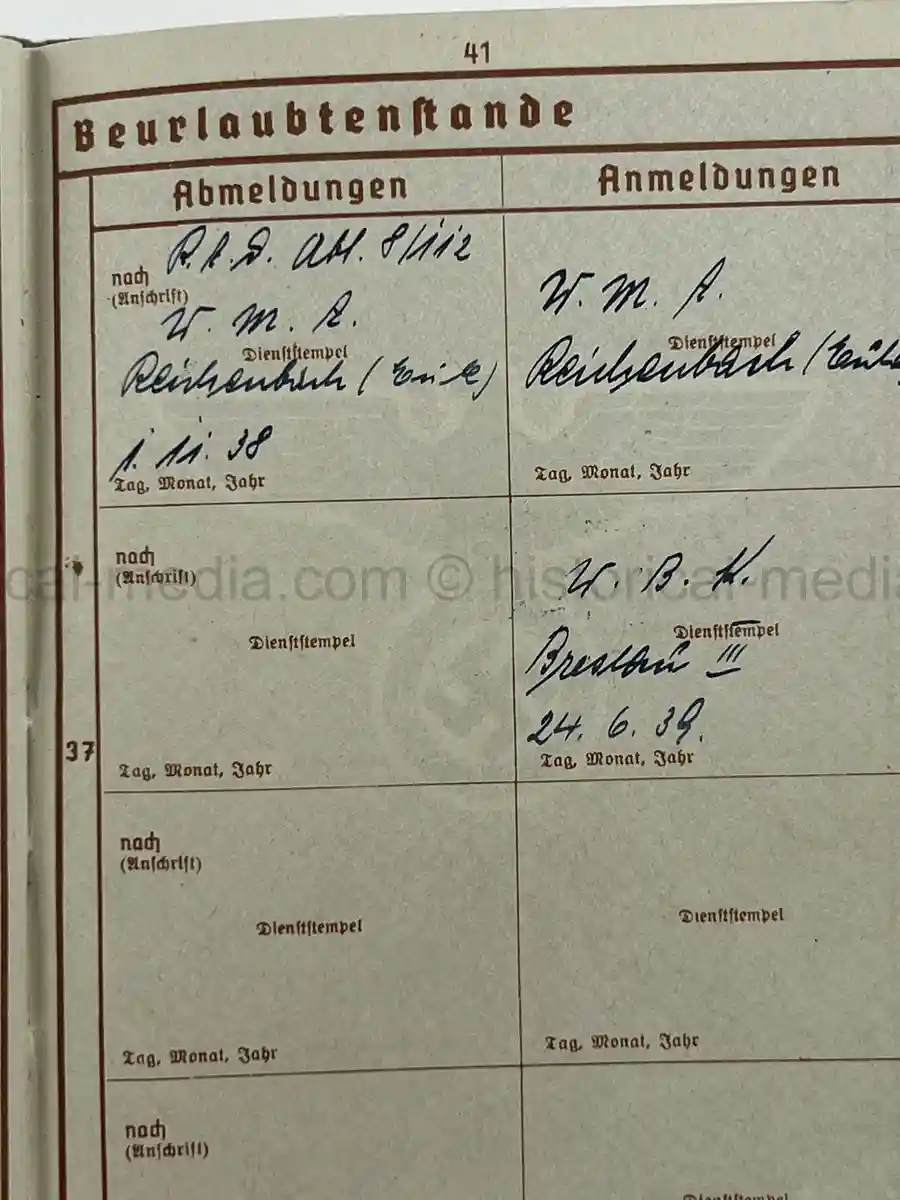
- Leave entries include Breslau region
- Identification photograph shows:
- Feldgrau wrap-style tunic associated with Sturmgeschütz / armored troops, likely field-issued to mobile anti-tank personnel
Summary:
“`html
“`