
Description
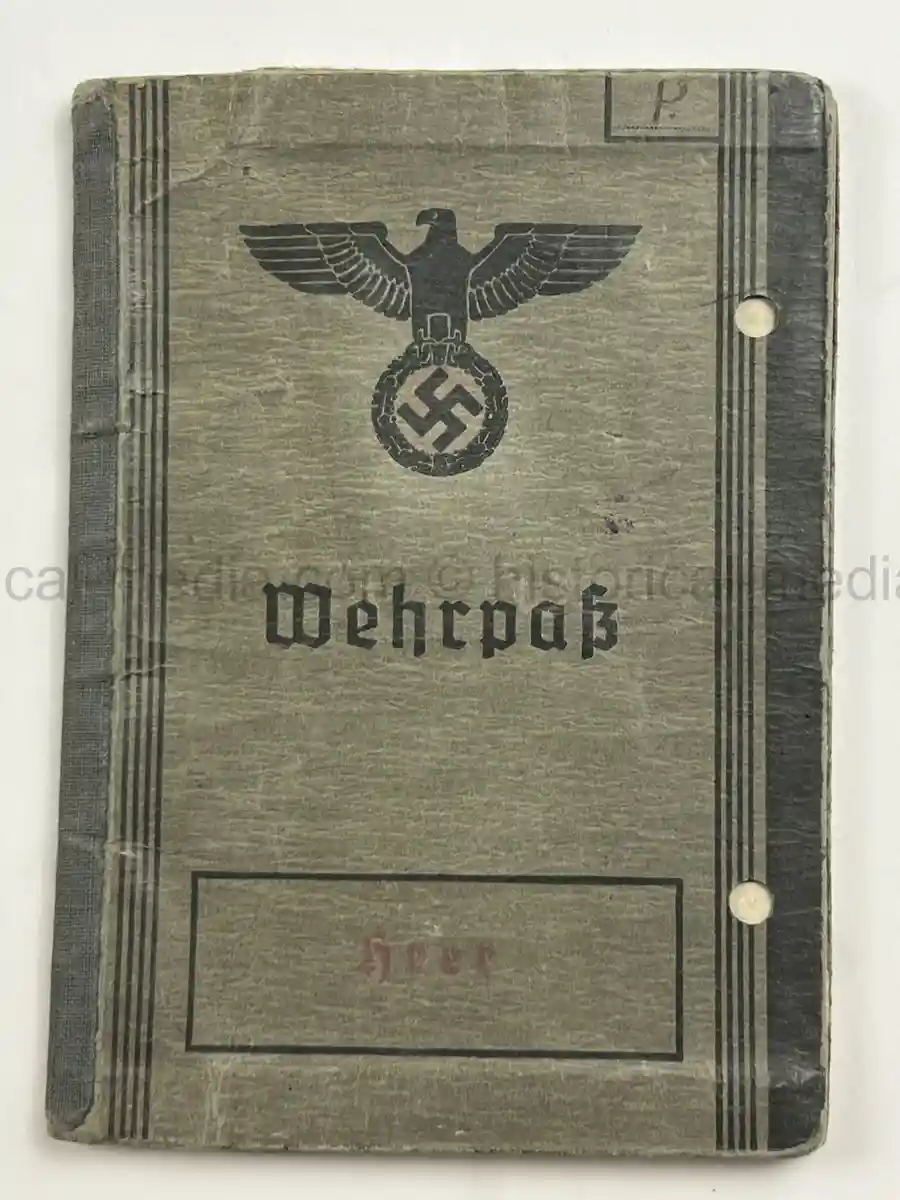
WEHRPASS – WALTER PFETZING – 29. INFANTERIE-DIVISION “FALKE” / 4. KAVALLERIE-DIVISION – POLAND, FRANCE & LATE-WAR EASTERN FRONT SERVICE
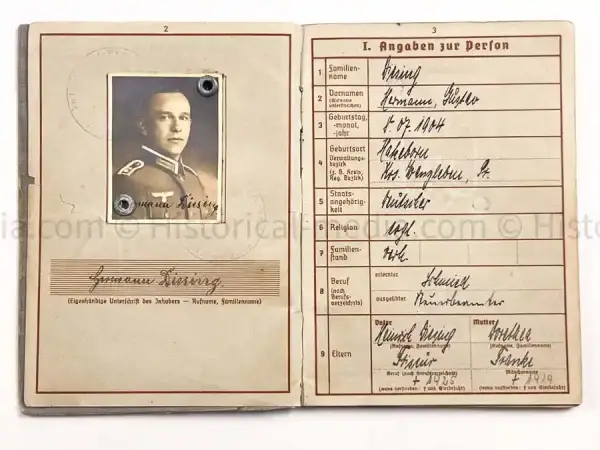
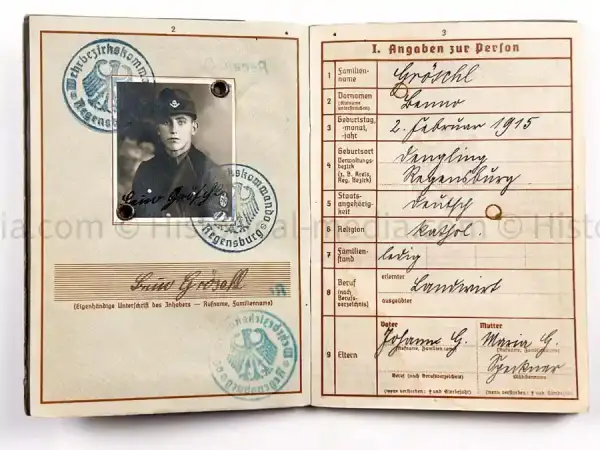
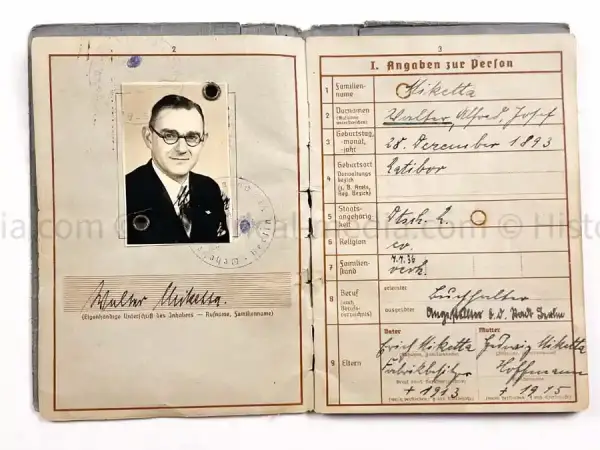
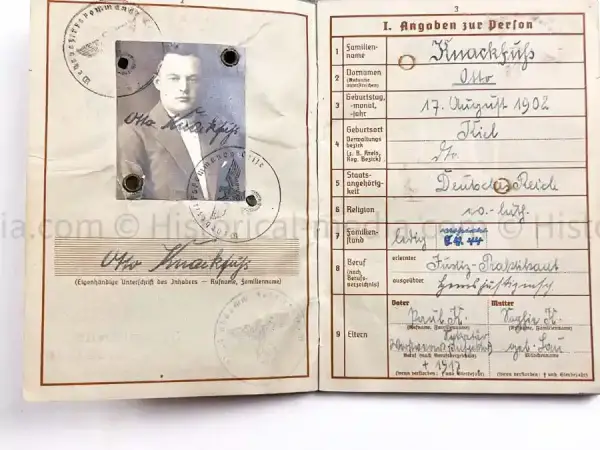
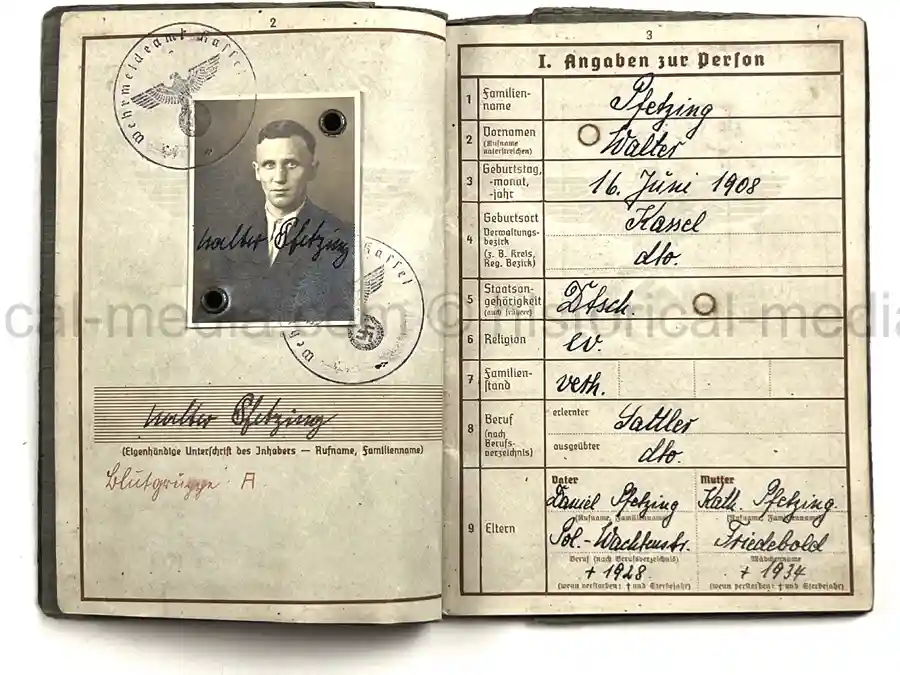
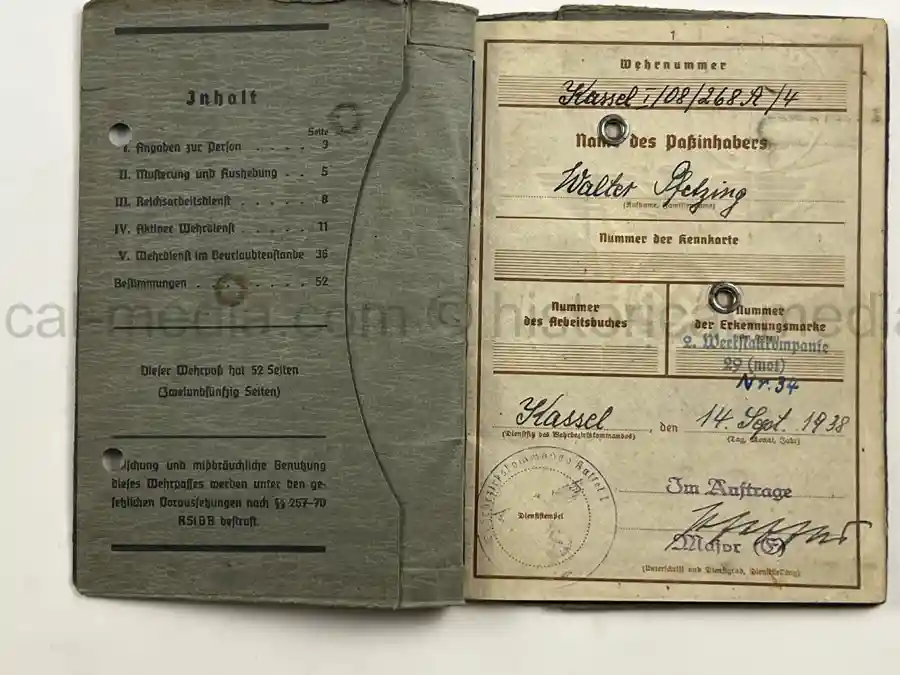
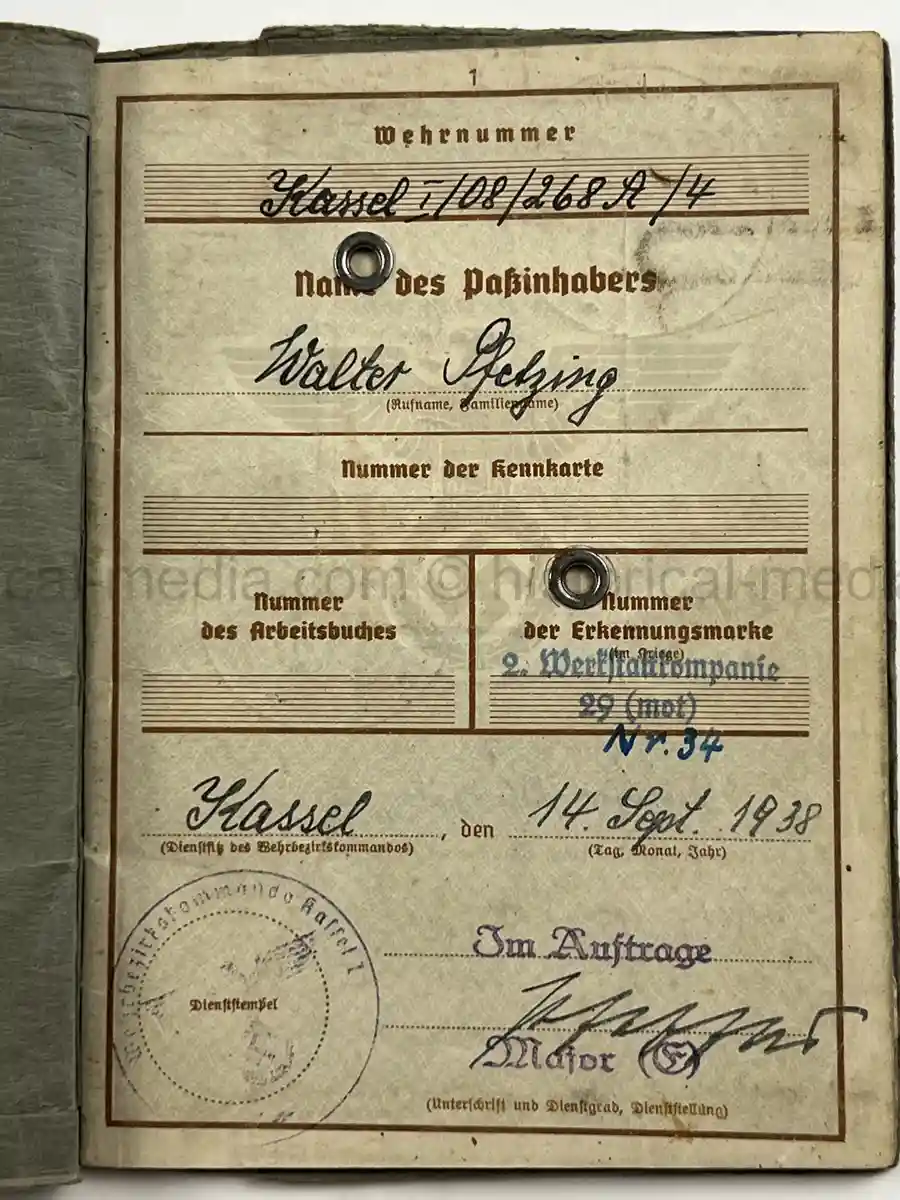
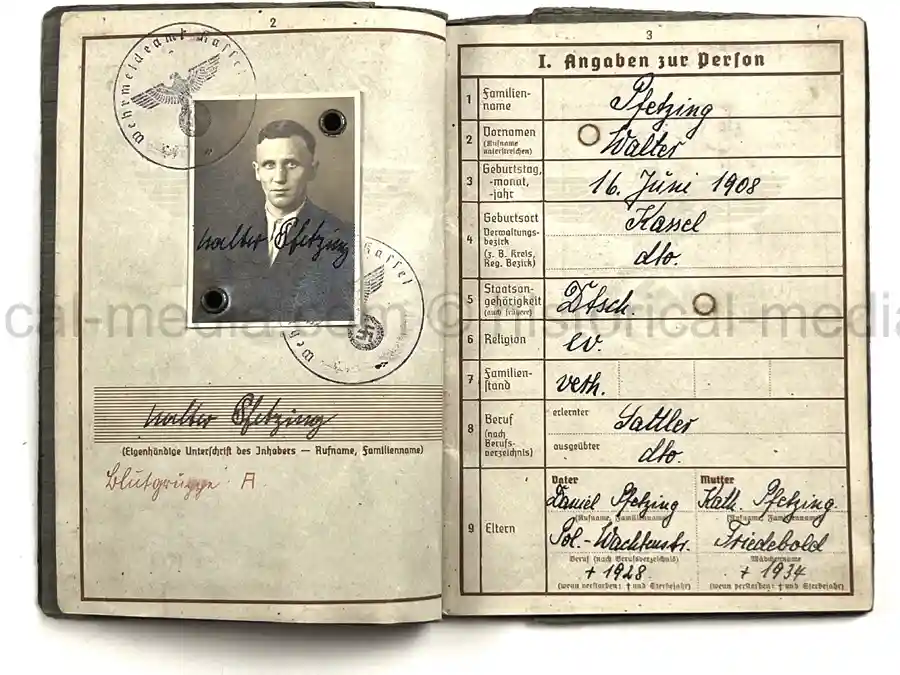
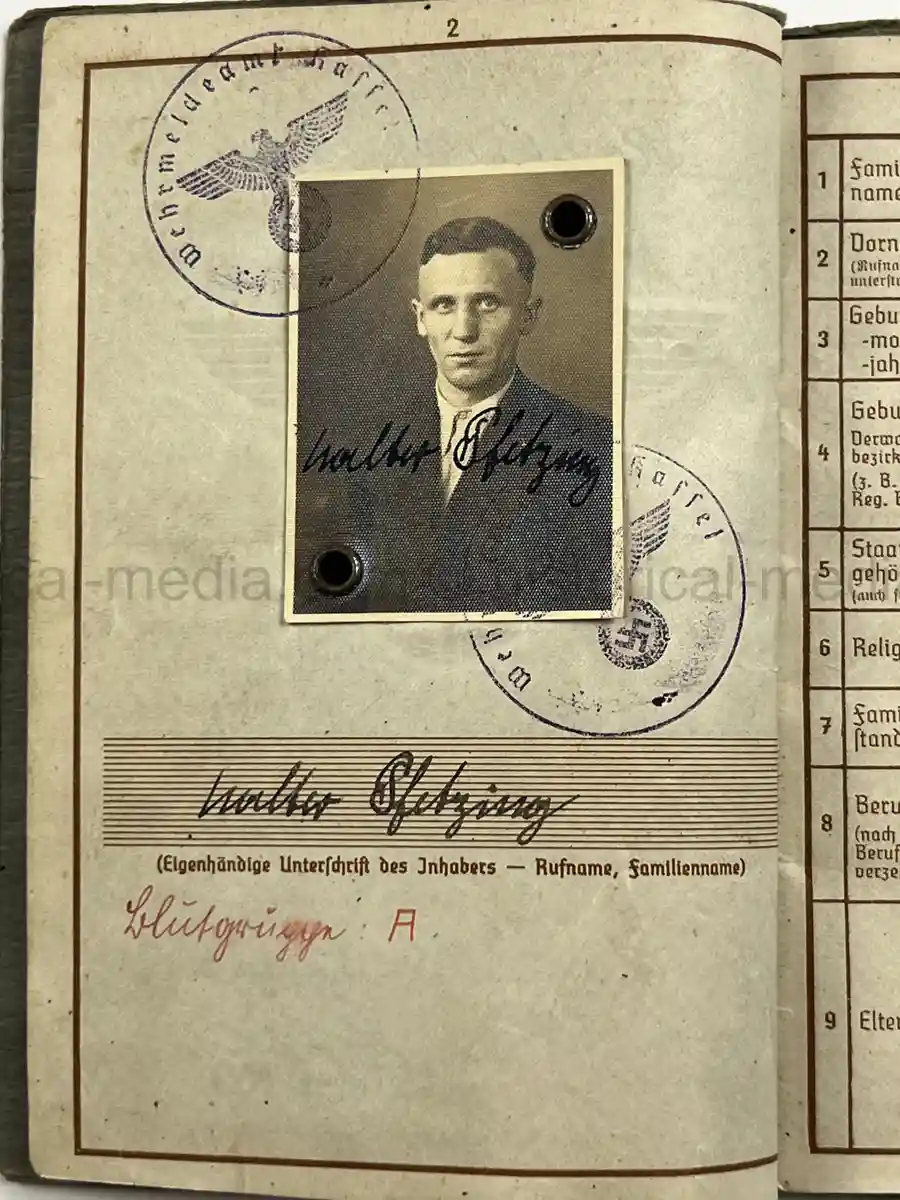
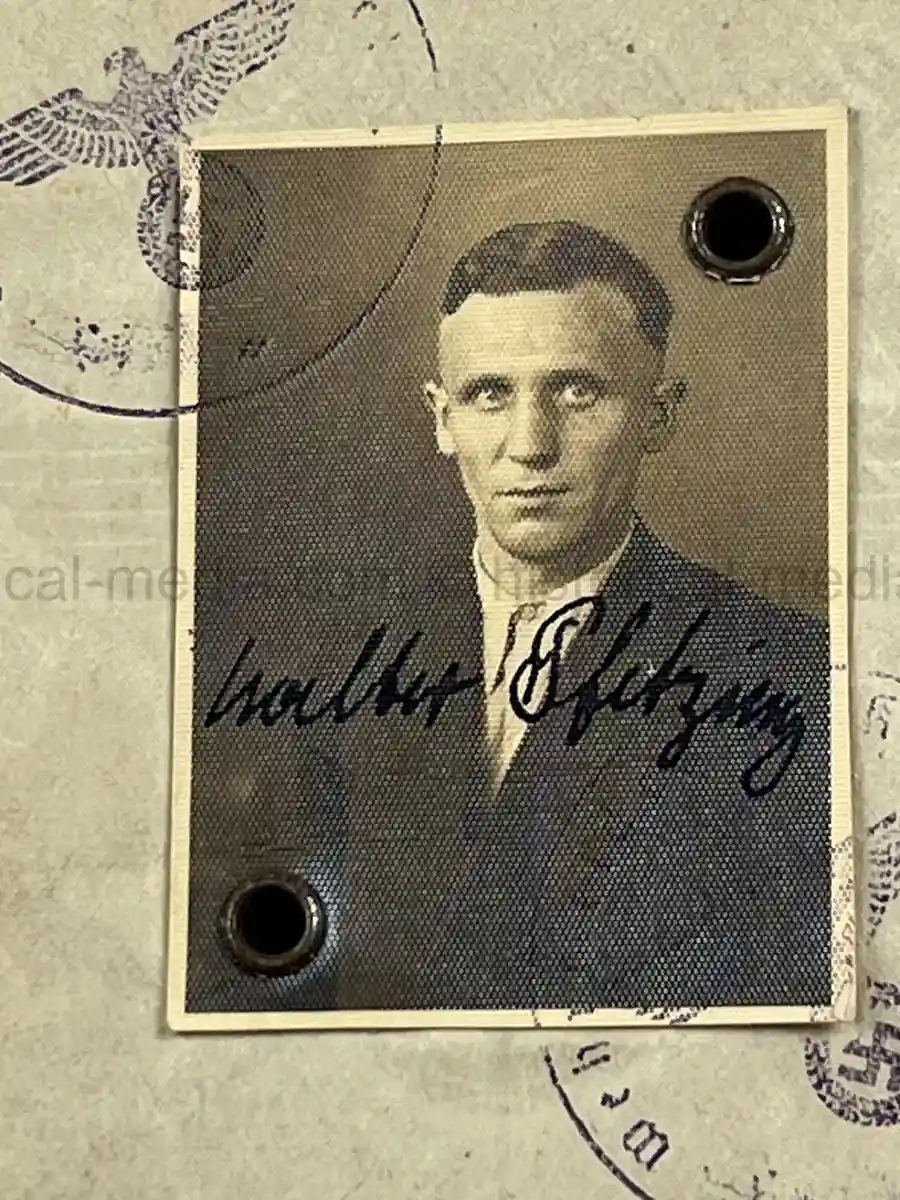
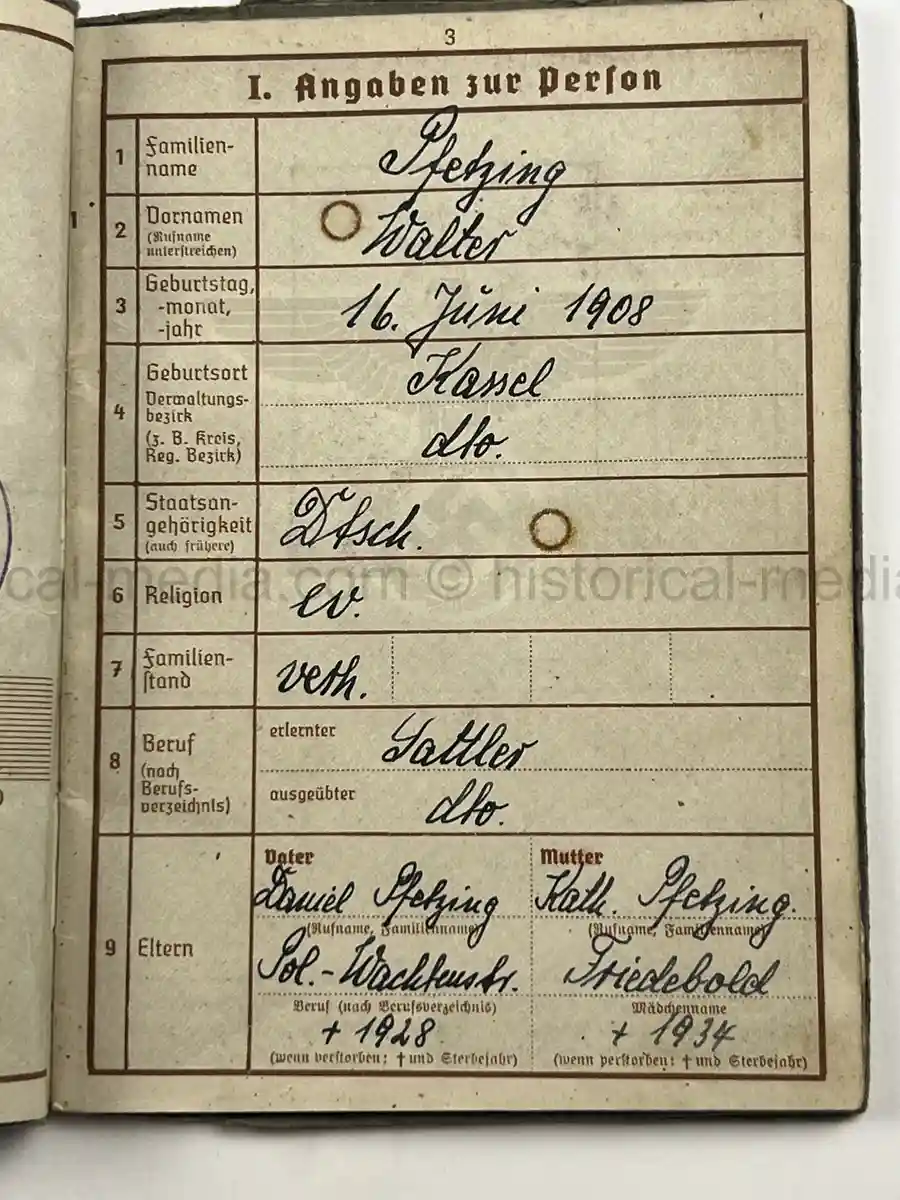
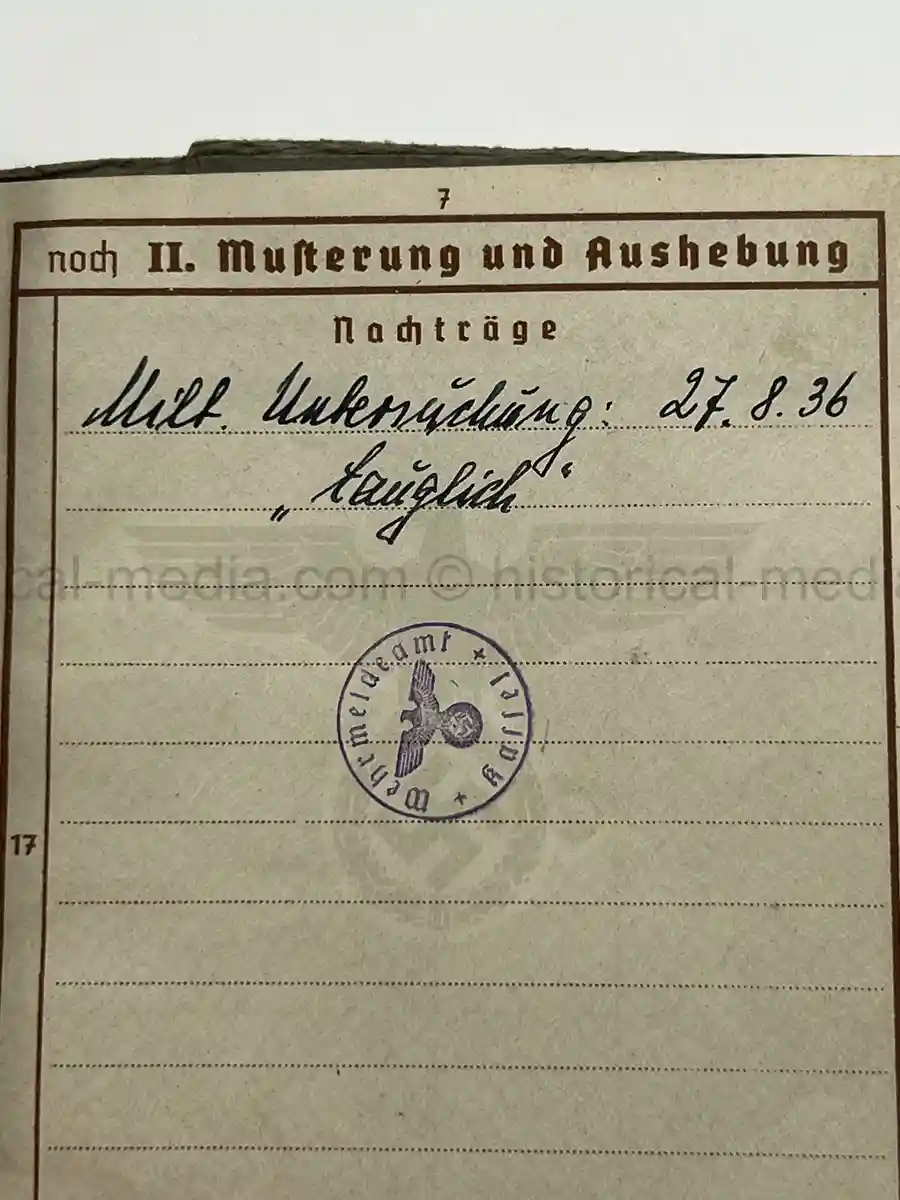
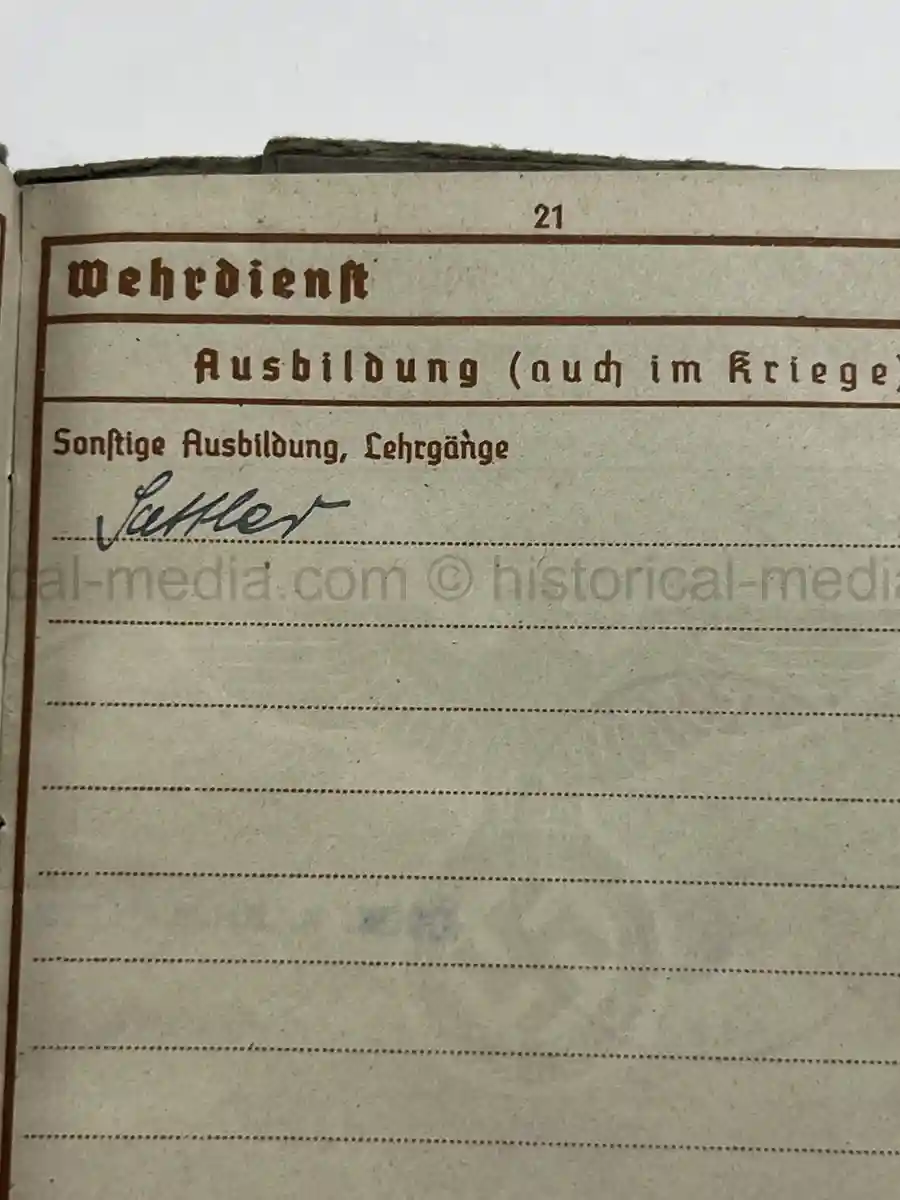
Complete Wehrpass issued to Walter Pfetzing, born 16 June 1908 in Kassel, a saddler by trade. Includes portrait photo, signatures, and numerous official stamps.
SERVICE:
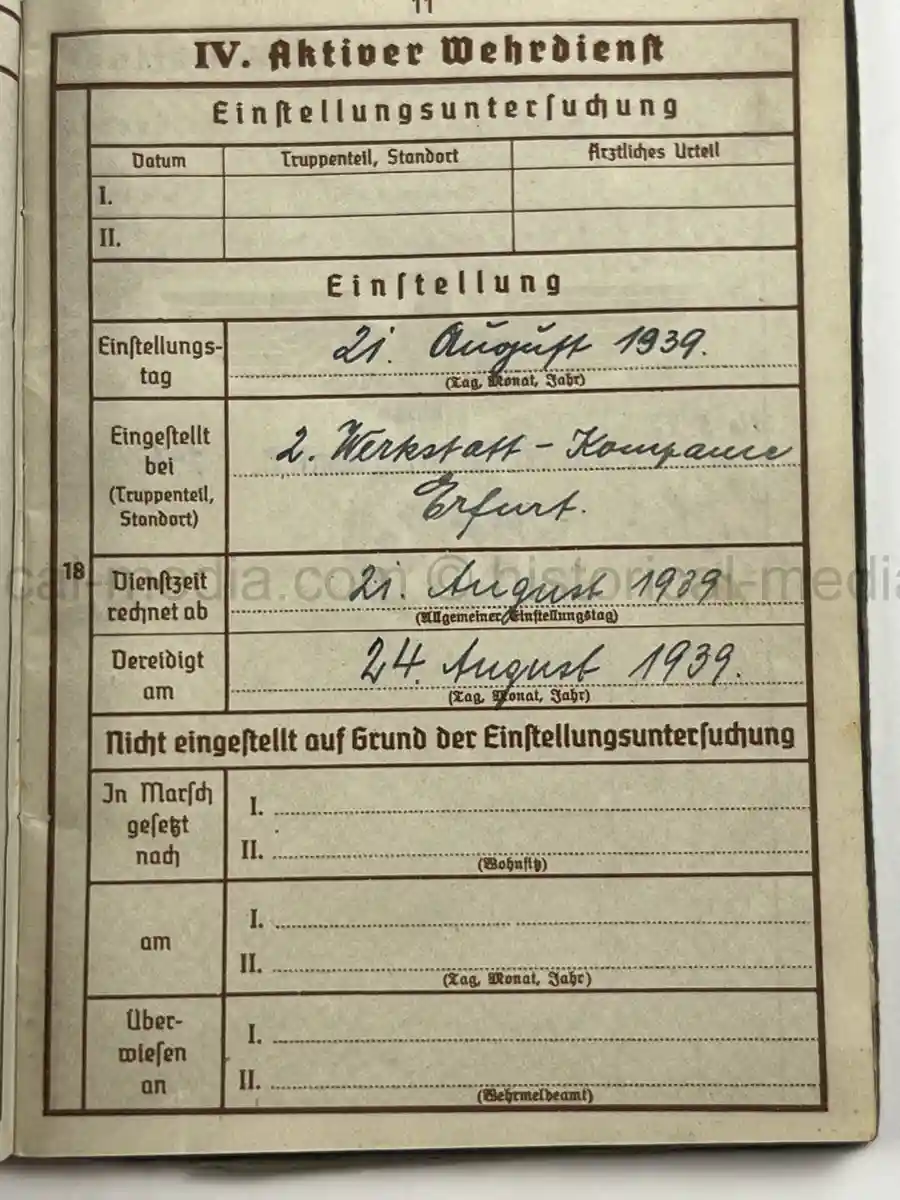
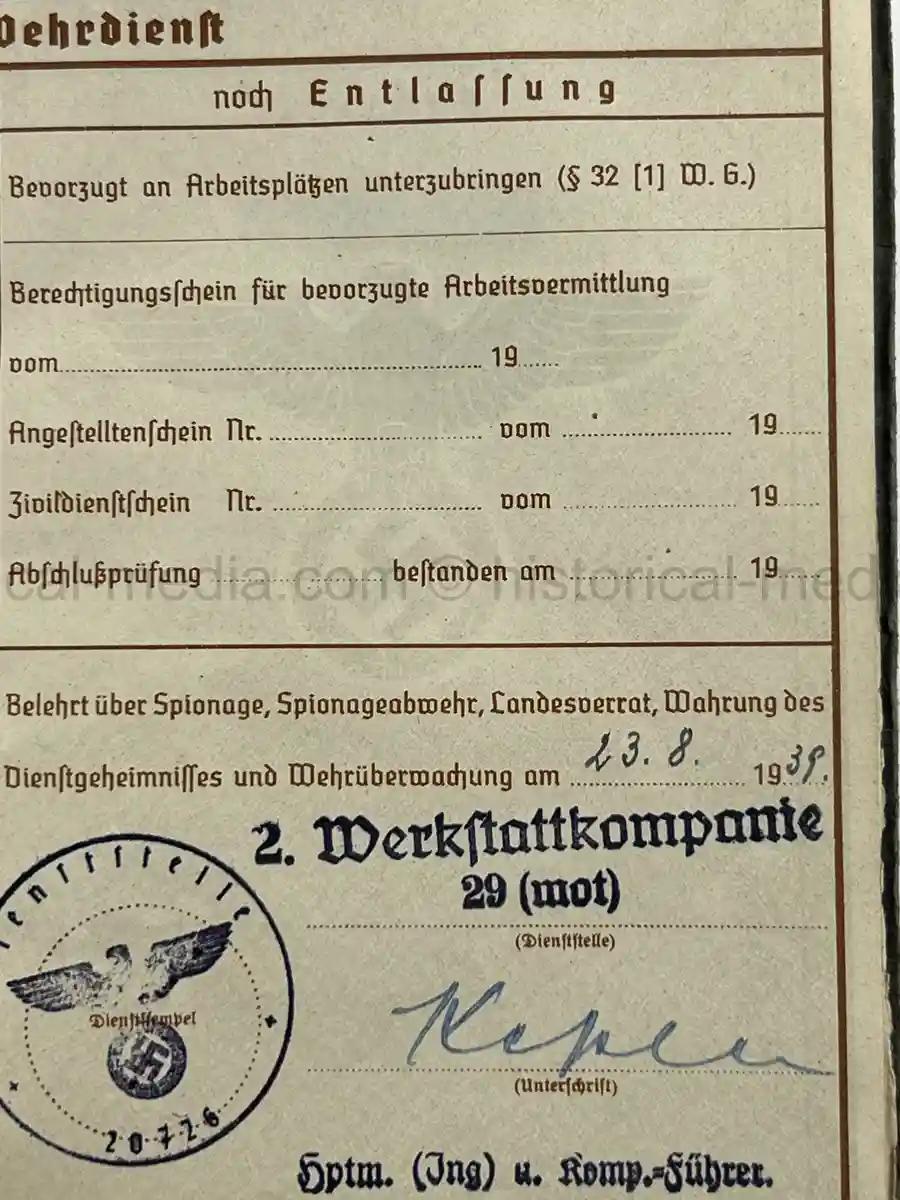
- Mobilized: 21 August 1939
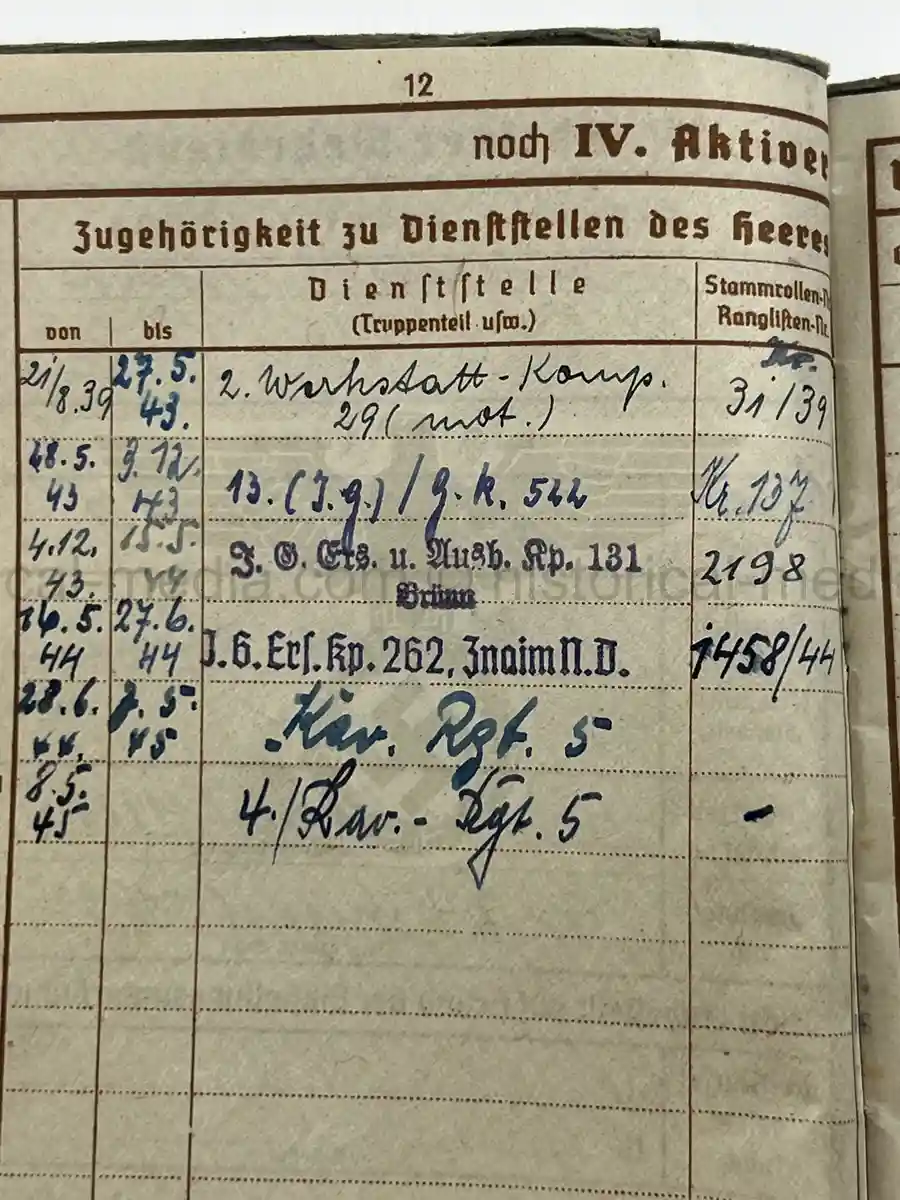
- 2. Werkstattkompanie 29 (mot.) – 29. Infanterie-Division (mot.) “Falke”
- Later service with:
- Grenadier-Regiment 522
- Kavallerie-Regiment 5 (Reiter-Regiment “Feldmarschall von Mackensen”) – 4. Kavallerie-Division (1944–45)
Service began within a motorized workshop company responsible for maintenance and repair of vehicles supporting frontline formations. This unit formed part of the 29. Infanterie-Division (mot.), later redesignated 29. Panzergrenadier-Division “Falke”, a highly mobile formation engaged in early Blitzkrieg operations.
Later transfers reflect continued wartime service, culminating in assignment to Reiter-Regiment 5, a horse-mounted combat unit of the 4. Kavallerie-Division, one of the last operational cavalry formations of the Wehrmacht, active on the Eastern Front in the final phase of the war (Hungary, Slovakia, Austria). In 1944 and 1945, Kavallerie-Regiment 5 “Feldmarschall von Mackensen” (officially redesignated as Reiter-Regiment 5 during this period) served as a core element of the 4. Kavallerie-Brigade, which later expanded into the 4. Kavallerie-Division.
Unlike many other cavalry units that were mechanized or converted into Panzer divisions earlier in the war, this regiment remained one of the few horse-mounted combat units of the Wehrmacht until the final days of the conflict.
CAMPAIGNS & OPERATIONS:
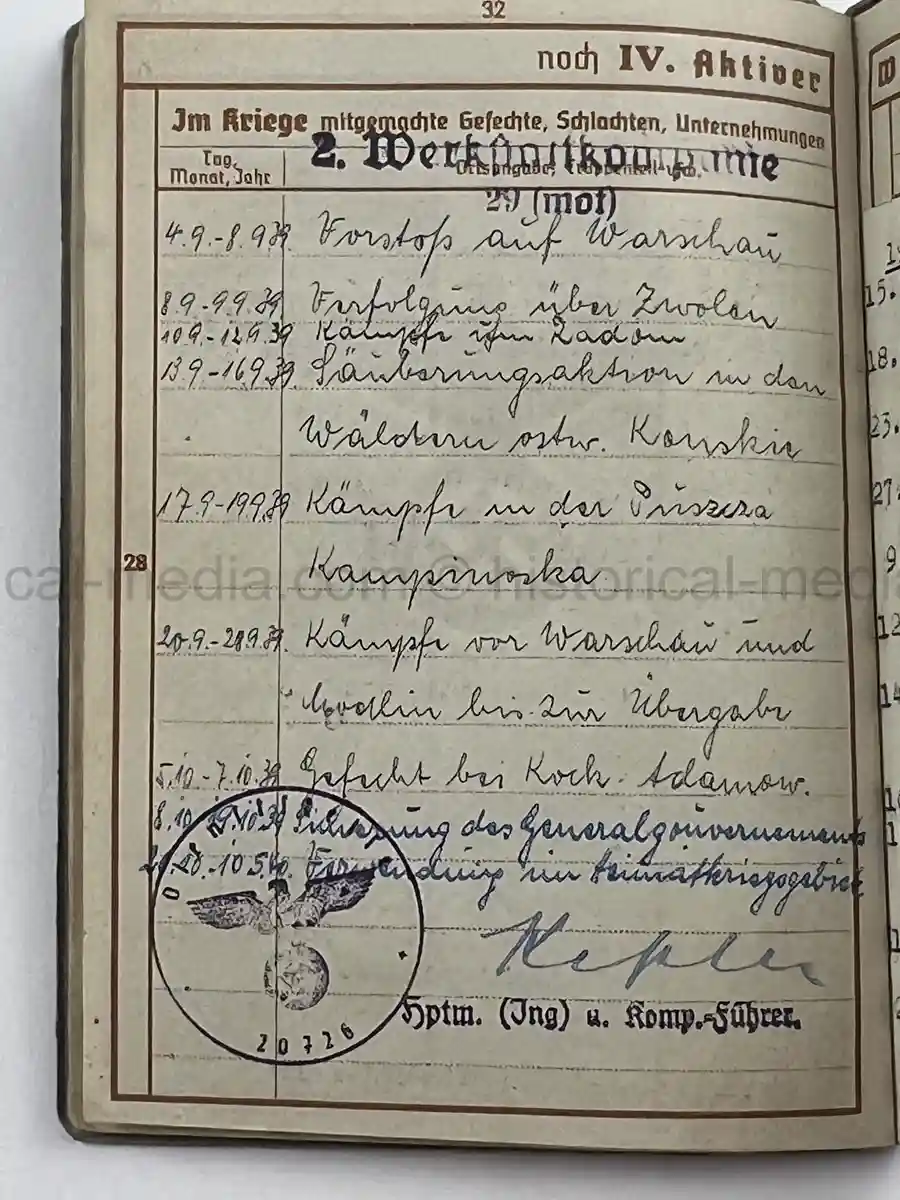
- Poland Campaign (September 1939)
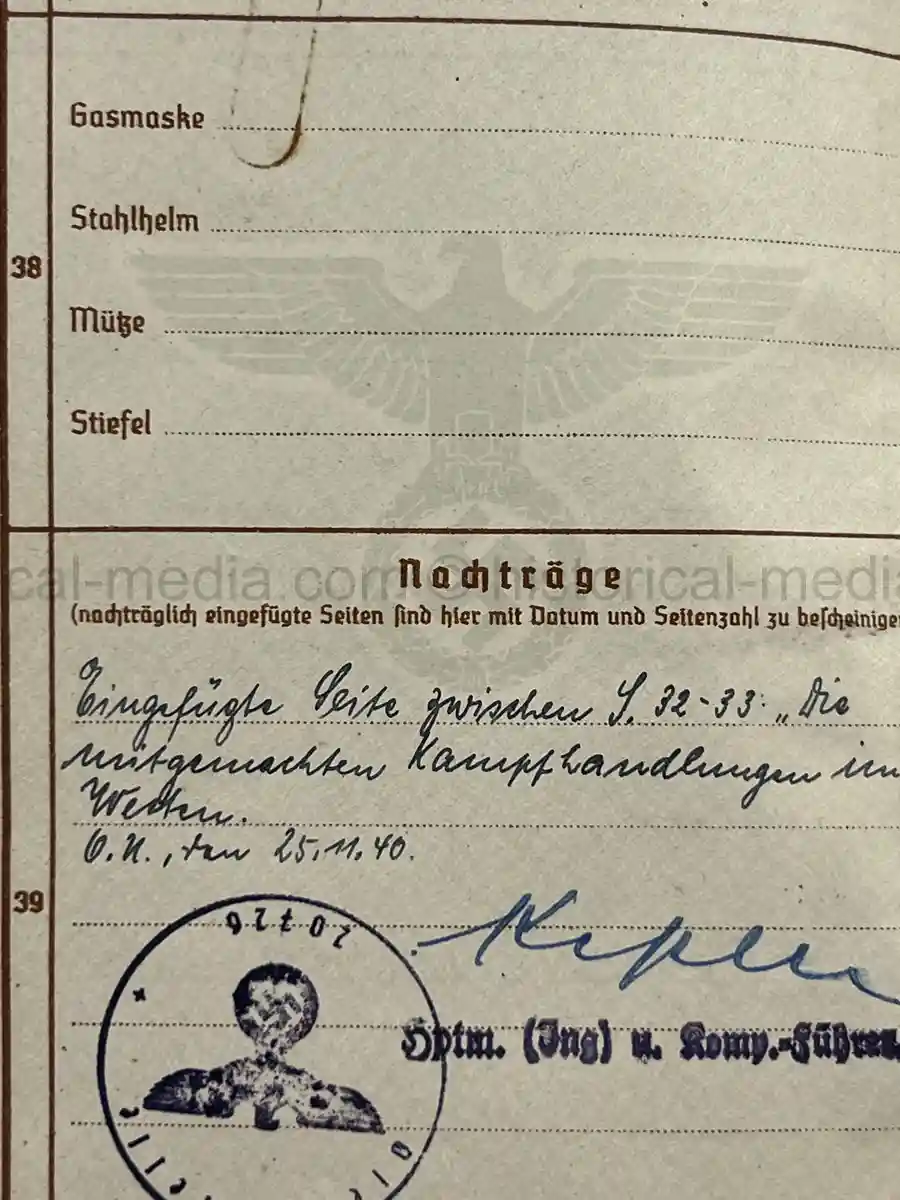
Advance on Warsaw (4–8 September), pursuit via Zwolin and Radom, clearing actions east of Konskie, fighting in the Irena / Kampinoska region, and final operations around Warsaw and Modlin. - Western Campaign (1940)
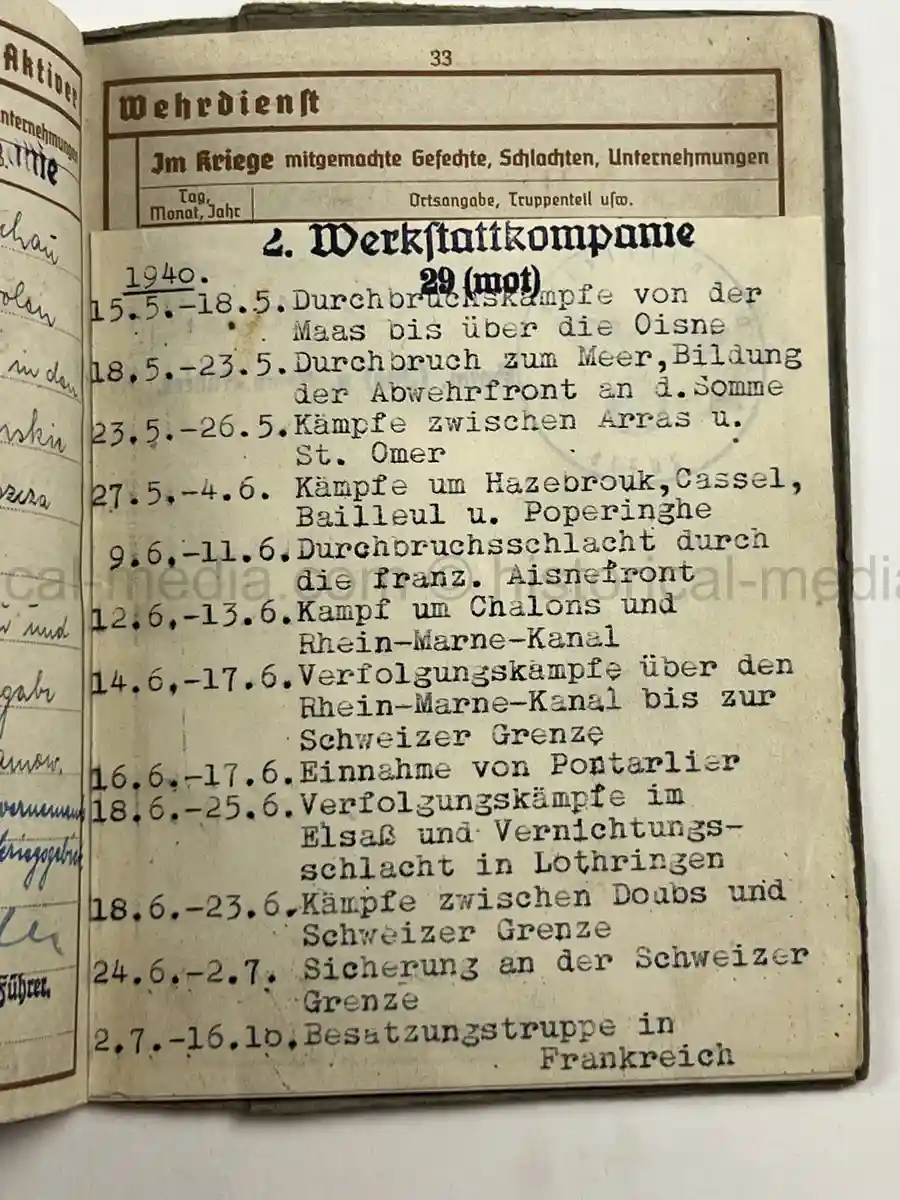
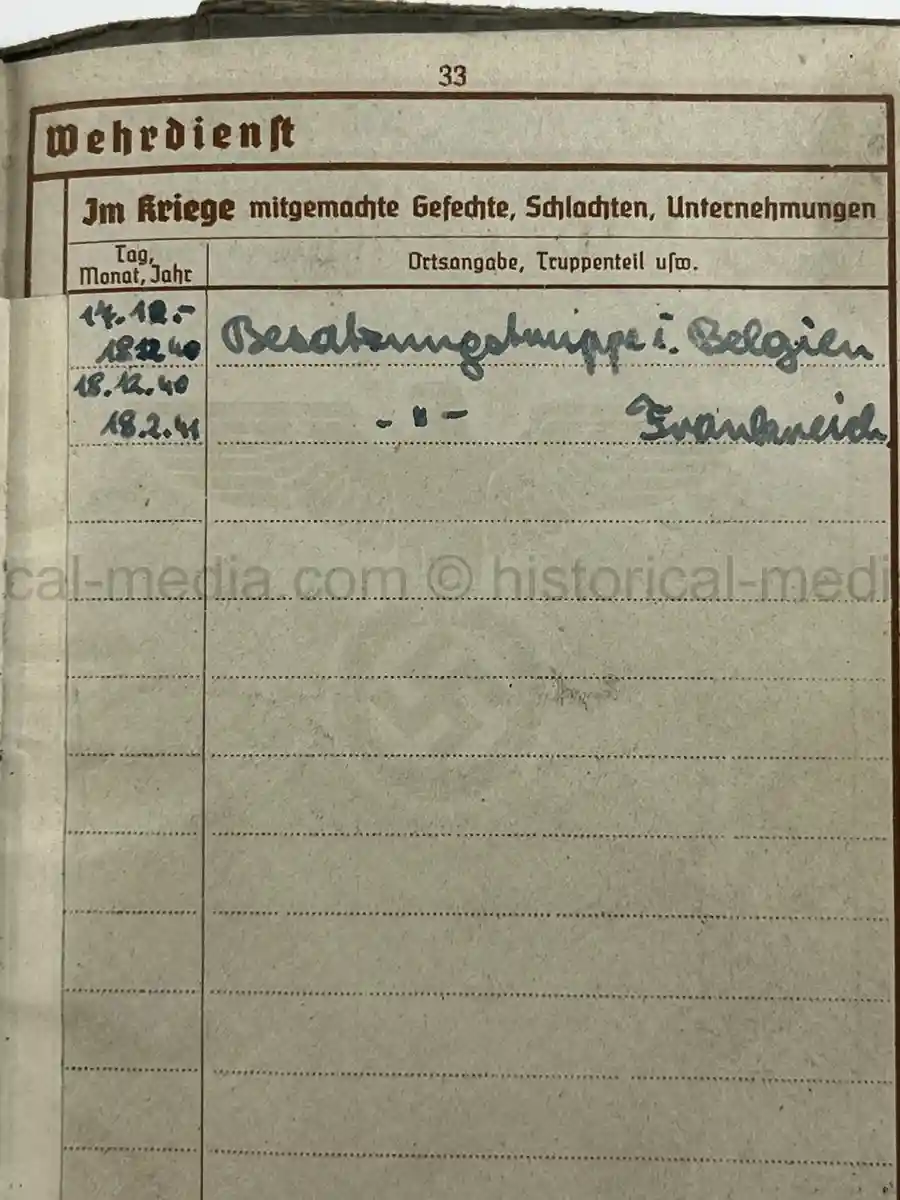
Breakthrough from the Maas across the Oise, advance to the Channel coast, combat around Arras and St. Omer, actions at Hazebrouck, Cassel, and Poperinghe, breakthrough of the Aisne front, fighting near Chalons and the Rhine–Marne Canal, pursuit to the Swiss border, capture of Pontarlier, followed by occupation service in France. - Eastern Front Service (later war)
The final year of the war Kv Rgt 5 was defined by desperate defensive fighting and rapid shifts between the crumbling Eastern Front and the Hungarian theater.-
Summer 1944 (Belarus & Poland): Following the collapse of Army Group Centre during Operation Bagration, the regiment fought heavy rearguard actions in the area of Pinsk and the Narew River. Their mobility on horseback was utilized for reconnaissance and covering the retreat of slower infantry divisions.
-
Autumn 1944 (East Prussia): The unit was moved to East Prussia to defend the German border against the advancing Red Army, serving under the 4th Army.
-
Winter 1944 – Spring 1945 (Hungary): In December 1944, the entire I. Cavalry Corps was transferred to Hungary. The regiment participated in the relief attempts for the besieged city of Budapest (Operation Konrad).
-
Final Operations (Austria): In February 1945, the brigade was officially upgraded to the 4. Kavallerie-Division. The regiment retreated through western Hungary and into Austria, eventually surrendering to British forces in May 1945 near Mauterndorf.
-
PROMOTIONS:
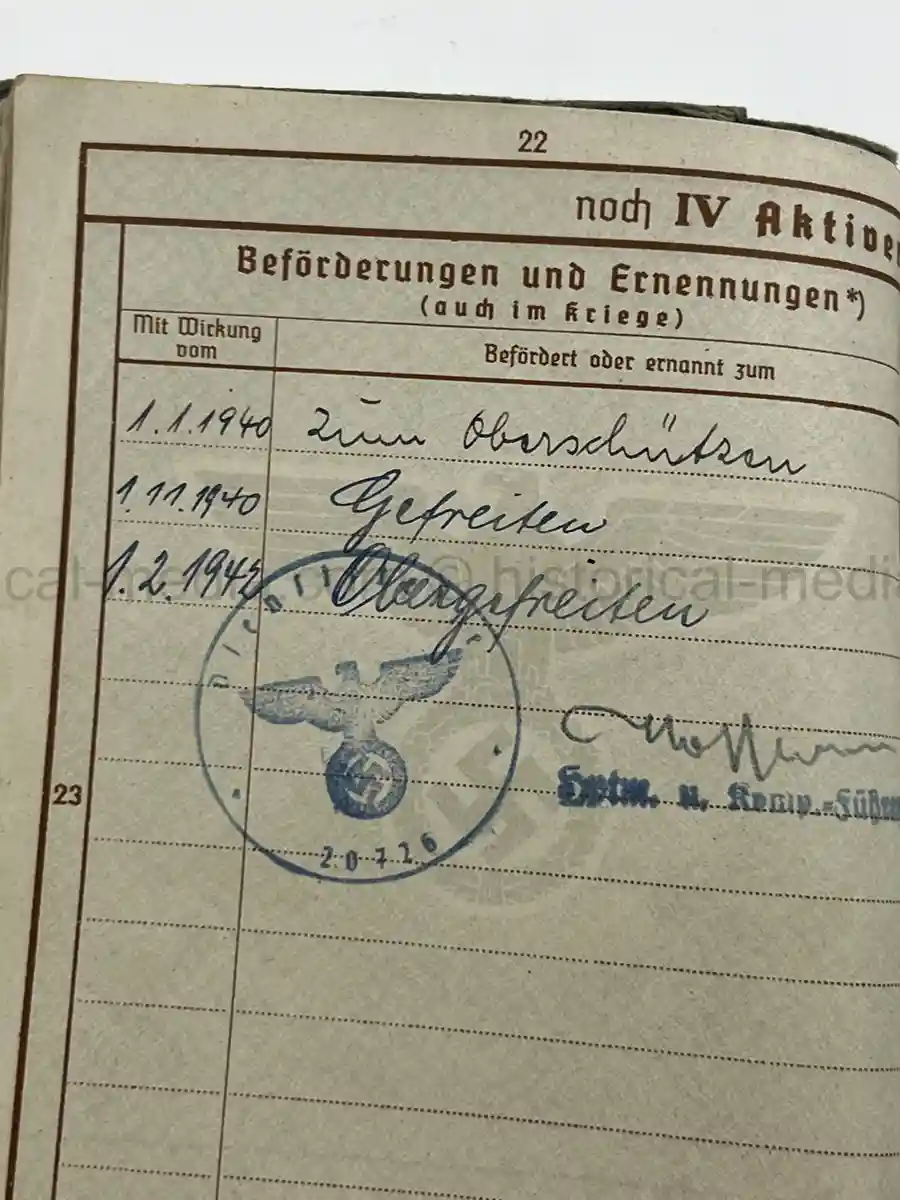
- Oberschütze (1 January 1940)
- Gefreiter (1 November 1940)
- Obergefreiter (1 February 1942)
AWARDS:
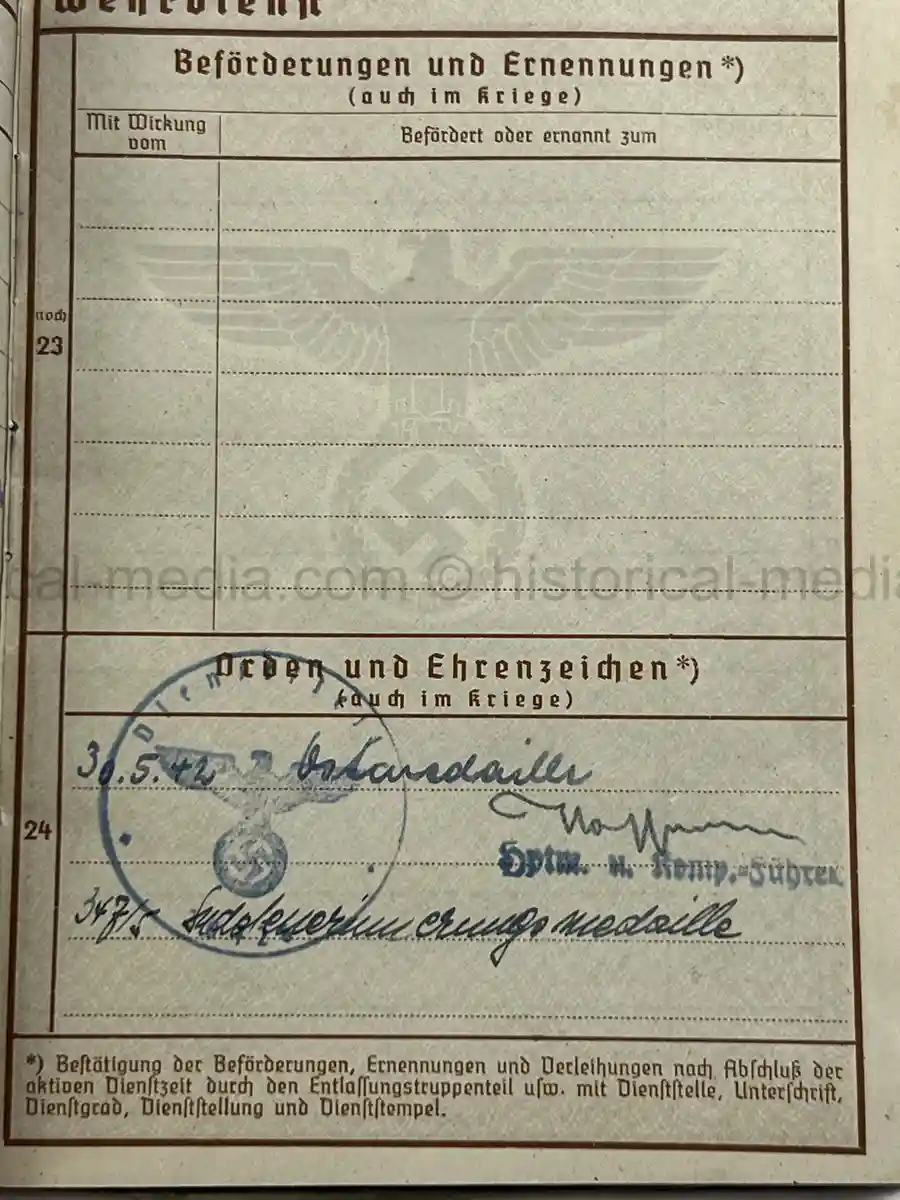
- Sudetenland Medal
- Ostmedaille (Eastern Front Medal)
OTHER DETAILS:
- Continuous service across early war campaigns and late-war formations
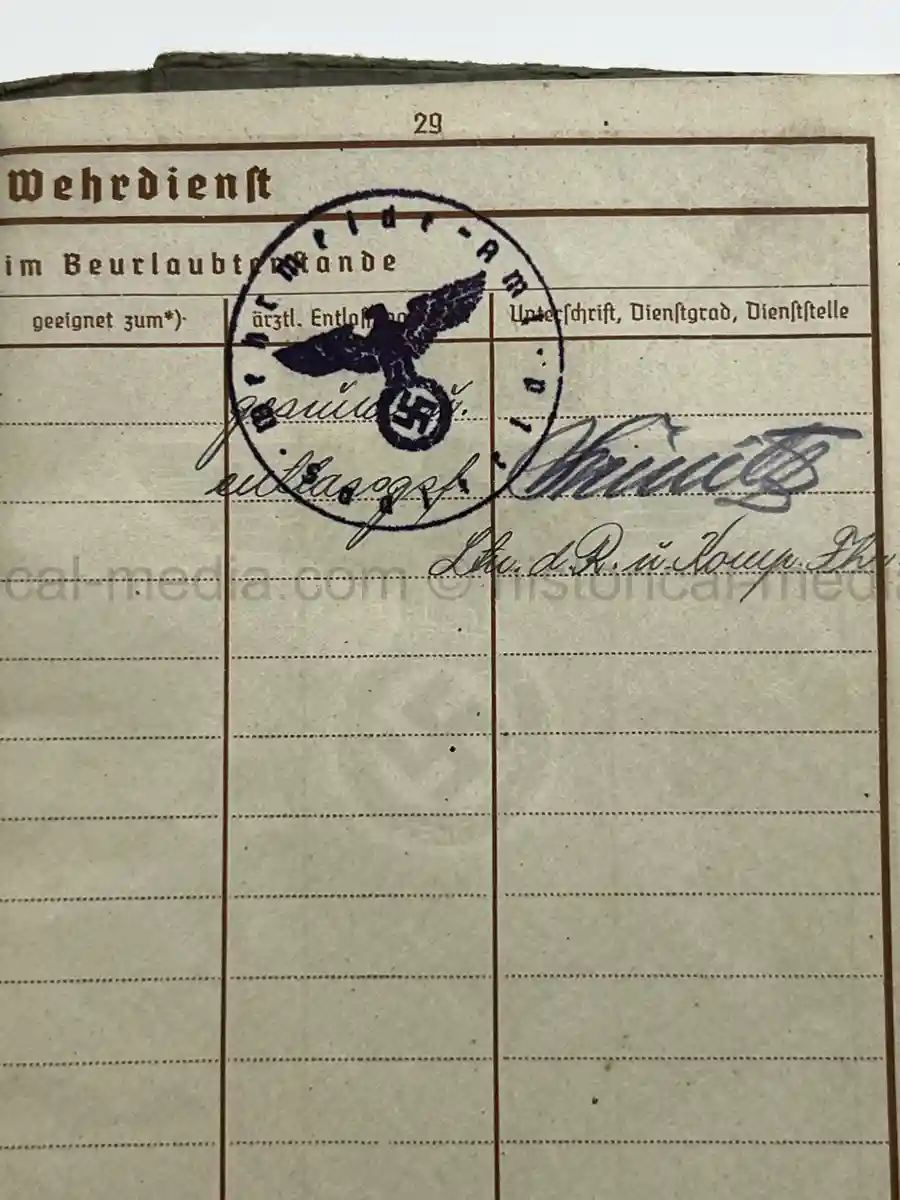
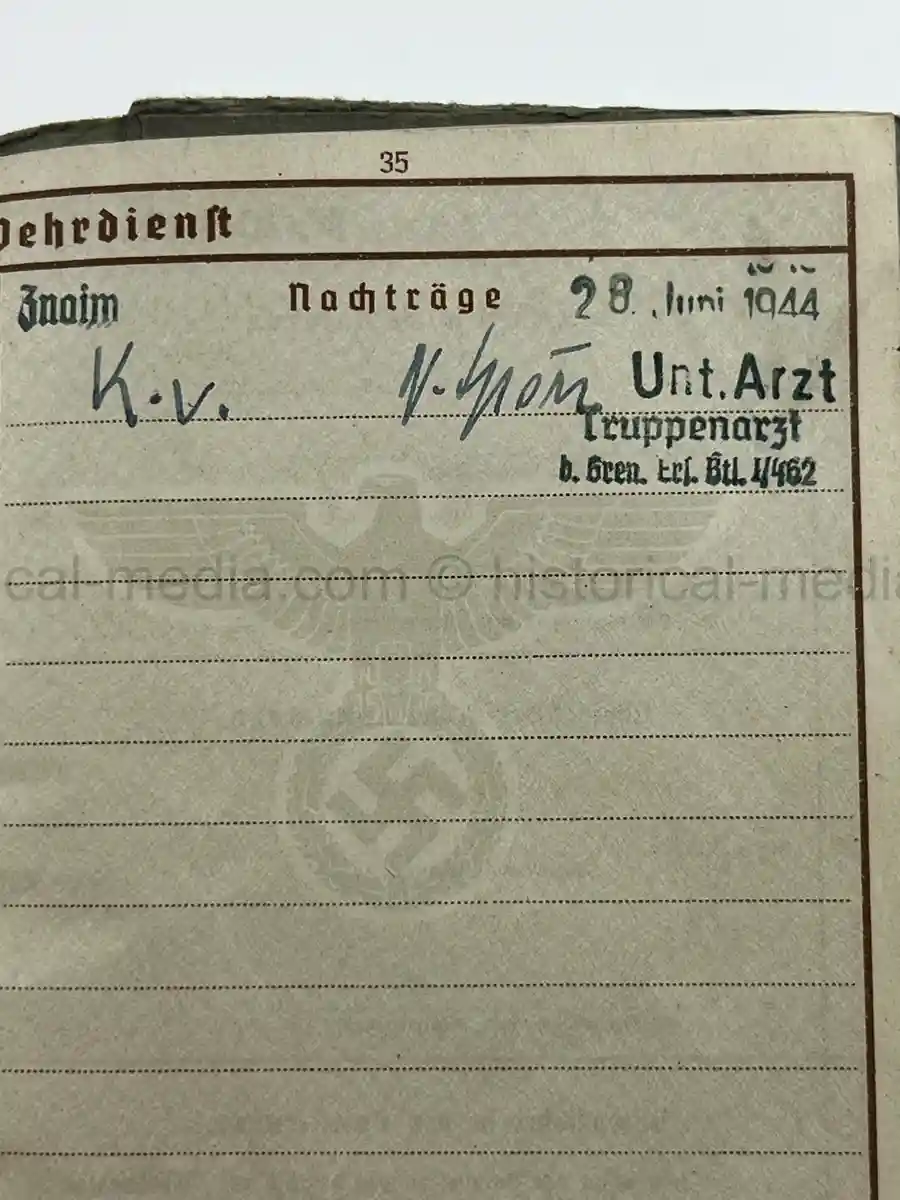
- Medical entry dated 28 June 1944 noting treatment by troop physician
“`