
Description
WEHRPASS – WALTER PETERSEN – 30. INFANTERIE-DIVISION – POLAND CAMPAIGN WIA + SIGNALS SERVICE – DENMARK & NORWAY – NARVIK
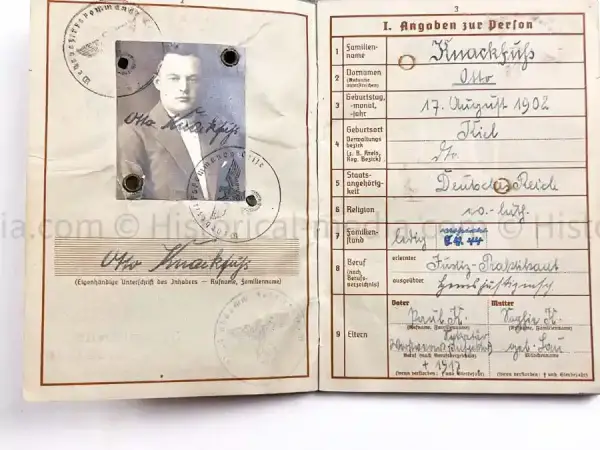
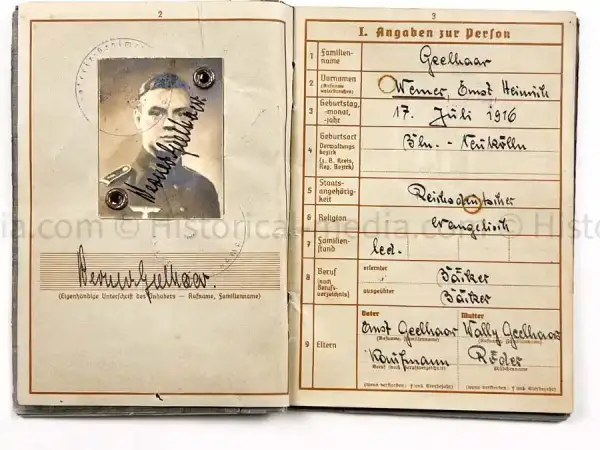
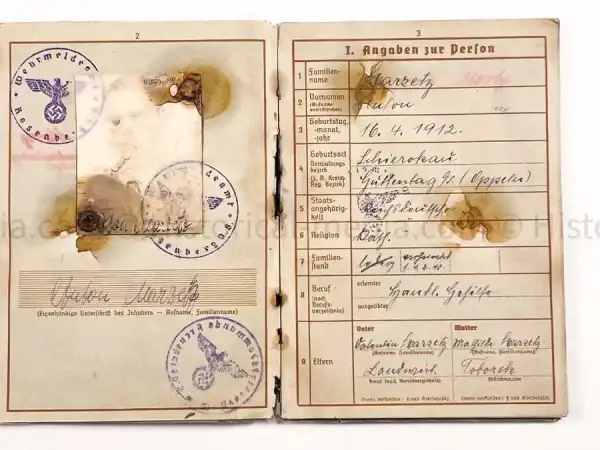
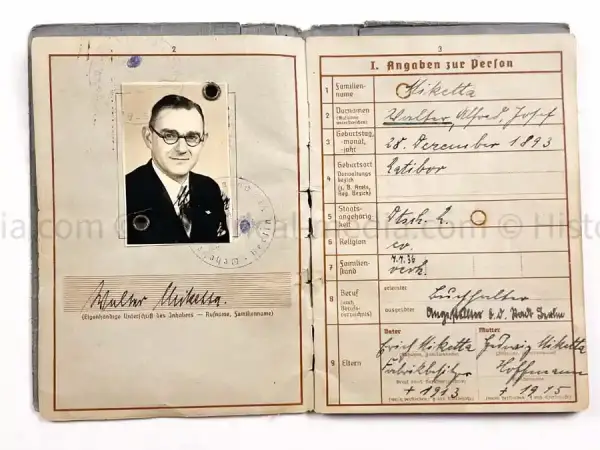
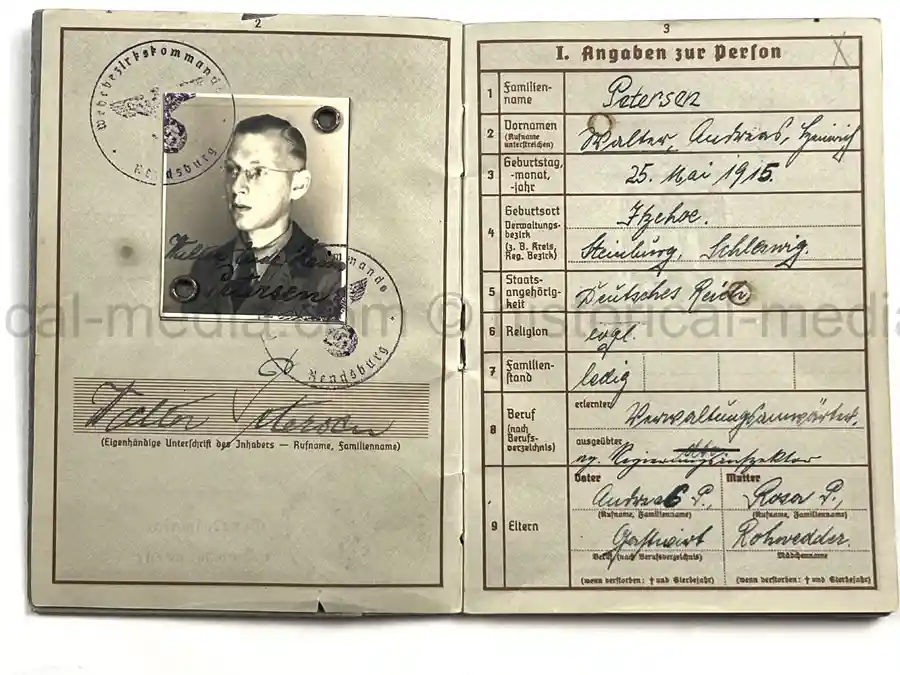
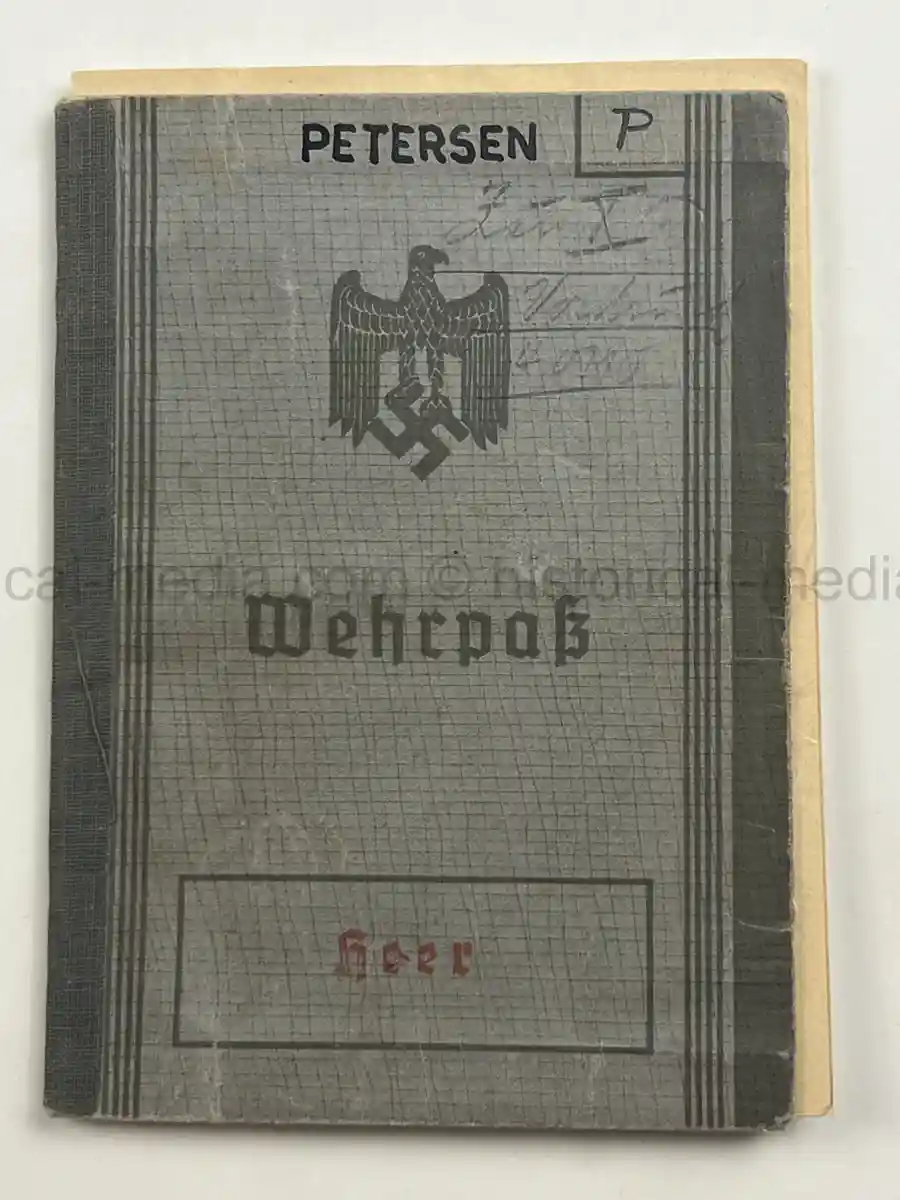
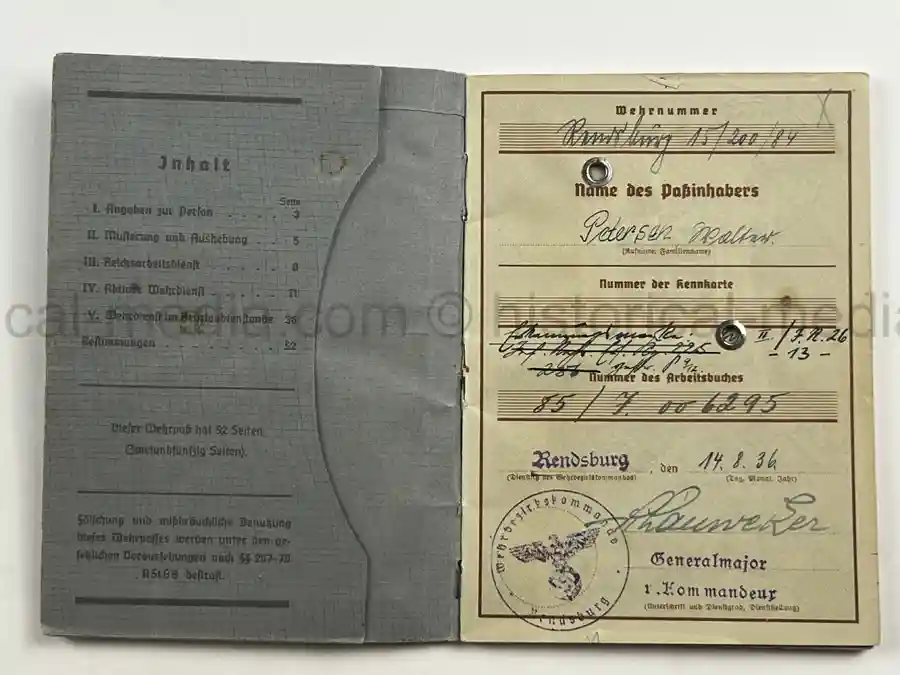
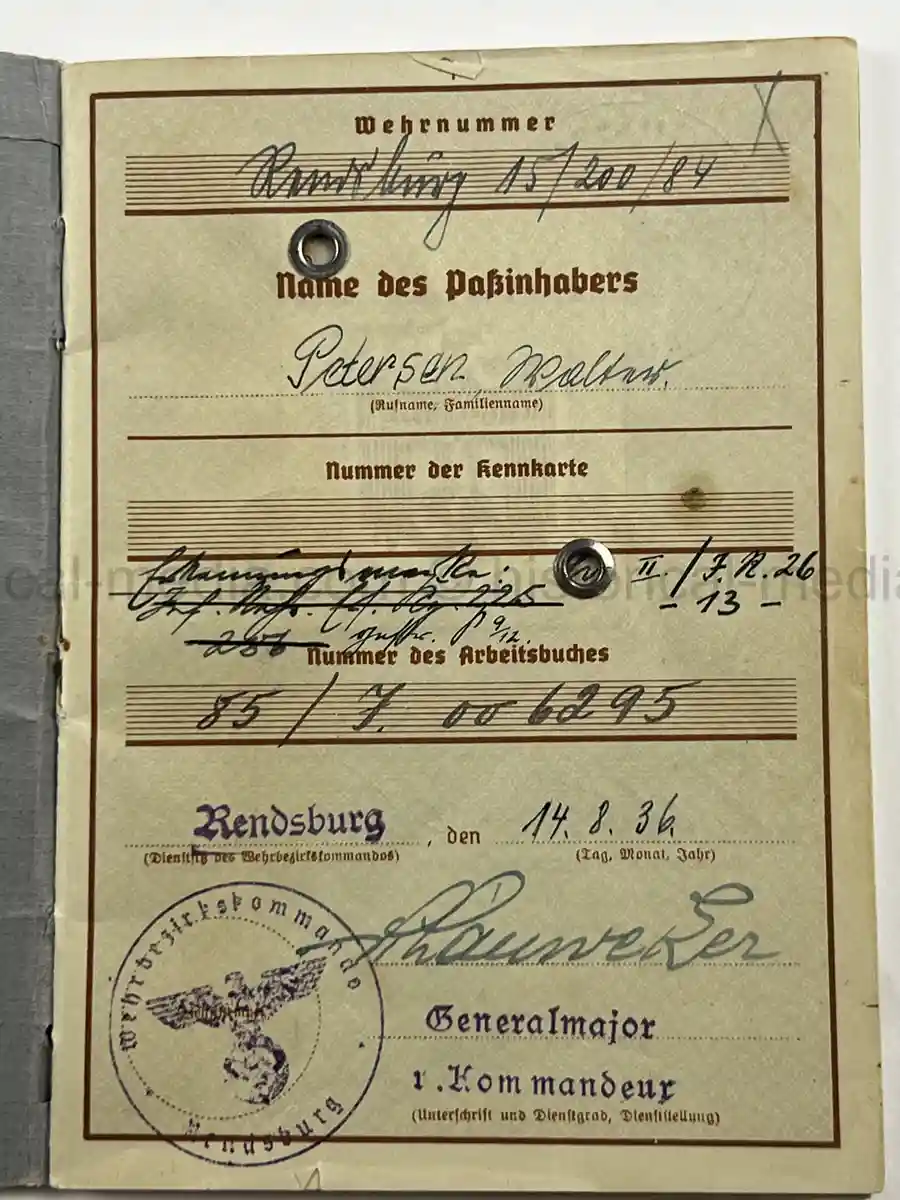
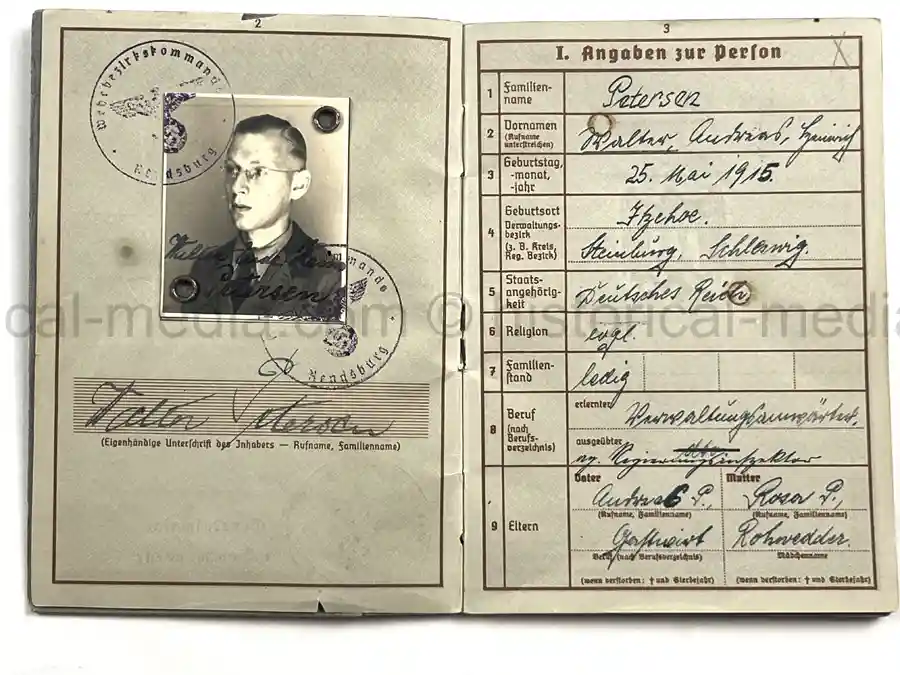
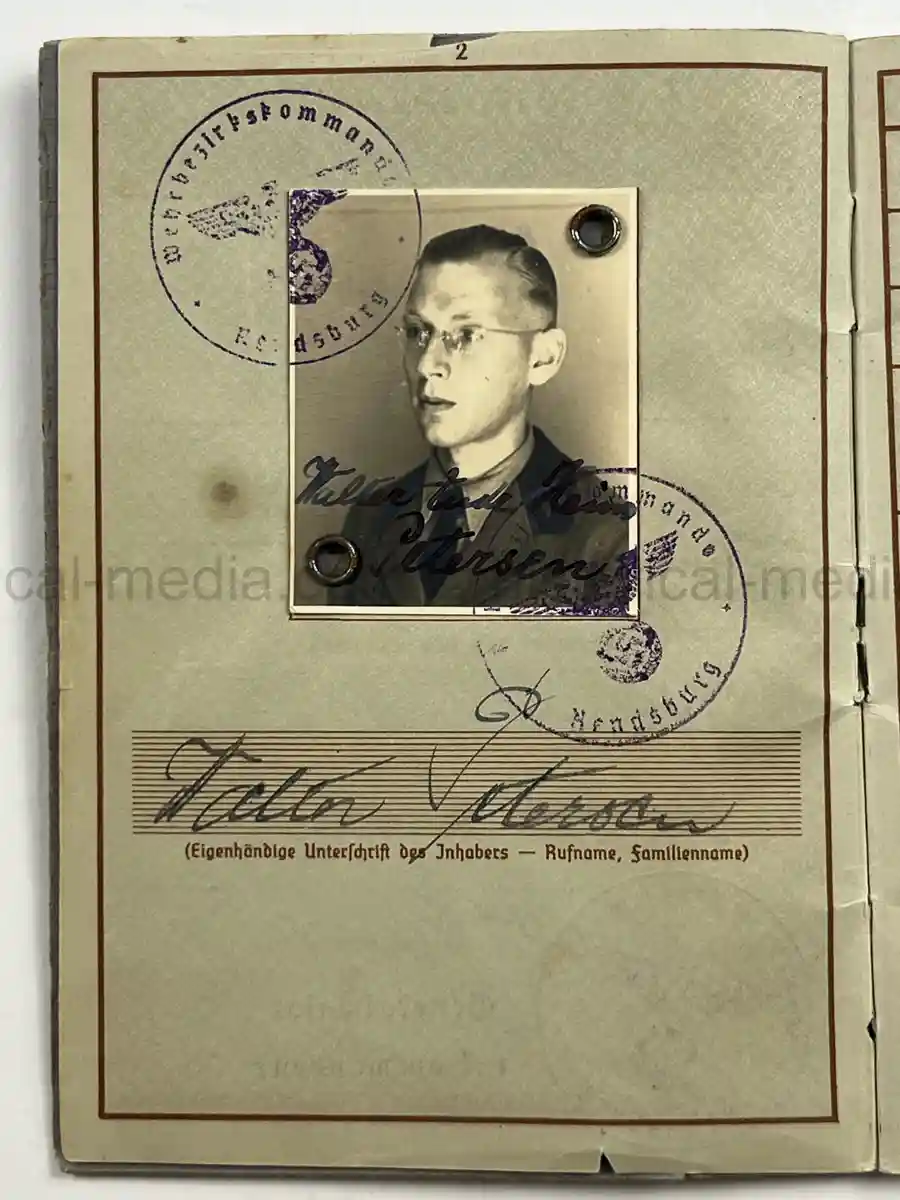
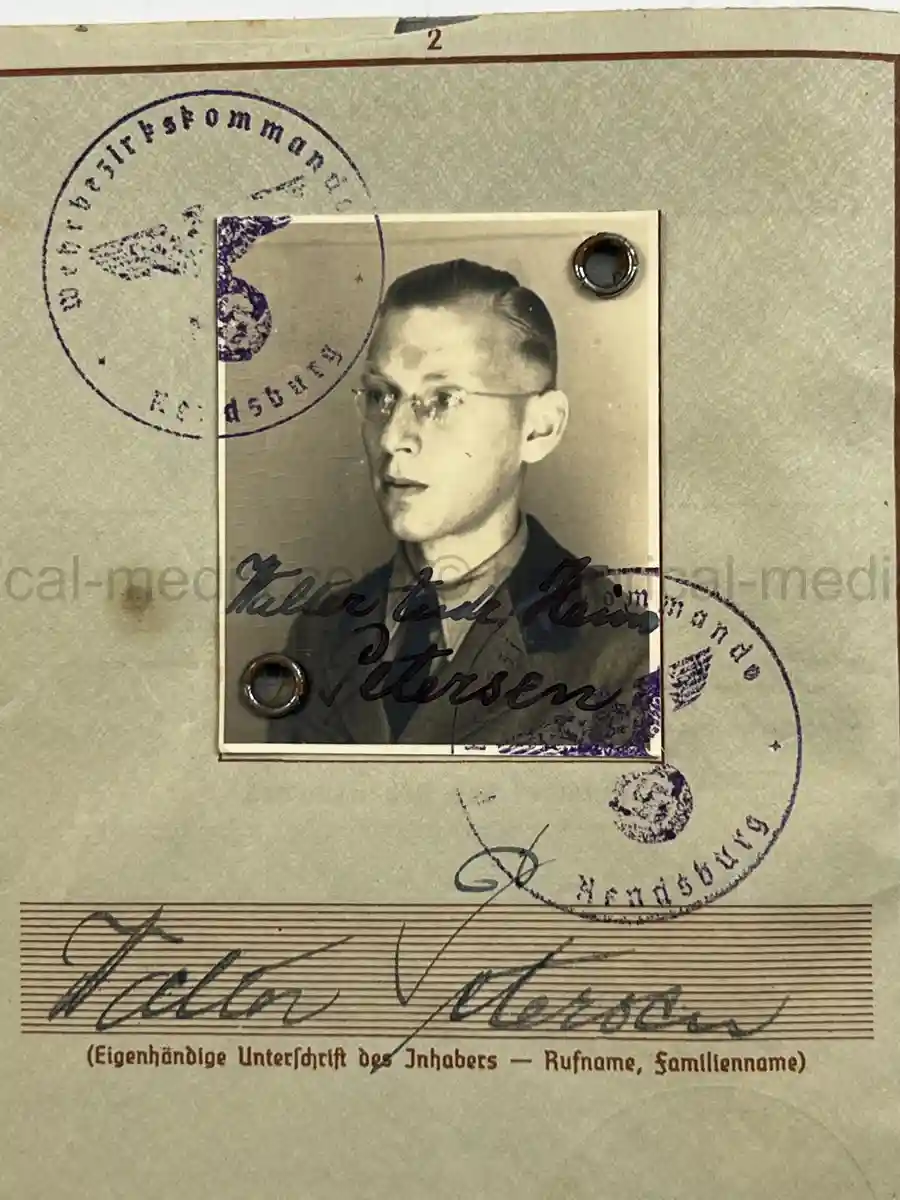
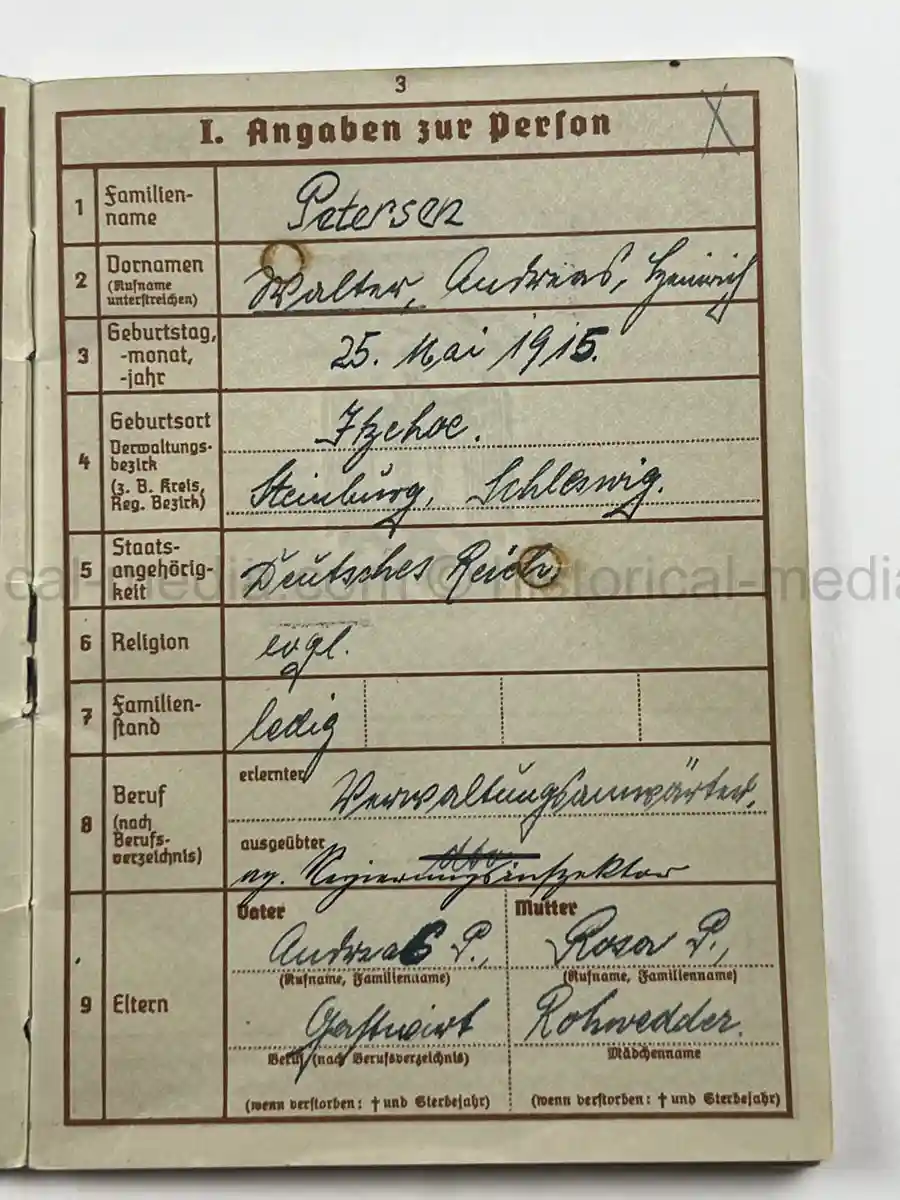
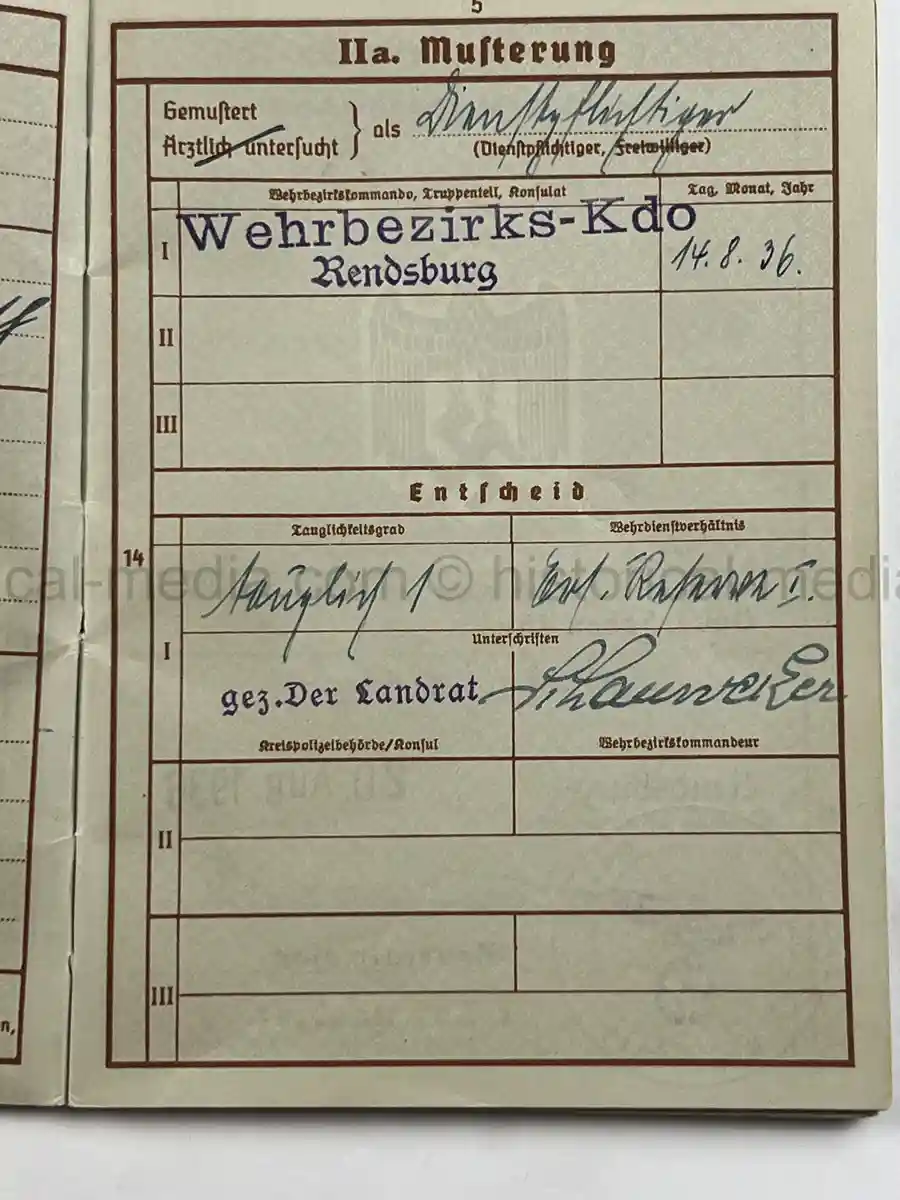
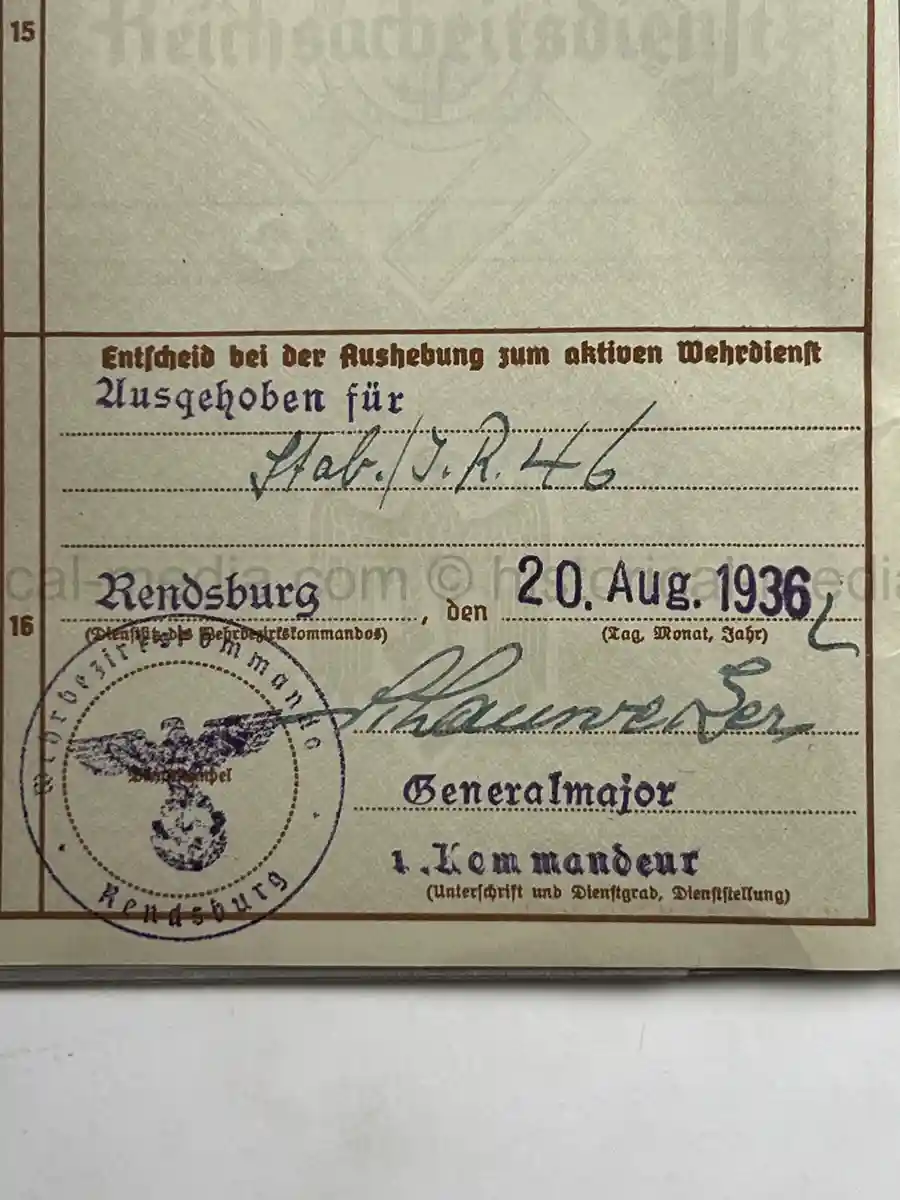
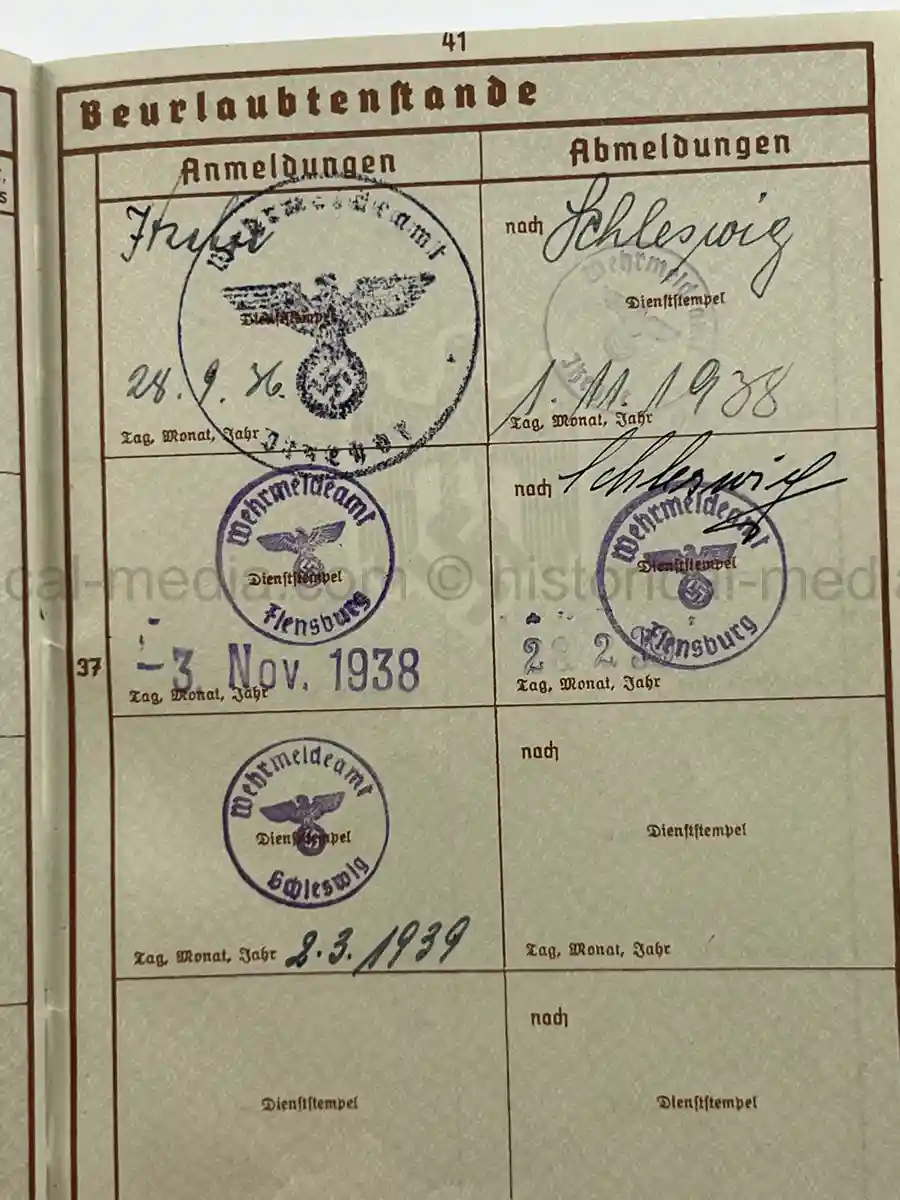
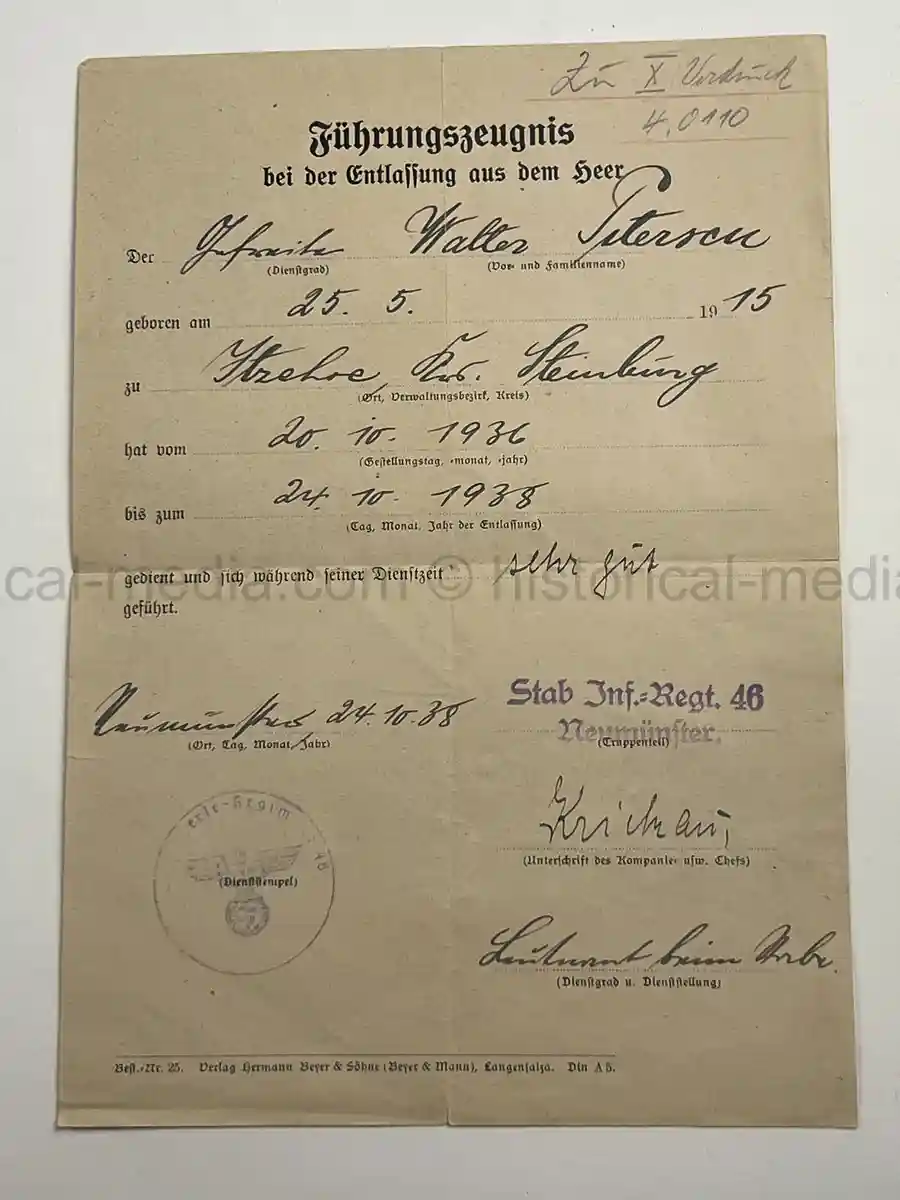
Complete Wehrpass issued to Walter Petersen, born 25 May 1915 in Jevenstedt, Schleswig, an agricultural worker. The document retains its original portrait photograph, early issue entries from Wehrbezirkskommando Rendsburg, and a continuous, well-documented service record through the end of the war.
SERVICE:
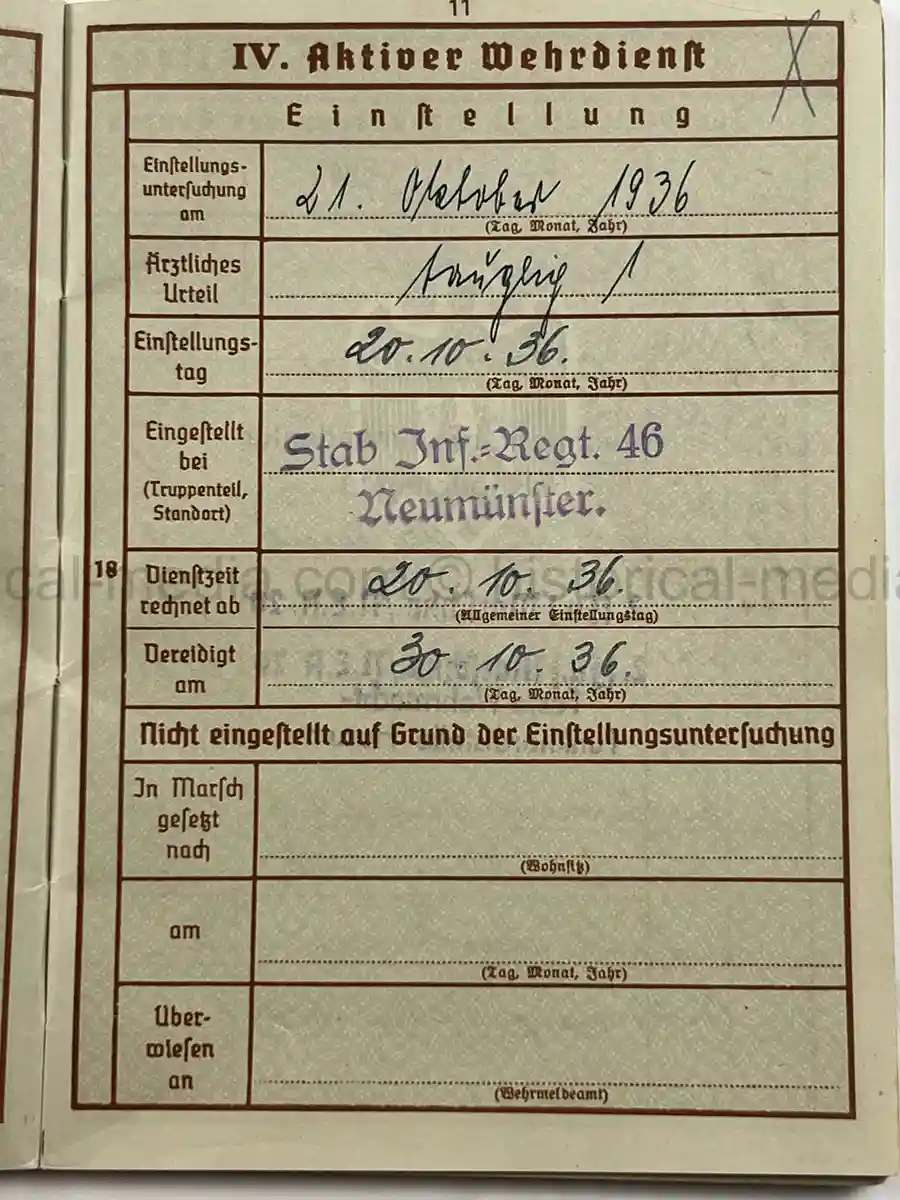
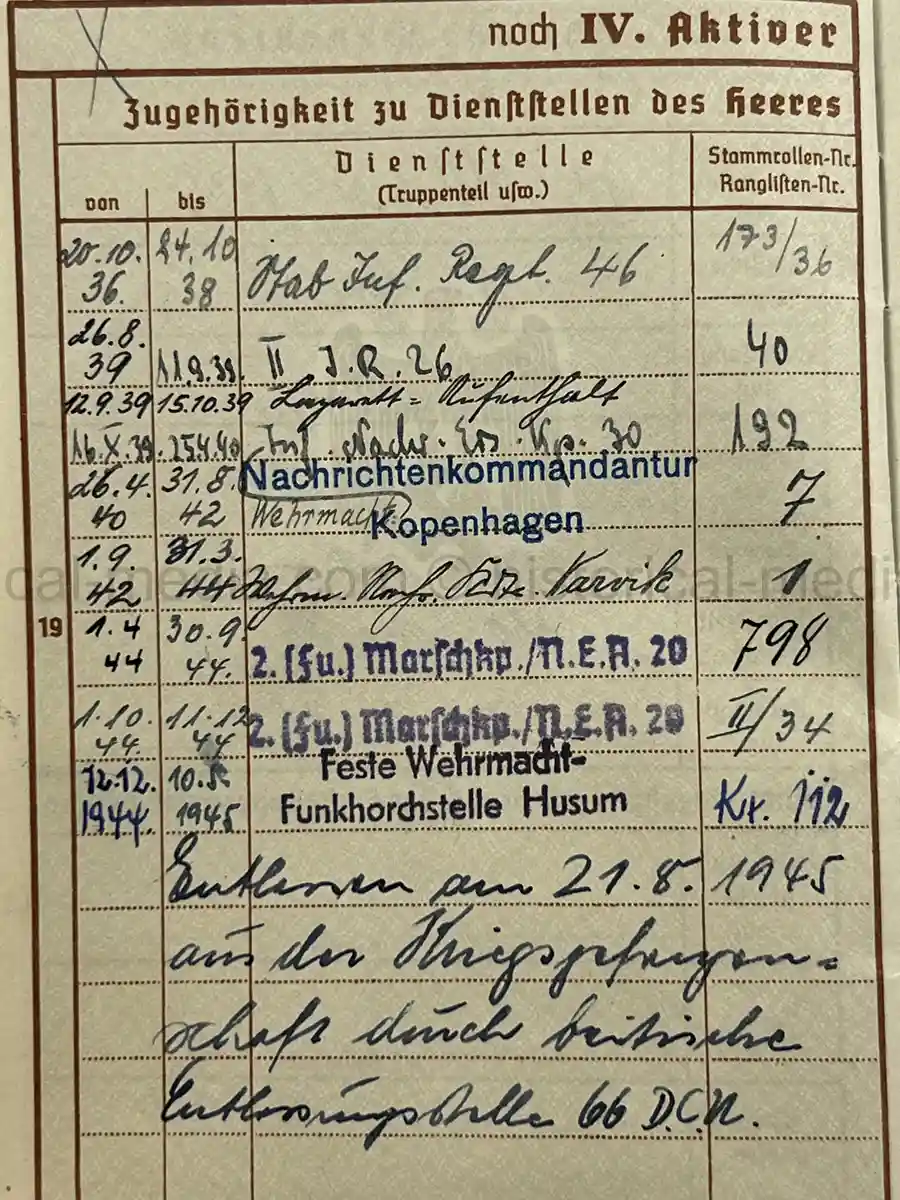
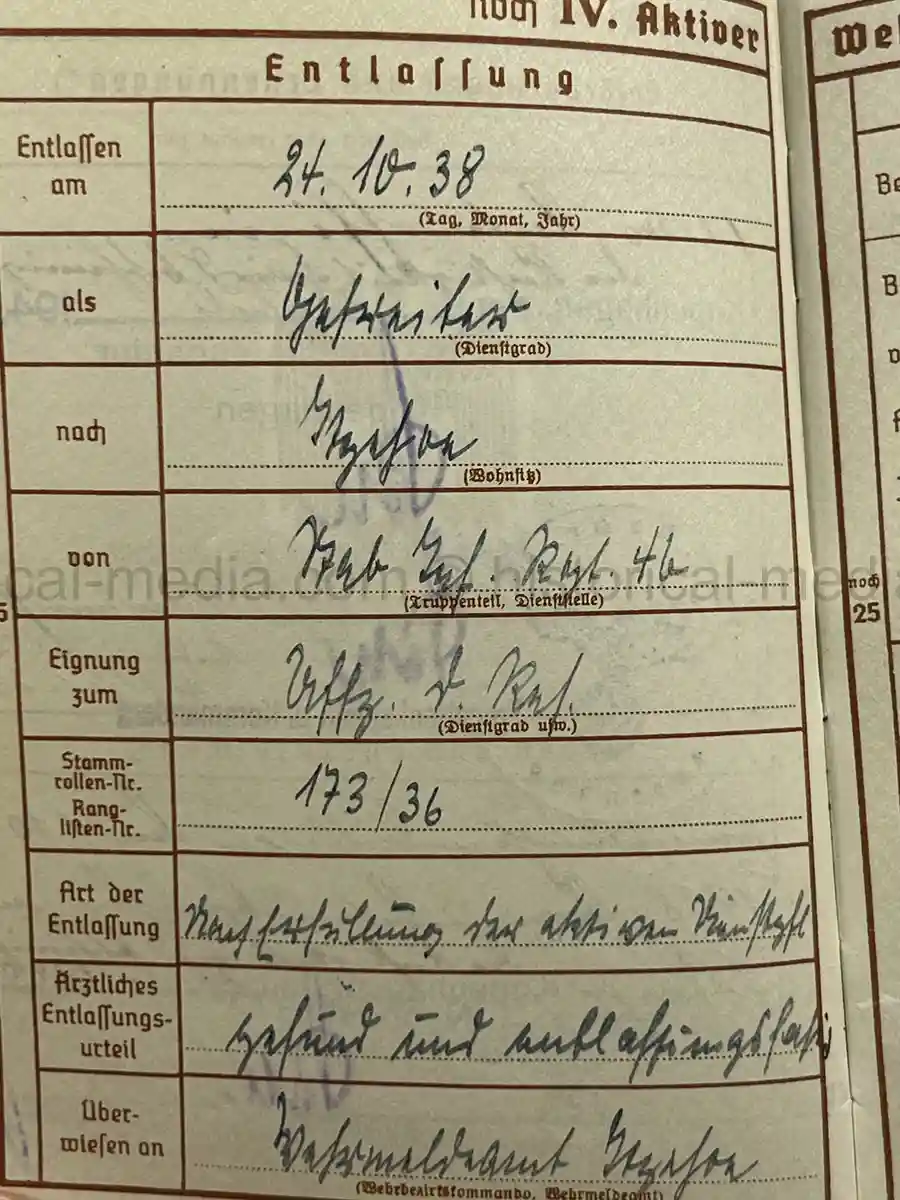
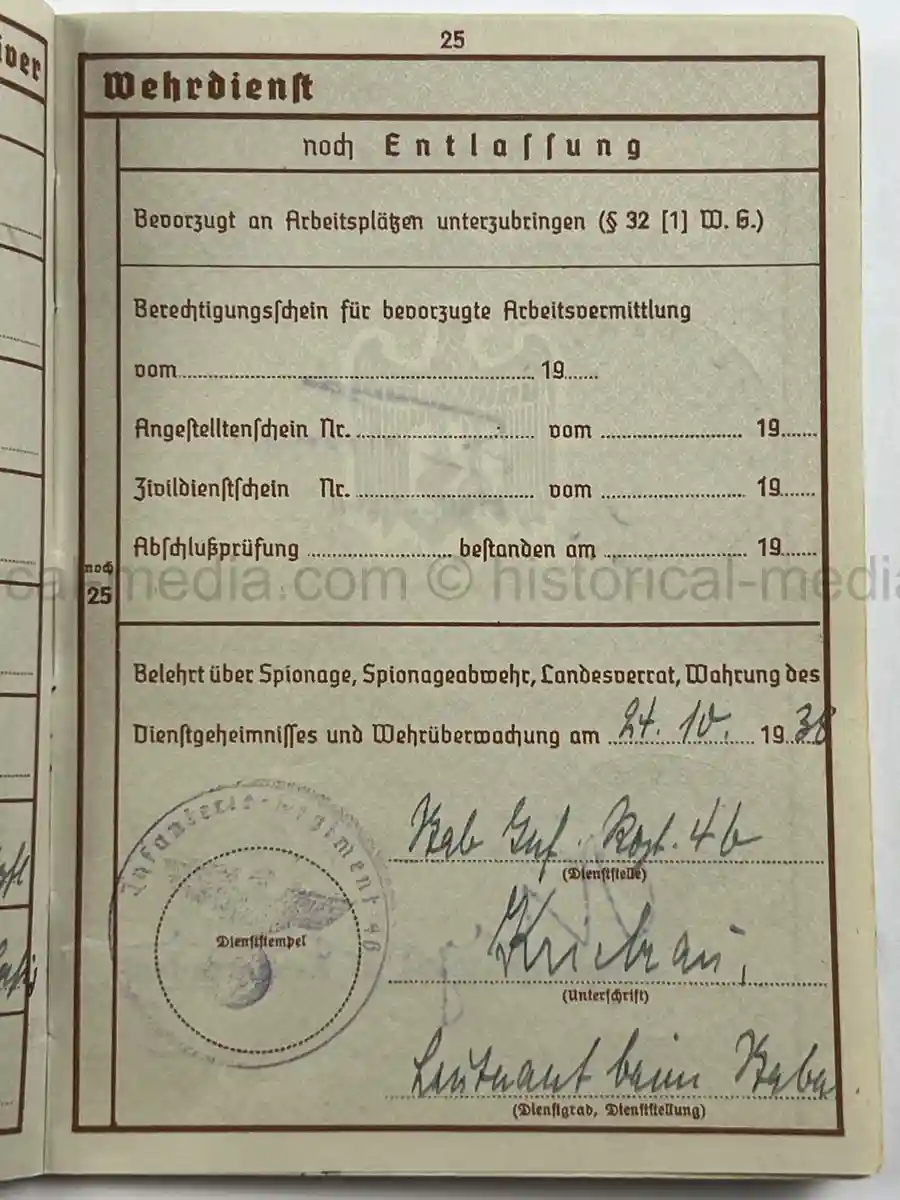
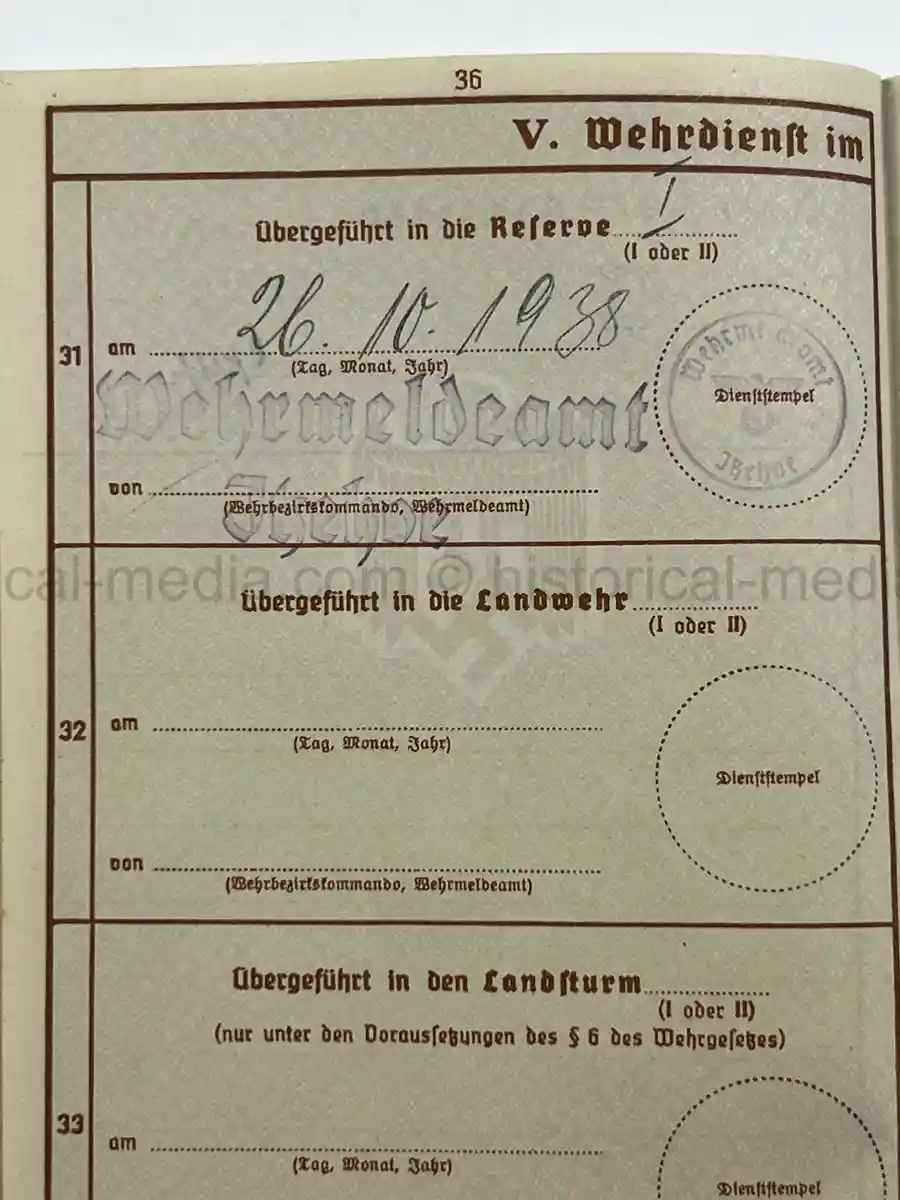
Conscripted on 20 October 1936, Petersen began his service with Stab / Infanterie-Regiment 46 in Neumünster, completing his initial training period before transfer to the reserve in October 1938.
He was mobilized for active service on 26 August 1939 with II. Bataillon / Infanterie-Regiment 26, part of the 30. Infanterie-Division, and entered combat during the opening phase of the Polish Campaign.
Following his recovery from wounds sustained in Poland, Petersen was reassigned away from frontline infantry service and transitioned into Nachrichten (signals) roles, where he would spend the majority of the war.
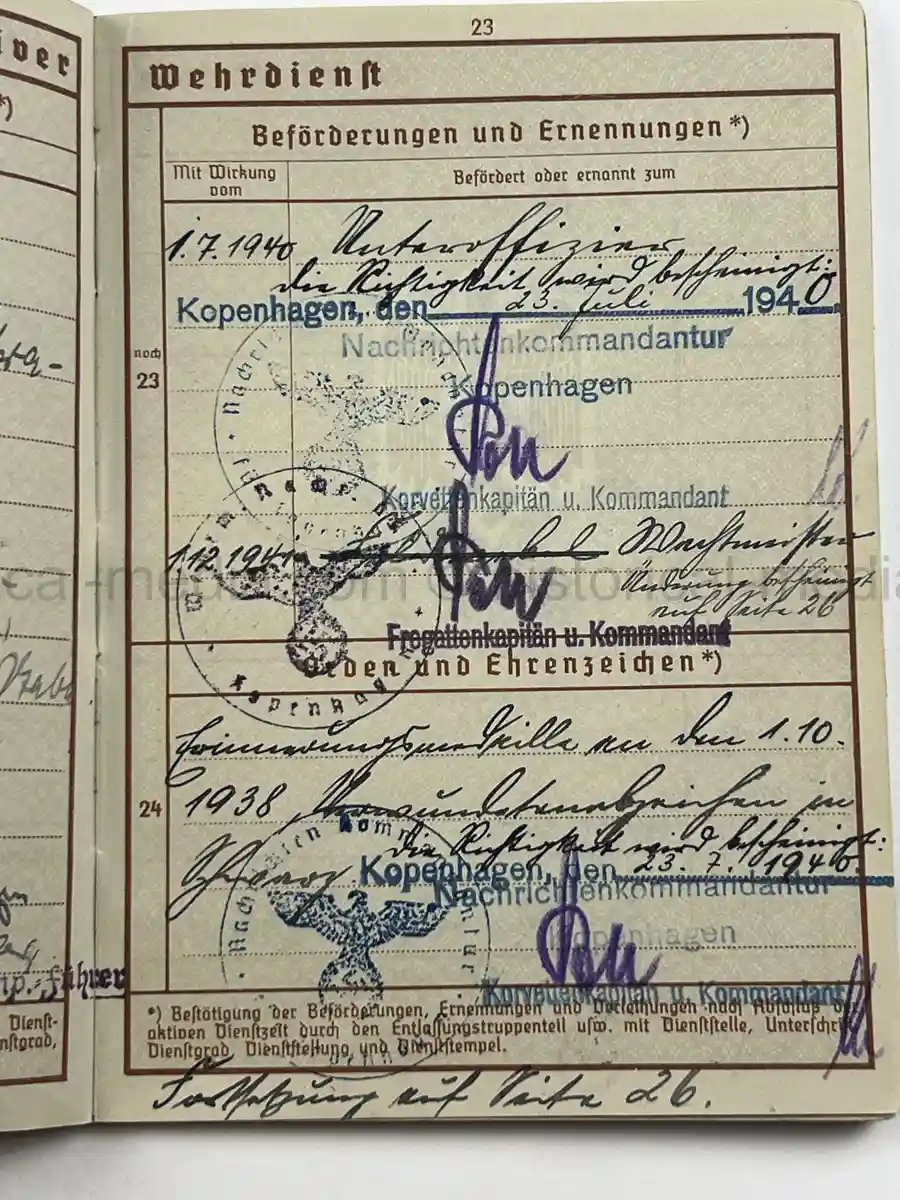
From April 1940 through 1942, he served with the Nachrichtenkommandantur Kopenhagen, placing him directly within the German occupation infrastructure in Denmark. This command was responsible for regional military communications, coordination between field commands, and maintaining secure signal traffic throughout the Danish theater. His presence here coincides with the early consolidation phase of German control following the April 1940 occupation.
He was subsequently transferred to Wehrmachts-Nachrichten units in Narvik (Norway), where he served from 1942 into 1944. This posting is particularly notable, as Narvik remained a strategically critical location due to its role in Arctic supply routes and as a northern naval and communications hub. Signals personnel in this region were heavily involved in maintaining long-range communications, coordinating coastal defense networks, and supporting operations tied to the northern front and Kriegsmarine activity.
In 1944, Petersen passed through replacement and march formations, including 2.(Fu.) Marsch-Kompanie / Nachrichten-Ersatz-Abteilung 20, before being assigned to a fixed installation.
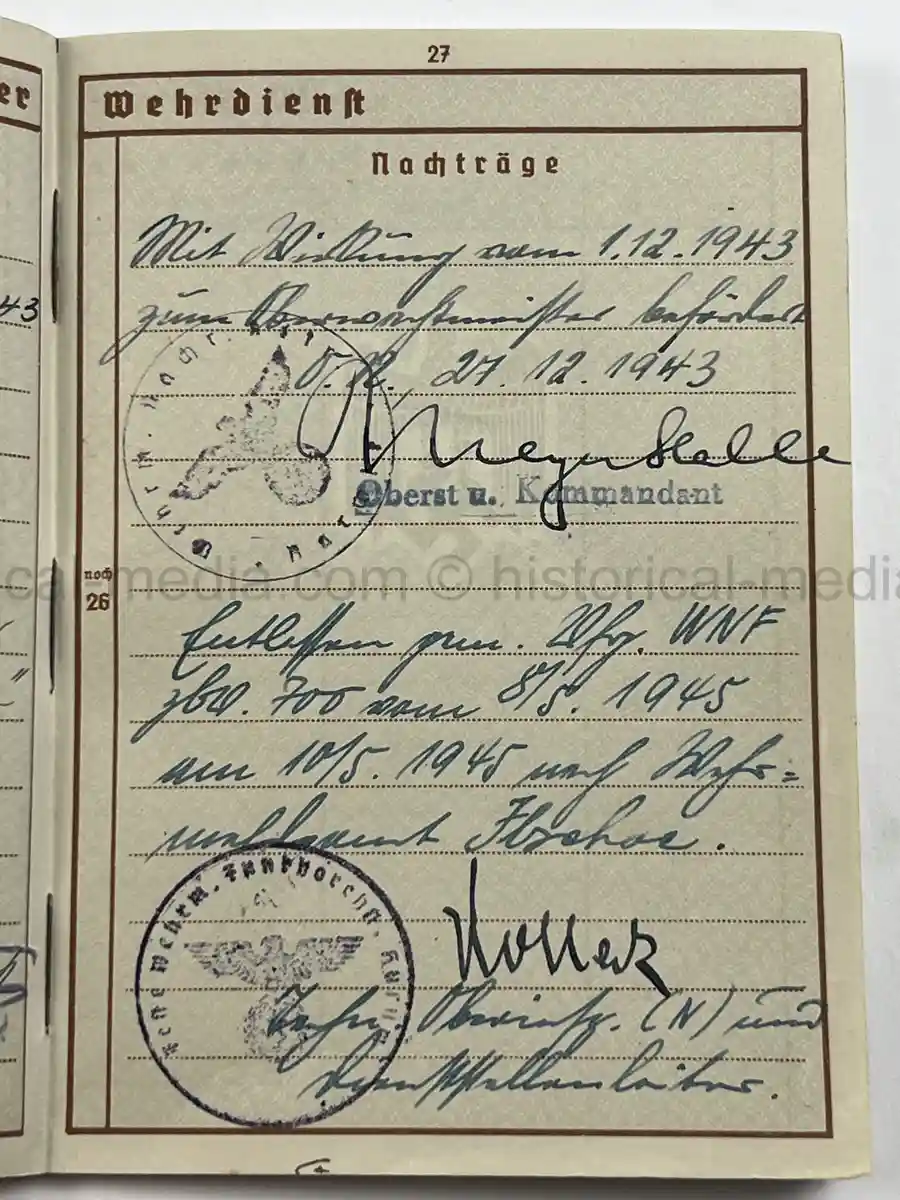
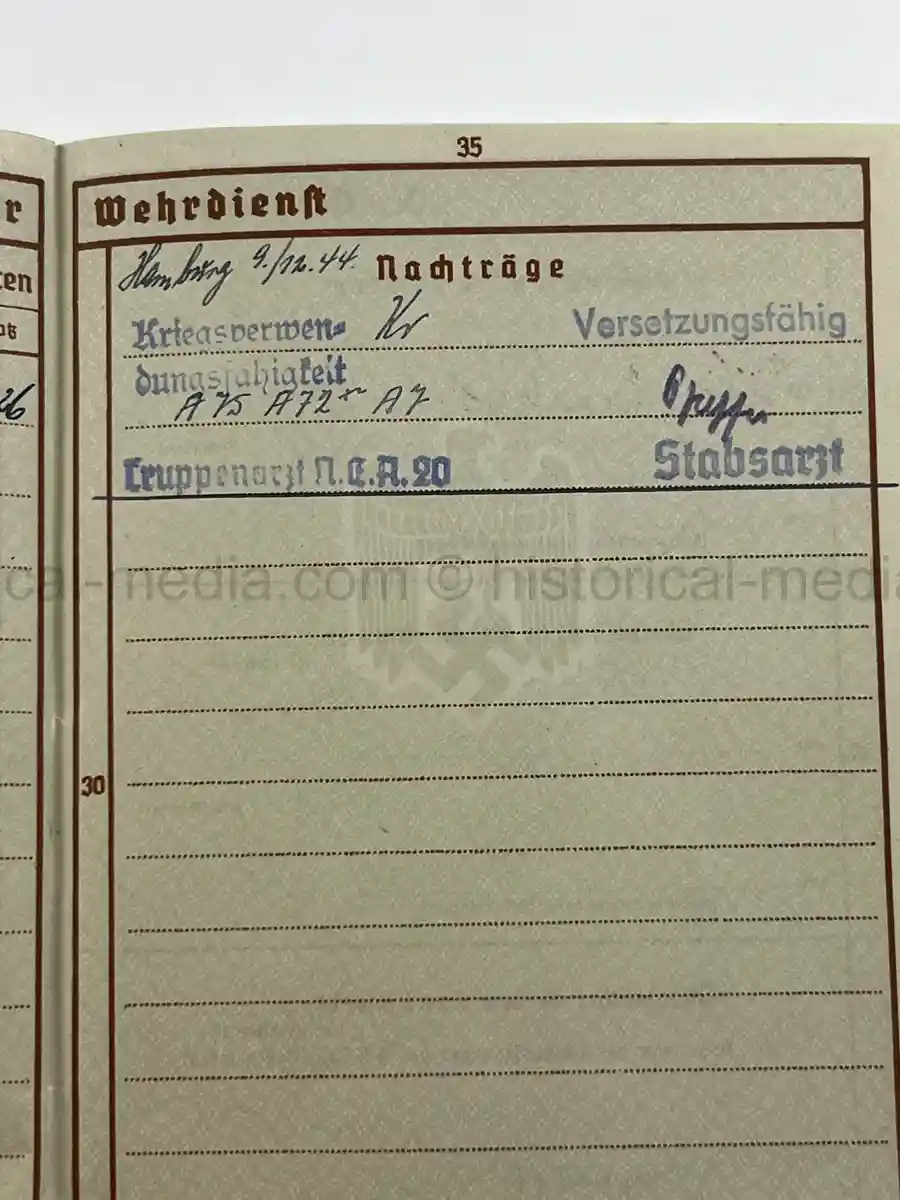
His final wartime posting was to the Feste Wehrmacht-Funkhorchstelle Husum, a signals interception and monitoring station in northern Germany. Personnel at such stations were tasked with listening, decoding, and relaying intercepted radio traffic, indicating Petersen’s role had evolved into a more technical and specialized communications function by the final phase of the war.
He remained in this capacity until Germany’s collapse, and records note his release from British captivity on 21 August 1945.
DIVISIONAL AFFILIATION (COMBAT PHASE):
Infanterie-Regiment 26 – 30. Infanterie-Division
CAMPAIGNS & COMBAT:
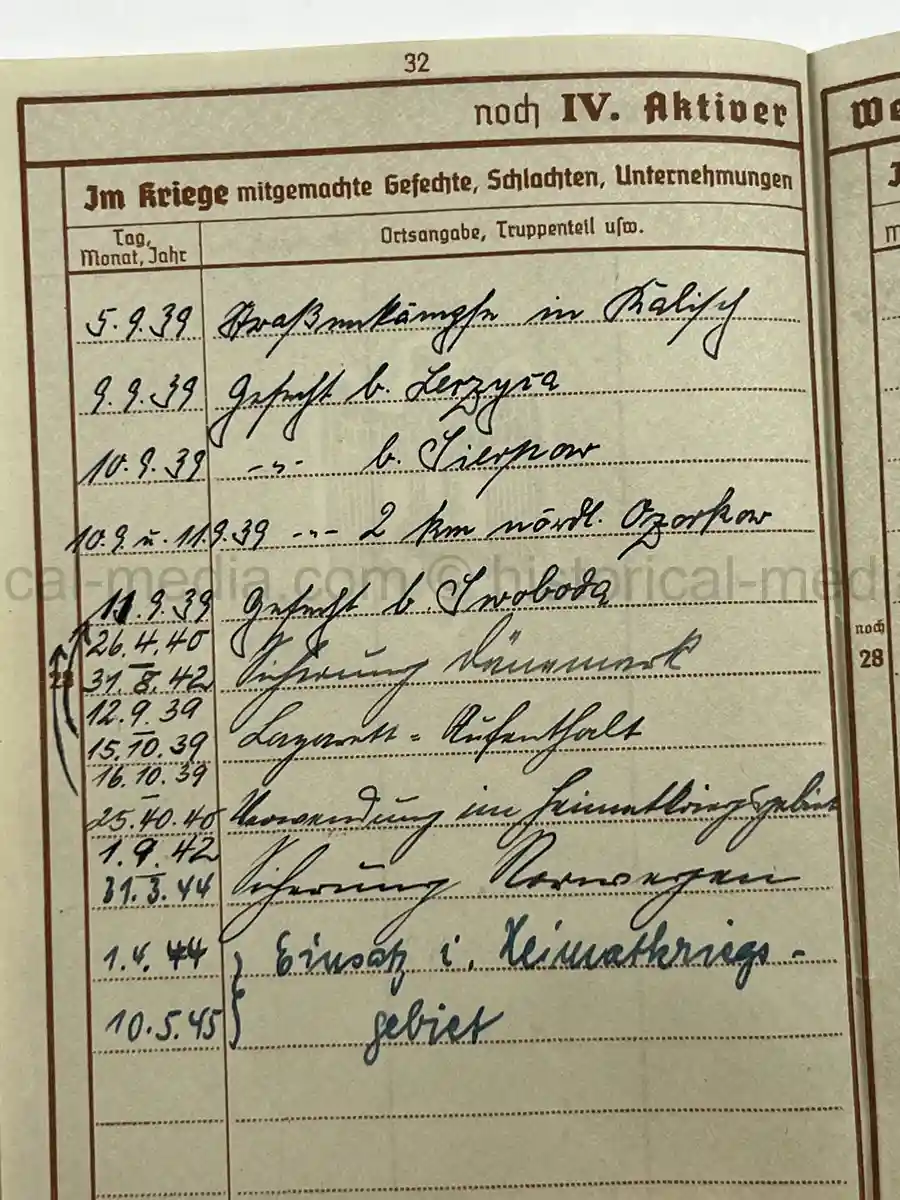
Poland Campaign, September 1939 entries include:
- 5 September: Breakthrough fighting at the Warthe River
- 8 September: Engagement near Łęczyca
- 10 September: Fighting near Sierpów
- 10–11 September: Actions north of Ozorków
- 11 September: Combat in the Bzura sector
These entries trace the division’s advance into the Battle of the Bzura, the largest engagement of the Polish campaign.
WOUNDING:
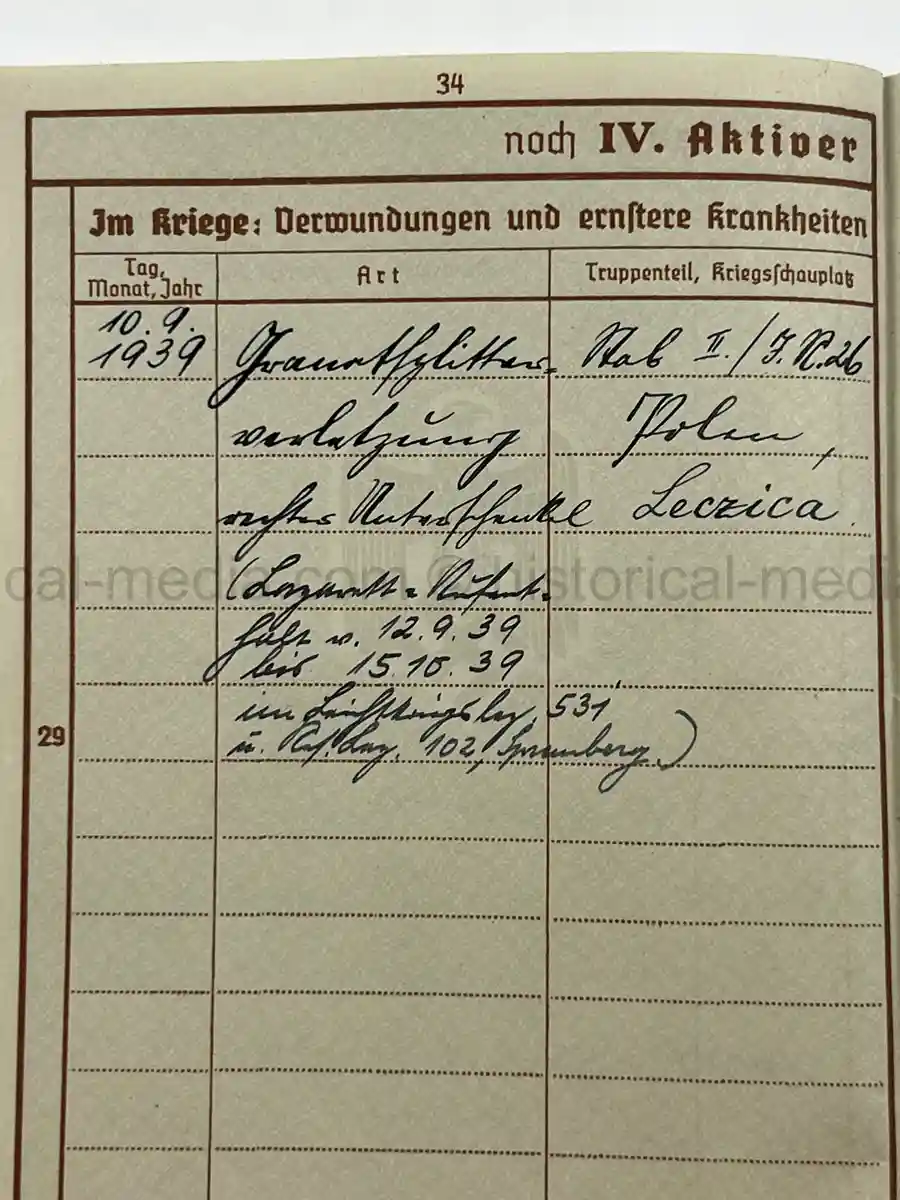
Wounded 10 September 1939 near Łęczyca by artillery shell splinters (Granatsplitterverwundung). He remained hospitalized and in recovery status until mid-October 1939 before returning to duty.
PROMOTIONS:
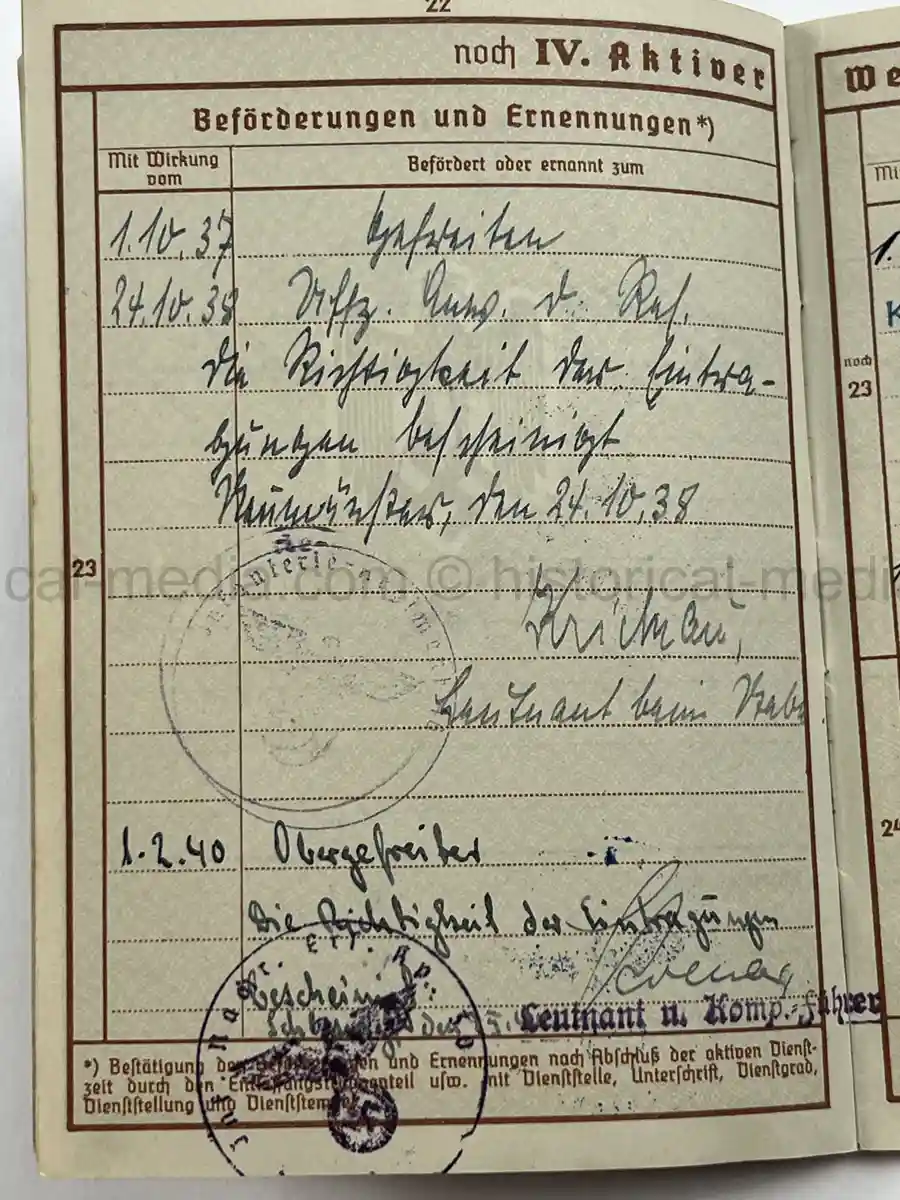
Gefreiter (1 July 1937)
Obergefreiter (1 February 1940)
Unteroffizier (1 July 1940)
Wachtmeister (1 December 1941)
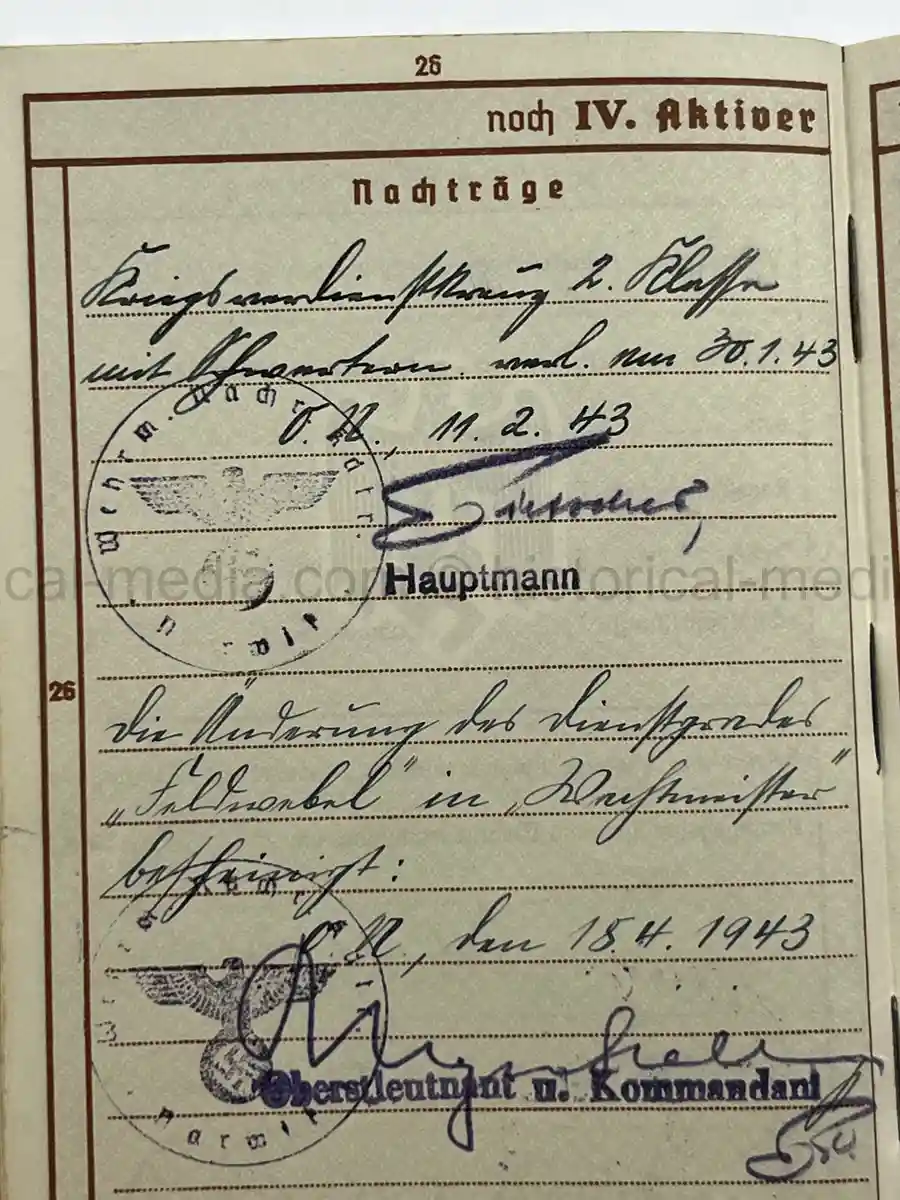
Oberwachtmeister (27 December 1943)
AWARDS:
Medaille zur Erinnerung an den 1. Oktober 1938
Verwundetenabzeichen in Schwarz (Black Wound Badge)
Kriegsverdienstkreuz 2. Klasse mit Schwertern
SPECIAL QUALIFICATIONS:
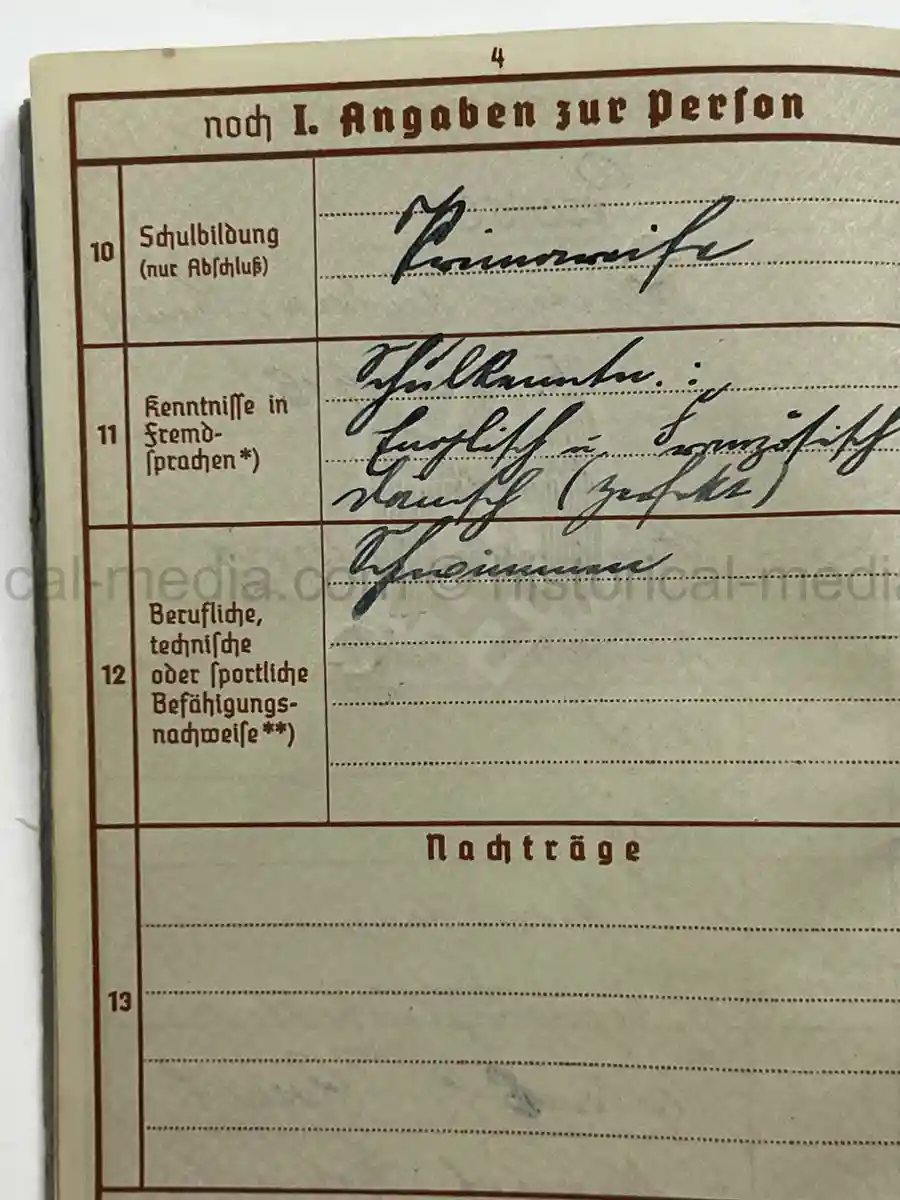
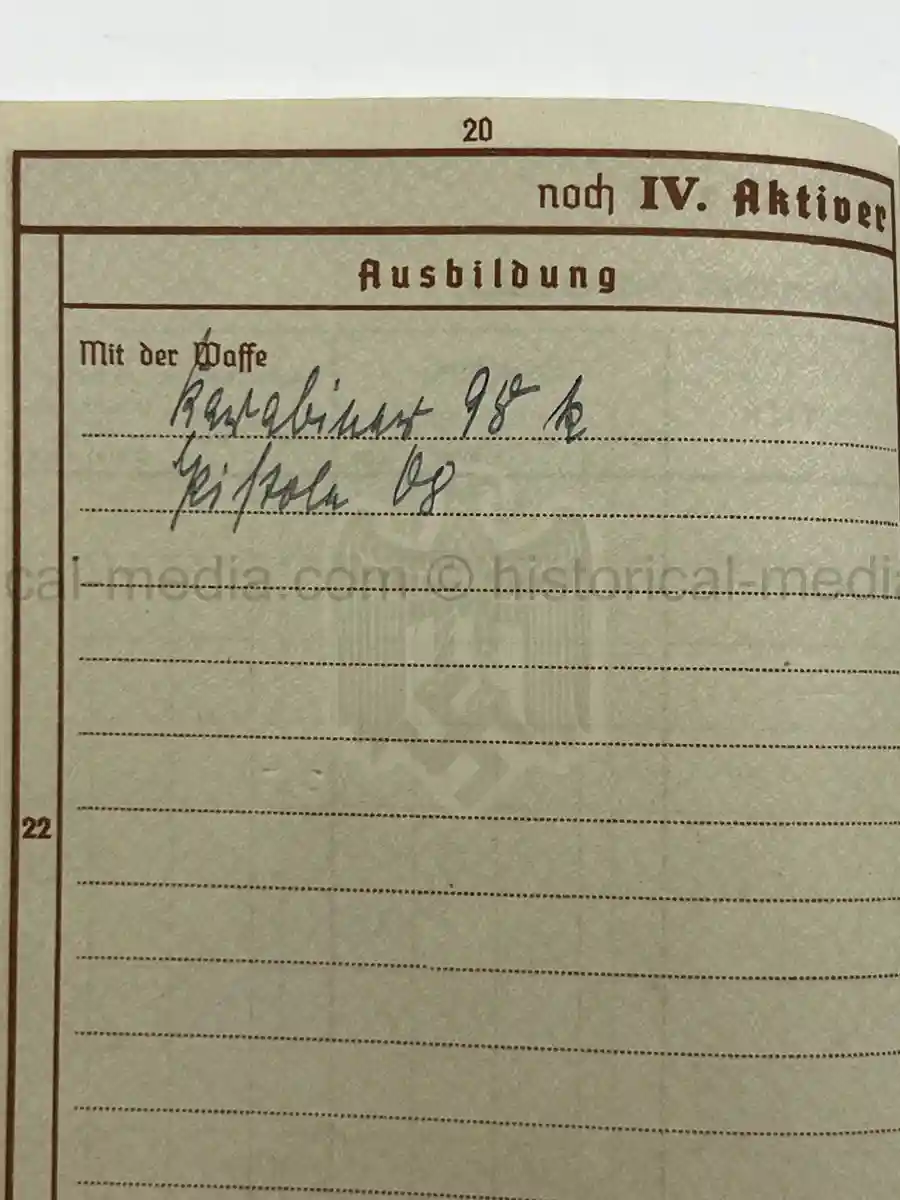
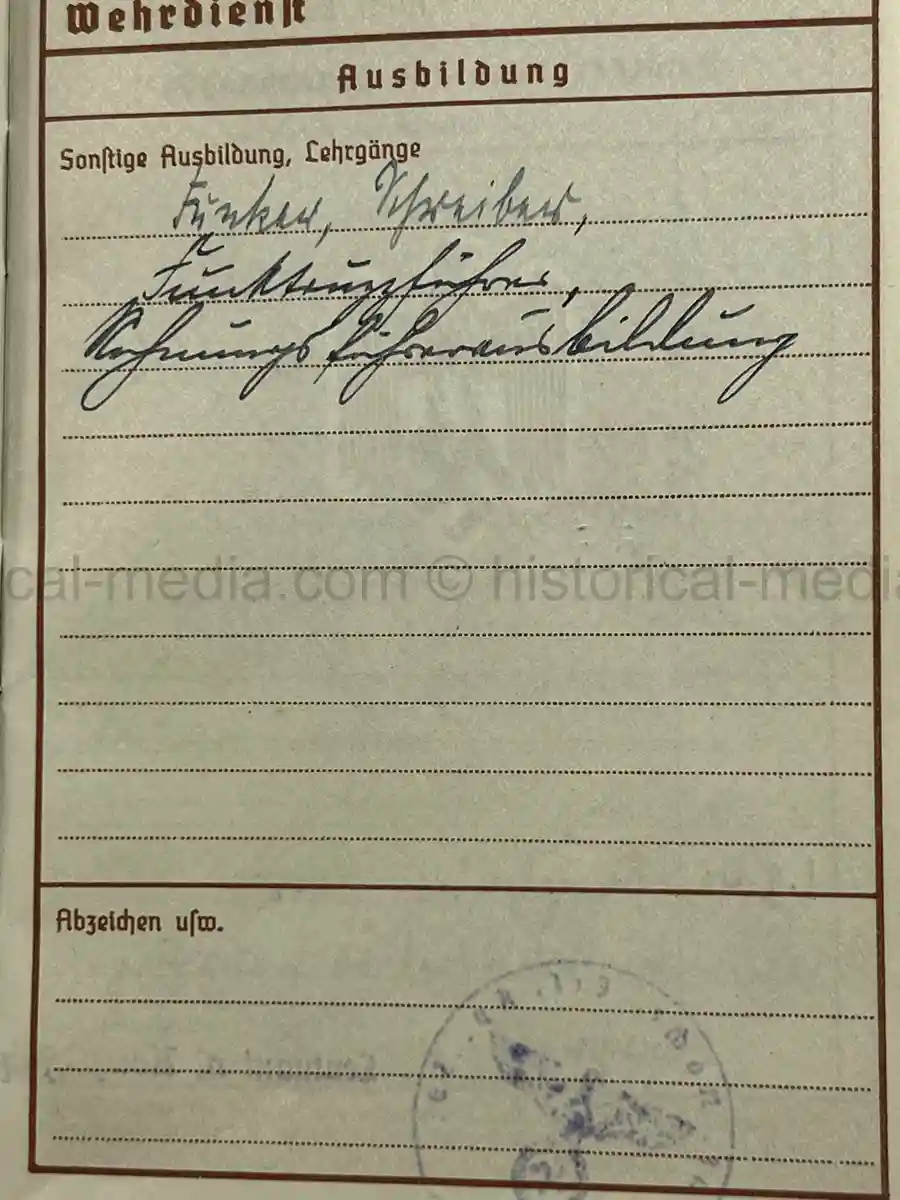
Documented signals training including radio operation, communications procedures, and technical instruction consistent with Nachrichten personnel. Later service in a Funkhorchstelle indicates involvement in interception and monitoring operations.
“`html
“`