
Description
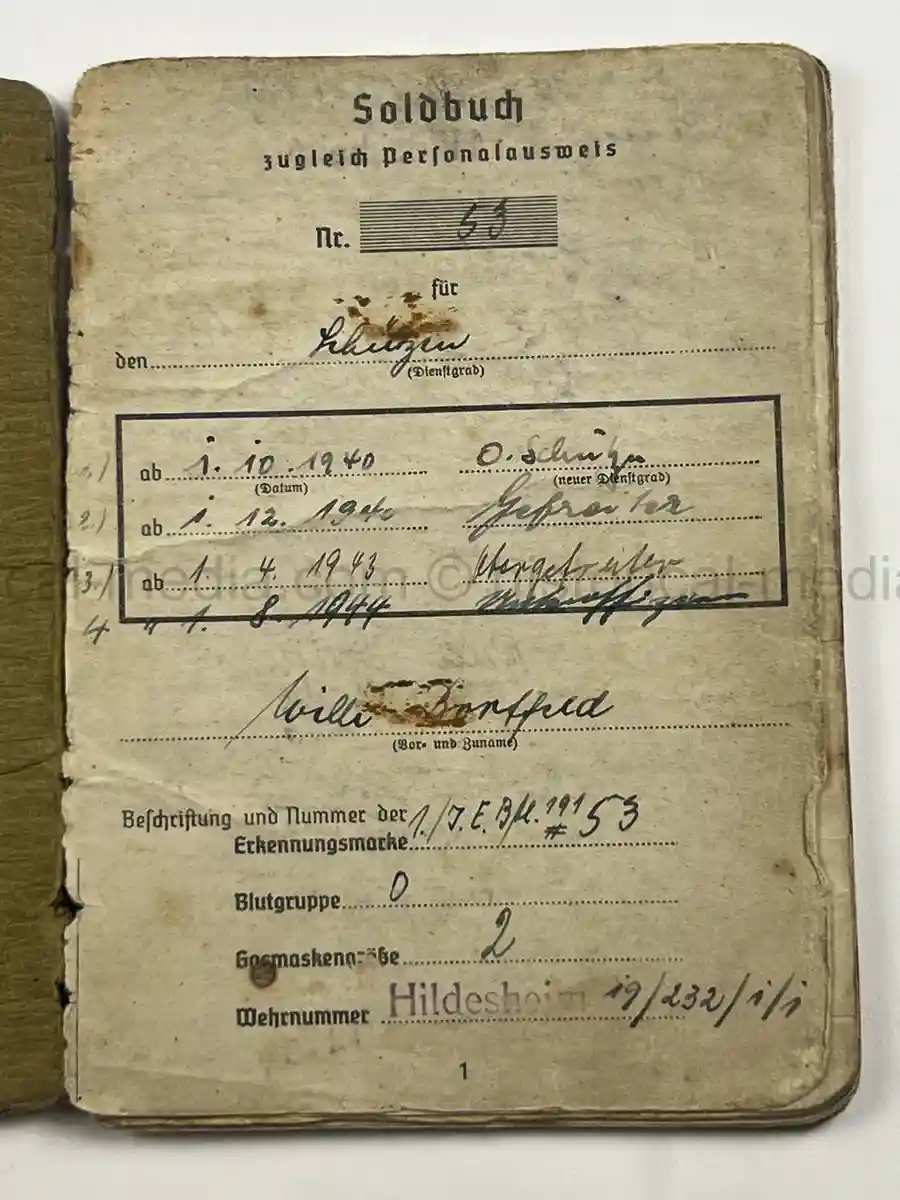
STURMGESCHÜTZ SOLDBUCH – WILLI BORTFELD – EASTERN FRONT / LATE WAR SERVICE – FALLSCHIRMJÄGER KNIFE – SCHWERES GRANATWERFER-BATAILLON 18
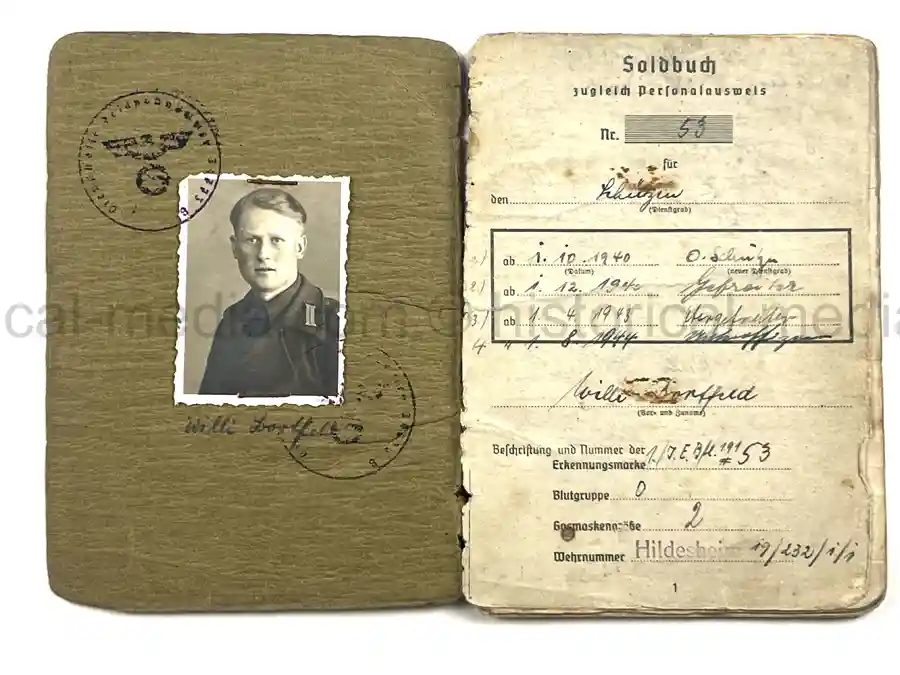
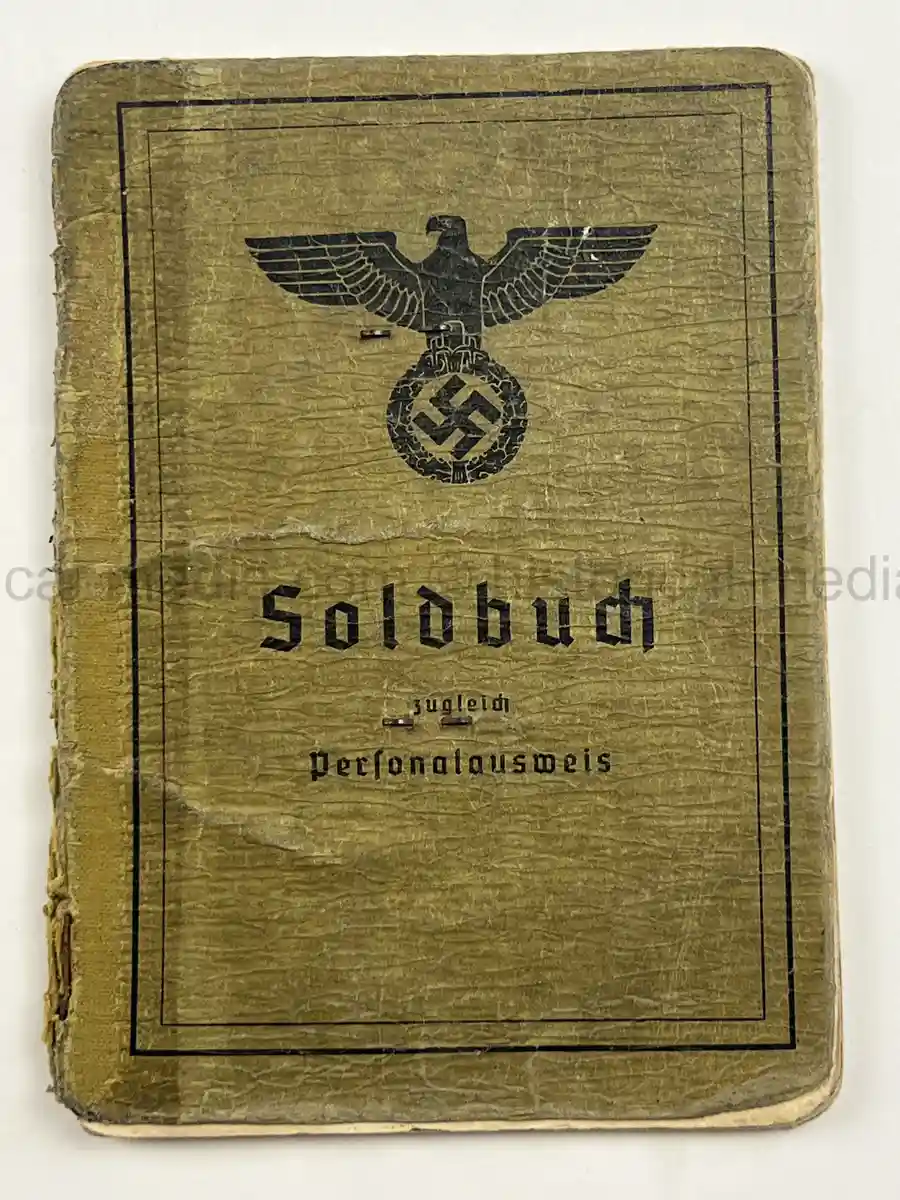
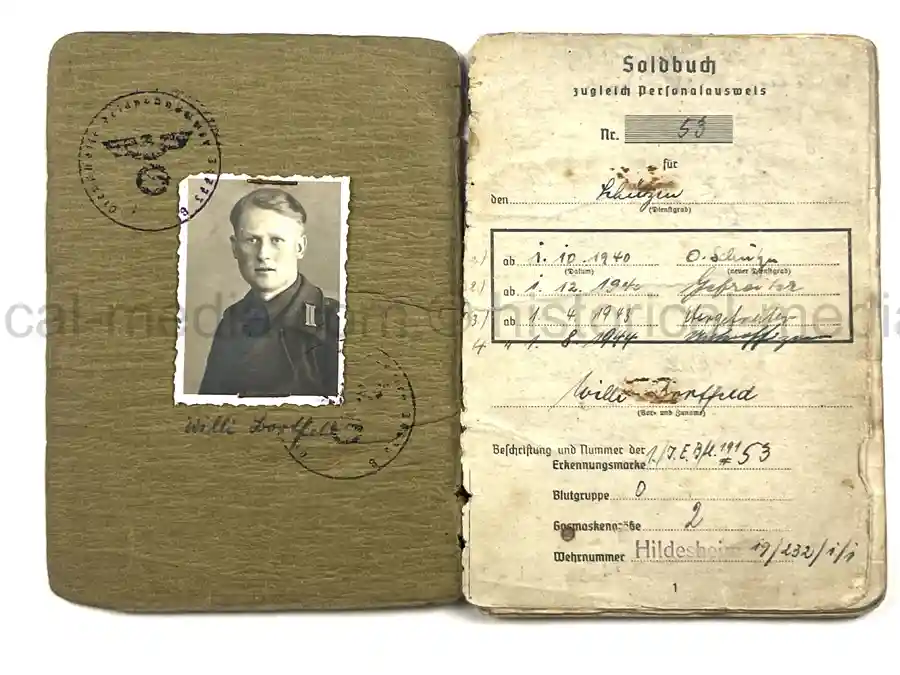
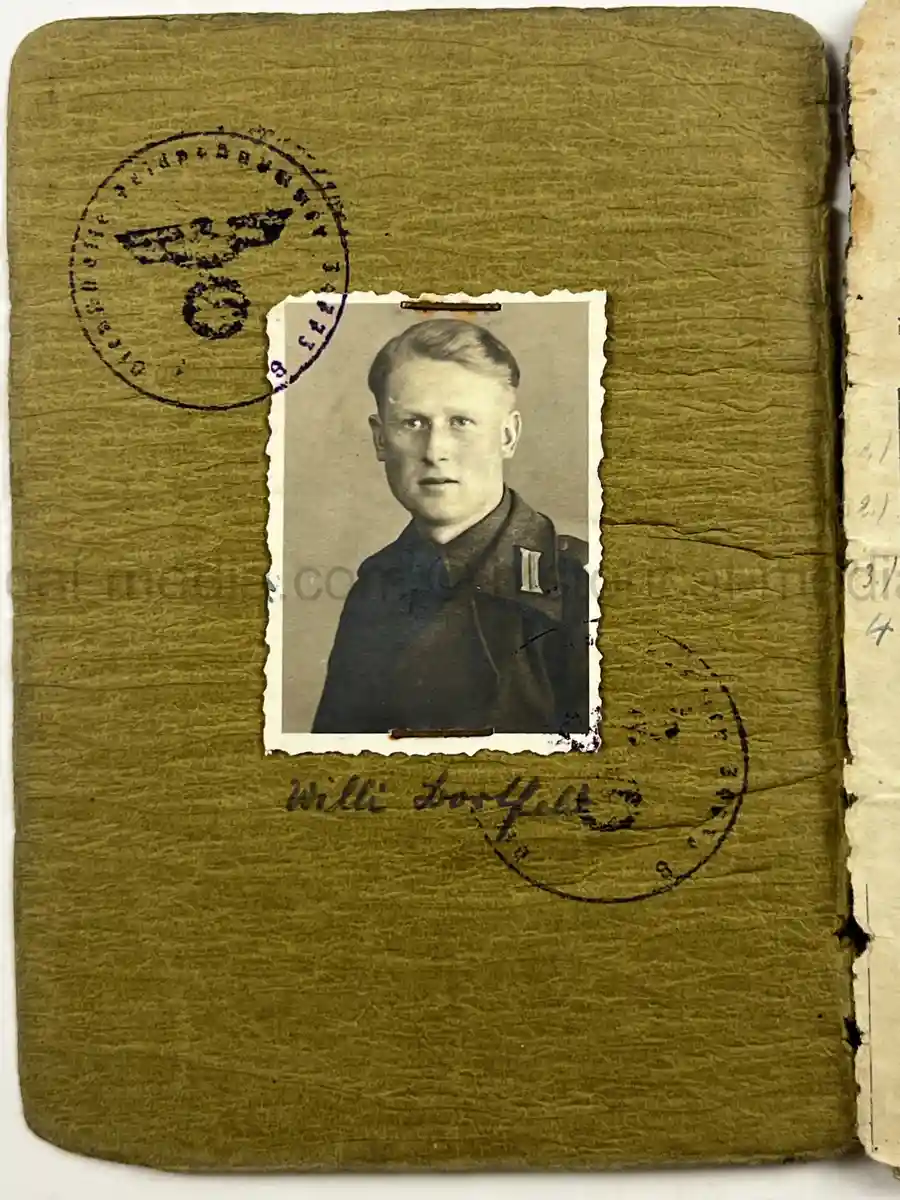
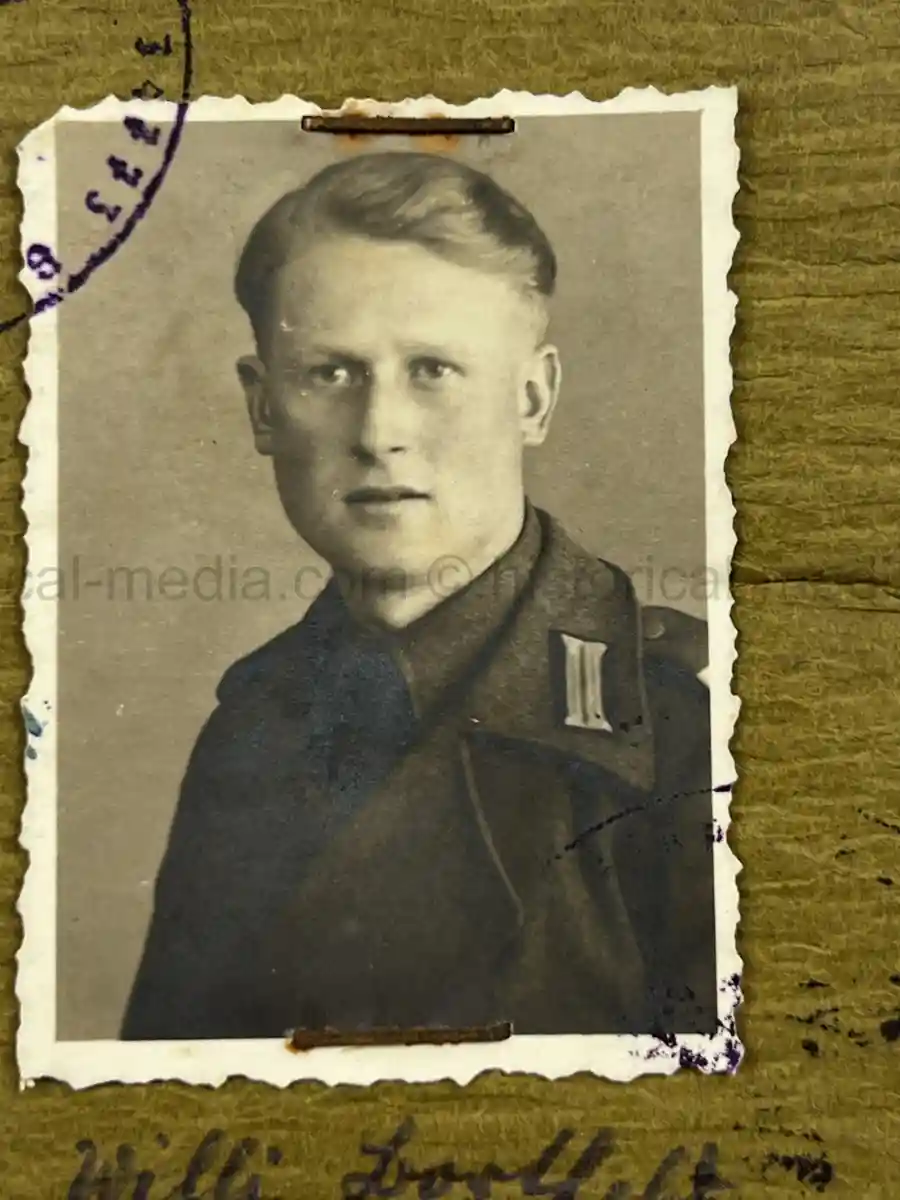
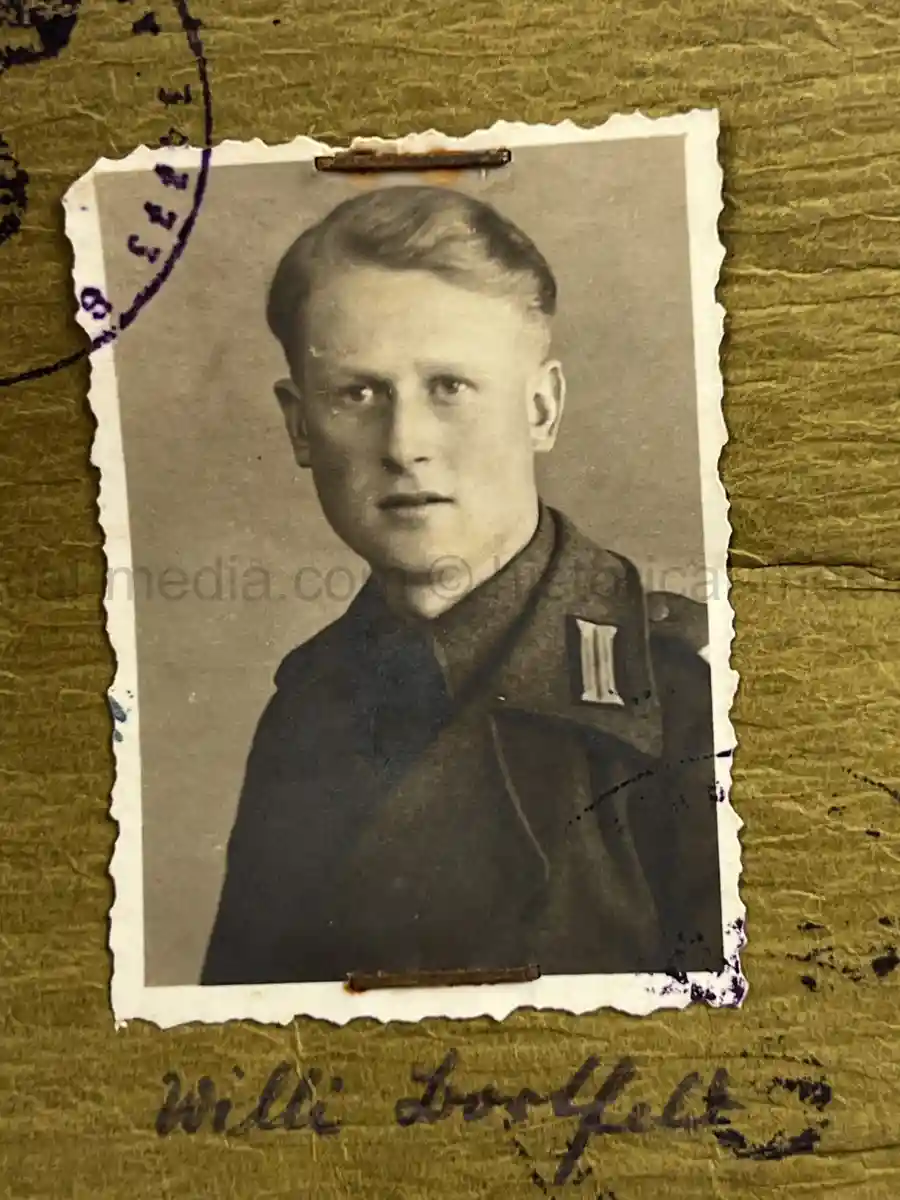
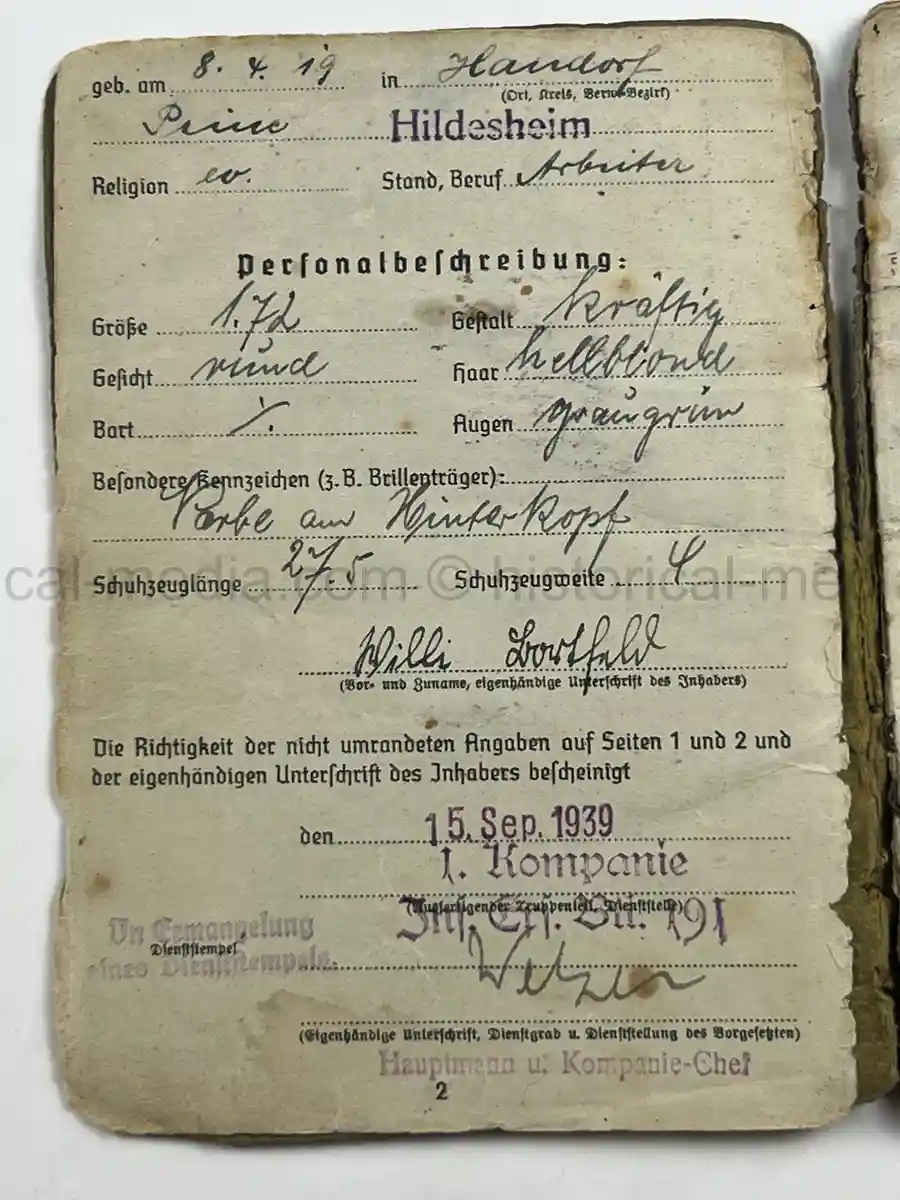
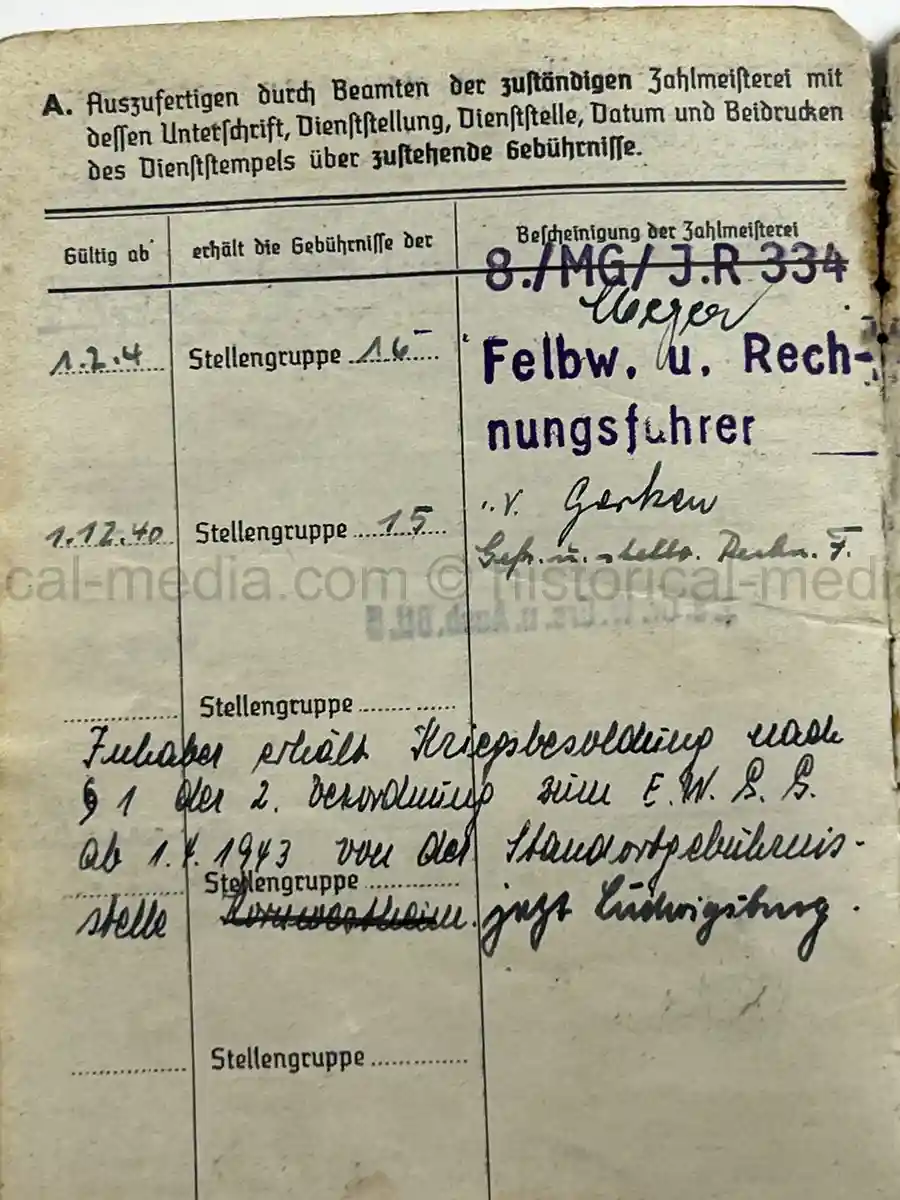
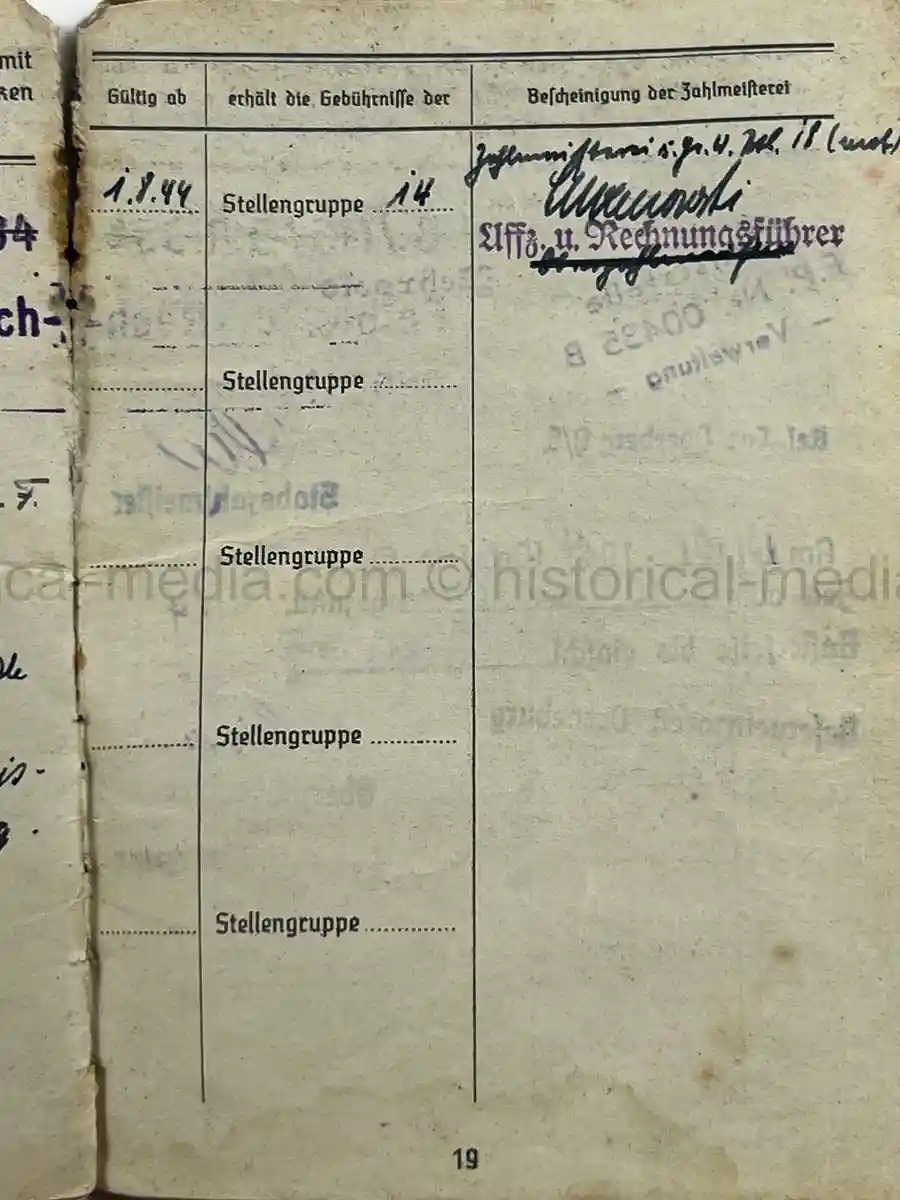
Complete Soldbuch issued to Willi Bortfeld, a German Army soldier with documented multi-unit service, including coastal artillery and heavy mortar formations, along with hospitalization records, equipment issue pages, and extensive late-war administrative entries. The book shows sustained service through the war, including combat-related wounding in 1944, recovery leave, and continued duty into late 1944, and is enhanced by a very nice original uniform photograph of the soldier wearing a Sturmgeschütz-style Feldgrau tunic.
PERSONAL DETAILS:
Willi Bortfeld is recorded as a Heer soldier with continuous wartime service, with the Soldbuch containing period entries, official stamps, and signatures throughout. The document reflects a frontline serviceman, with detailed administrative tracking of equipment, pay, medical status, and leave.
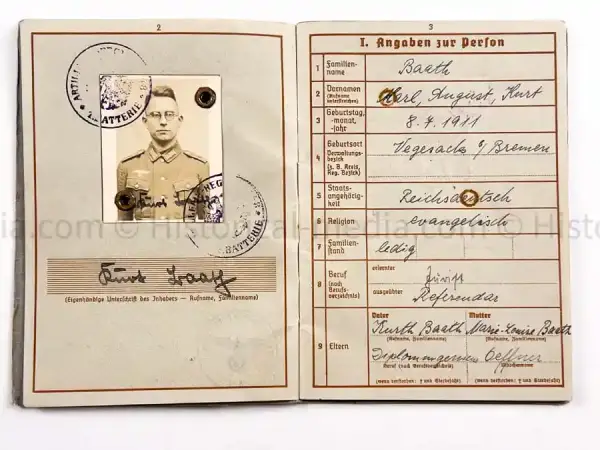
A clear and attractive period photograph is affixed, showing Bortfeld in uniform wearing a Feldgrau tunic associated with Sturmgeschütz personnel, adding strong visual and collector appeal.
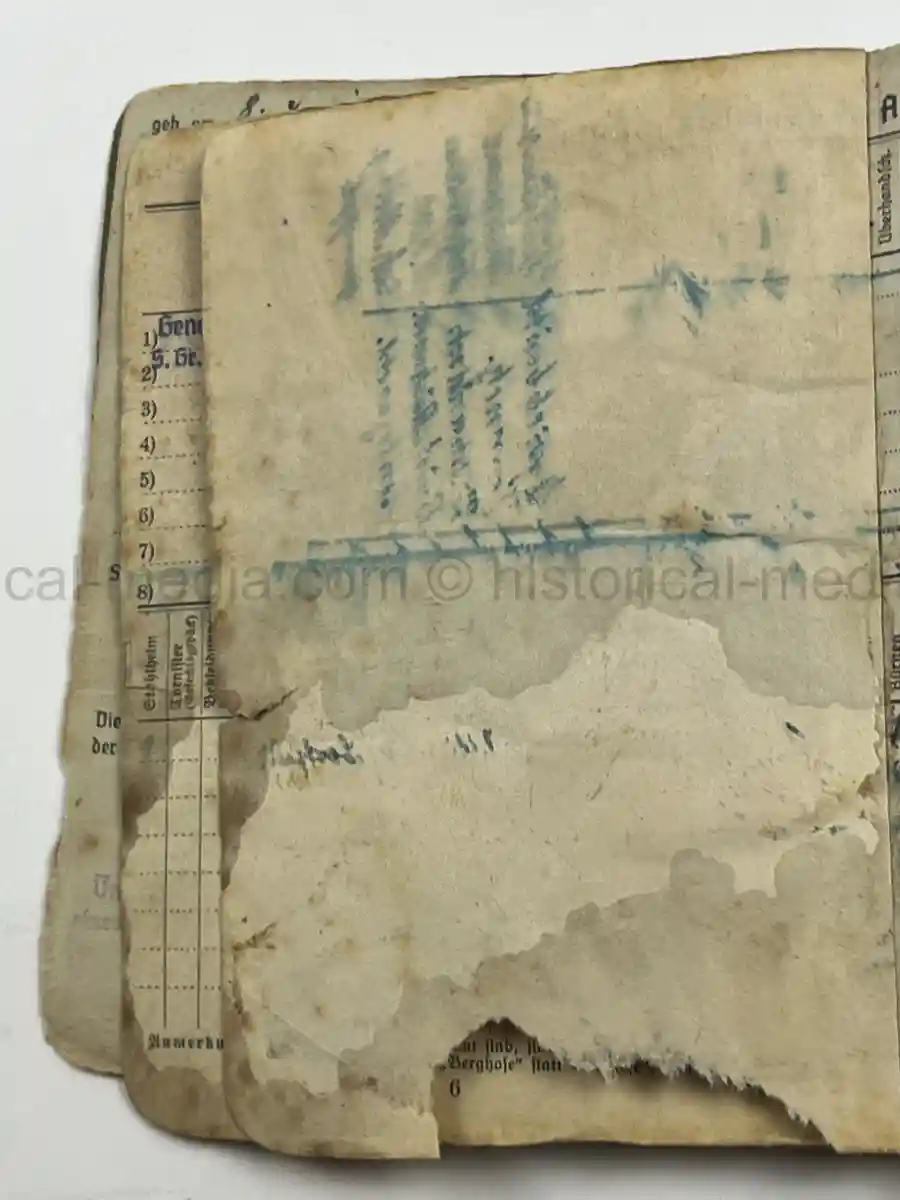
Note: Pages 3–4 are missing from the Soldbuch.
EARLY SERVICE / PRE-WAR:
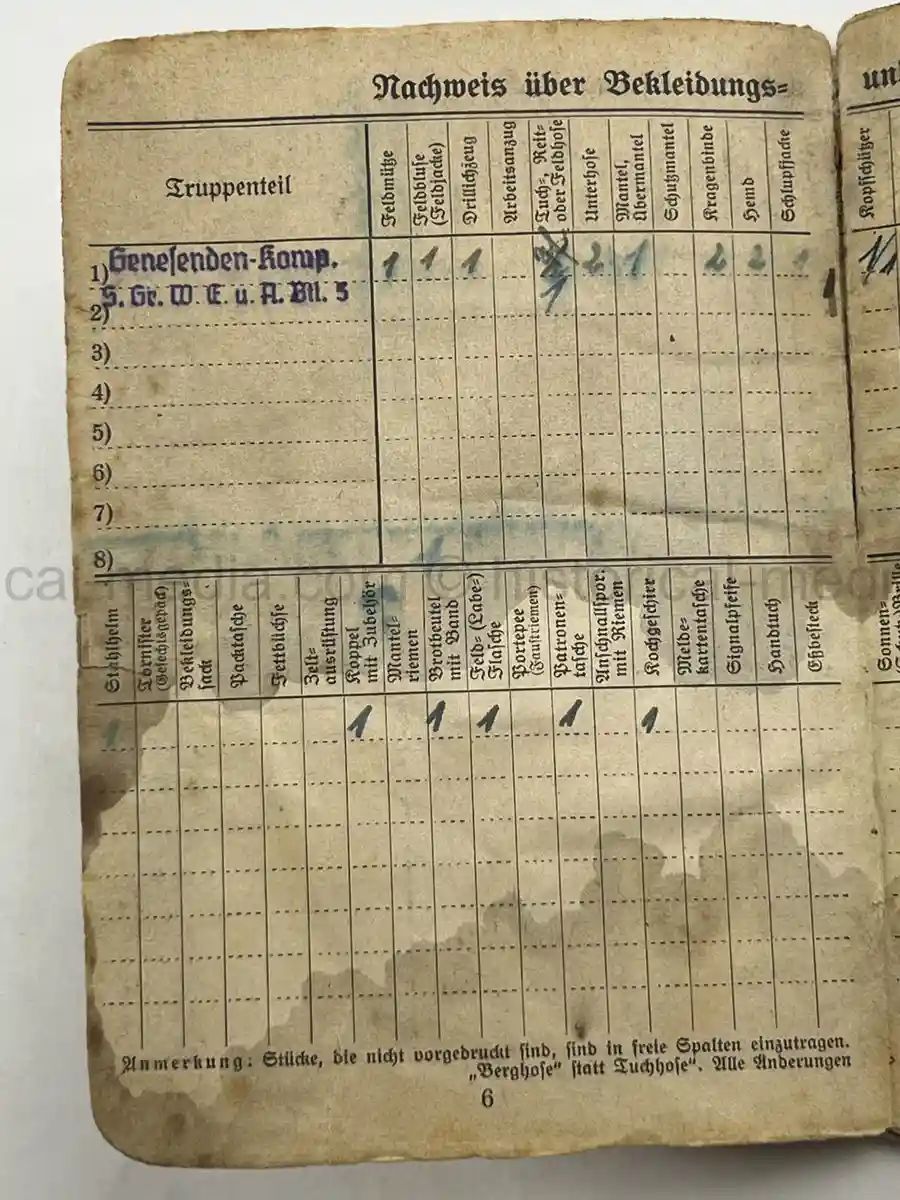
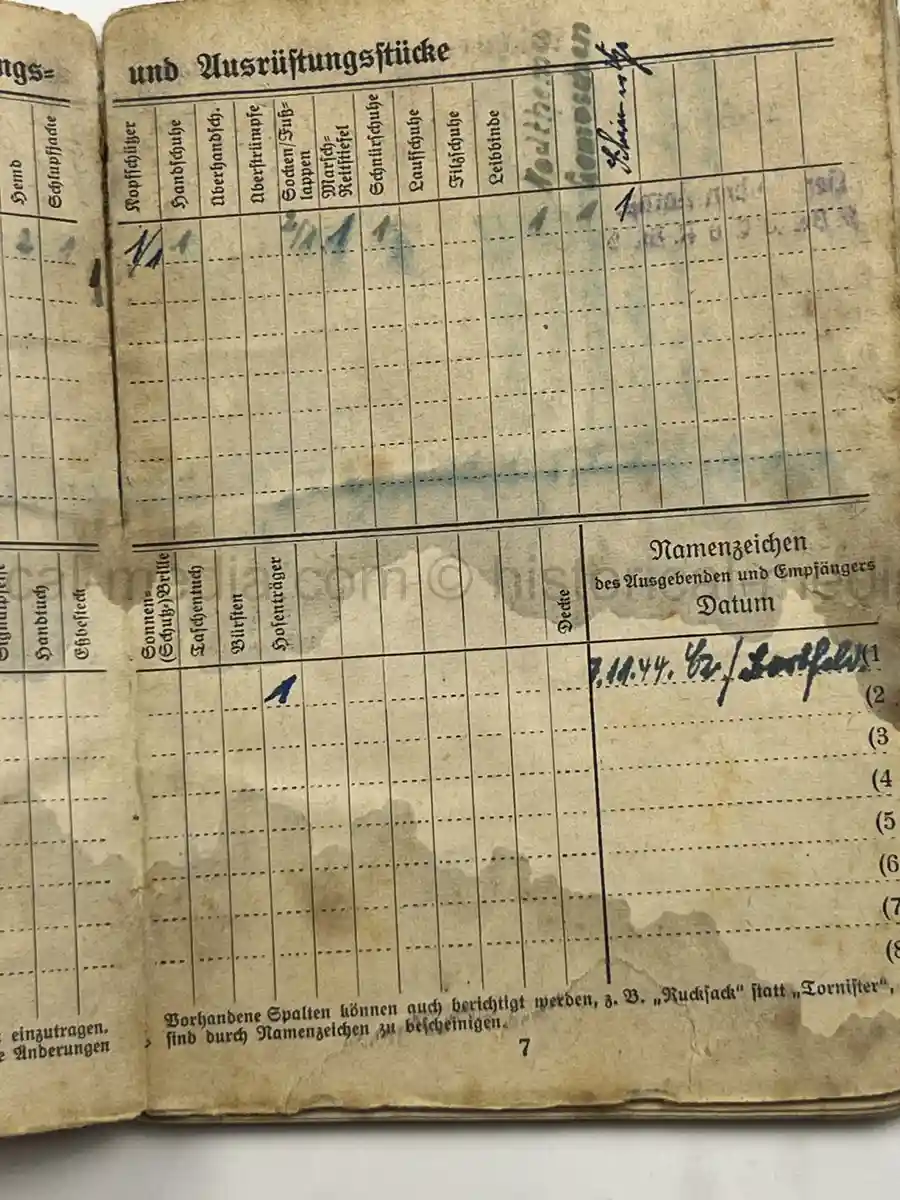
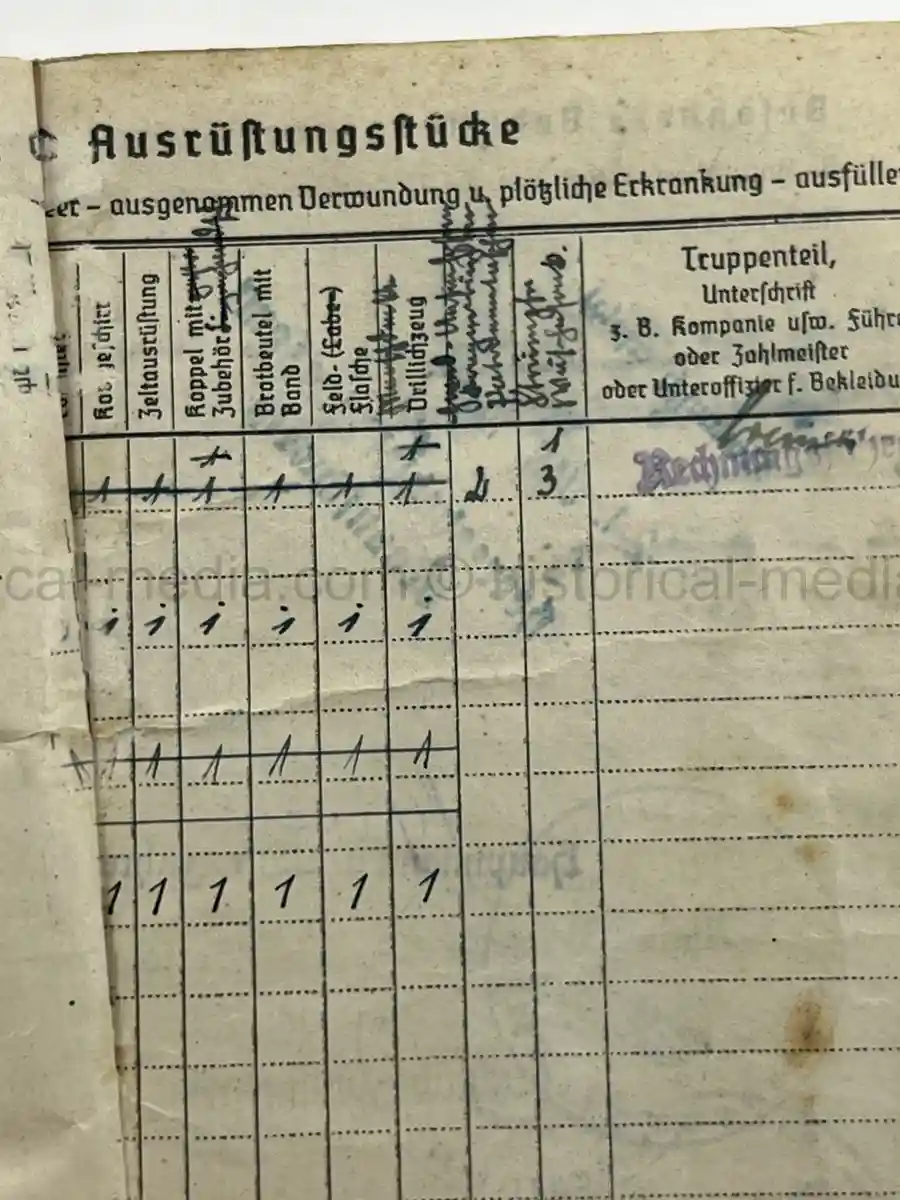
- Initial equipment issue entries dated around 30 August 1940
- Standard field gear issued, including:
- Belt and equipment (Koppel und Zubehör)
- Bread bag (Brotbeutel)
- Mess tin (Kochgeschirr)
- Shelter quarter (Zeltbahn)
Indicates entry into service or mobilization in 1940.
UNIT SERVICE (FIELD & TRAINING UNITS):
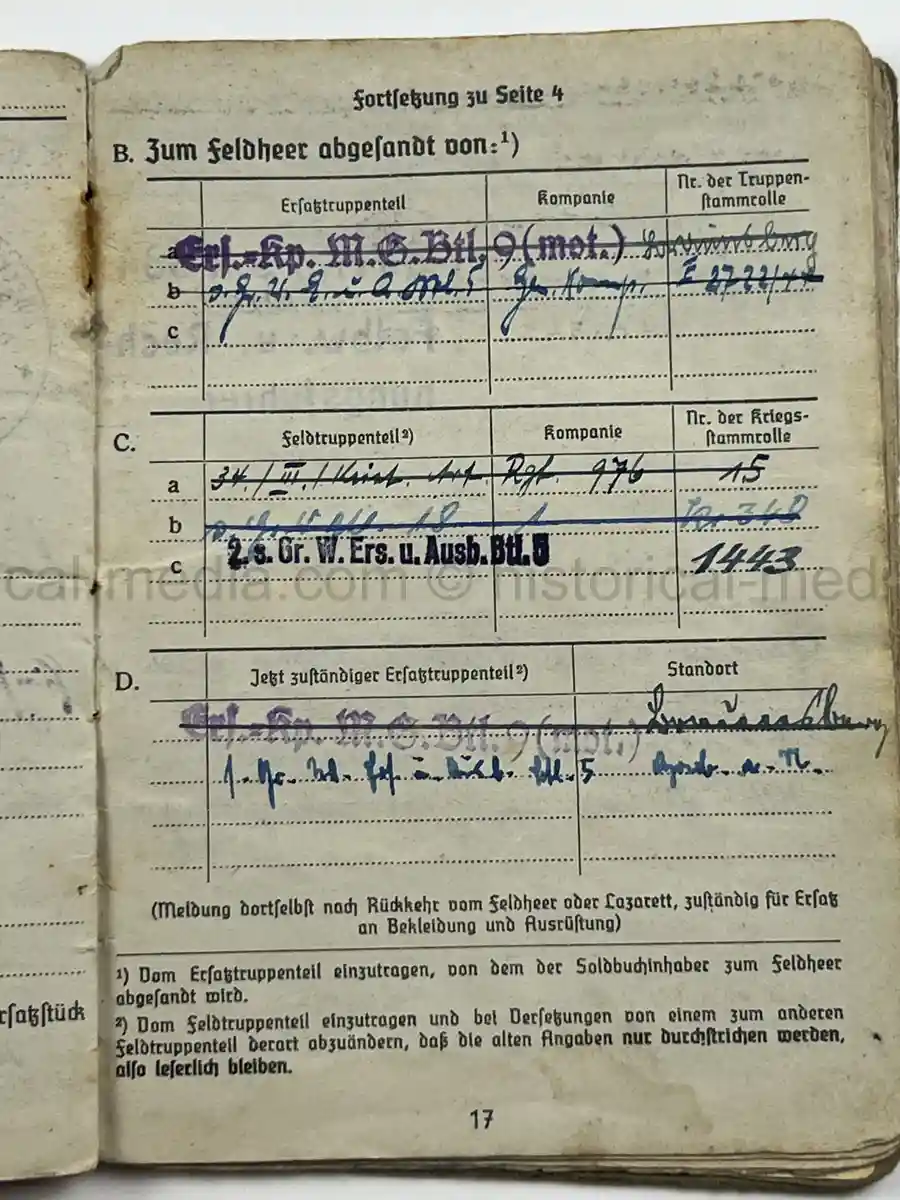
Page 17 provides important unit identifications, showing service across multiple formations:
- Küsten-Artillerie-Regiment 976
- Coastal artillery unit tasked with defense of occupied coastlines, likely in Atlantic or northern sectors
- Schweres Granatwerfer-Bataillon 18
- Specialized Heerestruppe (army-level unit), not permanently assigned to a single division
- Equipped with 12 cm s.Gr.W. 42 heavy mortars, providing powerful indirect fire support
In August 1944, this battalion was deployed on the Eastern Front in the Carpathian Mountains region, operating in Southern Poland / Western Ukraine during the German defensive battles against Soviet summer offensives.
- Positioned in the Karpathen (Carpathians), often supporting mountain and Ski-Jäger units
- Associated in late 1944 with formations such as the 1. Ski-Jäger-Division
This places Bortfeld in a high-intensity combat zone during a major phase of German retreat operations.
- Granatwerfer-Bataillon Ersatz- und Ausbildungs-Abteilung 5
- Replacement and training unit responsible for training and reinforcement of mortar troops
These entries indicate service spanning:
- Coastal defense artillery roles
- Frontline heavy mortar combat service on the Eastern Front
- Replacement and training assignments
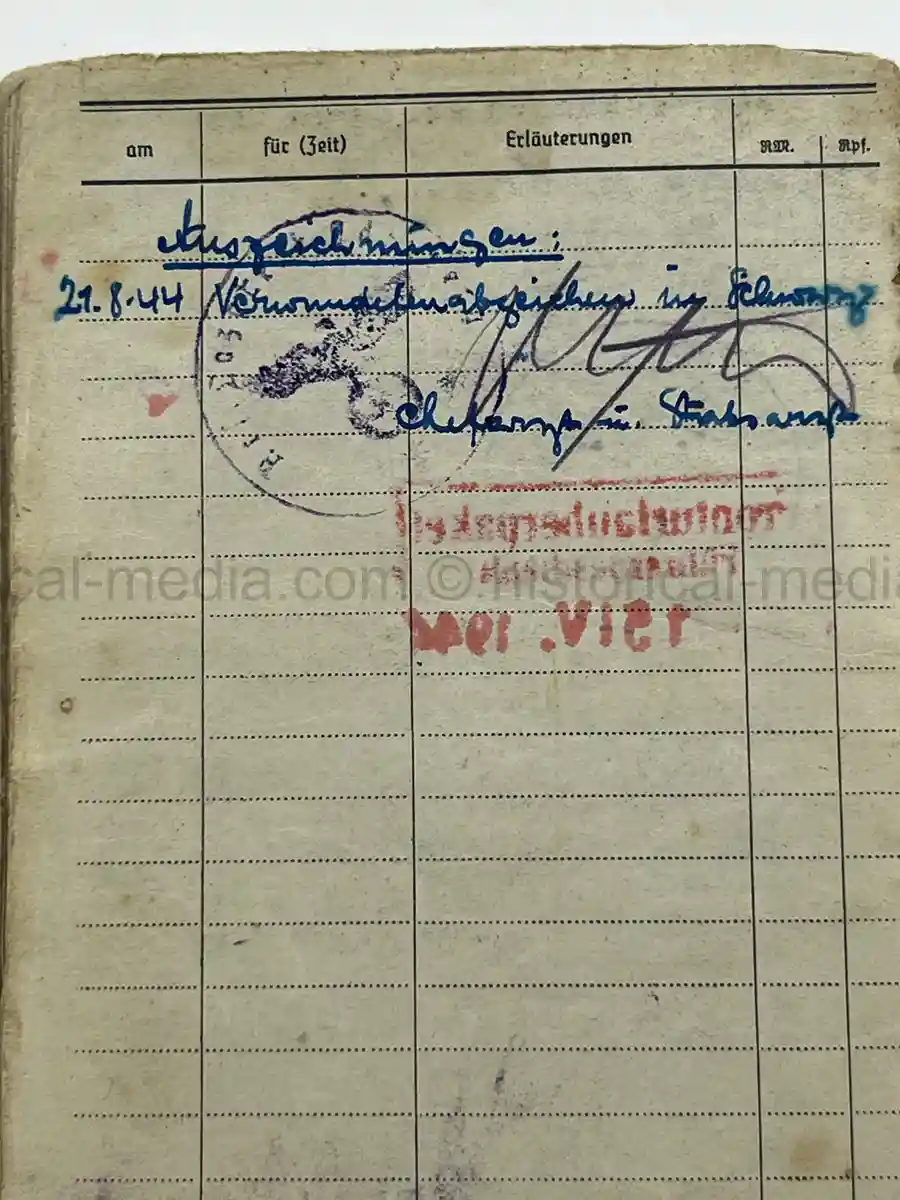
AWARDS (AS RECORDED):
- Verwundetenabzeichen in Schwarz (Black Wound Badge) – 21 August 1944
- Awarded while serving with Schweres Granatwerfer-Bataillon 18
- Confirms combat wounding during active Eastern Front service
This is a critical combat confirmation, directly tying Bortfeld to a frontline heavy mortar unit, a specific date, and the Carpathian combat zone during Soviet offensives.
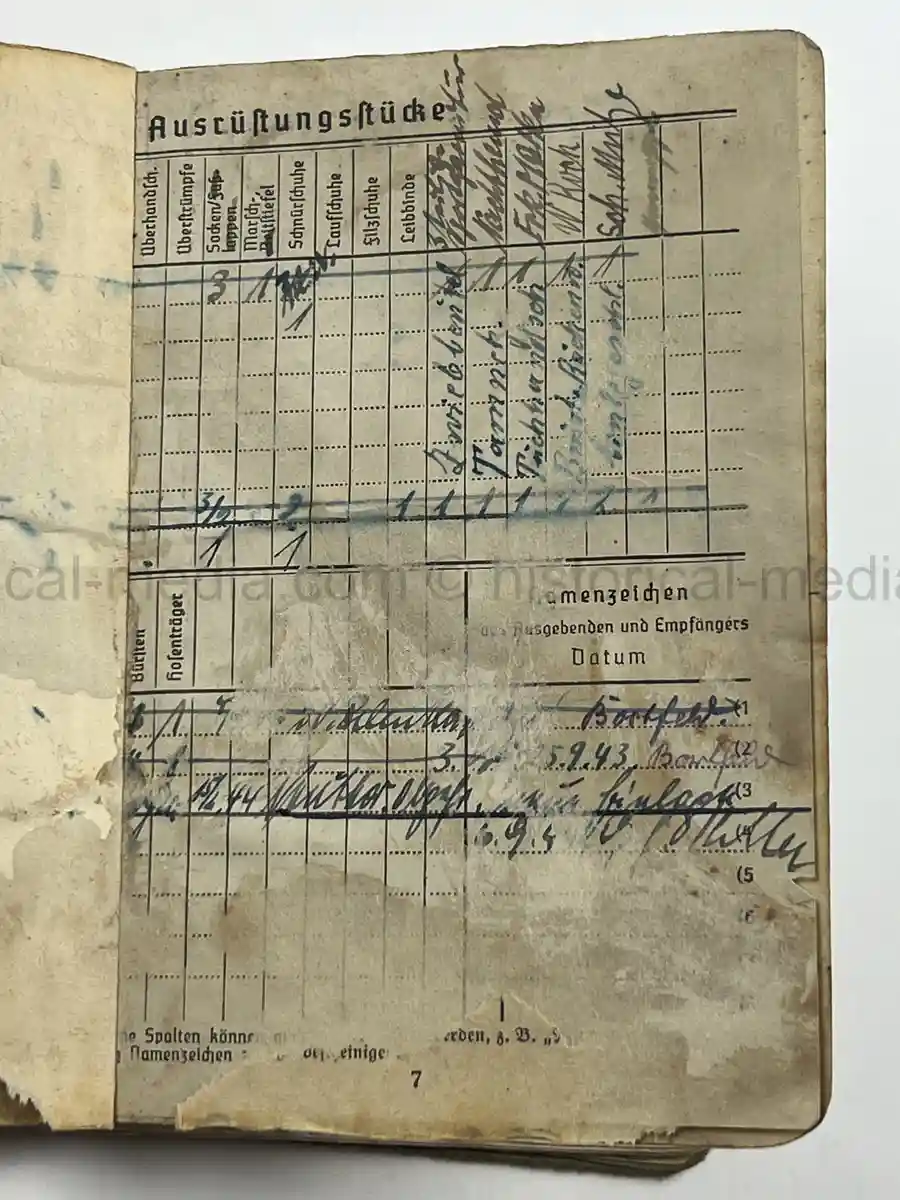
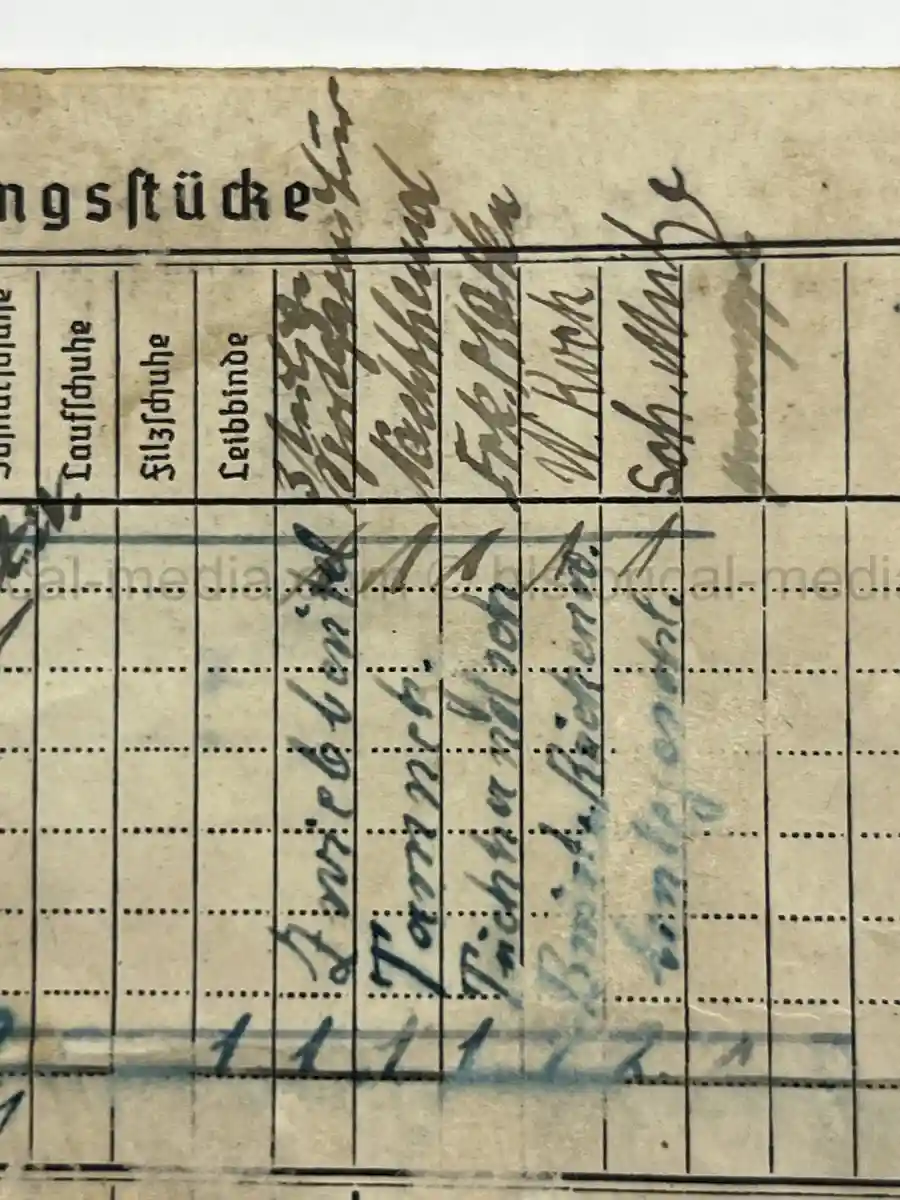
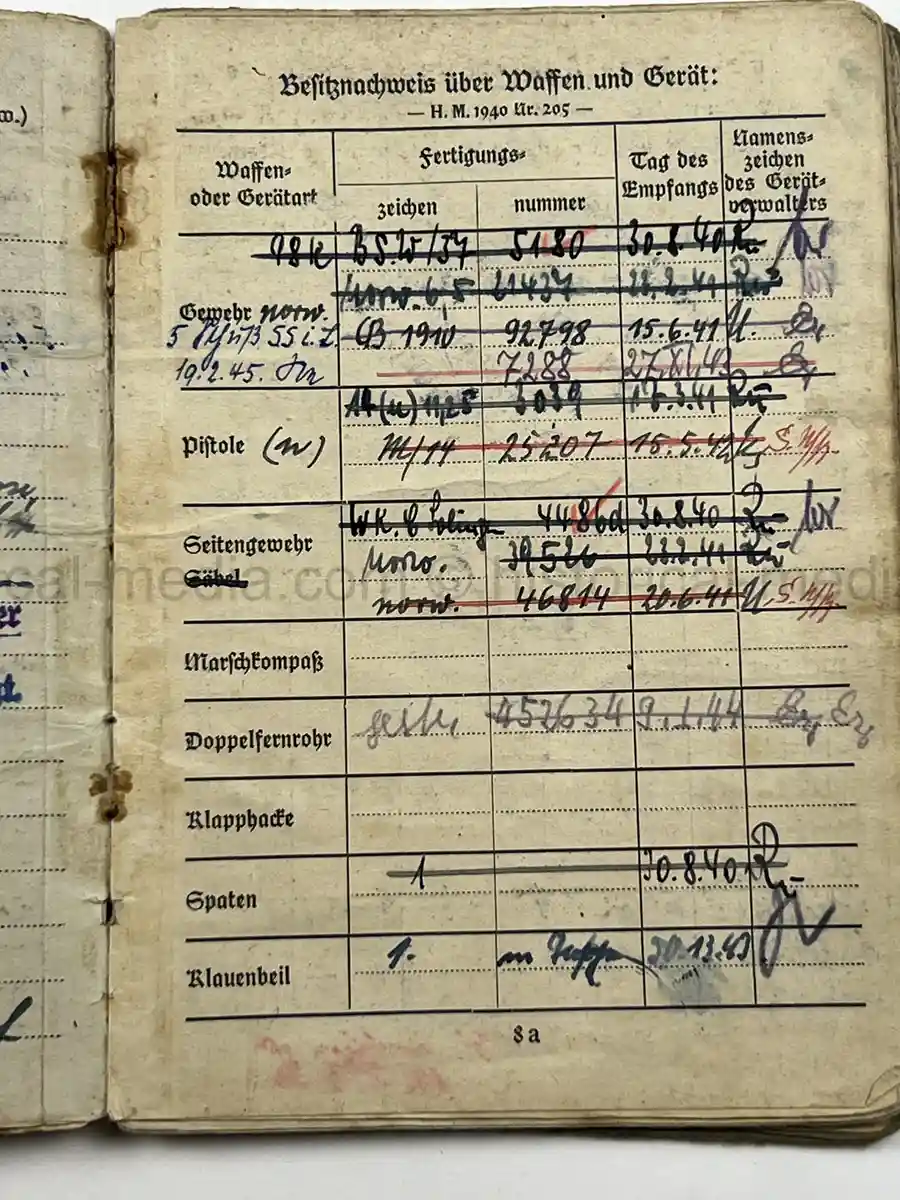
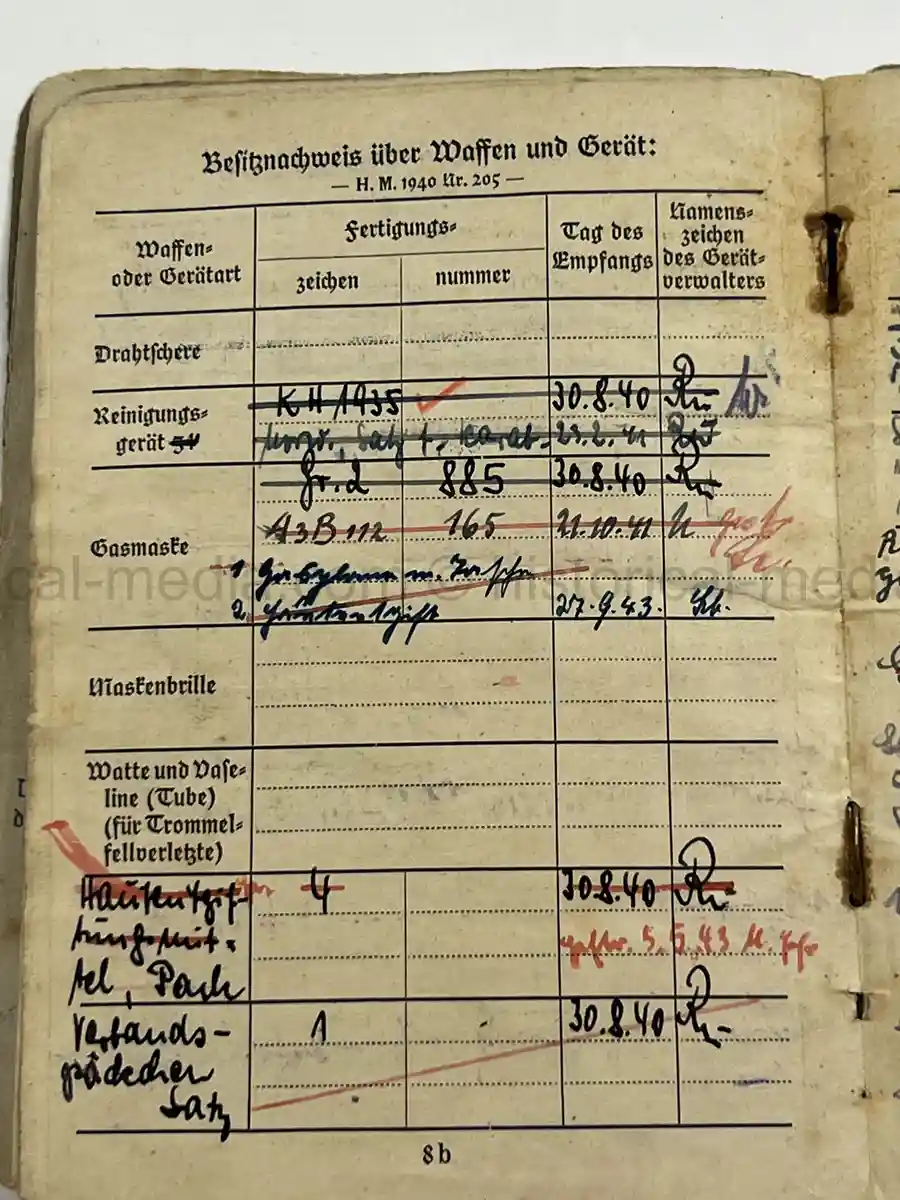
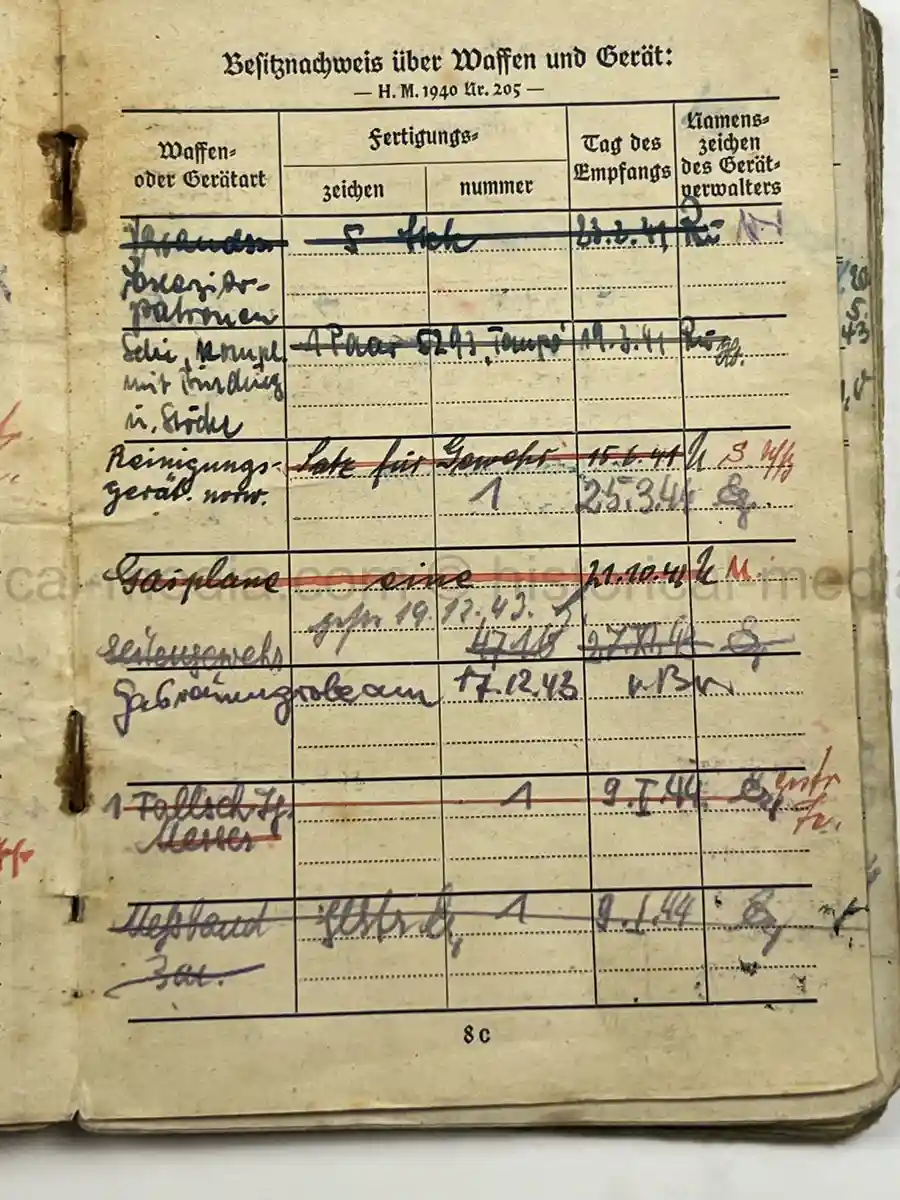
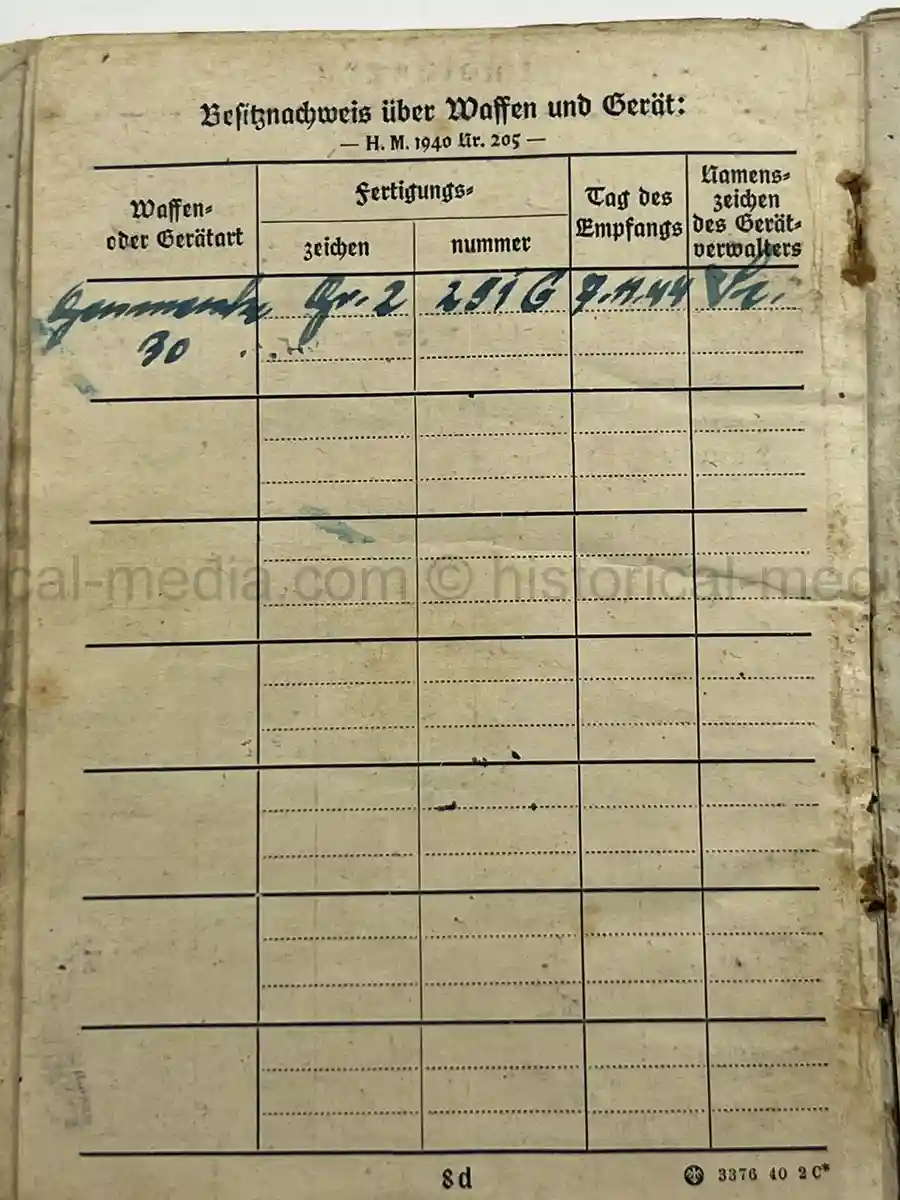
EQUIPMENT / WEAPONS ISSUE:
Detailed equipment records include:
- Gewehr 98 / Karabiner-type rifle (serial numbers recorded)
- Pistol (later crossed out/reissued)
- Bayonet (Seitengewehr)
- Entrenching tool (Spaten)
- Gas mask and cleaning kit
Notably recorded on page 8c:
- Fallschirmjäger-Messer (paratrooper gravity knife) – issued January 1944 – a particularly interesting and less common entry,
Multiple entries are crossed out and updated, reflecting active field use and reissue of equipment.
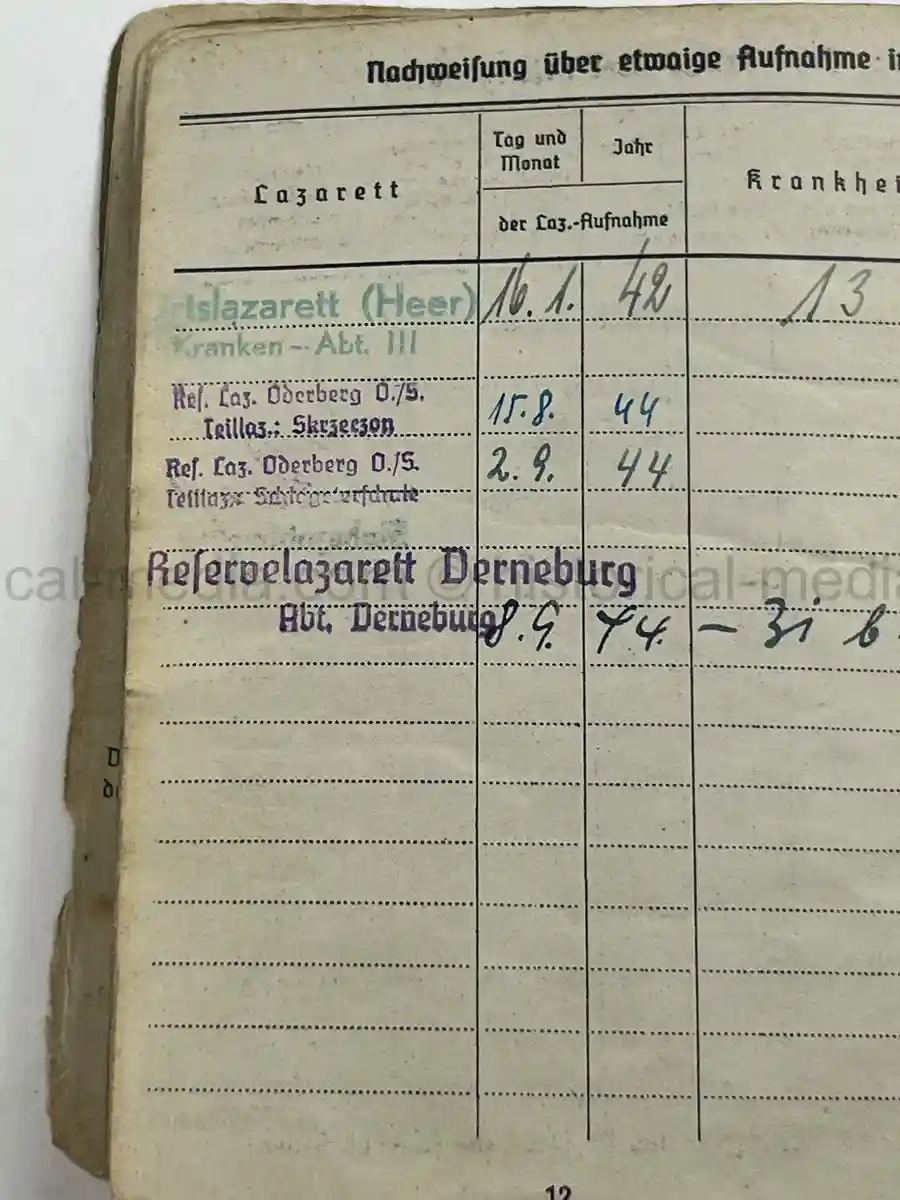
MEDICAL / HOSPITAL ENTRIES:
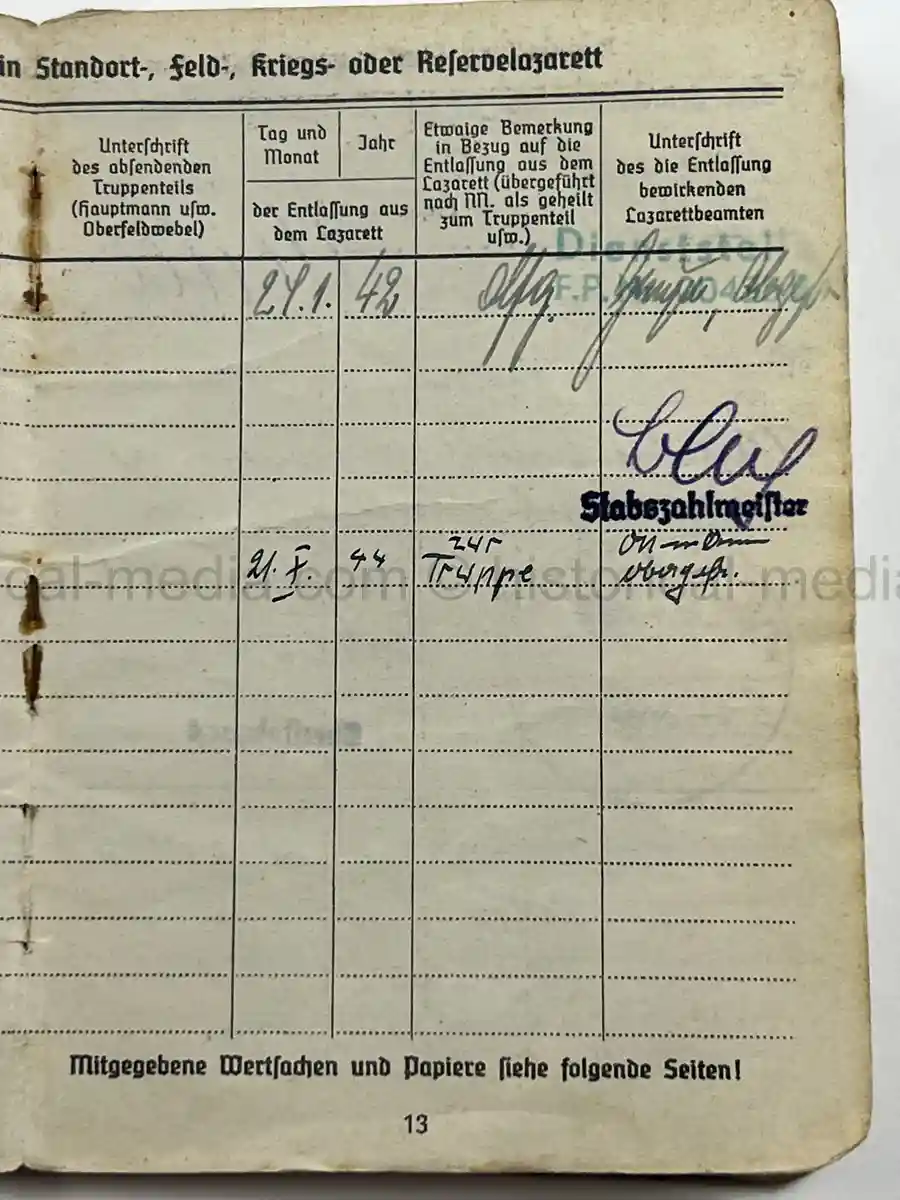
- Hospitalization recorded at:
- Lazarett (Heer), 16.1.1942
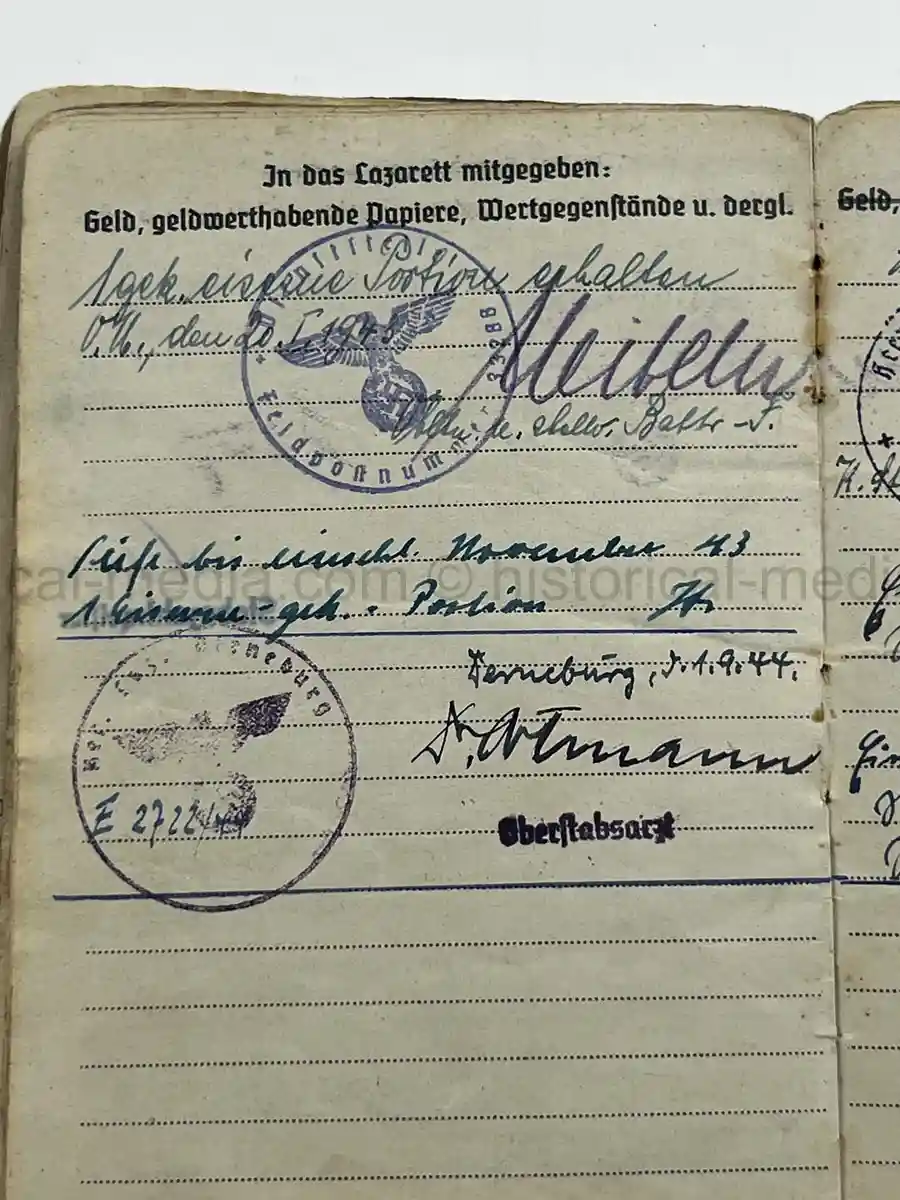
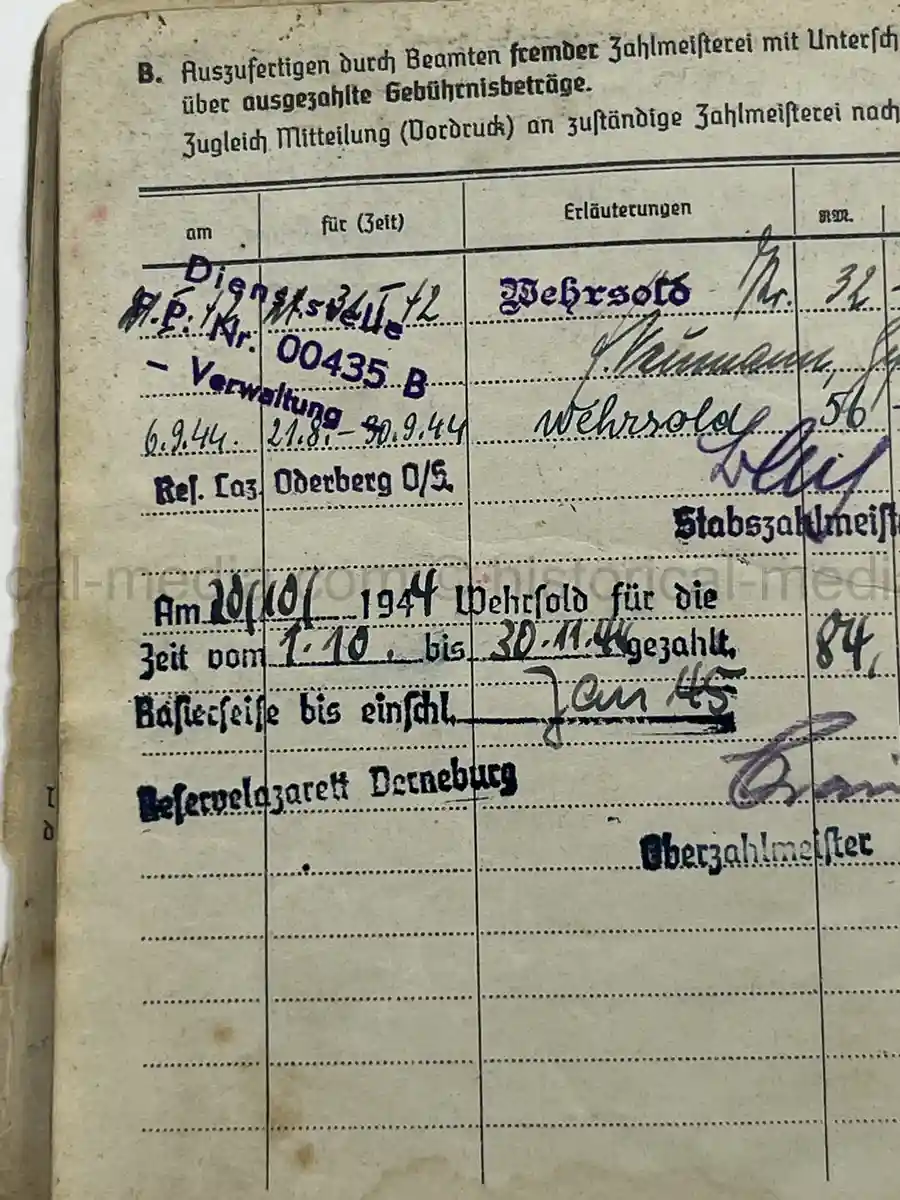
- Reserve-Lazarett Derneburg (1944)
- Additional admissions in August 1944, aligning with the wound badge award
Final notation:
- “als geheilt zum Truppenteil”
→ Returned to duty after recovery
Confirms:
- Combat-related wounding in 1944 (Eastern Front)
- Subsequent treatment and return to service
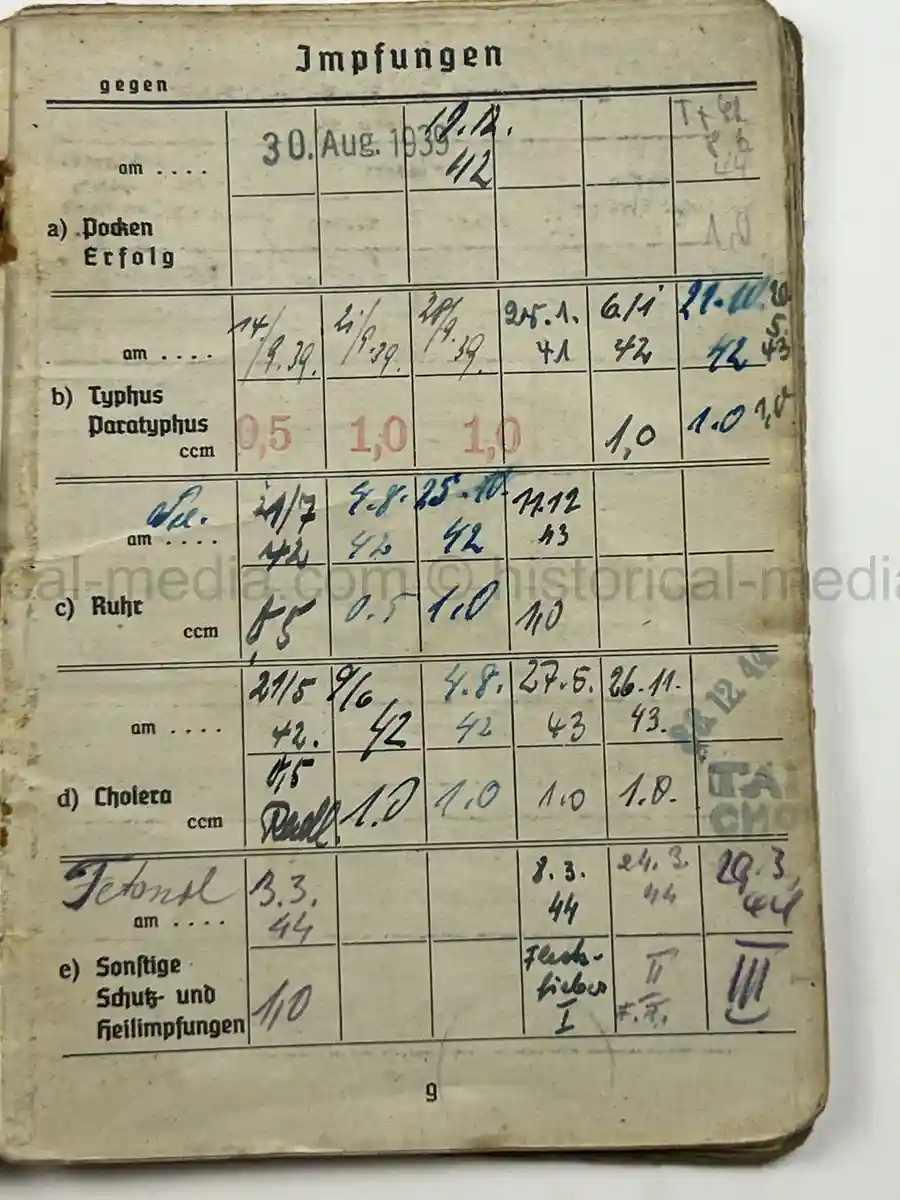
IMMUNIZATIONS:
- Smallpox (1939)
- Typhus / Paratyphus
- Cholera
- Booster entries through 1943–1944
Typical for soldiers operating in Eastern Front environments.
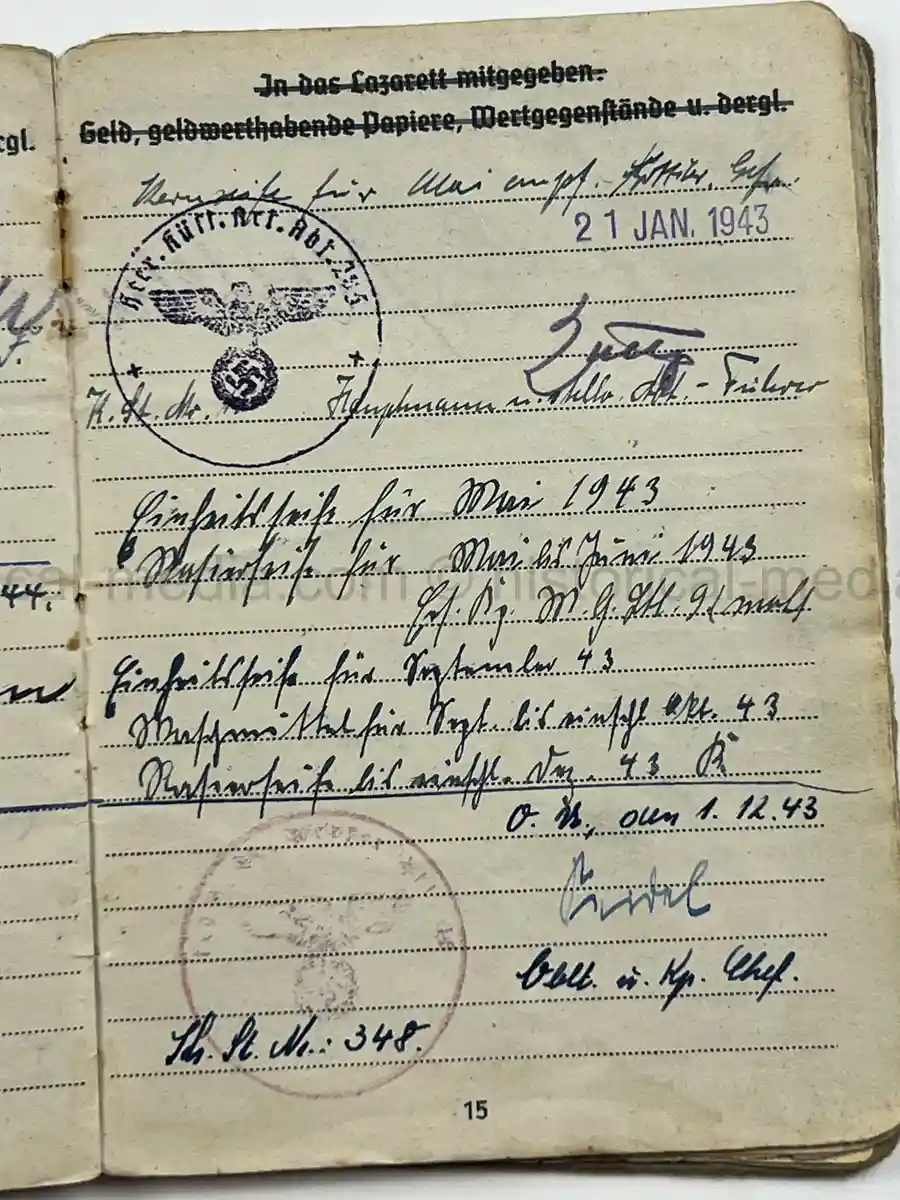
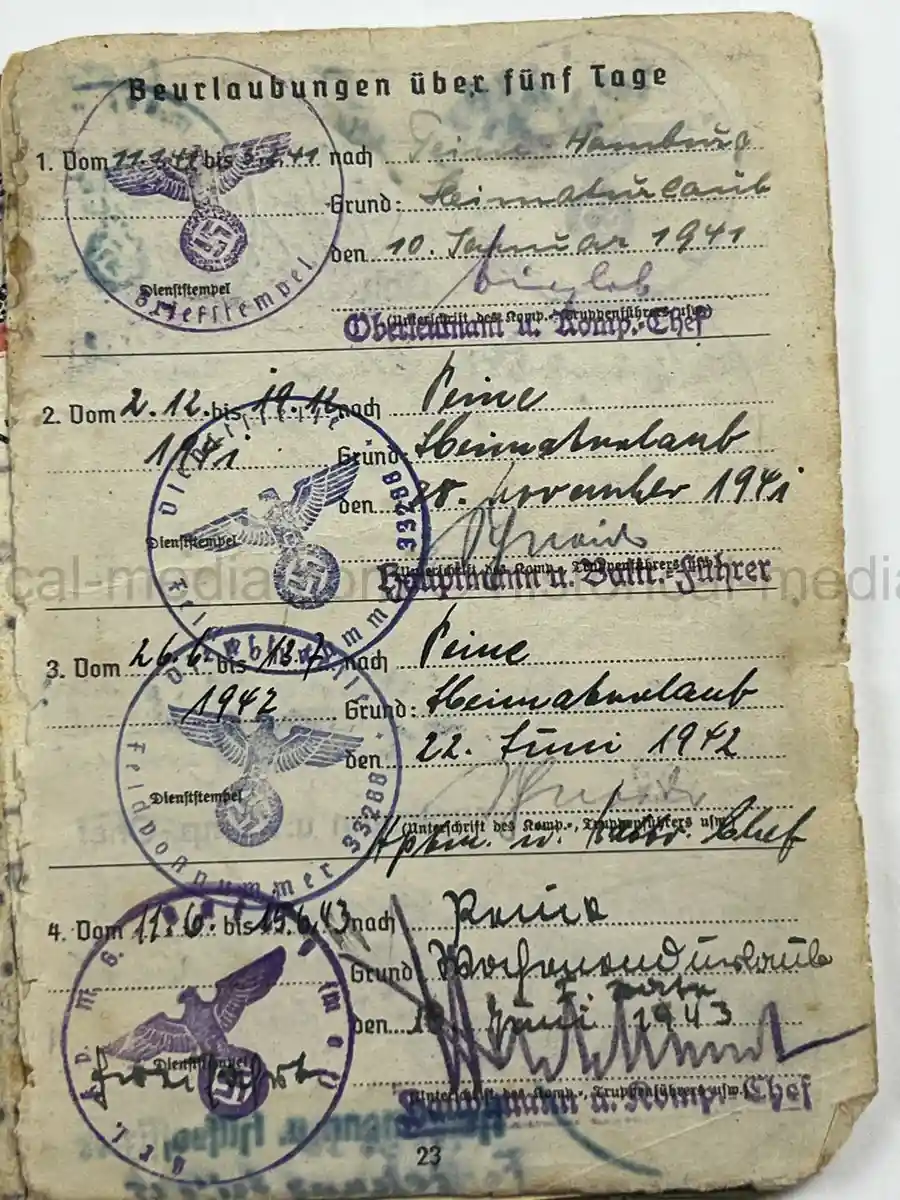
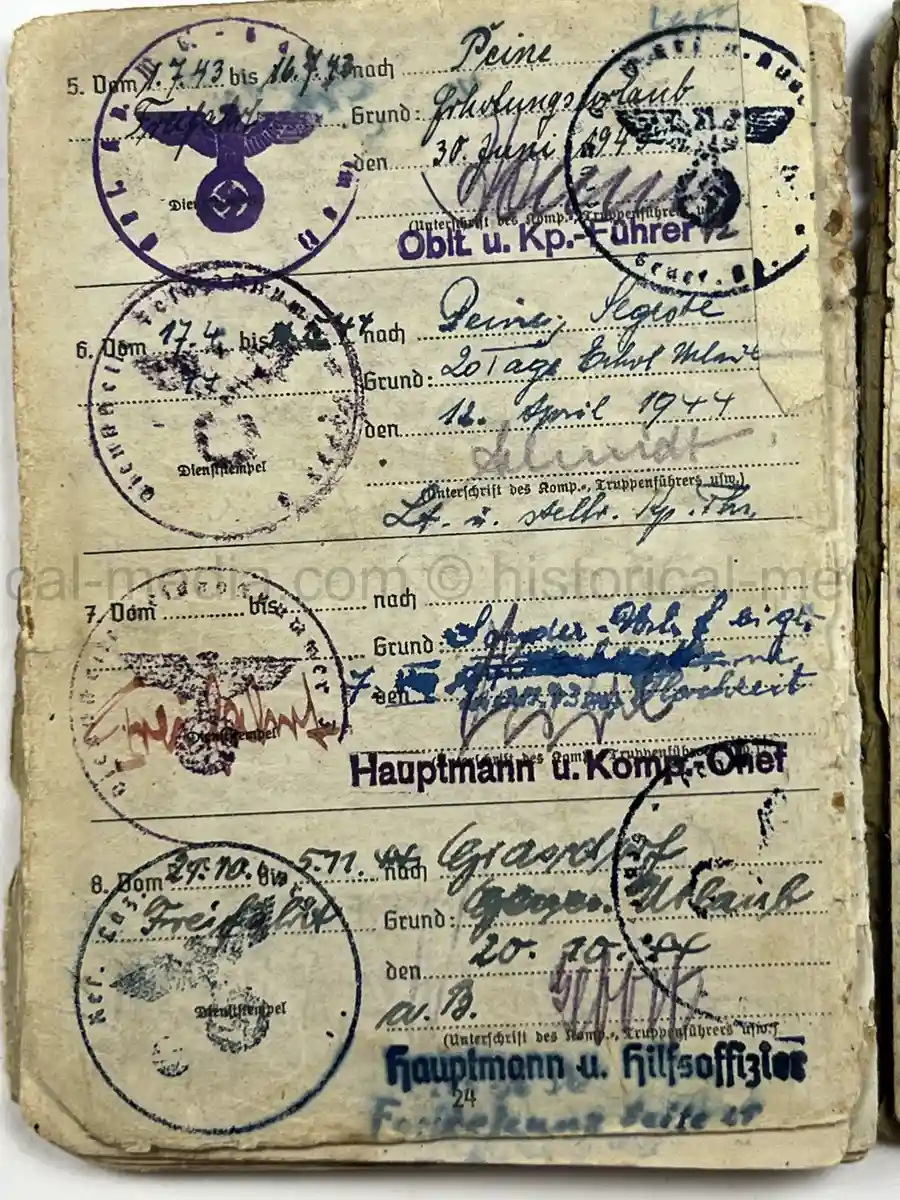
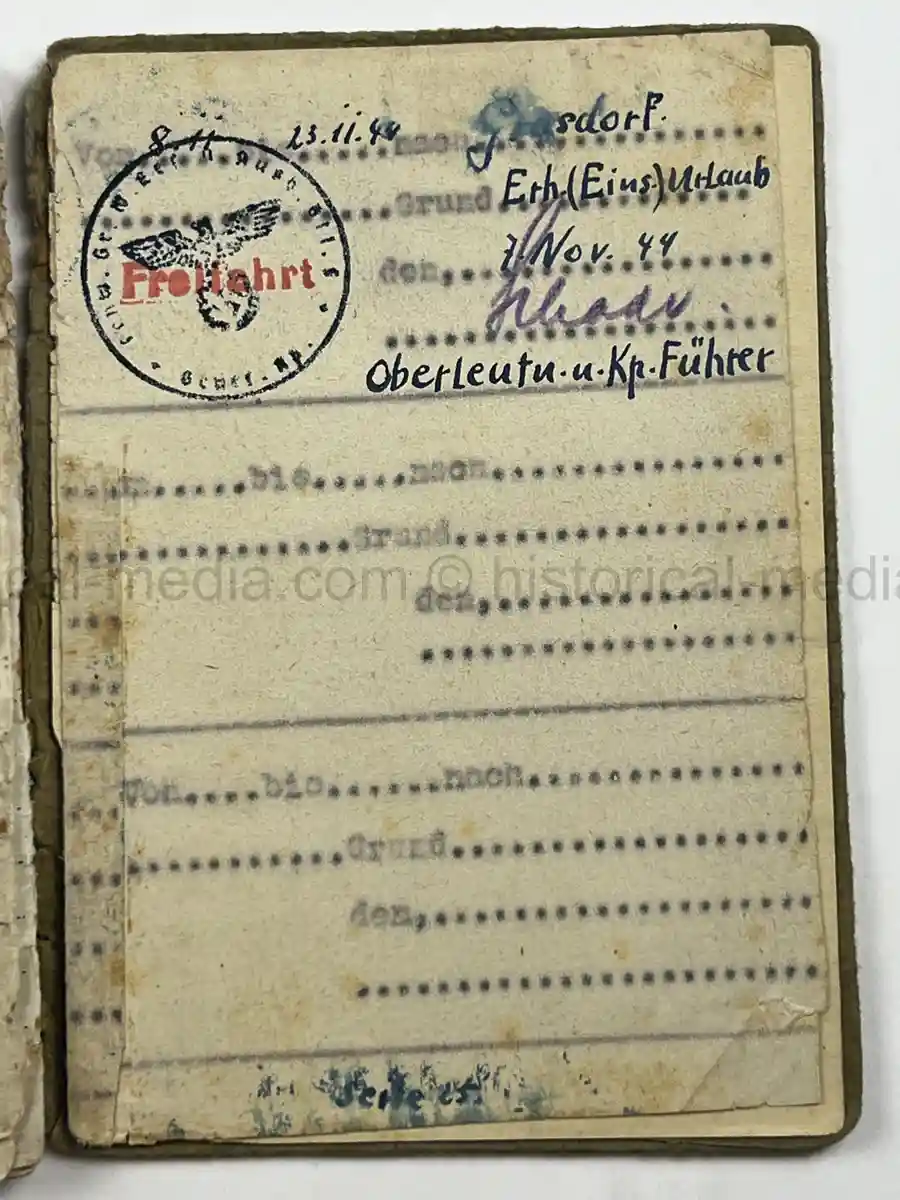
LEAVE / MOVEMENT ENTRIES:
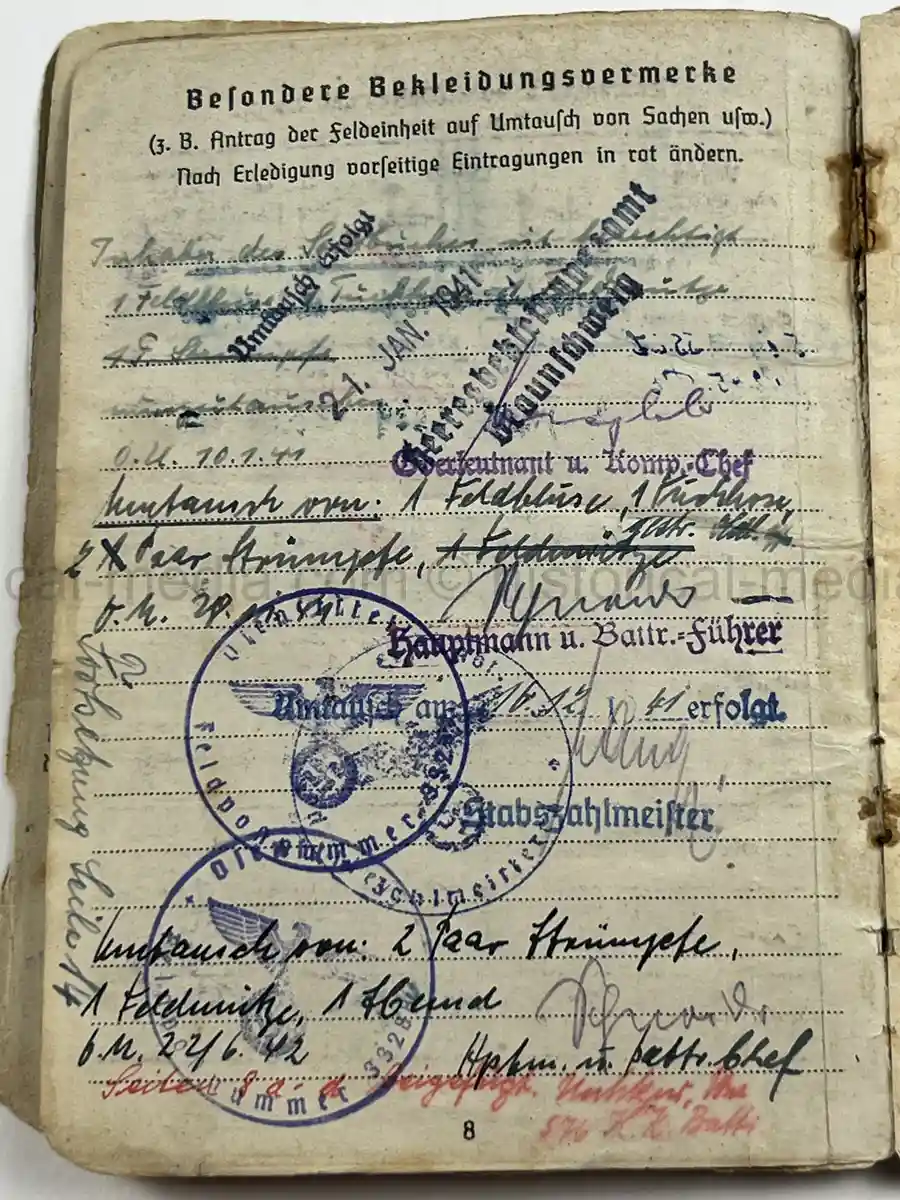
- Regular Heimaturlaub (home leave) entries between 1941–1944
Notable entry:
- 23 November 1944
- Likely Hersdorf
- Erholungsurlaub / Einsatzurlaub (recovery leave)
- Signed by Oberleutnant / Company Commander
Indicates continued service into the late-war period following recovery.
PAY / ADMINISTRATIVE ENTRIES:
- Pay records documented through late 1944
- Signed by Stabszahlmeister (paymaster)
- Reflects continued administrative tracking and active status
SPECIAL NOTES:
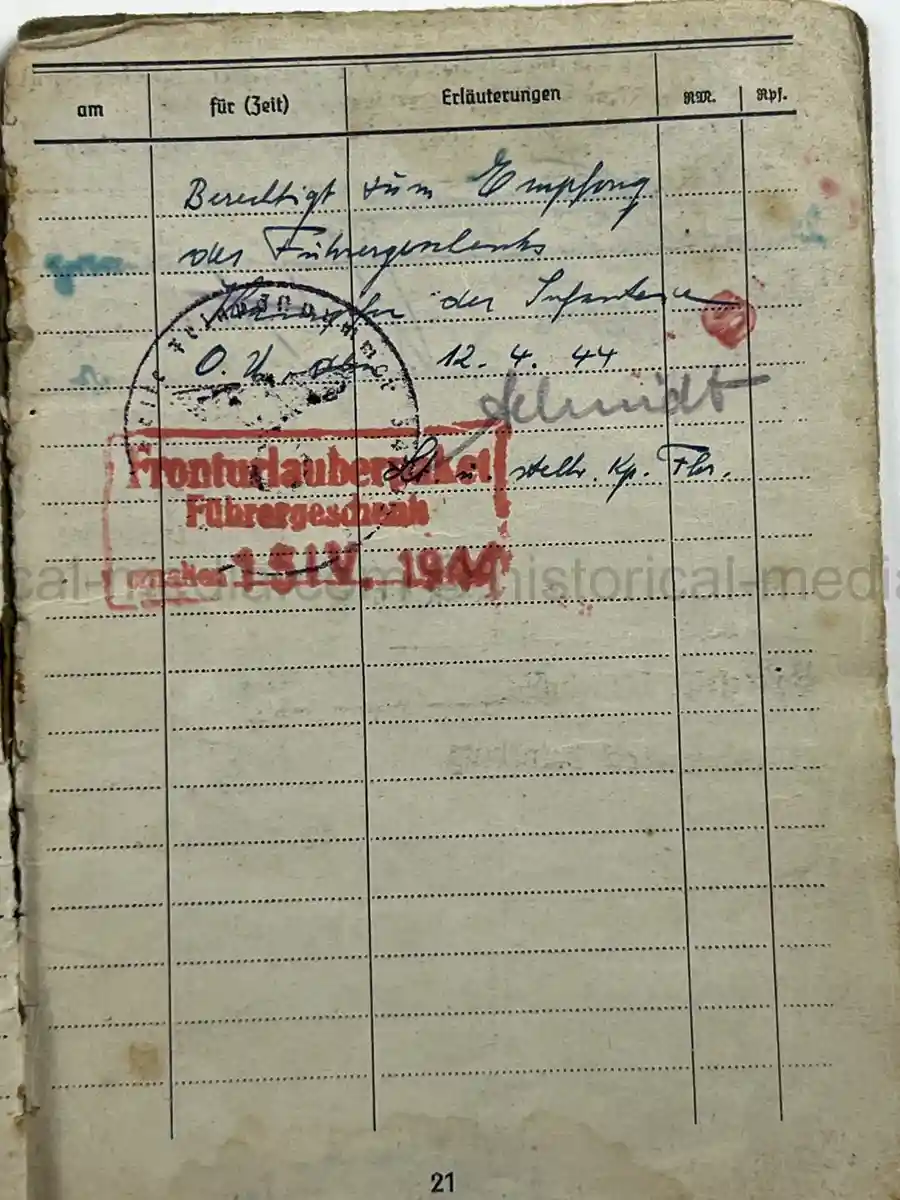
- Entry recorded:
- “Führergeschenk erhalten”
→ Führer’s gift received
- “Führergeschenk erhalten”
SPECIAL INSERTS:
- Original insert present:
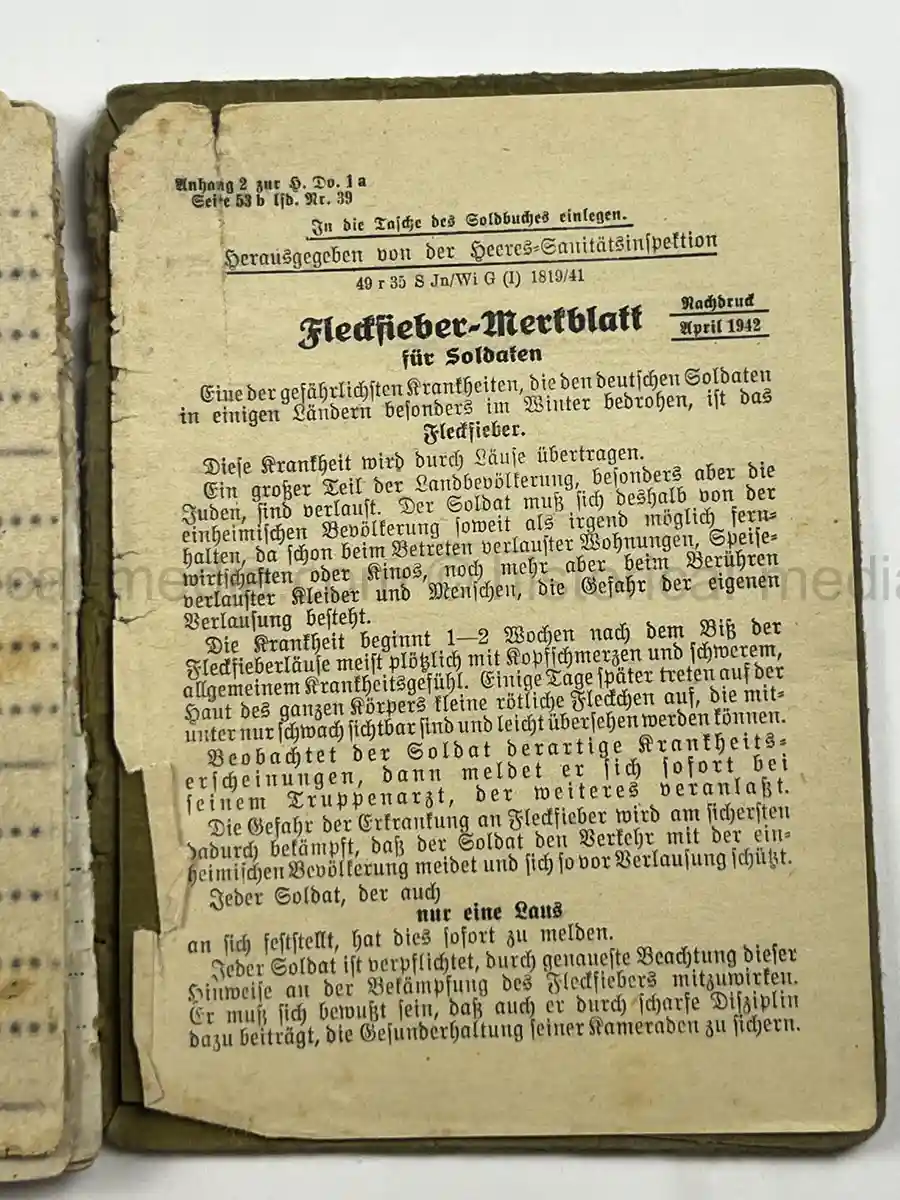
- “Fleckfieber-Merkblatt für Soldaten” (April 1942)
- Typhus prevention instructions
- Typical for soldiers serving in Eastern Front conditions
- “Fleckfieber-Merkblatt für Soldaten” (April 1942)
COMBAT / WAR SERVICE:
The Soldbuch reflects:
- Service beginning circa 1940
- Assignment to:
- Heavy mortar combat formations (Eastern Front)
- Coastal artillery units (later reassignment)
- Participation in Carpathian defensive operations (1944)
- Combat wounding (August 1944)
- Hospitalization and recovery cycle
- Continued duty through late 1944
“`