
Description
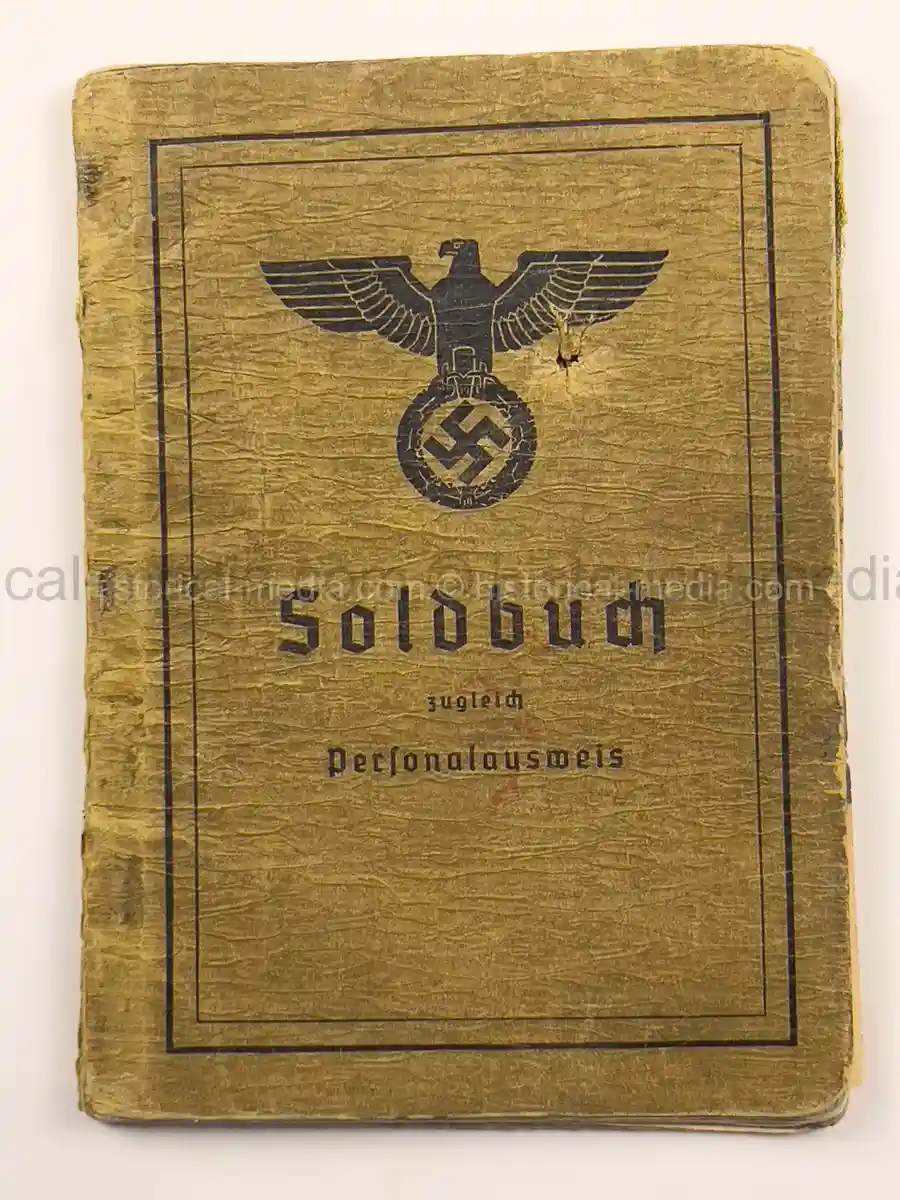
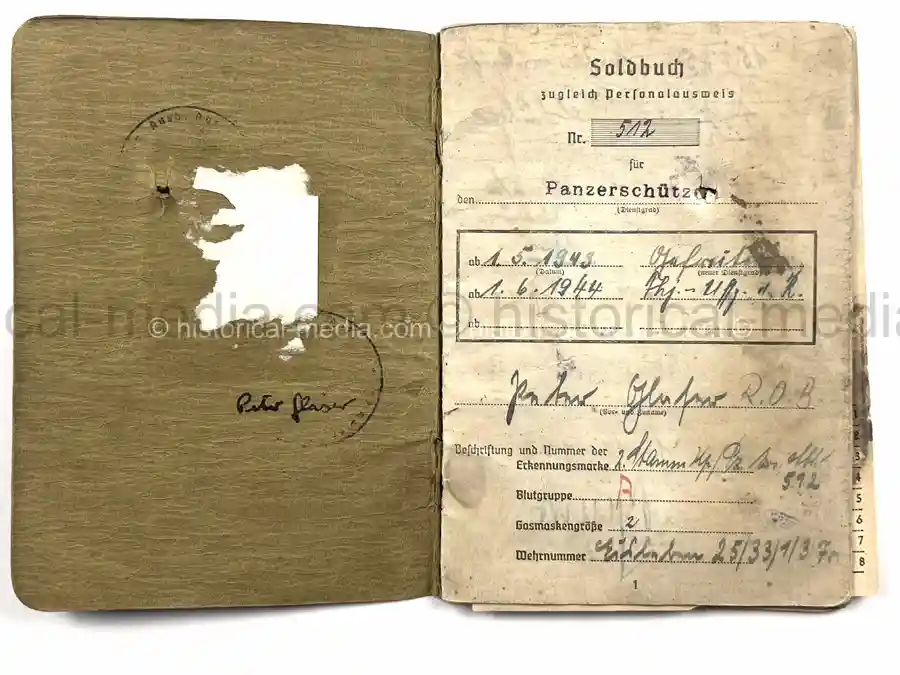
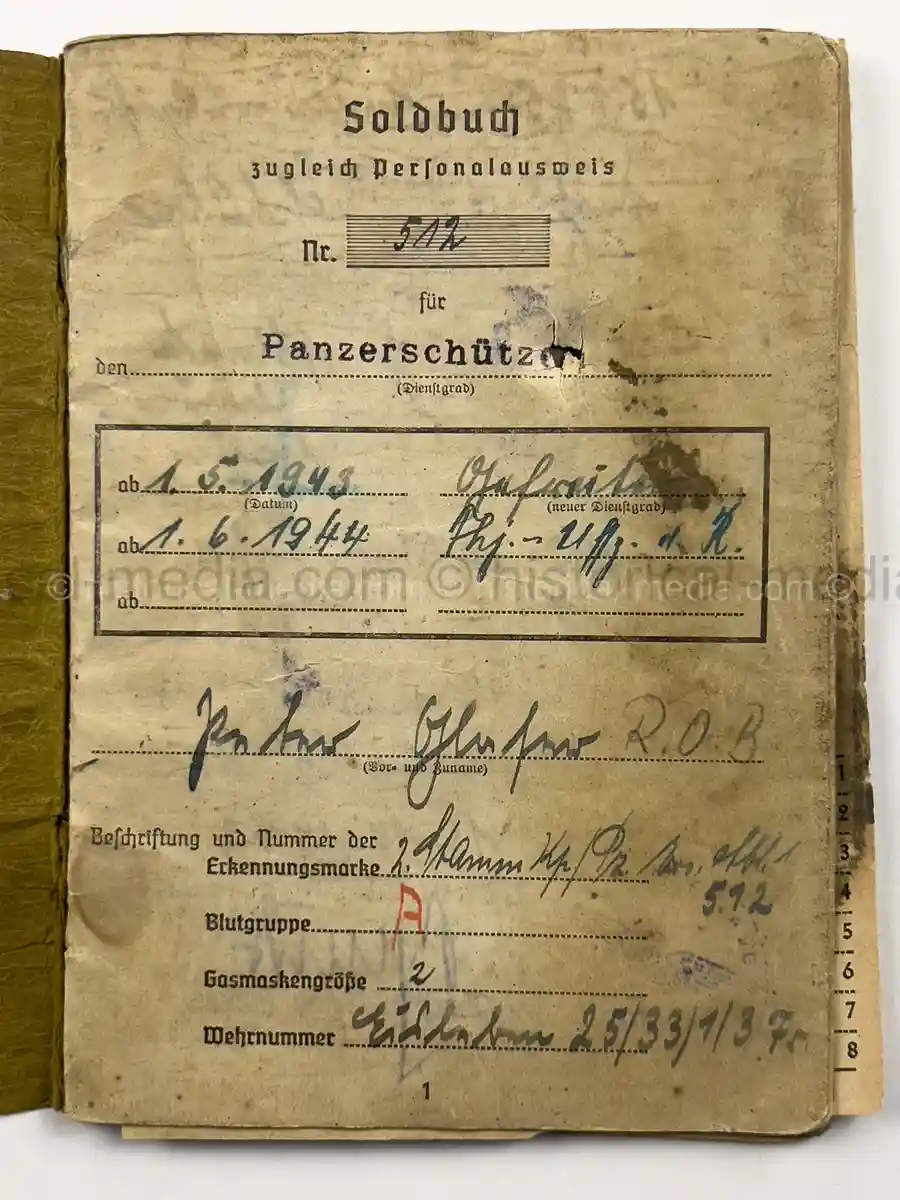
PANZER SOLDUCH – PETER GLASER – PANZERSCHÜTZE – PANZER-ABTEILUNG 116 / PZ.GREN.RGT. 59 – 20. PANZER-DIVISION – EASTERN FRONT – EK2 & SILVER PANZER ASSAULT BADGE – CLOSE COMBAT ENTRIES
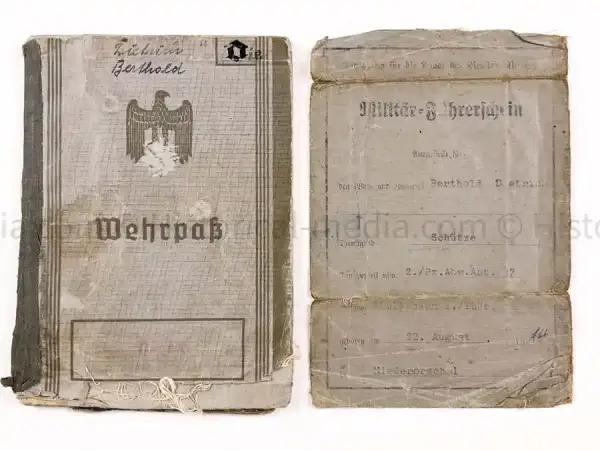
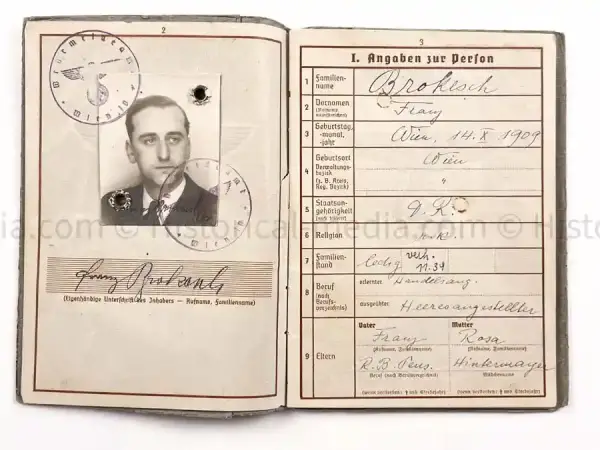
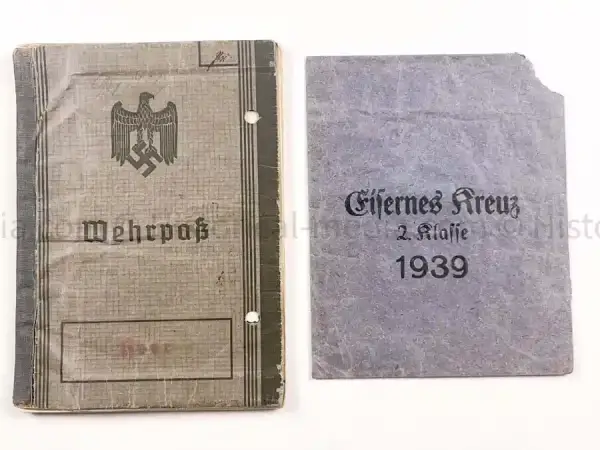
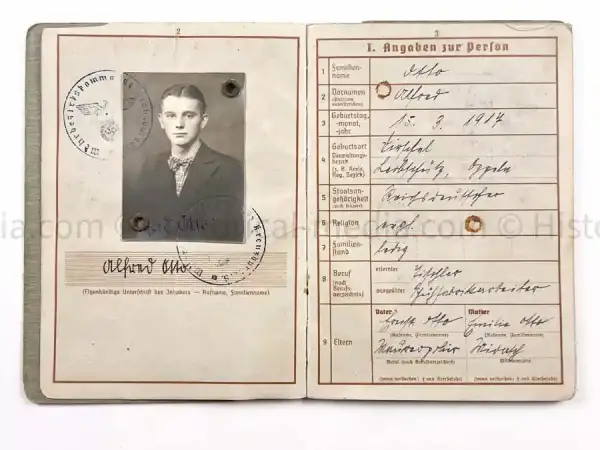
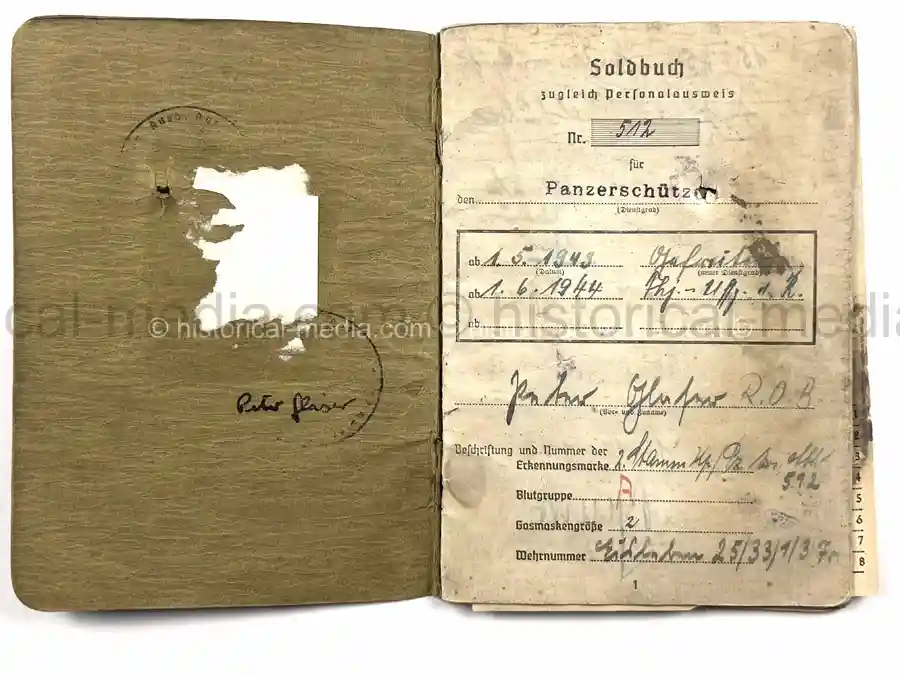
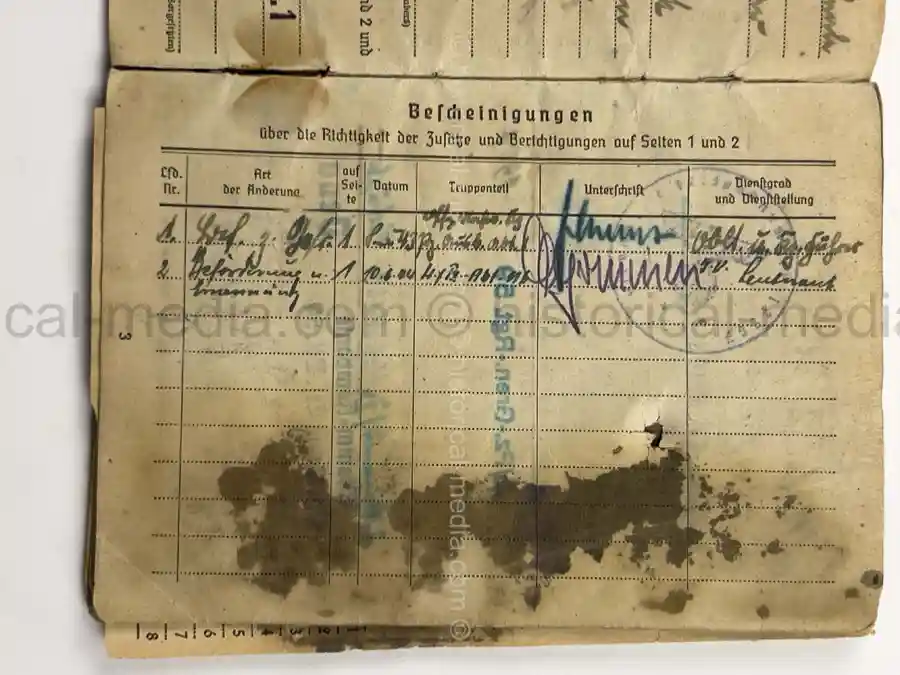
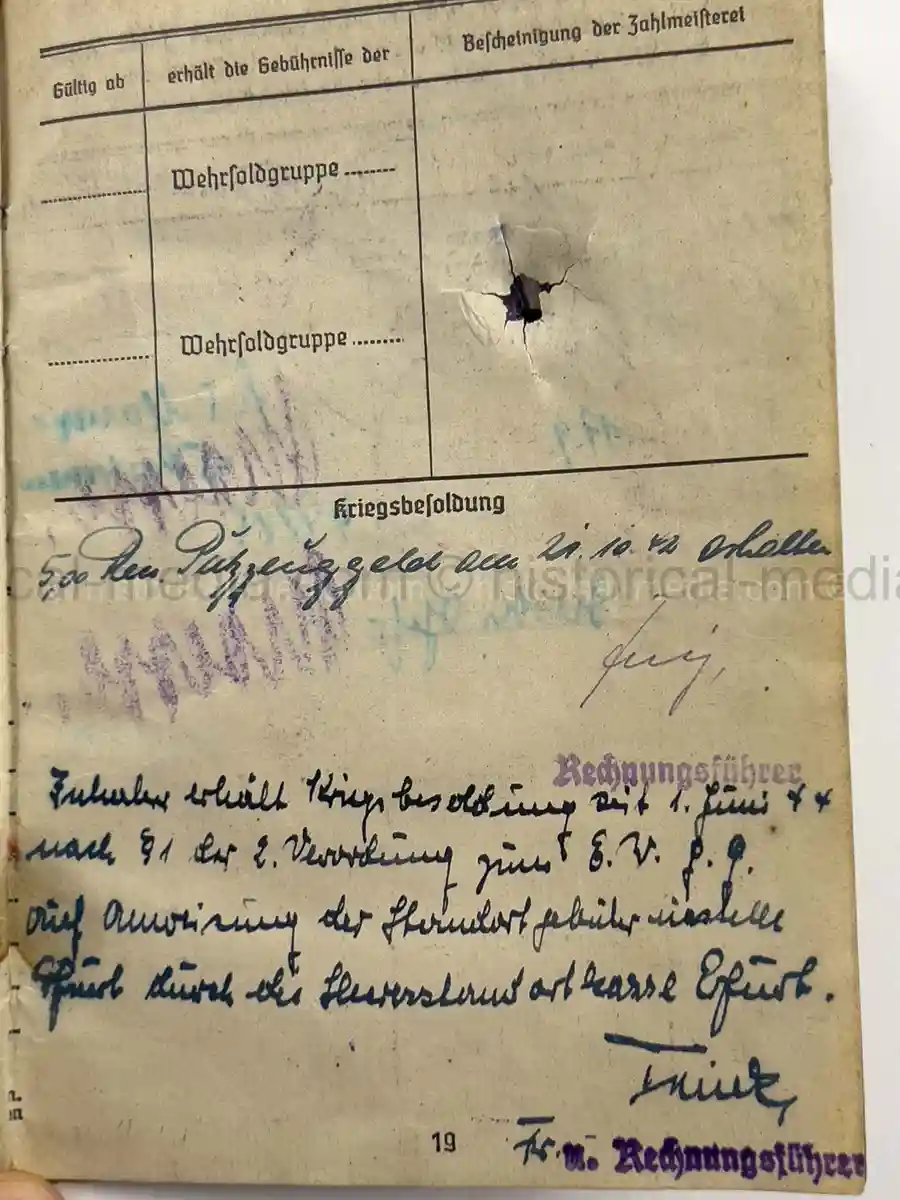
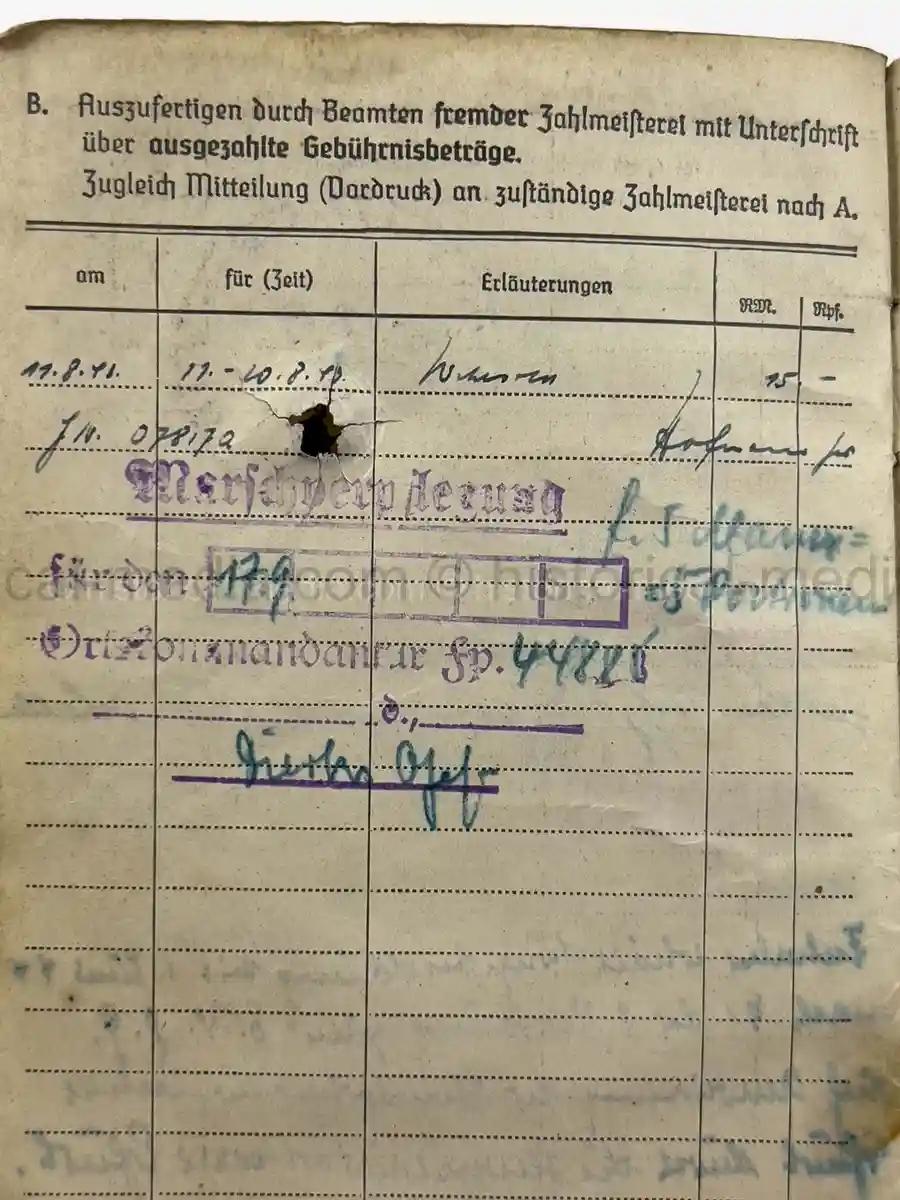
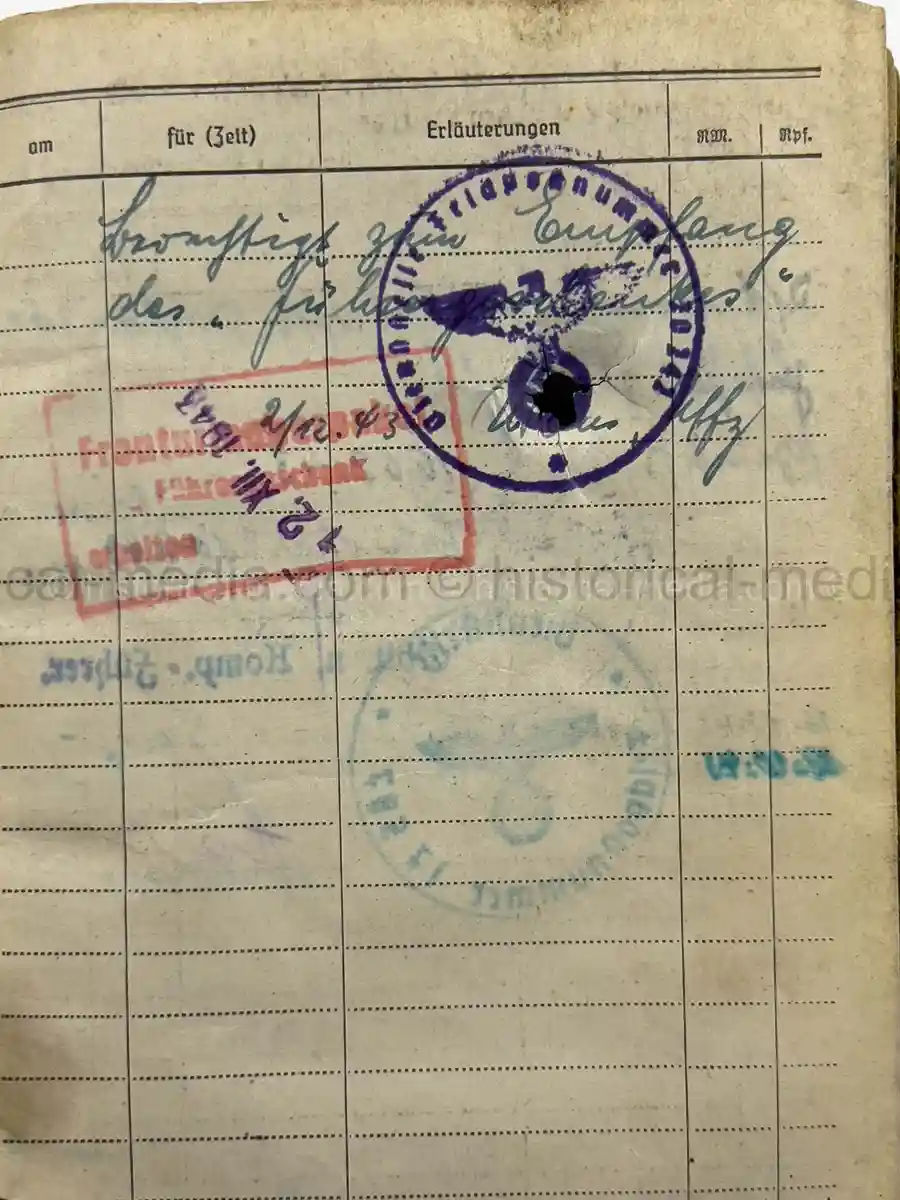
A well-used and combat-documented WWII German Soldbuch issued to Panzerschütze Peter Glaser, covering his service from induction in 1942 through active Eastern Front combat service in 1943–1944, including award of both the Iron Cross 2nd Class and the Panzer Assault Badge in Silver, along with recorded close combat engagements.
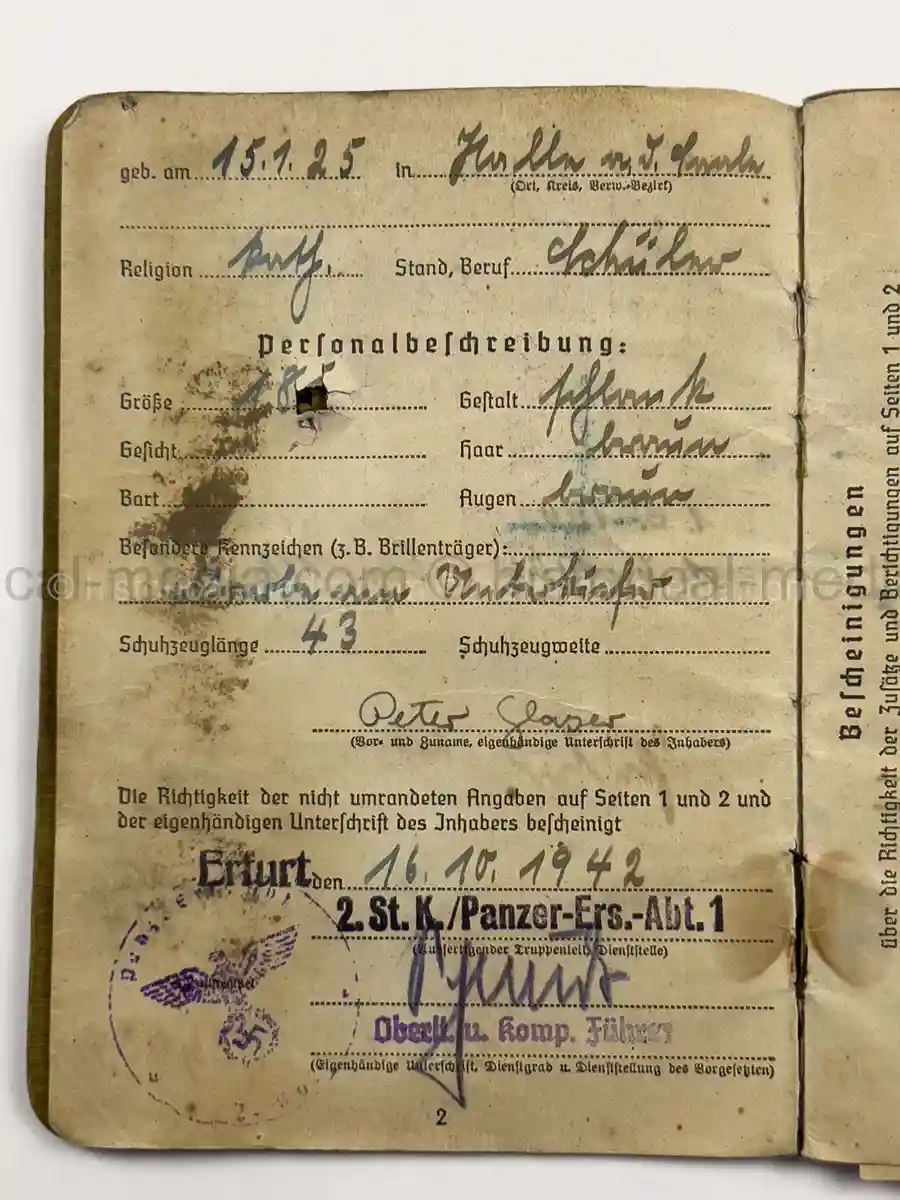
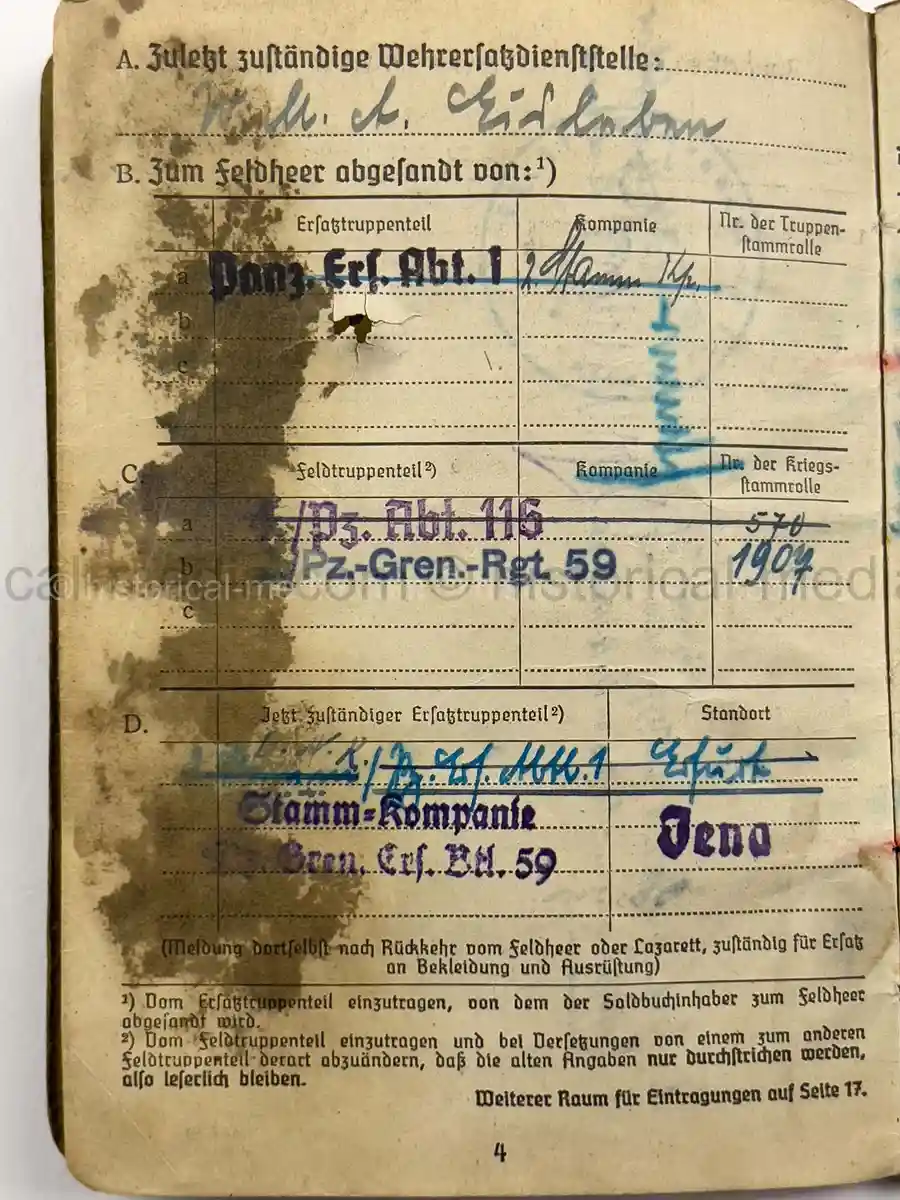
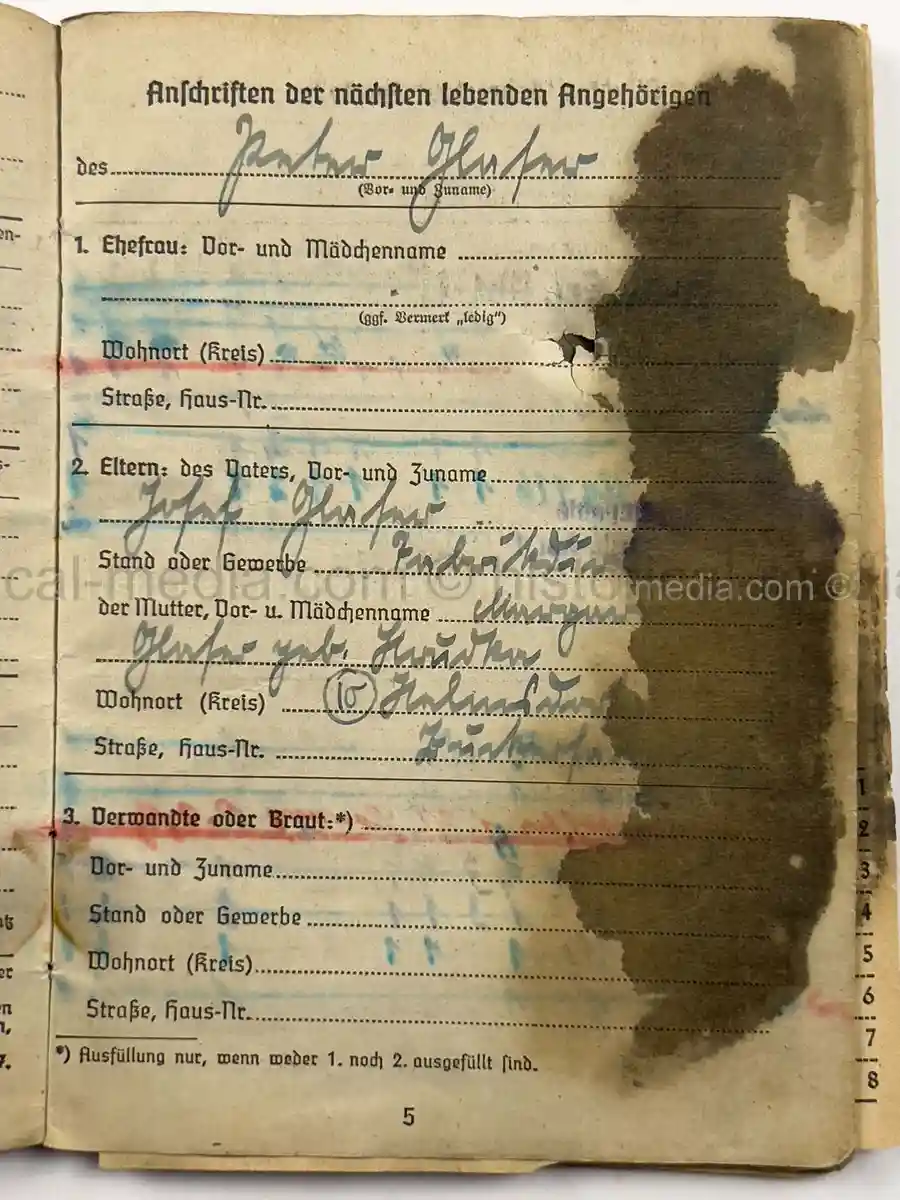
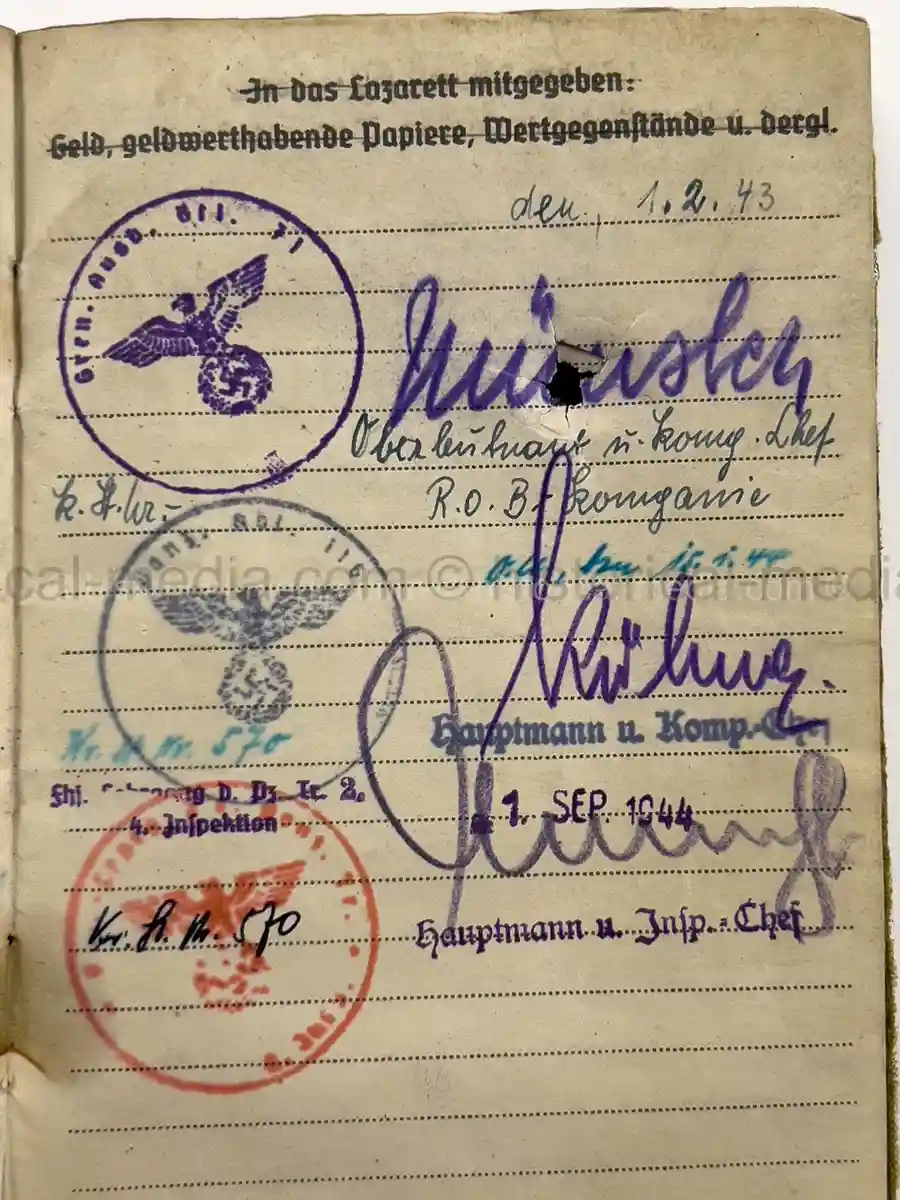
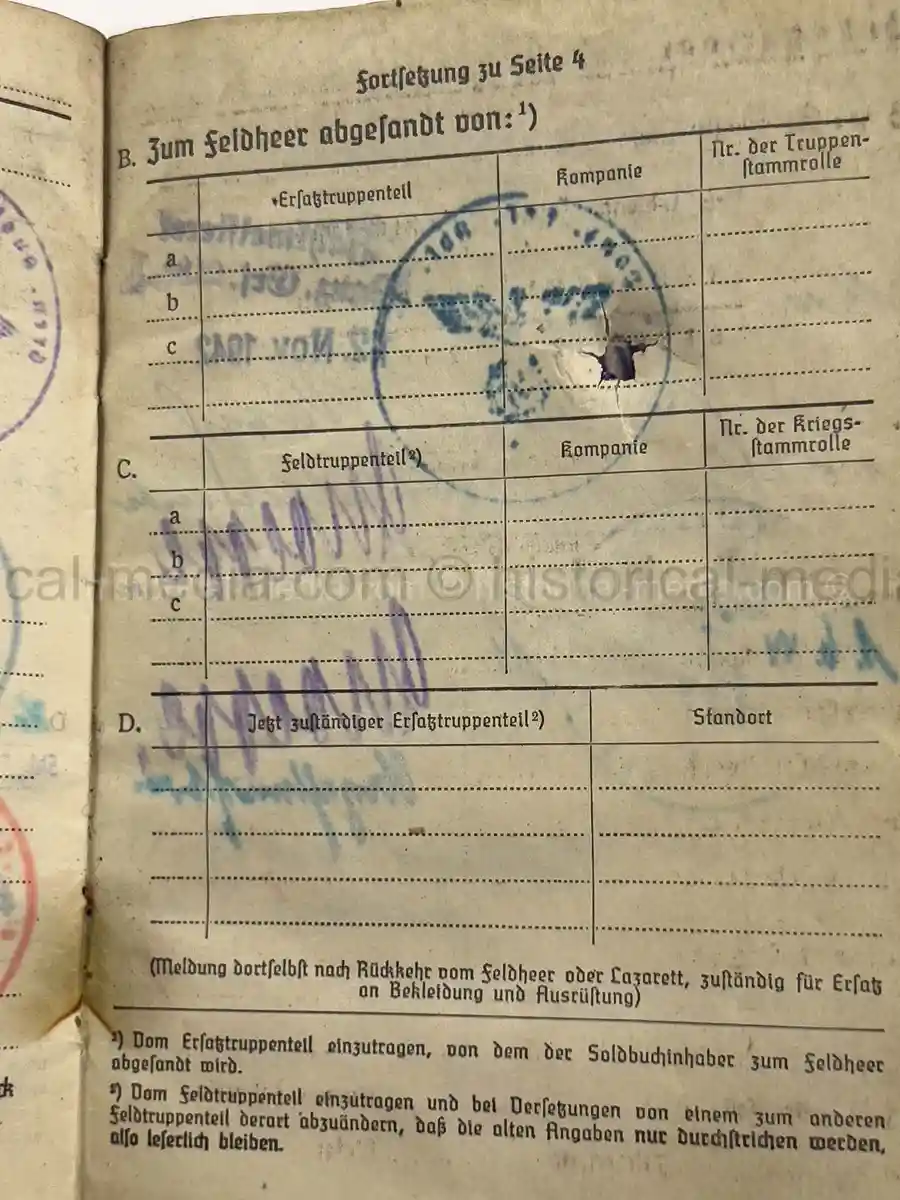
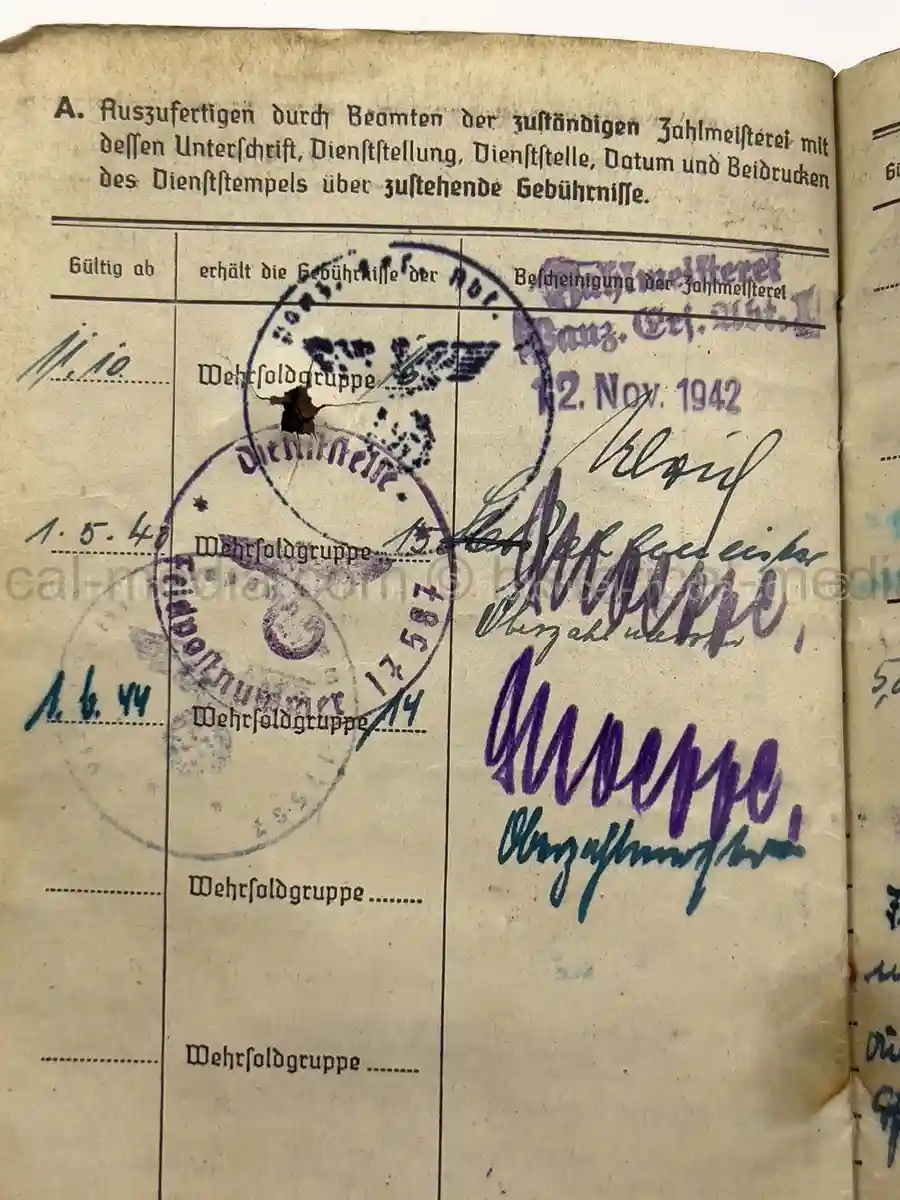
Glaser was born 15 July 1925 in Erbach am Main, and was issued his Soldbuch on 16 October 1942 with Panzer-Ersatz-Abteilung 1, before being assigned to frontline armored formations.
He later served with:
- Panzer-Abteilung 116
- Panzer-Grenadier-Regiment 59
- Replacement/training elements including Grenadier-Ersatz-Bataillon 59 (Jena)
Panzer-Grenadier-Regiment 59 was a core component of the 20. Panzer-Division, a veteran armored formation that saw continuous and heavy combat on the Eastern Front from 1941 through 1945. The division was heavily engaged in the central sector of the front, including operations around:
- Smolensk and Vyazma (1941–42)
- Rzhev salient fighting (1942–43)
- Orel / Bryansk sector and post-Kursk defensive battles (1943)
This places Glaser within a formation that was consistently in frontline action, often involved in both offensive armored operations and later desperate defensive fighting against Soviet breakthroughs.
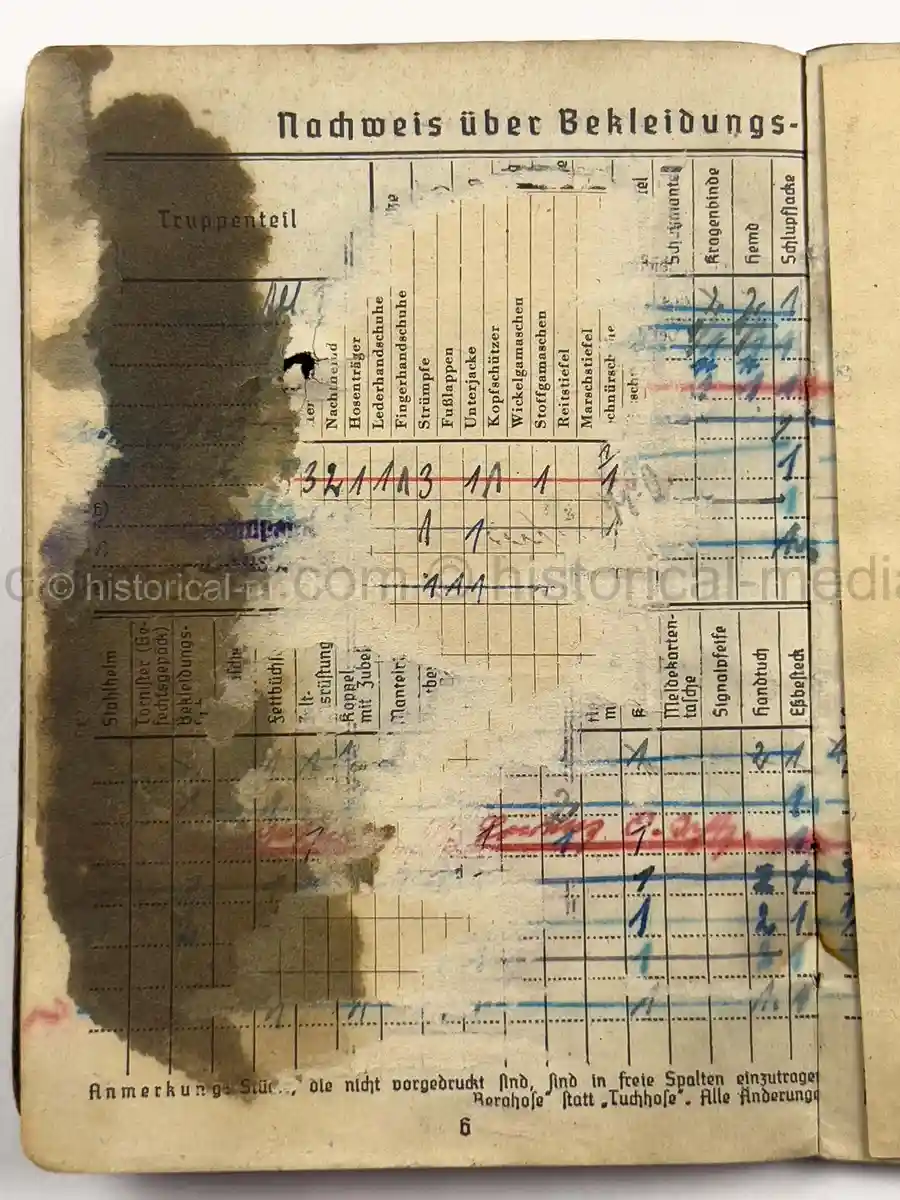
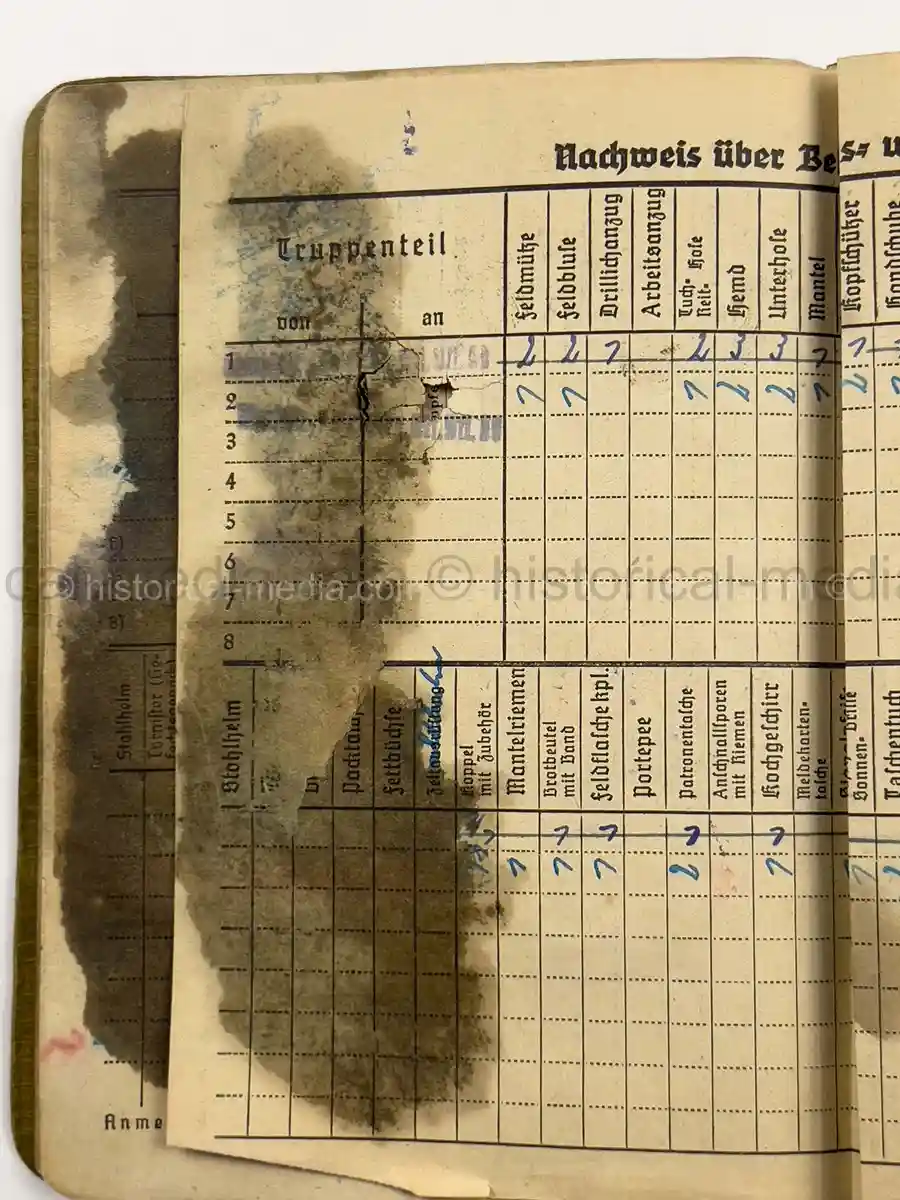
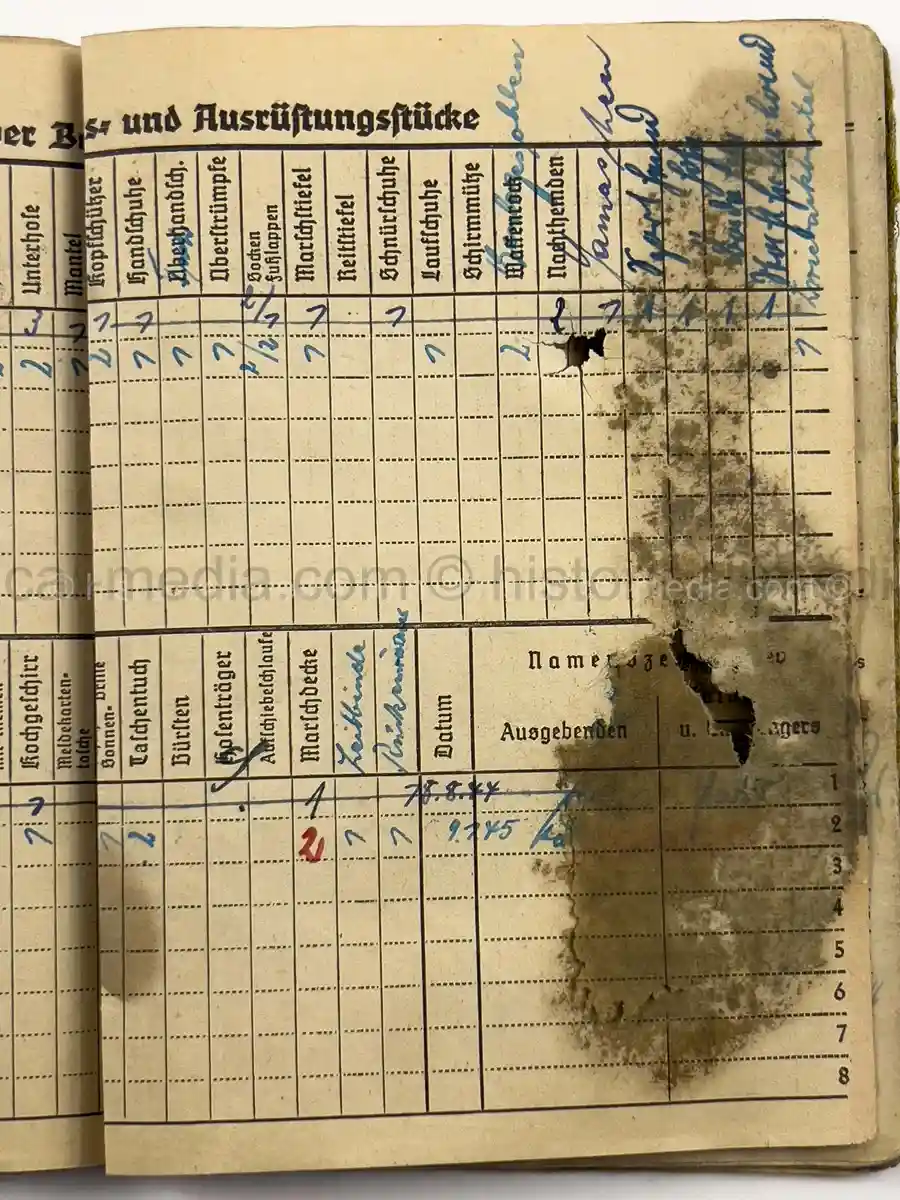
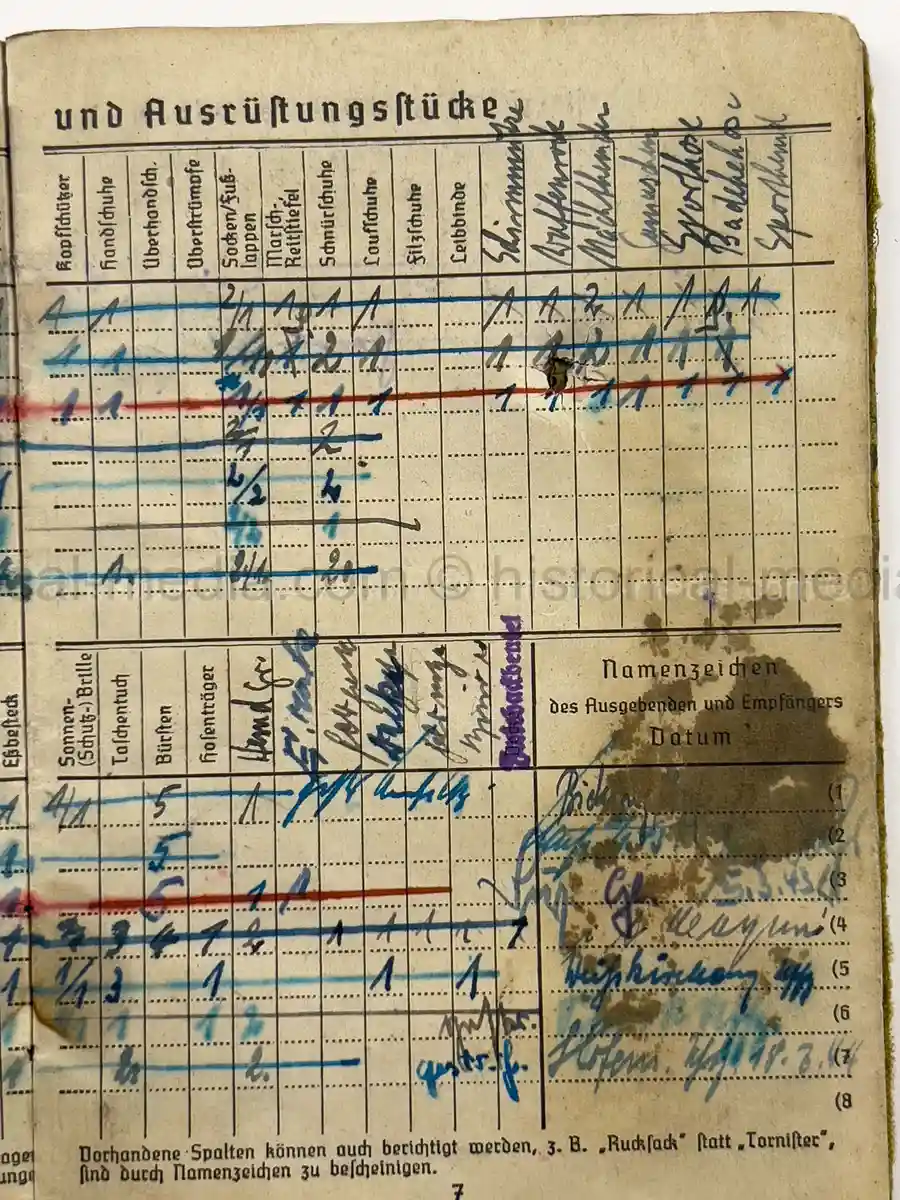
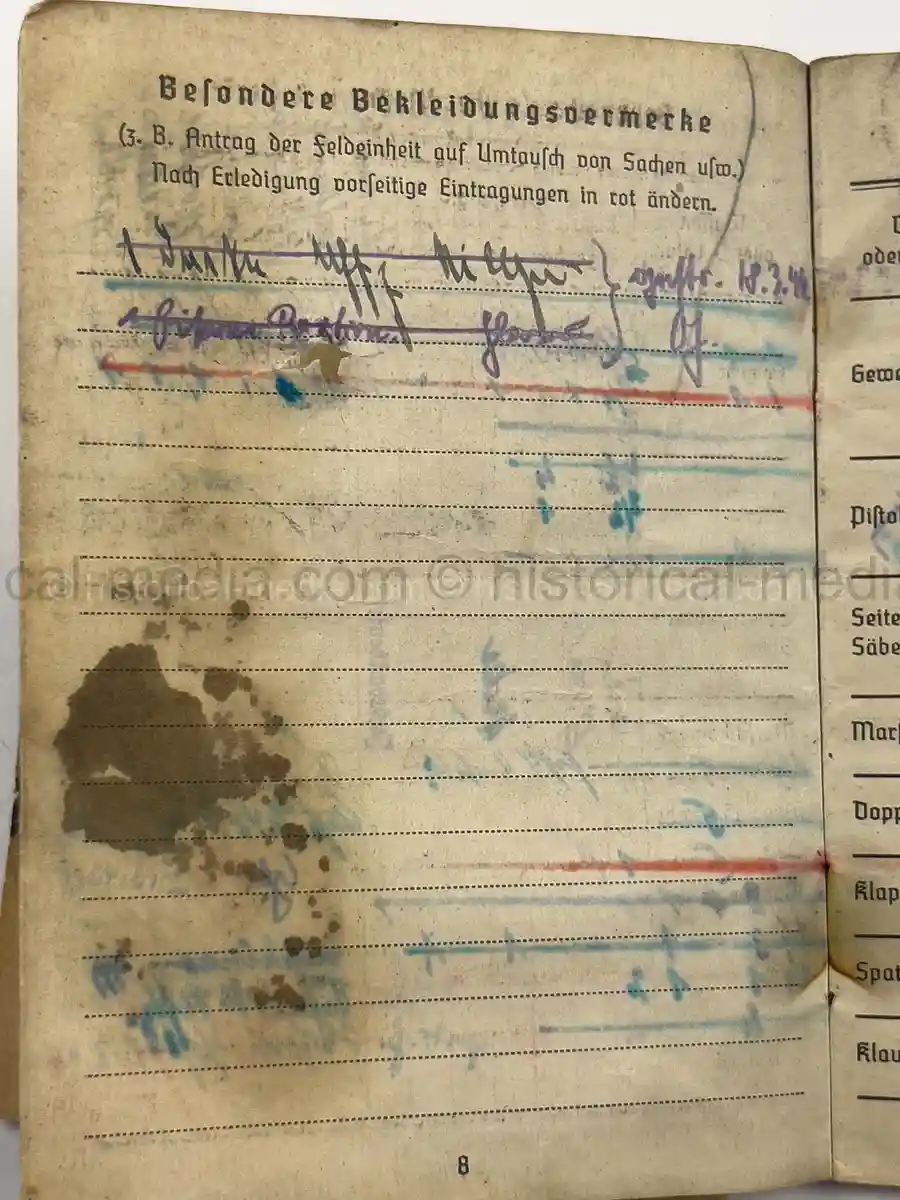
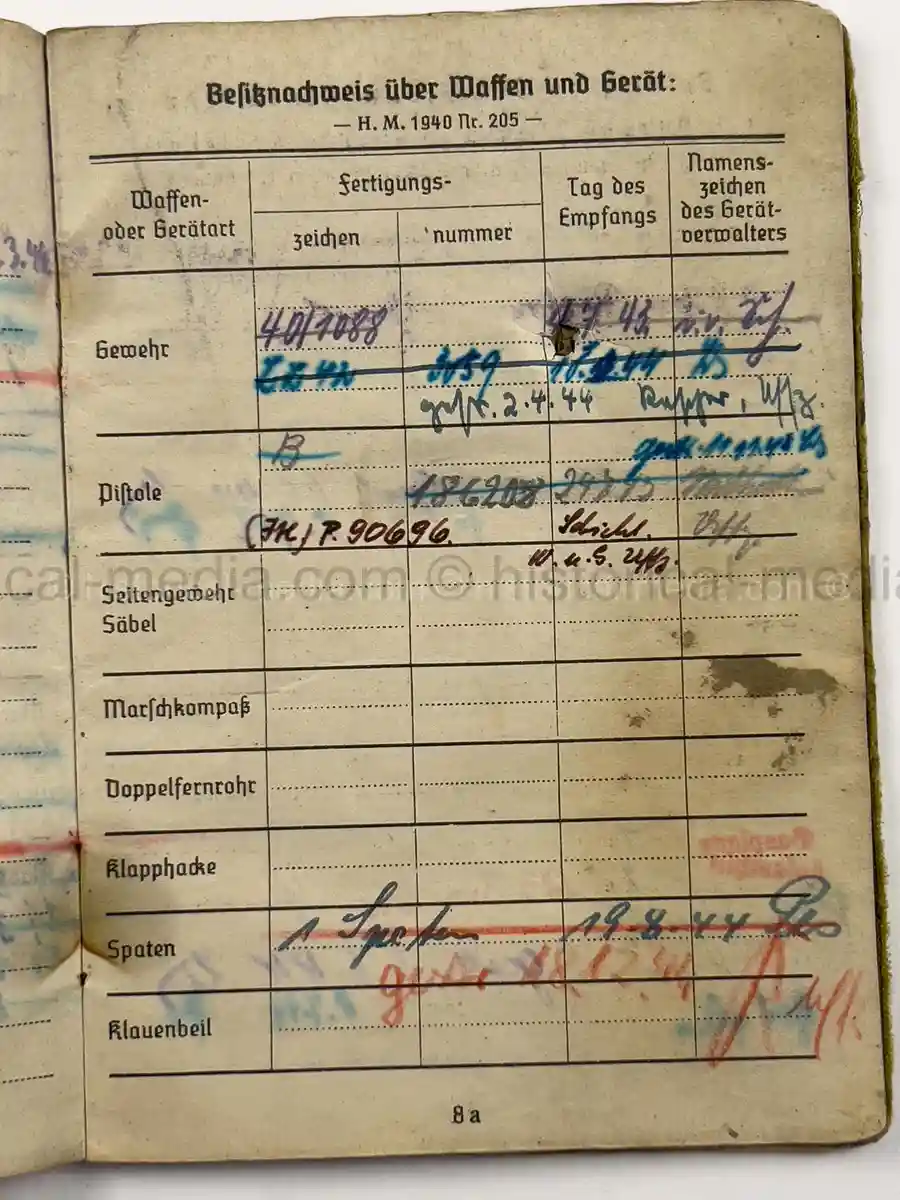
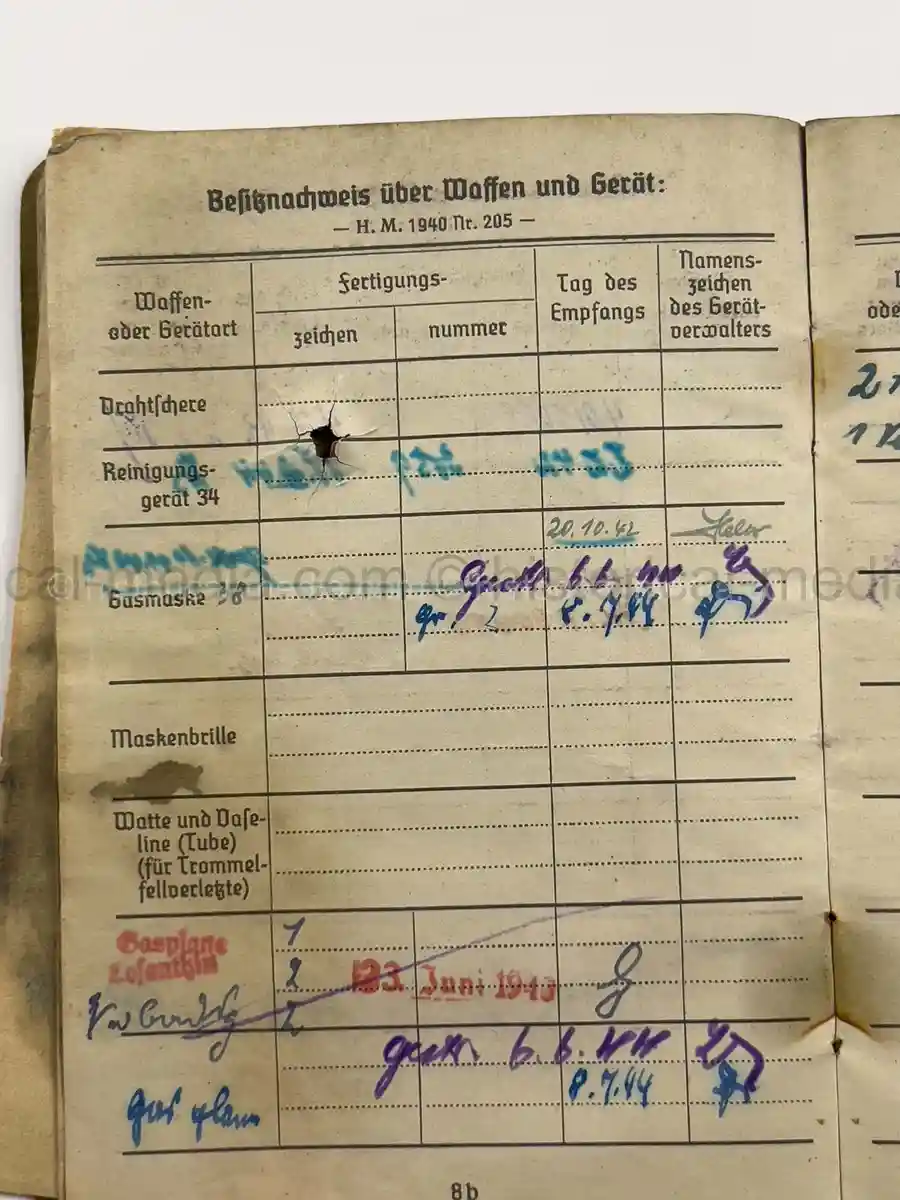
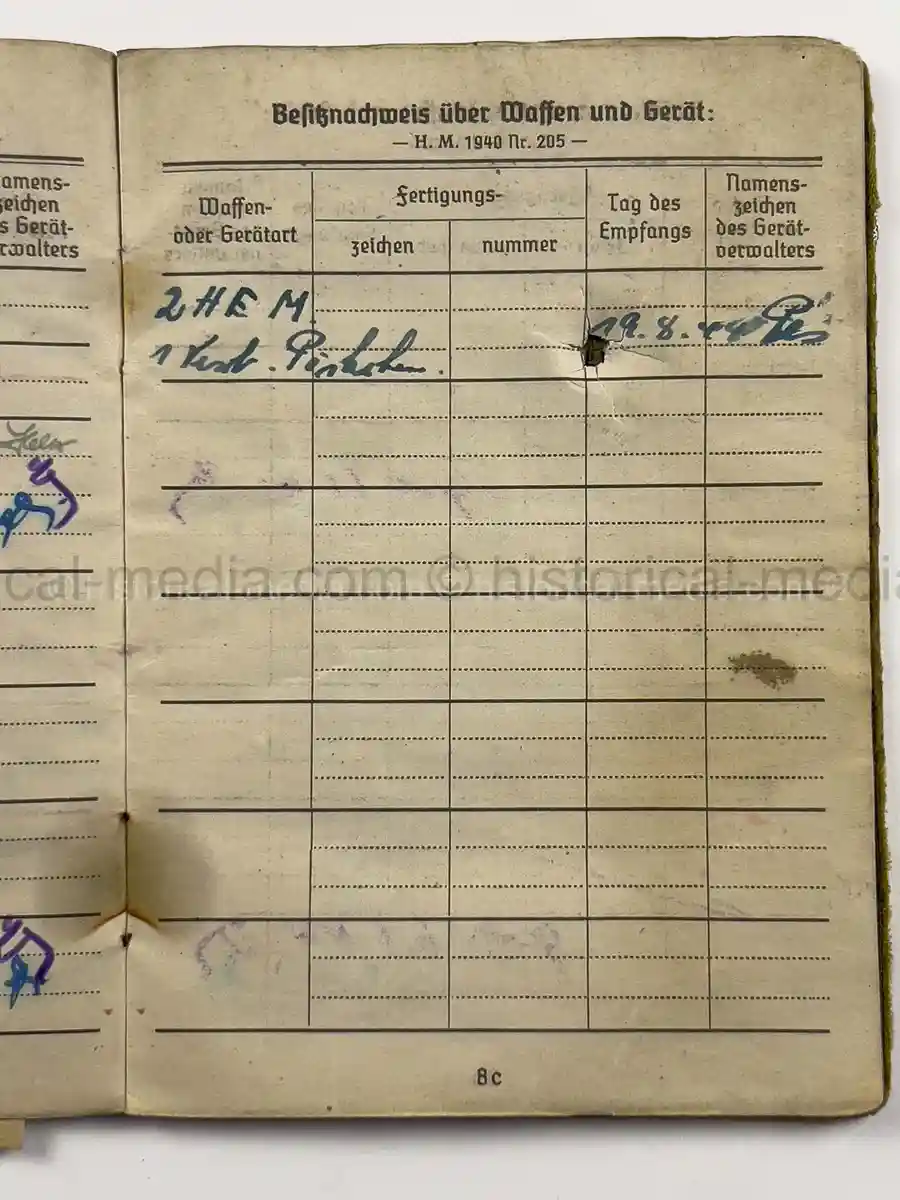
His equipment pages are well filled, showing issued:
- Karabiner 98k rifle
- Pistol (with serial recorded)
- Gas mask (Gasmaske 38)
- Standard field gear including spade and tools
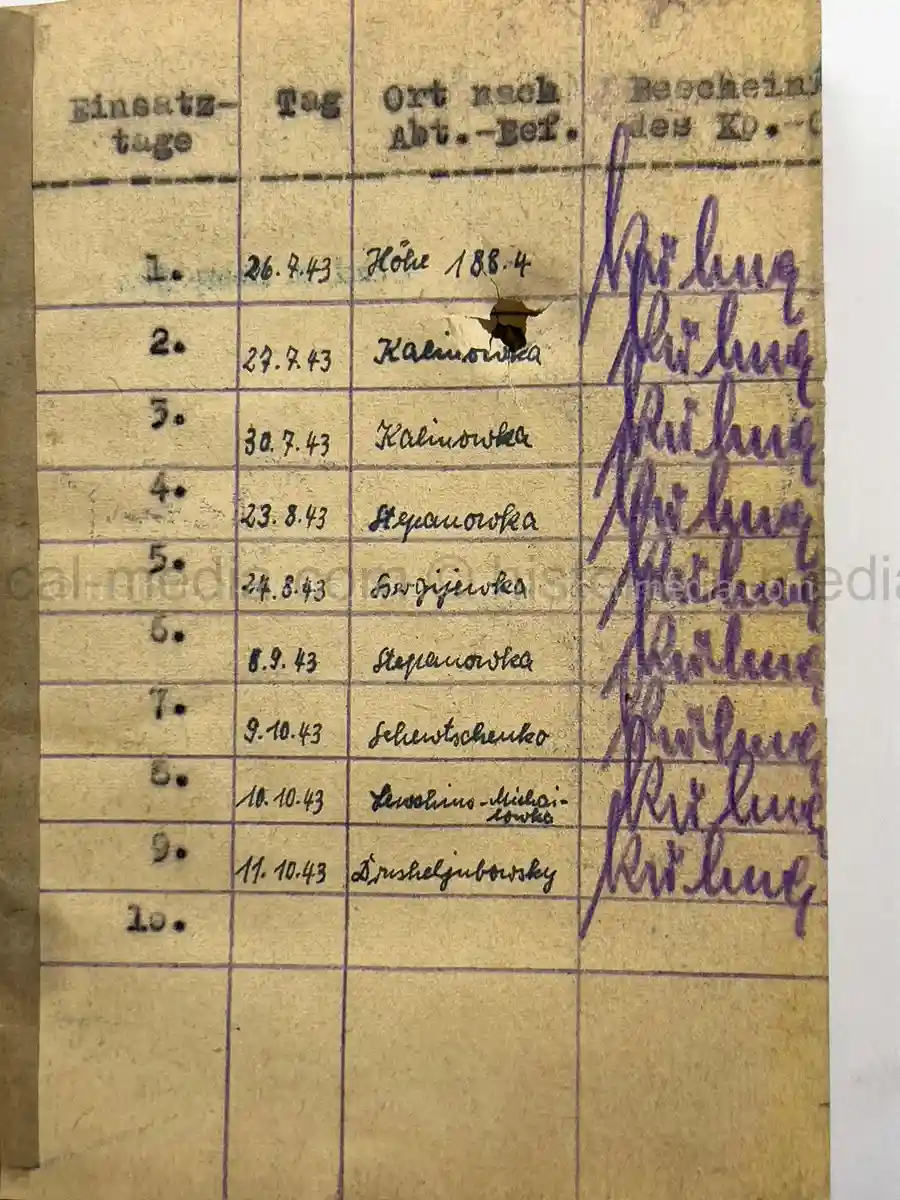
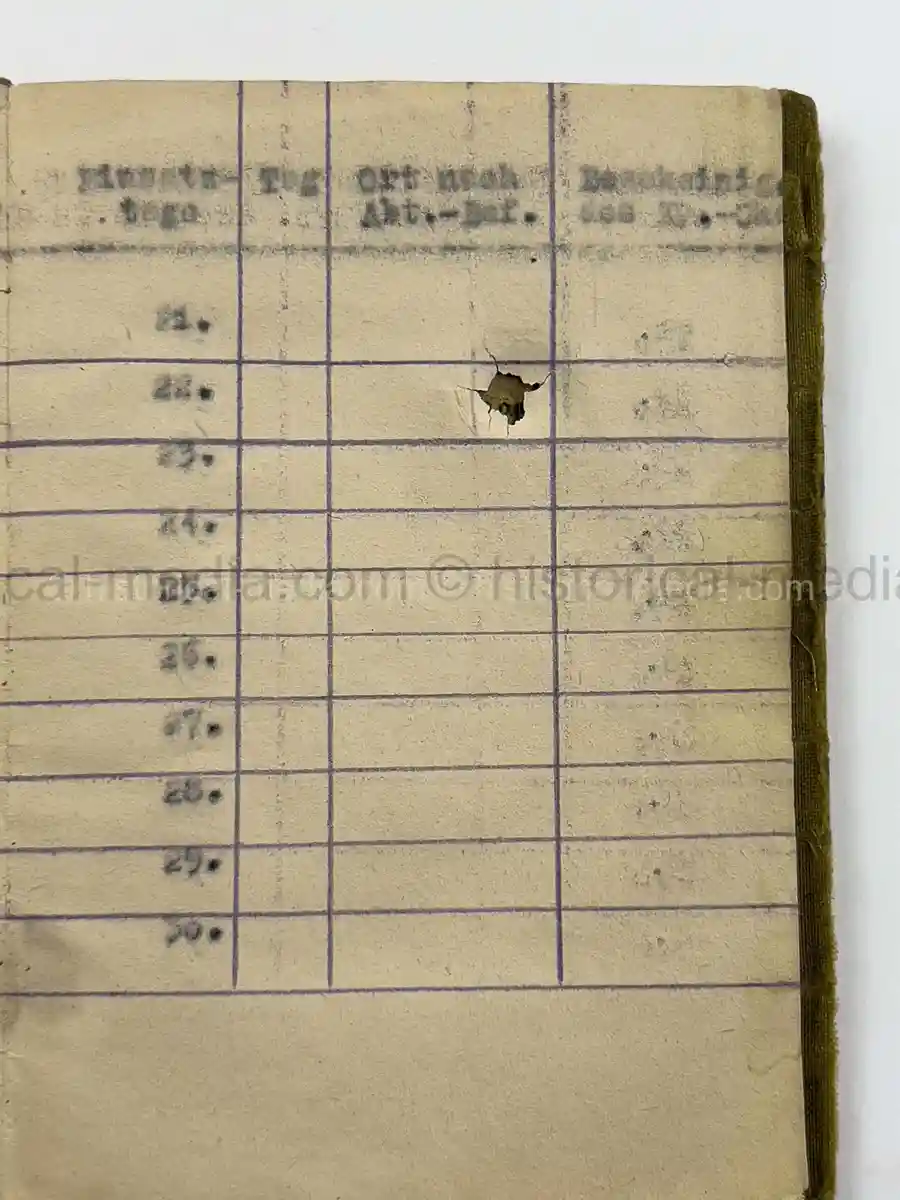
The Soldbuch contains clear combat deployment entries (Einsatztage) on the Eastern Front in 1943, including locations such as:
- Kalinkowka / Kalinowka
- Semenovka
- Additional engagements between July and October 1943
These locations correspond to areas of intense fighting during the Soviet summer offensives following the Battle of Kursk, particularly in sectors where 20. Panzer-Division was engaged in mobile defensive operations and counterattacks.
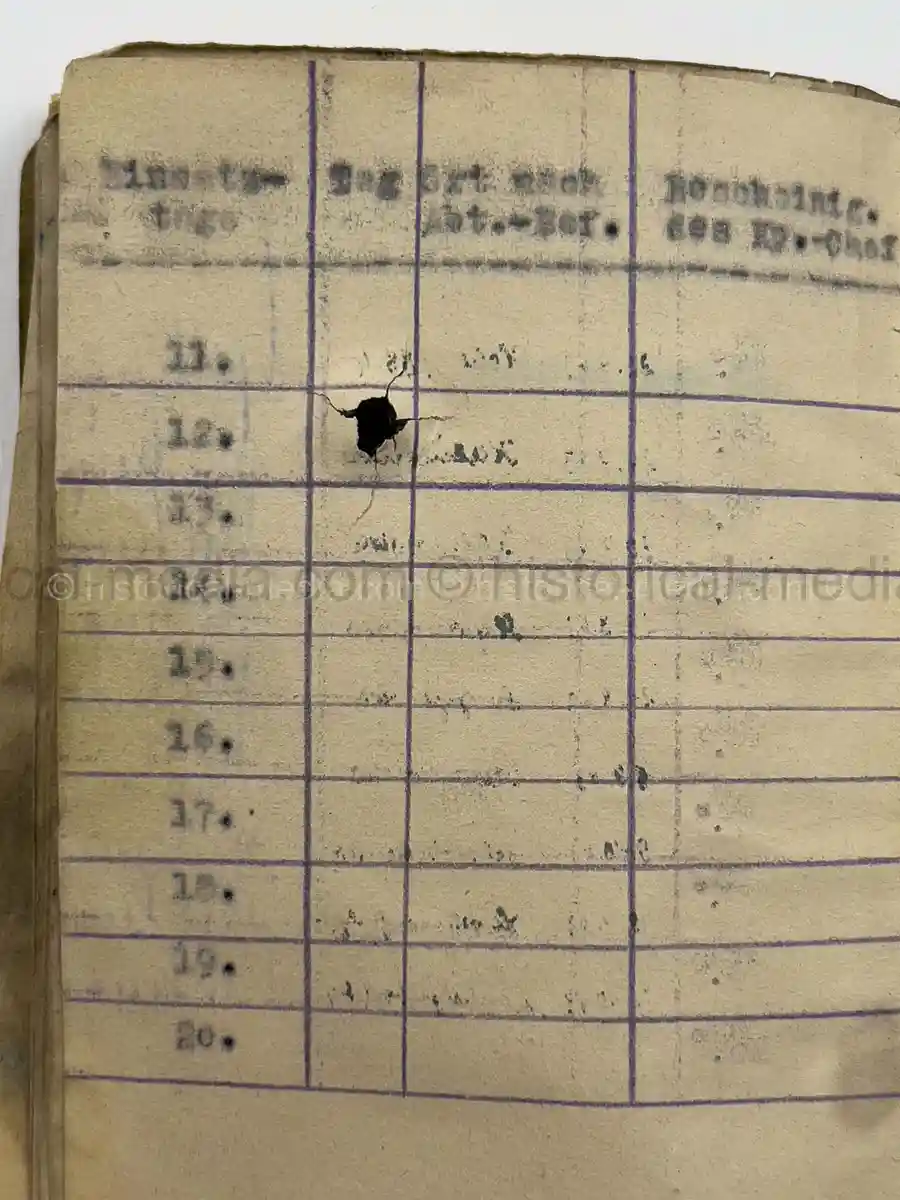
In addition, the Soldbuch includes a dedicated list of close combat engagements, confirming repeated involvement in direct infantry-level fighting, a notable and desirable feature in Panzergrenadier documents.
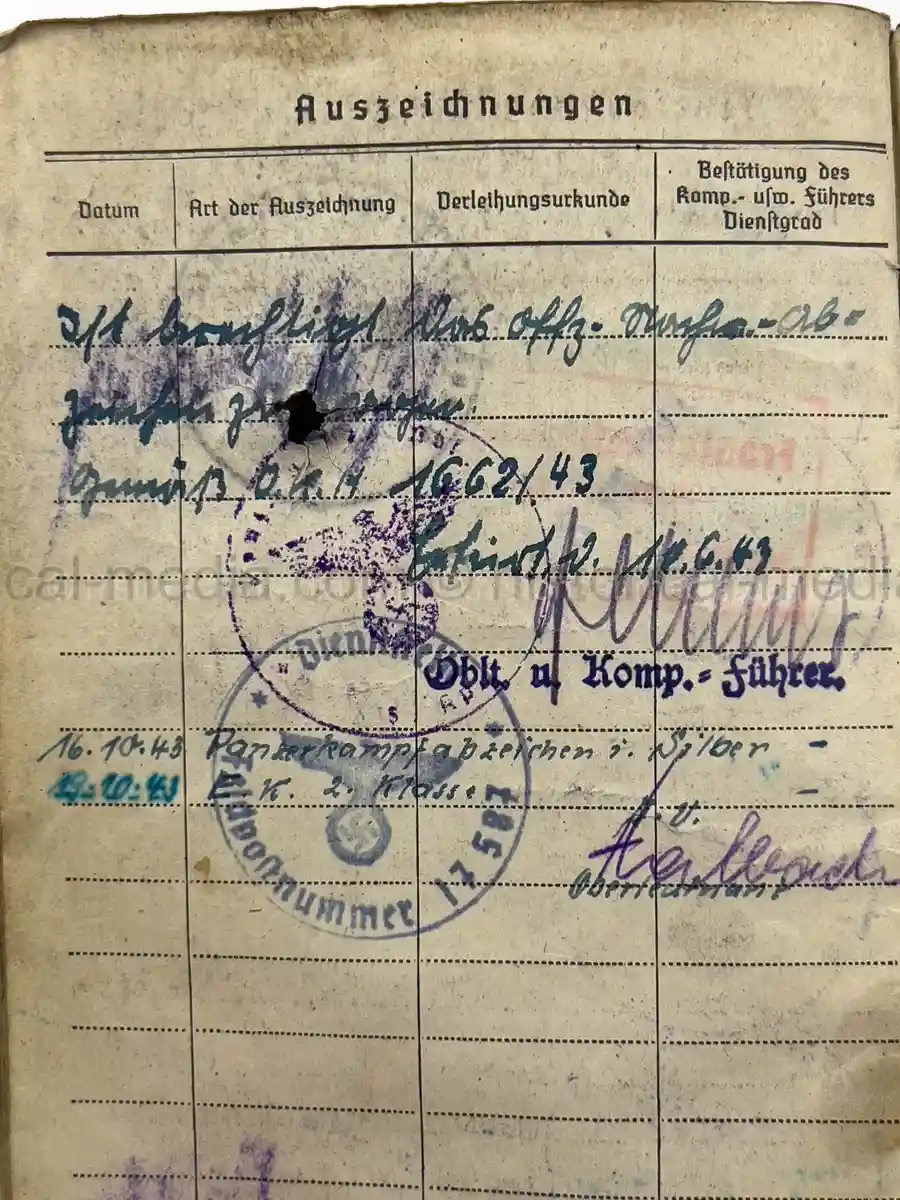
For his service, Glaser received:
- Panzerkampfabzeichen in Silber (Silver Panzer Assault Badge) – awarded October 1943
- Iron Cross 2nd Class (Eisernes Kreuz II. Klasse) – awarded 19 October 1943
The timing of these awards aligns directly with the intense defensive battles of late summer and autumn 1943, when 20. Panzer-Division was engaged in heavy armored combat and close-range fighting during Soviet advances.
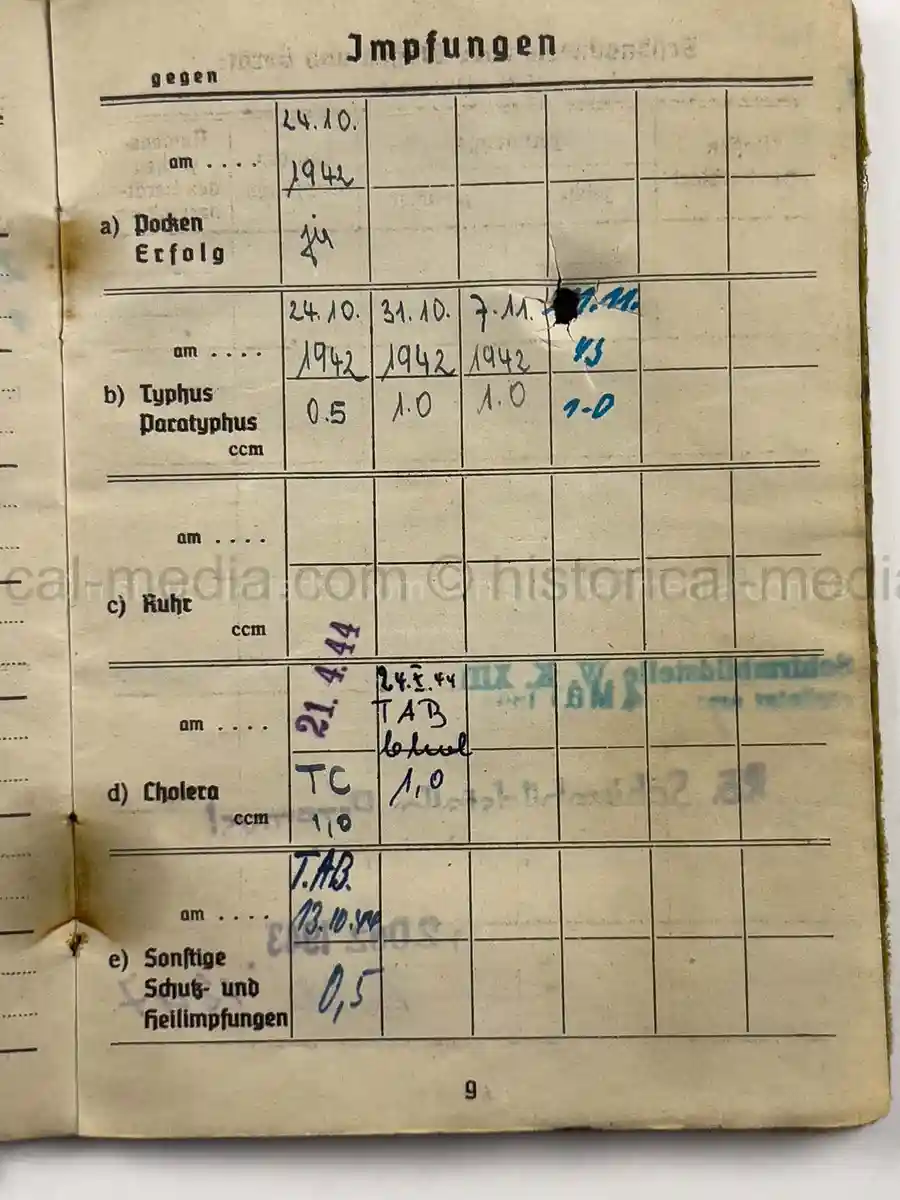
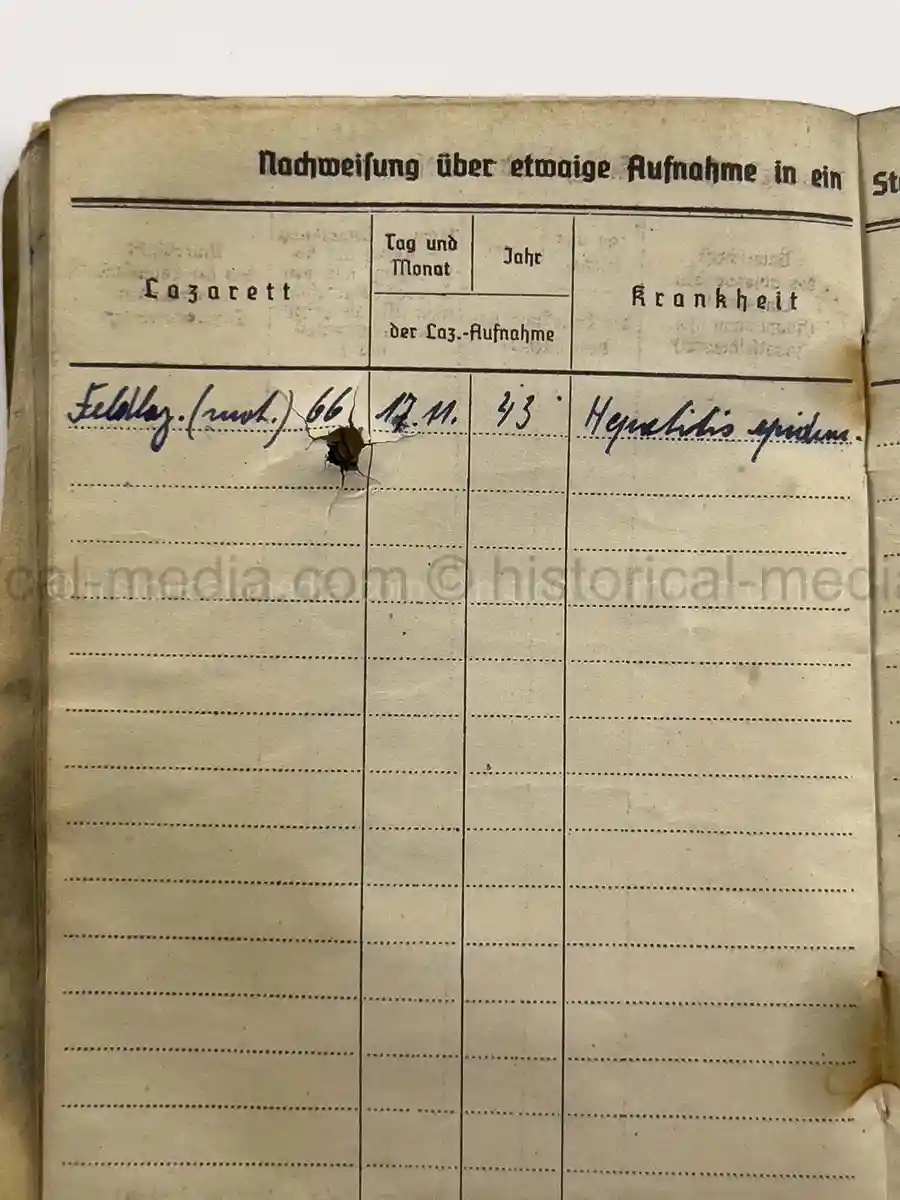
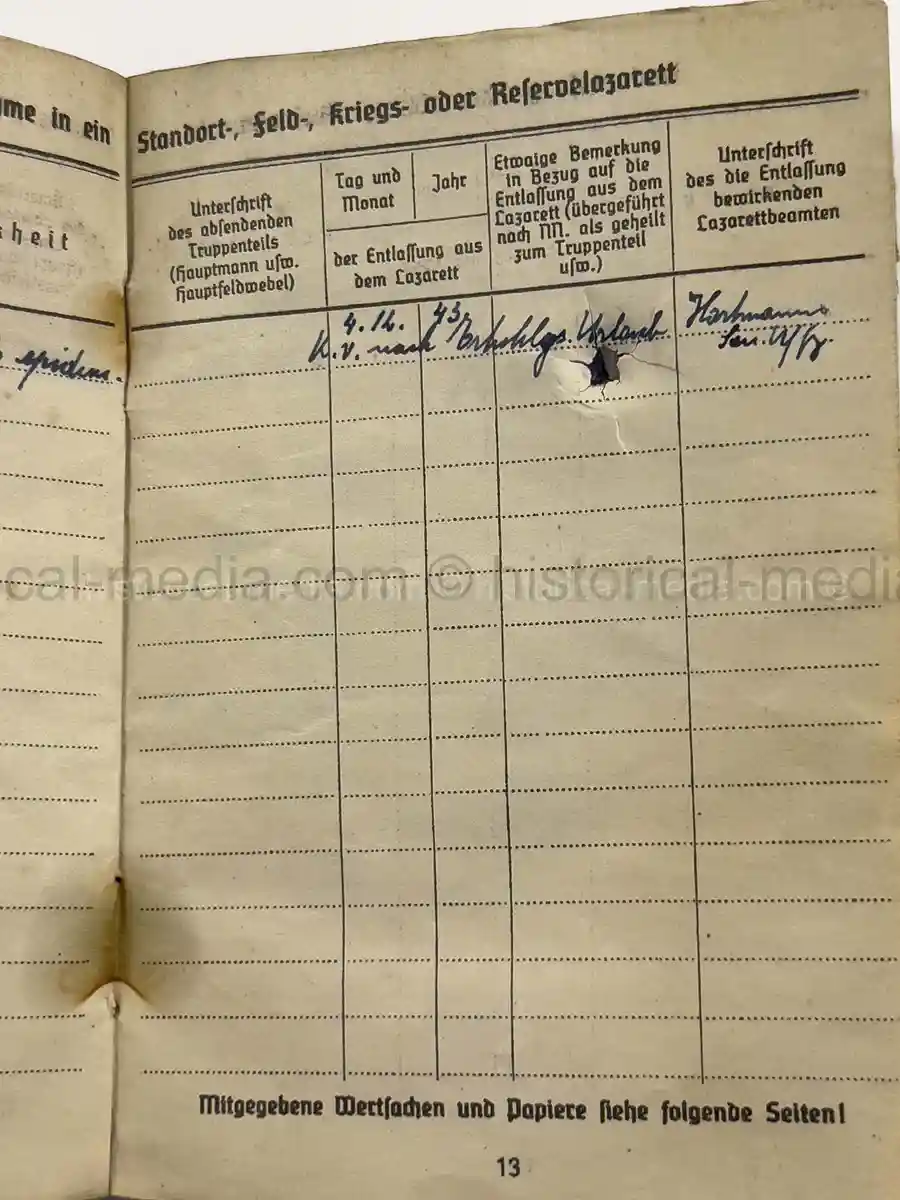
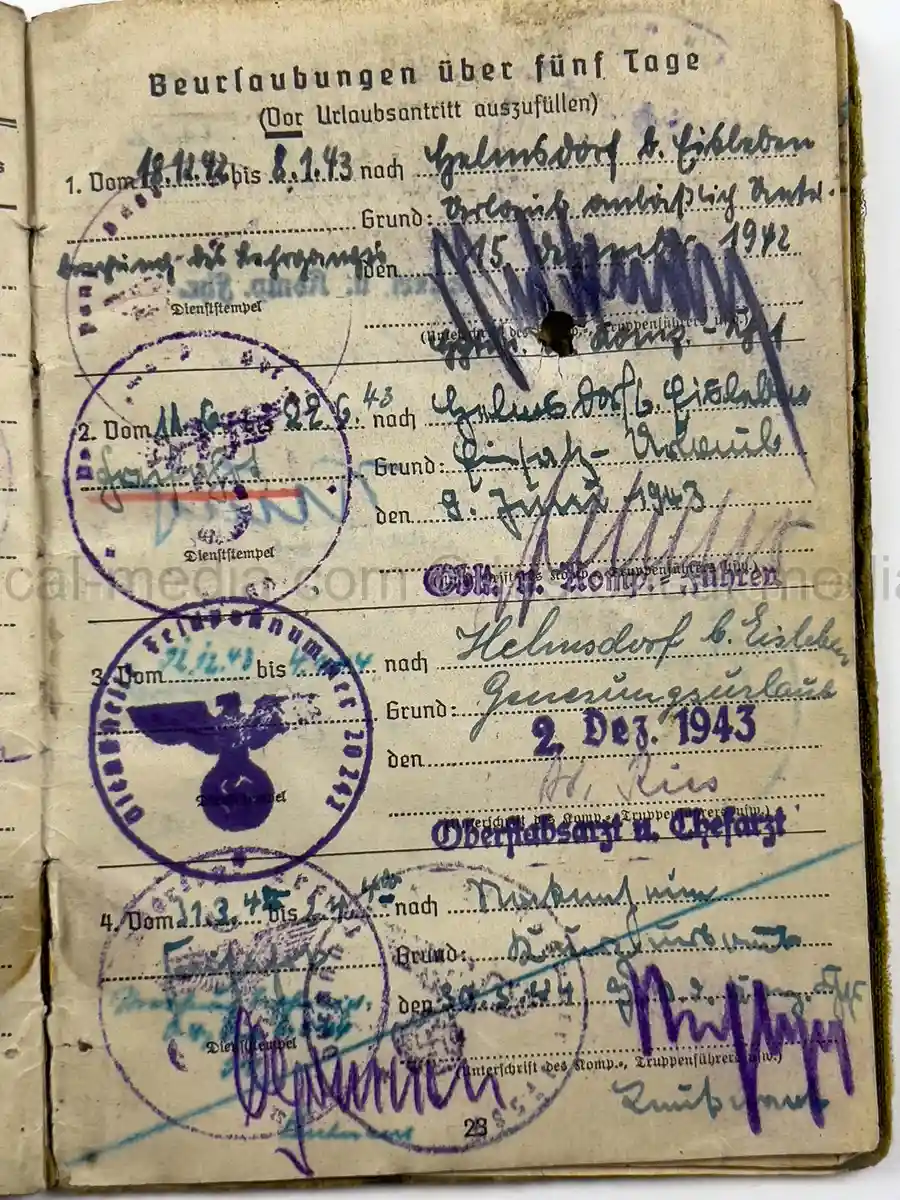
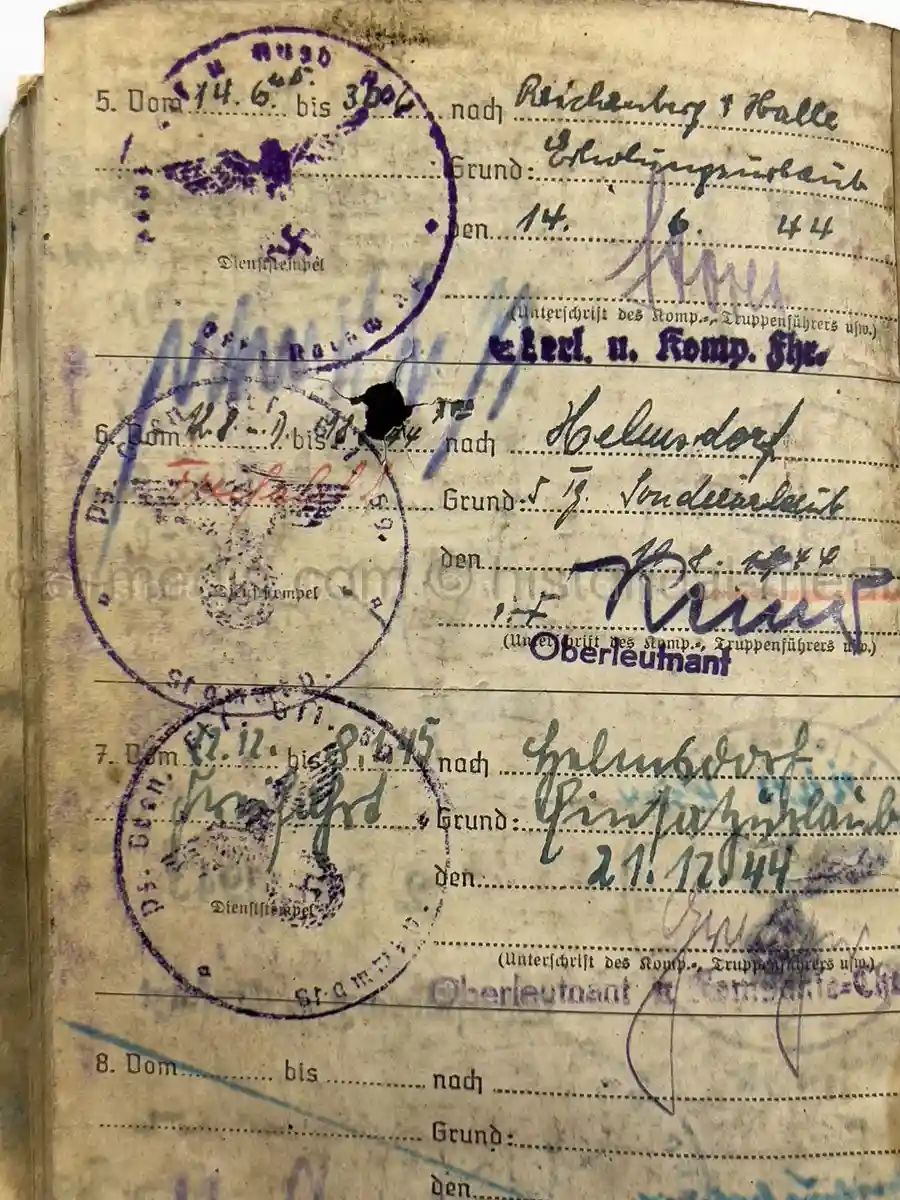
Medical entries record that he was hospitalized on 12 November 1943 with Hyperkeratosis, followed by discharge from a Lazarett on 8 December 1943, noted as fit for duty—again consistent with service under harsh frontline conditions immediately after his combat award period.
“`html
“`